
Soups & Stews
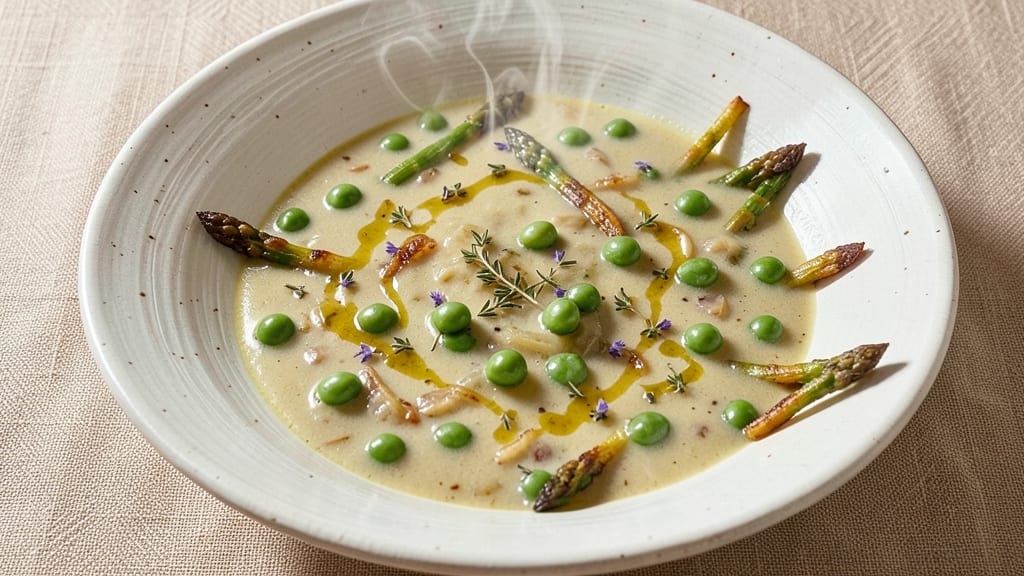
Spring's brightest flavors come together in this asparagus and pea soup recipe, where tender green vegetables simmer into a velvety broth infused with fresh herbs.
The secret lies in balancing sweet peas and earthy asparagus with just the right amount of garlic and thyme, creating a soup that's both comforting and vibrant. Perfect for spring menus or light summer dinners, this recipe delivers restaurant-quality results with minimal effort.
What sets this soup apart is the herbed crispness achieved through proper simmering techniques—never overcooking the vegetables to preserve their natural sweetness. An immersion blender creates a silky texture without sacrificing any of that fresh flavor, while a final touch of lemon zest brightens every spoonful.
The result is a soup that's creamy yet light, with just enough body to satisfy even the most discerning palates.
This recipe works beautifully as a starter or main dish, especially when paired with crusty bread or a sprinkle of toasted croutons. For an extra touch of elegance, finish with fresh chives or a drizzle of high-quality olive oil—simple details that elevate the presentation without complicating the process.
The best part? It comes together in under 45 minutes, making it ideal for busy weeknights or special occasions.
Whether you're serving a crowd or treating yourself to a quiet meal, this asparagus and pea soup brings the essence of spring to your table.
The techniques here ensure you'll achieve that perfect balance of flavors and textures every time, proving that vegetarian soups can be just as hearty and satisfying as any meat-based dish.
Ingredients for asparagus and pea soup
Spring's brightest ingredients transform into velvety perfection with these 13 essential components.
| Ingredient | Amount | Notes |
|---|---|---|
| Fresh Asparagus 🌱 | 1 lb | Trimmed, tough ends removed |
| Fresh Peas 🌿 | 1 ½ cups | Frozen or fresh, shelled |
| Yellow Onion 🧅 | 1 whole | Diced, medium size |
| Garlic Cloves 🧄 | 3 cloves | Minced, fresh preferred |
| Fresh Thyme 🌿 | ¼ cup | Leaves only, finely chopped |
| Celery Stalks 🥬 | 2 whole | Diced, medium ribs |
| Extra-Virgin Olive Oil 🫒 | ¼ cup | High-quality, fruity |
| Vegetable Broth 💧 | 4 cups | Low-sodium preferred |
| Lemon Zest 🍋 | 1 tbsp | Freshly grated |
| Salt 🧂 | 1 tsp | Diamond Crystal preferred |
| Black Pepper 🌶️ | ½ tsp | Freshly cracked |
| Fresh Chives 🌿 | ⅛ cup | Chopped, for garnish |
| Crusty Bread 🍞 | 4 slices | For serving, optional |
The asparagus and peas are the stars here—fresh peas bring natural sweetness, while asparagus with vibrant tips adds earthy depth. For peas, frozen works perfectly (no need to thaw), but fresh from the pod is ideal. Asparagus should be bright green and firm—avoid woody stalks. I always grab mine from Whole Foods or the local farmers market in spring, but the grocery store frozen section is a great backup. The thyme and chives? Fresh is non-negotiable—dried just won't give that bright herbal note. If you're using fresh thyme, strip the leaves from the stems before chopping. For the vegetable broth, low-sodium is key—you'll be adding plenty of salt later.
No fresh peas? Frozen peas work perfectly—just don't thaw them first. Short on asparagus? Substitute with 1 cup sliced green beans for a similar texture. The onion and celery form the aromatic base—don't skip them, even if you're in a hurry. For the olive oil, use something fruity and peppery—none of that bland supermarket stuff. The lemon zest can be pre-grated (those little bottles at Trader Joe's are perfect), but fresh is always better. Want more depth? Add 1/2 tsp smoked paprika to the broth. The crusty bread is optional but recommended—a good baguette from the bakery section is ideal, or any sturdy bread you have on hand.
This soup tastes even better the next day—make extra and store in airtight containers for up to 5 days in the fridge. For freezing, portion into 2-cup servings and thaw overnight in the fridge. The asparagus and peas hold up beautifully to freezing, though peas may soften slightly. To reheat, warm gently on the stove with a splash of broth—never boil, or the texture will break down. The lemon zest and chives are best added fresh just before serving, so don't include them in the stored portions. The broth can be made ahead too—store it separately and combine with the veggies when ready to serve.
Why You'll Love This Recipe
- Spring in a Bowl: I swear, the moment I blend those tender asparagus spears with sweet peas—still bright green from the garden—it’s like springtime in my kitchen. That earthy garlic and thyme? Pure magic.
- No-Fuss Prep: Honestly, the hardest part is snapping those asparagus ends. Sauté onions, toss in garlic and thyme, add the veggies, and let the pot do the work. Twenty minutes max, and zero stress.
- Leftover Goldmine: Between us, this soup only gets better after a day or two. The flavors meld into something richer, and it reheats like a dream. Perfect for packing lunches or feeding unexpected guests.
- Budget Brightener: Fresh peas and asparagus might seem fancy, but they stretch further than you’d think. A single bunch of asparagus and a small pod of peas make four servings—without breaking the bank.
Step-by-step instructions for asparagus and pea soup
Here's how to transform spring's brightest greens into a velvety, herb-infused soup that captures garden-fresh flavor.
Prep and Sauté the Vegetable Base
Heat the 0.25 cup extra-virgin olive oil in a large pot over medium heat until shimmering. Add the 1 whole diced yellow onion and 2 whole diced celery stalks, cooking for 5-6 minutes until softened and translucent. You'll know they're ready when they release easily from the bottom of the pan.
Add the 3 minced garlic cloves and 0.25 cup finely chopped fresh thyme, stirring for 30 seconds until fragrant. This aromatic trio forms the flavor foundation of your soup - don't rush this step, as proper cooking develops their full potential. The thyme should release its piney aroma while the garlic just begins to color.
Add Asparagus and Peas for Spring Brightness
Push the vegetables to one side of the pot and add the 1 lb trimmed asparagus, cut into 1-inch pieces. Cook for 3-4 minutes until the asparagus begins to soften slightly but still maintains its vibrant green color. The peas will join shortly, so keep them separate initially to prevent overcooking.
Add the 1.5 cups fresh peas (fresh or thawed frozen) and stir gently to combine. Cook together for 2-3 minutes until the peas are tender but still hold their shape. You're aiming for al dente vegetables that will continue cooking slightly in the broth. The asparagus should be fork-tender but not mushy - it should still offer a slight bite.
Build the Velvety Broth Base
Pour in the 4 cups vegetable broth and bring to a gentle boil. Immediately reduce heat to medium-low and add the 1 tbsp freshly grated lemon zest, 1 tsp salt, and 0.5 tsp freshly cracked black pepper. The lemon zest will brighten the entire soup while the salt and pepper balance the natural sweetness of the vegetables.
Let the soup simmer uncovered for 15-20 minutes until the asparagus and peas are completely tender. You'll know it's ready when the asparagus pieces collapse easily with a fork and the peas burst when pierced. The soup should have reduced slightly but still maintain a luscious consistency. Taste and adjust seasoning if needed - the lemon zest adds complexity that may require additional salt.
Finish with Herbs and Garnish
Remove the soup from heat and stir in the 0.125 cup chopped fresh chives. The chives add a delicate oniony note that complements the thyme. Let the soup sit for 5 minutes to allow the flavors to meld completely. This resting period is crucial - it lets the soup develop its full character and prevents the chives from becoming bitter from overcooking.
Ladle the soup into bowls and serve immediately with the 4 slices crusty bread on the side. The bread provides the perfect vehicle for soaking up every last drop of that herbed, lemon-kissed broth. The contrast between the warm soup and cool bread creates an irresistible textural experience that makes this dish truly memorable.
Pro Tips For Making Asparagus And Pea Soup
- Trim Asparagus Properly: Snip the woody ends at a 45-degree angle—about 1 inch from the base—before using any for the soup. I used to toss whole stalks in, and the texture was a nightmare. The angled cut makes them look better too, which matters when you’re serving it as a starter.
- Sweat Onions Low and Slow: Cook the onions over medium-low heat for 8–10 minutes until they’re translucent but not browned. High heat turns them bitter, and that’s the last thing you want in a delicate pea-asparagus soup. (Yes, even if you’re impatient like me.)
- Shock Peas Before Adding: Plunge fresh peas into ice water for 30 seconds after shelling to stop cooking. Then drain and pat dry—this keeps them bright green and crisp in the soup. I learned this the hard way when my peas turned mushy and lost their snap.
- Bloom Thyme in Fat: Toss the thyme sprigs into the pot with a splash of oil or butter first, letting them sizzle for 30 seconds before adding liquid. This releases their aroma instantly, so the soup sings with flavor from the start. (Your nose will thank you.)
Serving suggestions for this dish
Bread Pairings
Crusty baguettes or sourdough are my go-to choices—their sturdy texture holds up perfectly to the velvety soup while soaking up every last drop of flavor.
For a special touch, toast the bread lightly in the oven with a drizzle of extra-virgin olive oil and a sprinkle of flaky sea salt before serving. 🍞
If you prefer something softer, try ciabatta or focaccia—their airy pockets make them ideal for ladling soup into. I often serve this soup with a small bowl of garlic-infused olive oil for dipping, which adds another layer of richness to the meal.
Garnish Ideas
A final sprinkle of fresh chives or parsley adds a pop of color and freshness that elevates the dish. For extra crunch, top with toasted breadcrumbs or crumbled feta cheese—just 2 tablespoons of each per bowl.
A drizzle of high-quality olive oil or a swirl of crème fraîche adds a luxurious finish. 🌿
For a smoky twist, try smoked paprika or a pinch of aleppo pepper—just ¼ teaspoon per serving. These add depth without overpowering the delicate flavors of the asparagus and peas.
I also love adding a few crispy prosciutto bits for a savory contrast, especially if serving to guests who enjoy a touch of meat.
Cheese Pairings
If you're serving this as a main dish, consider adding a side of goat cheese or ricotta for extra protein and creaminess. A small bowl of whipped ricotta with a drizzle of honey and black pepper pairs beautifully with the soup.
The tangy, creamy notes complement the bright flavors of the asparagus and peas. 🧀
For a vegetarian option, try vegan cashew cream—just blend ½ cup soaked cashews, ¼ cup water, and 1 teaspoon lemon juice until smooth. Drizzle it over the soup for a rich, dairy-free finish that still feels indulgent.
Wine and Drink Pairings
A crisp Sauvignon Blanc or Pinot Grigio enhances the bright, herbaceous notes of the soup. The acidity in these whites cuts through the richness while complementing the lemon zest. I love a chilled glass of La Crema Sauvignon Blanc from California—it’s light enough to let the soup shine. 🍷
For non-alcoholic options, try a sparkling lemonade or iced hibiscus tea. The citrusy notes in both drinks mirror the lemon zest in the soup, creating a refreshing contrast. A light ginger beer with a squeeze of lime also works wonderfully, especially on warm spring days.
Nutrition facts
Frequently asked questions
Can I use frozen peas instead of fresh?
Frozen peas work perfectly in this recipe—just don't thaw them first. The frozen variety retains its sweetness and texture when cooked directly from frozen. For best results, use high-quality frozen peas without added salt or preservatives.
How do I prevent the soup from becoming too watery?
Simmer the soup uncovered for 15-20 minutes to let excess liquid reduce naturally. If it's still too thin, remove the pot from heat and stir in 1 tablespoon cornstarch mixed with 2 tablespoons cold water. Return to low heat just until thickened.
Can I make this soup ahead of time?
Yes, this soup actually tastes better the next day! Store in airtight containers for up to 5 days in the fridge. For freezing, portion into 2-cup servings and freeze for up to 3 months. Reheat gently on the stove with a splash of broth—never boil, or the texture will break down.
What if I don't have an immersion blender?
No problem! Transfer the soup to a blender in batches and blend until smooth, then return to the pot. For a slightly chunkier texture, use a regular blender and leave some vegetables whole. Alternatively, mash some peas against the pot walls with a potato masher for a rustic look.
Can I add potatoes to make it heartier?
Certainly! Add 1 cup diced potatoes with the onion and celery. They'll cook through during the 15-20 minute simmer. For extra creaminess, try ½ cup Yukon Gold potatoes—they break down beautifully while adding natural sweetness that complements the peas.