
Soups & Stews
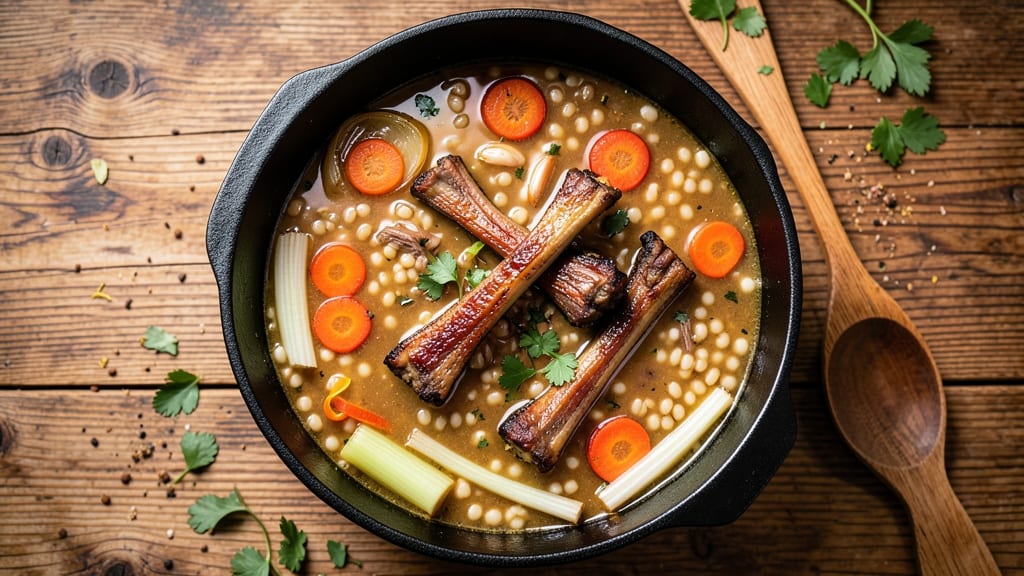
This beef barley soup recipe with prime rib bones transforms ordinary broth into liquid gold—rich, deeply savory, and packed with umami from slow-rendered marrow and collagen. The secret lies in those prime rib bones, which infuse the soup with a depth of flavor no store-bought stock can match.
I developed this recipe after years of experimenting with bone broths, and the difference is night and day compared to standard beef barley soup.
The process begins with roasting the bones to deepen their flavor, then simmering them for hours to extract gelatinous richness. Barley adds hearty texture, while aromatic vegetables and herbs round out the broth.
What you'll end up with is a soup that's velvety, satisfying, and full of restaurant-quality depth—perfect for cold weather or when you want to impress without fuss.
This isn't just another beef barley soup; it's a labor of love that rewards patience with unmatched flavor. The broth will be so rich you'll want to serve it as a starter, and the barley will be perfectly tender without turning mushy.
Pair it with crusty bread or a simple green salad to complete the meal.
Ready to make soup that tastes like it simmered all day? Let's get started—your kitchen will smell incredible within the first hour, and the results will keep you coming back for seconds.
Ingredients for beef barley soup recipe with prime rib bones
Prime rib bones, aromatic vegetables, and slow-simmered barley create soup that tastes like a hug in a bowl.
| Ingredient | Amount | Notes |
|---|---|---|
| Prime Rib Bones 🦴 | 2 lb | Marrow-rich, cut into 3-inch pieces |
| Yellow Onion 🧅 | 2 whole | Chopped, medium dice |
| Carrots 🥕 | 4 whole | Peeled, cut into 1-inch chunks |
| Celery Stalks 🥬 | 4 whole | Cut into 1-inch pieces |
| Garlic Cloves 🧄 | 6 cloves | Smashed, not minced |
| Pearl Barley 🌾 | 1 cup | Rinsed well, uncooked |
| Tomato Paste 🍅 | 2 tbsp | High-quality, no sugar added |
| Dried Thyme 🌿 | 1 tbsp | Or 1 tbsp fresh thyme |
| Bay Leaves 🍃 | 2 whole | Fresh preferred |
| Black Peppercorns 🌶️ | 1 tbsp | Crushed, not ground |
| Salt 🧂 | 2 tsp | Kosher or sea salt |
| Extra-Virgin Olive Oil 🫒 | ¼ cup | For roasting bones |
| Water 💧 | 12 cups | Or enough to cover bones |
| Beef Broth 🍲 | 4 cups | Homemade preferred |
| Fresh Parsley 🌿 | ¼ cup | Chopped, for garnish |
Those prime rib bones are non-negotiable—the marrow and collagen give this soup its restaurant-quality depth. Ask your butcher for marrow-rich bones (the ends of prime rib cuts work best). Roast them first at 425°F for 20 minutes to deepen their flavor. Costco or Whole Foods usually have them in the meat counter, but call ahead. If you can't find them, beef marrow bones or even veal bones will work, though the flavor won't be quite the same. Look for bones with good marbling—they'll render more flavorful fat during roasting.
No prime rib bones? Beef short ribs or chuck bones are solid substitutes, but you'll need to roast them longer (30 minutes) to get that caramelized crust. Fresh thyme is ideal, but dried works at half the amount—just make sure it's not ancient. For the barley, Pearl Barley from Bob's Red Mill is my go-to, but any pearl barley will do. The tomato paste adds depth, so don't skip it—Rao's or Mutti brands are my pantry staples. If you're short on time, you can use 1 cup of crushed tomatoes instead, but the paste gives better control over acidity.
This soup tastes even better the next day—honestly, the flavors meld into something magical. Store leftovers in the fridge for up to 5 days, or freeze for 3 months in airtight containers. I always make a double batch because it disappears fast. The barley thickens as it cools, so add a splash of water or broth when reheating. Garnish with fresh parsley right before serving—it brightens up the rich broth. For extra indulgence, serve with crusty bread and a sprinkle of grated Parmesan (even though it's not in the recipe, trust me on this).
Why You'll Love This Recipe
- One-Pot Wonder: I swear by this recipe because it’s all in one pot—no chopping chaos, no extra pans. Toss in the prime rib bones, chopped veggies, and barley, then let the broth do the work. Honestly, the only prep is a quick dice of onions and celery, and the rest? Just simmer.
- Rich Umami Bomb: That prime rib bone? It’s the secret weapon—melts into the broth for a depth of flavor you won’t find in store-bought. The garlic and carrots caramelize just enough to add a sweet-savory punch. Between us, this isn’t just soup; it’s a flavor experience.
- Weeknight to Holiday: I make this for lazy Mondays, but it’s also the star of my Thanksgiving table. The barley soaks up the broth, the veggies stay tender, and the bones give it that restaurant-quality richness. (Yes, even on a Tuesday night.)
- Leftovers That Don’t Suck: This soup actually tastes better the next day—no sad, watery aftertaste here. I freeze portions for quick meals, and it reheats like a dream. Plus, the bones make it budget-friendly; you’re getting way more flavor for your money than with pre-made broth.
Step-by-step instructions for beef barley soup with prime rib bones
Here's how to transform prime rib bones into rich, velvety broth that makes this soup unforgettable.
Roast the Bones for Deep Flavor
Preheat your oven to 425°F and place the 2 lb prime rib bones on a baking sheet. Drizzle them with the ¼ cup extra-virgin olive oil and rub it all over, coating the bones completely. This creates a crust that locks in flavor as they roast.
Roast the bones for 30-40 minutes, turning occasionally, until they develop a deep golden-brown color. You'll smell that incredible meaty aroma—this is where the magic begins. The high heat caramelizes the surface, creating layers of flavor that will infuse your broth. Don't skip this step; it's what makes this soup taste restaurant-quality.
Sauté Vegetables and Build the Base
While the bones roast, heat a large Dutch oven over medium heat. Add the 2 whole yellow onions, 4 whole carrots, and 4 whole celery stalks, all chopped as specified. Cook them for 8-10 minutes, stirring occasionally, until they begin to soften and release their natural juices.
Add the 6 smashed garlic cloves and cook for another 1-2 minutes until fragrant—this should take just seconds, as garlic burns quickly. Stir in the 2 tbsp tomato paste and cook for 30 seconds to deepen its flavor. Remove the vegetables from the pot and set them aside temporarily. You'll add them back later once the broth develops.
Extract Maximum Flavor from the Bones
Once the bones are roasted, transfer them to the Dutch oven with all their rendered juices. Add the 12 cups water and 4 cups beef broth, scraping up any browned bits from the bottom of the baking sheet. These bits are packed with flavor—don't waste them!
Bring the liquid to a boil, then reduce heat to medium-low to maintain a gentle simmer. Add the 2 whole bay leaves, 1 tbsp dried thyme, 1 tbsp crushed black peppercorns, and 2 tsp salt. Cover the pot and let it simmer for 1½ hours—this is where the bones release their marrow and collagen into the broth, creating that luxurious, velvety texture.
Add Barley and Vegetables for Hearty Texture
After 1½ hours, remove the bones from the pot using tongs and set them aside to cool slightly. Strain the broth through a fine-mesh sieve into a large pot, discarding the bones and any solids. Return the broth to the heat and bring it to a gentle simmer.
Add the 1 cup rinsed pearl barley and the reserved vegetables from Step 2. Simmer uncovered for 30-40 minutes or until the barley is tender and the vegetables are fork-tender. Taste the broth and adjust seasoning if needed—this is your chance to balance the flavors before serving.
Finish and Serve with Fresh Herbs
Once the barley is perfectly tender, remove the pot from heat. Stir in the ¼ cup chopped fresh parsley just before serving. This adds a bright, fresh note that cuts through the richness of the broth. Ladle the soup into bowls, making sure each serving gets its fair share of barley and vegetables.
Serve immediately with crusty bread on the side to soak up every last drop of that prime rib-infused broth. The contrast of the tender barley, hearty vegetables, and rich broth will make this soup a centerpiece for any meal. Leftovers keep well in the refrigerator for up to 5 days, and the flavor actually improves as it sits!
Pro Tips For Making Beef Barley Soup Recipe With Prime Rib Bones
- BLISTER THE BONES FIRST: I learned this the hard way—skipping the sear means flavorless broth. Hit those prime rib bones with high heat for 5-7 minutes per side until they’re deep brown, almost black in spots. The Maillard reaction pulls every last bit of richness from the marrow, which is what turns your soup from "good" to "unforgettable."
- CHOP ONIONS COARSELY: Tiny onion pieces dissolve into mush and make the soup taste bitter. Cut the yellow onion into ½-inch chunks—big enough to stay intact through simmering, but small enough to soften without turning to paste. Trust me, you’ll taste the difference when you spoon up a hearty bite.
- DON’T RUSH THE SIMMER: After adding everything, resist the urge to crank the heat. A gentle simmer (tiny bubbles, not rolling) for at least 3 hours—yes, even if you’re impatient—lets the collagen break down properly. I’ve tried the "quick version," and it’s a sad, watery mess compared to the rich, gel-like broth you get when you slow it down.
- SAVE THE MARROW FOR LATER: Crack open the prime rib bones mid-cook (after 2 hours) and scoop out the marrow with a spoon. Stir it into the soup at the very end—it melts into a velvety, buttery finish that makes the whole dish sing. (Yes, even if you’re not a marrow purist, it’s worth the extra 2 minutes of effort.)
Troubleshooting great beef barley soup recipe with prime rib bones
Broth Too Cloudy?
If your broth looks cloudy after simmering, you likely need to skim more impurities. Use a fine-mesh skimmer or ladle to remove any foam or fat that rises to the surface during the first 30 minutes of simmering.
For extra clarity, strain the broth through a cheesecloth-lined sieve after removing the bones. I find that Muslin cloth from cooking supply stores works best for this. 🌡️
Barley Mushy?
Overcooked barley turns mushy and loses its satisfying bite. To prevent this, check the barley at 25 minutes of simmering and taste-test—it should be tender but still hold its shape. If it's already too soft, mix in ¼ cup cold water to stop the cooking process.
For extra insurance, use pearled barley instead of steel-cut, as it cooks faster and holds texture better.
Weak Flavor?
If your soup lacks depth, the bones might not have rendered enough flavor. Next time, roast the bones at 450°F for 45 minutes to deepen the caramelization. Also, add 1 tbsp fish sauce or ½ tsp MSG during the final simmer for an umami boost.
I keep a small bottle of Red Boat Fish Sauce on hand specifically for this purpose—it elevates the broth beautifully. 💫
Fat Separation?
Excess fat floating on top can happen if the broth cools too quickly. To fix this, chill the soup in the refrigerator overnight, then skim off the hardened fat with a spoon before reheating. For a cleaner presentation, use a fat separator funnel when pouring servings.
If you're short on time, sprinkle ¼ tsp xanthan gum into the hot broth and stir gently—it helps emulsify the fat without altering texture.
Vegetables Too Soft?
Overcooked vegetables turn to mush and lose their structure. To maintain texture, add the carrots and celery to the broth only 15 minutes before the barley is done.
Onions can handle slightly longer cooking, but keep an eye on them. For extra crunch, reserve ½ cup chopped celery and carrots to add just before serving. 🥕
Broth Too Salty?
If your soup tastes overly salty, dilute it by adding 1 cup hot water or broth per quart of soup. For a more natural fix, add ½ cup unsalted butter or ¼ cup heavy cream—the fat coats your taste buds and balances the salt.
Avoid adding acidic ingredients like lemon juice, as they can make the saltiness more pronounced. Always taste as you go! 🧂
Nutrition facts
Frequently asked questions
Can I substitute prime rib bones with something else?
If you can't find prime rib bones, use beef marrow bones or chuck bones instead. For maximum flavor, roast them at 450°F for 30-40 minutes first. Short ribs work too, but they'll need 45 minutes of roasting to develop that caramelized crust.
How do I know when the barley is perfectly cooked?
Barley should be tender but still hold its shape—like al dente pasta. Taste-test at 25 minutes of simmering. If it's too firm, cook 5-10 more minutes. For extra insurance, use pearled barley (not steel-cut), as it cooks faster and stays chewy.
Why does my soup taste better the next day?
The flavors deepen as the broth cools and the barley absorbs more liquid, creating a richer, more balanced taste. The collagen from the bones also gels more completely overnight, giving that signature velvety texture. Store leftovers in the fridge for up to 5 days—it's worth the wait!
Can I make this soup in a slow cooker?
Yes! Roast the bones as directed, then transfer everything (including vegetables and broth) to your slow cooker. Cook on low for 8-10 hours or high for 5-6 hours. The slow cooking enhances the broth's richness, but check the barley's doneness at 4 hours to avoid mushiness.
What's the best way to reheat leftovers?
Gently reheat on the stovetop over low heat until just warm—never boil. Add a splash of water or broth if the barley thickens too much. For microwave reheating, cover with a damp paper towel and heat in 30-second intervals, stirring between each. Always stir well to redistribute flavors!