
Soups & Stews
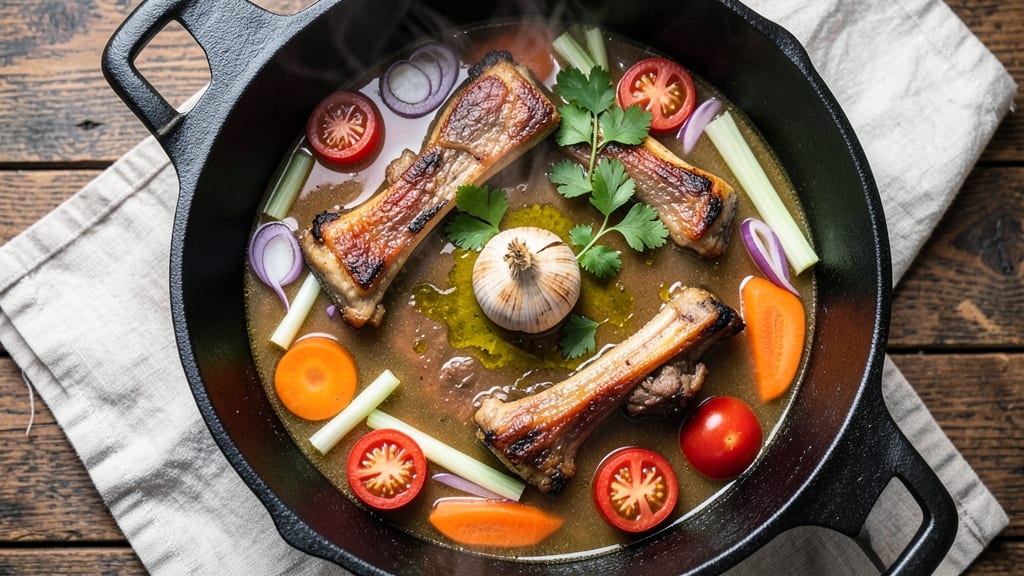
This South African beef bone soup recipe transforms tough cuts into a deeply flavorful, slow-simmered masterpiece that captures the essence of traditional Cape Town cooking.
The secret lies in hours of gentle simmering, where collagen-rich bones melt into a velvety broth infused with aromatic herbs and earthy spices—creating a dish that feels both comforting and sophisticated.
What sets this apart is the careful balance of bitter greens, tender vegetables, and the unmistakable richness of bone marrow that elevates every spoonful.
The process begins with a thorough cleaning of the bones, followed by a deep caramelization that builds layers of umami flavor before adding vegetables and herbs.
Unlike quicker soups, this recipe demands patience—each hour of simmering transforms the broth from clear to rich and golden, while the meat becomes so tender it nearly dissolves.
The result is a soup that’s hearty enough for a winter meal but light enough to enjoy year-round, with a depth of flavor that makes it a centerpiece for any table.
What you’ll achieve is a restaurant-quality broth that’s deeply savory yet balanced by the bright acidity of vinegar and the earthy notes of fresh herbs. The vegetables remain crisp-tender, and the meat—whether from shank, neck, or knuckle—falls apart at the touch of a spoon.
This isn’t just soup; it’s a labor of love that turns a simple pot of water into something extraordinary, worthy of being served alongside braai meats or crusty bread.
Perfect for feeding a crowd or meal prepping for the week, this recipe scales effortlessly while maintaining its depth of flavor. The leftovers only improve as the broth continues to develop, making it a practical yet indulgent choice for any occasion.
Let’s dive into the steps that will transform your kitchen into a taste of South Africa.
Ingredients for beef bones soup recipe south africa
Pantry staples meet South African tradition—just add time and patience for soul-warming broth.
| Ingredient | Amount | Notes |
|---|---|---|
| Beef Bones (Knuckle, Neck, or Shank) 🦴 | 4 lb | Raw, cleaned, marrow-rich preferred |
| Yellow Onion 🧅 | 2 whole | Chopped, medium size |
| Carrots 🥕 | 4 whole | Medium, peeled, cut into chunks |
| Celery Stalks 🌿 | 4 whole | Fresh, cut into 2-inch pieces |
| Garlic Cloves 🧄 | 8 cloves | Peeled, smashed slightly |
| Tomatoes 🍅 | 4 whole | Roma or vine-ripened, crushed |
| Fresh Thyme Sprigs 🌿 | 4 whole | Stems removed, leaves only |
| Fresh Parsley 🌿 | ½ cup | Chopped, flat-leaf preferred |
| Bay Leaves 🍃 | 4 whole | Dried, standard size |
| Black Peppercorns 🌶️ | 1 tbsp | Whole, lightly crushed |
| Apple Cider Vinegar 🍎 | 2 tbsp | For bright acidity |
| Salt 🧂 | 2 tsp | Kosher or sea salt |
| Olive Oil 🫒 | ¼ cup | For caramelizing bones |
| Bitter Greens 🥬 | 2 cups | Kale, Swiss chard, or spinach |
| Fresh Lemon Juice 🍋 | 1 tbsp | Brightens flavors at end |
The bones are the heart of this soup. Butcher shops or specialty meat counters are your best bet for marrow-rich knuckles or neck bones—ask for the fattest, meatiest pieces. If you're using shank, score the surface to help the collagen render faster. Costco or local farms often have great deals on bone-in cuts. Pro tip: Roast the bones first at 425°F for 20 minutes to deepen their flavor before simmering. That caramelized crust is pure umami gold—don't skip it. For the greens, farmers markets have the freshest bitter varieties like Swiss chard or kale—look for vibrant, crisp leaves.
No fresh thyme? Dried works at one-third the amount, but fresh is ideal here. Running low on apple cider vinegar? White wine vinegar or red wine vinegar both work—just cut the amount in half. The tomatoes can be canned (San Marzano if possible) if fresh aren't in season. For the bitter greens, frozen works in a pinch, but fresh is better. If you're making this ahead, prep all your veggies and store them in the fridge for up to 3 days. The bones can sit in the freezer for months—just thaw overnight before roasting. The parsley can be swapped for cilantro if you prefer, but thyme is non-negotiable for that Cape Town flavor.
This soup tastes even better the next day—honestly, the broth gets richer as it sits. Store it in the fridge for up to 5 days, or freeze portions for 3 months. I like to portion it into containers with a little extra broth on top to keep everything moist. The bones? Save any leftover meat for sandwiches or salads—it's still delicious cold. For meal prep, double the recipe and freeze half. When reheating, do it gently on low heat to avoid breaking up the broth. Serve with crusty bread or alongside braai meats for the full South African experience.
Why You'll Love This Recipe
- No Chopping Chaos: I swear by the "dirty chop" method here—just halve the onions, leave the carrots whole, and hack the celery into rough chunks. The bones do all the work while you sip your tea.
- Rich Without Effort: That first golden-brown crust on the bones? Pure magic. After hours of simmering, the marrow melts into the broth, turning it into something so deep and savory you’ll forget to stir.
- Leftovers That Beg for More: This soup only gets better the next day—thicker, more concentrated, and perfect for quick lunches. I make a double batch on Sundays and freeze portions; my kids fight over who gets the leftovers.
- Budget That Feeds: A single knuckle bone stretches into five hearty servings, and the veggies add bulk without breaking the bank. Honestly, it’s the kind of meal that makes grocery day feel like a win.
Step-by-step instructions for South African beef bones soup
Here's how to build a rich, aromatic broth that captures all the umami depth of slow-cooked bones.
Brown the Beef Bones for Maximum Flavor
Preheat your oven to 450°F. Place the 4 lb beef bones on a rimmed baking sheet and roast for 20-25 minutes, turning occasionally, until they develop a deep golden-brown crust. This step is crucial—it creates the Maillard reaction that forms complex flavors in the broth.
While the bones roast, heat 0.25 cup olive oil in a large Dutch oven over medium-high heat. Carefully transfer the browned bones to the pot, bone-side down. Let them sear for 3-4 minutes until another rich crust forms. This double-browning technique ensures maximum flavor extraction during the long simmer.
Build the Aromatic Base
Add the chopped 2 whole yellow onion, 4 whole carrots, and 4 whole celery stalks to the Dutch oven. Cook for 5-6 minutes, stirring occasionally, until the vegetables begin to soften and release their juices. This process, called "sweating," helps develop their flavors before the long simmer.
Push the vegetables to the sides of the pot and add the 8 cloves smashed garlic and crushed black peppercorns to the center. Cook for 30 seconds until fragrant—you'll smell that wonderful garlic aroma filling your kitchen. Then add the crushed tomatoes and stir to combine with the vegetables and bones.
Simmer the Broth for Deep Flavor
Pour in 8 cups cold water (enough to cover the bones by about 2 inches) and bring to a boil. Once boiling, reduce heat to low and add the 2 tbsp apple cider vinegar, 2 tsp salt, 4 whole bay leaves, and 4 whole fresh thyme sprigs. The vinegar helps tenderize the bones and brightens the broth.
Cover the pot and let it simmer gently for 2.5-3 hours, maintaining a low, steady bubble. Skim off any foam or impurities that rise to the surface with a ladle during the first 30 minutes of cooking. This ensures a clear, clean broth. The bones should become fork-tender and release easily from the pot.
Finish with Herbs and Greens
After the initial simmer, remove the bones and shred any meat from them using two forks. Return the meat to the broth. Add the 2 cups bitter greens and simmer uncovered for another 15-20 minutes until the greens are tender but still vibrant. The greens will absorb the rich flavors of the broth.
In the final 5 minutes of cooking, stir in the 0.5 cup chopped fresh parsley and 1 tbsp fresh lemon juice. The lemon juice brightens the dish and cuts through the richness of the broth. Taste and adjust seasoning with additional salt if needed. The soup should be deeply flavorful with a perfect balance of savory, herbal, and slightly tangy notes.
Serve Warm with Crusty Bread
Ladle the soup into bowls, making sure each serving gets a generous portion of the tender beef, vegetables, and greens. The broth should be rich and aromatic, with a beautiful golden color. Serve immediately with warm crusty bread to soak up every last drop of that flavorful liquid.
This soup tastes even better the next day as the flavors continue to meld. Store any leftovers in the refrigerator for up to 4 days or freeze for 3 months. The long simmering process makes this a perfect make-ahead meal that gets better with time.
Pro Tips For Making Beef Bones Soup Recipe South Africa
- BLISTER THE BONES FIRST: Toss your knuckle or shank bones in a hot, dry pot for 5 minutes before adding liquid—this caramelizes the bone surface and unlocks deeper flavor. I used to skip this, and the broth always tasted like it needed more seasoning; now it’s rich from the start.
- CHAR THE VEGETABLES: Sear your onions, carrots, and celery in batches until they’re deeply browned, not just softened. The bitterness from the char balances the sweetness of the carrots and adds complexity—my grandmother’s trick, and it works every time.
- DON’T RUSH THE SIMMER: Keep the broth at a gentle simmer, not a rolling boil, or you’ll turn it cloudy and scatter the flavor. A low, steady bubble (barely visible) lets the collagen melt into silkiness without breaking the surface.
- CRUSH THE GARLIC: Smash your garlic cloves with the flat of your knife before adding them—this releases more oils and flavor. I was skeptical until I tried it: the soup now has a deeper, more aromatic punch without needing extra cloves.
Pro cooking tips for beef bones soup recipe south africa
Bone Browning Mastery
The key to an exceptional broth starts with properly browning your bones—this isn't just about color, it's about flavor science.
I always double-brown them: first in the oven at 450°F for 20-25 minutes to develop deep caramelization, then sear them in the Dutch oven for 3-4 minutes to create that coveted Maillard crust. This two-step process builds layers of umami that no single method can match.
Don't skip the oven step—it's what transforms ordinary bones into flavor bombs. 🔥
Low-and-Slow Simmering
Patience is your secret weapon here. After adding your vegetables and aromatics, maintain a gentle simmer (just small bubbles) for 2.5-3 hours—never a rolling boil. I use a meat thermometer to monitor the broth temperature, keeping it between 185-195°F.
This slow cook allows collagen to break down completely, creating that signature velvety texture. The first 30 minutes are critical for skimming foam—use a fine-mesh ladle to remove impurities before they settle.
Vinegar's Dual Role
The 2 tbsp apple cider vinegar serves two crucial purposes: it tenderizes the bones by breaking down connective tissue, and it brightens the broth with acidity. I add it right when the broth comes to a boil, then immediately reduce to a simmer.
For extra depth, I sometimes add 1 tsp fish sauce (a South African pantry staple) alongside the vinegar—it adds an umami punch that complements the beef beautifully. 💡
Herb Timing Matters
Fresh herbs should be added at specific stages for maximum impact. The thyme sprigs go in with the vinegar and salt, where they infuse the broth throughout the long simmer.
But the parsley and lemon juice come in only during the final 5 minutes—this preserves their bright, fresh flavors rather than letting them turn bitter. I like to tear the thyme leaves off the stems before adding them, so they distribute more evenly throughout the broth.
Green Selection Secrets
Not all greens work equally well in this soup. For the 2 cups bitter greens, I recommend Swiss chard or kale—they hold up better during the final 15-20 minute simmer while still maintaining their vibrant color. Spinach wilts too quickly and can make the broth look murky.
Add the greens when you remove the bones, so they cook just long enough to soften but not disintegrate. The bitterness they bring actually enhances the richness of the broth, creating a perfect balance. 🥬
Equipment Upgrades
While you can make this soup in any large pot, I've found a Dutch oven with a tight-fitting lid is ideal for several reasons: it retains heat better during the long simmer, the heavy base prevents scorching, and the deep sides make skimming foam easier.
If you don't have one, a heavy-bottomed stockpot works well too. For temperature control, I use a Thermoworks Smoke thermometer—it's worth the investment for maintaining that perfect 185-195°F range throughout the cook.
Nutrition facts
Frequently asked questions
What type of beef bones work best for this South African soup?
Use marrow-rich knuckle, neck, or shank bones—they yield the most flavorful broth. Look for bones with visible marrow cavities and some meat still attached. Ask your butcher for \"soup bones\" or specify you want bones with good fat content. Avoid bones that are too small or have been previously cooked.
Can I make this soup in a slow cooker instead of stovetop?
Yes! Brown the bones first in the oven, then transfer everything to your slow cooker with 8 cups water. Cook on low for 8-10 hours or high for 5-6 hours. The slow cooker maintains gentle heat, but you'll need to skim foam more frequently through the lid opening. The texture will be just as rich, though stovetop gives you better control over the simmer.
How do I know when the bones are fully cooked?
The bones are done when they're fork-tender and the meat pulls away easily from the bone. Test by inserting a fork into the largest bone—it should slide in with minimal resistance. The broth should also be noticeably reduced and have a deep golden color. If you're unsure, cook another 30 minutes to ensure maximum collagen extraction.
What can I do with leftover broth?
This broth gets even better after resting! Use it for risotto, pasta, or grain bowls within 4 days. For longer storage, freeze in ice cube trays for easy portioning. The rich flavor works perfectly in stir-fries or as a base for curries. Don't discard the bones—shred any remaining meat for sandwiches or salads.
Why did my broth turn cloudy?
Cloudiness usually means you didn't skim foam during the first 30 minutes of cooking. For future batches, skim aggressively and strain the broth through a fine-mesh sieve if needed. Avoid boiling vigorously, which can emulsify fats. If it's too late, simmer uncovered for 10 minutes to let impurities rise to the surface and skim again.