
Soups & Stews
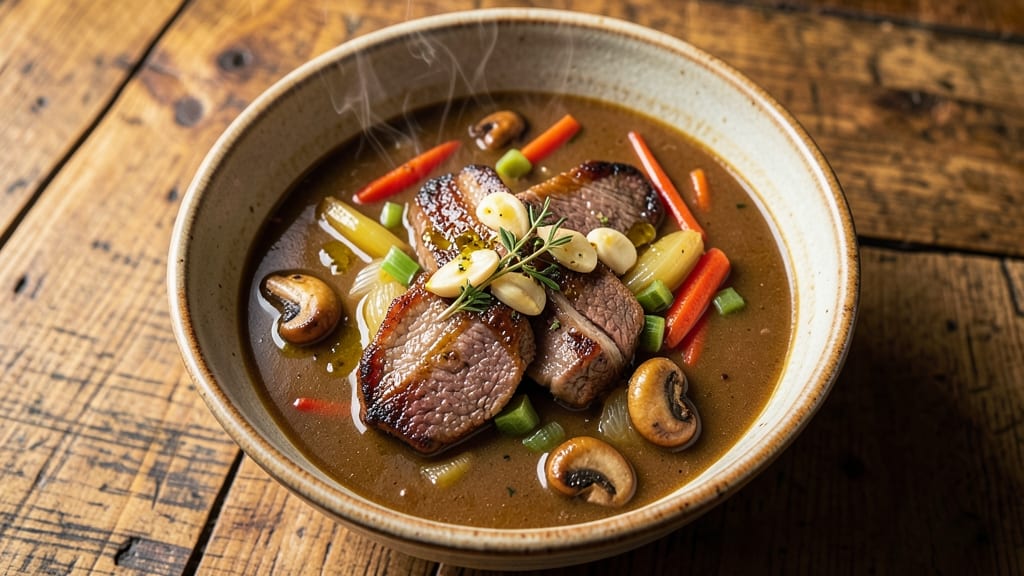
This beef cheek soup recipe delivers restaurant-quality depth with its silky texture and rich umami that lingers long after the last spoonful. The secret lies in slow-cooking tough beef cheek until it practically melts, transforming it into tender, flavorful strands that dissolve into the broth.
Unlike quick soups, this one develops complexity through hours of simmering, where aromatics and umami-rich ingredients meld into a harmonious base.
What sets this recipe apart is the balance of techniques—beginning with a quick parboil to remove impurities, followed by a slow reduction that concentrates flavors without overpowering the delicate beef.
The broth builds layers of depth through mushrooms, soy sauce, and a touch of vinegar, creating a perfect harmony of savory and slightly tangy notes. Every ingredient plays a role in crafting a soup that feels both comforting and sophisticated.
The result is a velvety soup where the beef cheek breaks down into tender, melt-in-your-mouth strands, suspended in a golden, aromatic broth that’s rich without being heavy. The texture is the star—silky yet substantial, with each spoonful offering a perfect balance of meatiness and broth.
This isn’t just soup; it’s a meal that transforms a simple bowl into an experience.
Perfect for chilly evenings or special occasions, this soup pairs beautifully with crusty bread or a simple green salad. The recipe scales effortlessly, making it ideal for feeding a crowd or prepping ahead for the week.
Let’s get started on creating a dish that feels like a warm hug in every bite.
Ingredients for beef cheek soup
Sixteen ingredients transform into velvety, umami-rich beef cheek soup that feels like a restaurant hug.
| Ingredient | Amount | Notes |
|---|---|---|
| Beef Cheek 🥩 | 2 lb | Tough cut, trimmed of fat |
| Yellow Onions 🧅 | 2 whole | Chopped into 1/2-inch pieces |
| Carrots 🥕 | 3 whole | Peeled, cut into 1-inch chunks |
| Celery Stalks 🌿 | 3 whole | Cut into 1-inch pieces |
| Garlic Cloves 🧄 | 6 cloves | Smashed but not minced |
| Shiitake Mushrooms 🍄 | 8 whole | Stemmed, whole for broth |
| Fresh Thyme Sprigs 🌿 | 4 whole | Stems removed for broth |
| Fresh Parsley Sprigs 🌿 | 4 whole | For garnish and finishing |
| Tomato Paste 🍅 | 2 tbsp | High-quality, no sugar added |
| Soy Sauce 🍶 | 2 tbsp | Dark soy preferred |
| Red Wine Vinegar 🍷 | 1 tbsp | For brightness and depth |
| Beef Bone Broth 💧 | 6 cups | Homemade or high-quality store-bought |
| Extra-Virgin Olive Oil 🫒 | ½ cup | For initial searing |
| Salt 🧂 | 1 ½ tsp | Diamond Crystal preferred |
| Black Peppercorns 🌶️ | 1 tsp | Freshly cracked |
| Bay Leaves 🌿 | 2 whole | For subtle earthy depth |
The beef cheek is non-negotiable—it's the star of this dish. Look for well-marbled cuts from a butcher or specialty market like D'Artagnan or your local Whole Foods meat counter. A 2-pound piece will yield enough for six servings with tender, melt-in-your-mouth strands. If you can't find beef cheek, chuck roast is a decent substitute, though it won't have the same luxurious texture. The mushrooms are key too—shiitakes add that deep, meaty umami that pairs perfectly with the beef. Buy dried shiitakes for even more concentrated flavor, but fresh work beautifully here too.
No soy sauce? Coconut aminos or tamari will give you that salty depth, though the flavor profile will shift slightly. Running short on red wine vinegar? Apple cider vinegar or balsamic work in a pinch, but they'll change the brightness of the soup. The tomato paste is non-negotiable for color and richness—Rao's or Mutti brands are my go-tos for quality. Fresh thyme and parsley should be vibrant and green, not wilted. If you're using dried herbs, cut the amount to one-third of what's listed. The bone broth? Homemade is ideal, but Pacific Foods or Kettle & Fire brands are solid store-bought options.
This soup tastes even better the next day as flavors meld—make a double batch if you can. Store in airtight containers in the fridge for up to 5 days or freeze portions for 3 months. The beef cheek will continue breaking down in the fridge, so reheat gently on the stove with a splash of broth. For serving, I always garnish with extra parsley and a drizzle of high-quality olive oil—it elevates the dish instantly. The soup pairs beautifully with crusty sourdough bread or a simple arugula salad to cut through the richness.
Why You'll Love This Recipe
- One-Pot Magic: I swear by this—just dump everything in a pot, simmer, and walk away. The beef cheek practically melts into tender perfection while you sip your coffee or scroll through your phone. Honestly, the only chopping is the veggies, and even that’s forgiving if you’re not a knife enthusiast.
- Rich Umami Bomb: That beef cheek? It’s the star—deep, savory, and buttery when cooked right. Pair it with the sweetness of carrots and the sharp bite of celery, and you’ve got a flavor explosion that tastes like a hug from your grandma’s kitchen. (Yes, even on a Tuesday night.)
- Leftovers That Beg for More: This soup only gets better the next day. The flavors meld into something dangerously comforting, and I’ve reheated it three times without a single complaint. Between us, I’ve brought it to potlucks, office lunches, and even my in-laws’ house—no one’s ever turned it down.
- Budget-Friendly Luxury: Beef cheek is cheaper than steak but feels like a splurge. A single cut feeds four, and the veggies stretch it into multiple meals. I’ll be real: it’s my go-to when I want something fancy without breaking the bank. Plus, the leftovers freeze like a dream.
Step-by-step instructions for beef cheek soup
Transform tough beef cheek into velvety, umami-rich soup with this slow-cooked masterpiece.
Sear the Beef Cheek for Deep Flavor
Heat the 0.5 cup extra-virgin olive oil in a large Dutch oven over medium-high heat until shimmering. Pat the 2 lb beef cheek completely dry with paper towels—this ensures maximum browning. Working in batches if needed, sear the beef cheek on all sides until deeply golden brown, about 8-10 minutes per side.
Here's the thing—don't rush this step. The caramelized crust releases into the broth later, creating layers of rich flavor. If the oil starts smoking excessively, reduce heat slightly and continue searing. Once browned, remove the beef cheek and set aside on a plate.
Build the Aromatic Base
In the same Dutch oven, add the 2 whole yellow onions, 3 whole carrots, and 3 whole celery stalks that have been chopped into ½-inch pieces. Cook for 8-10 minutes, stirring occasionally, until the vegetables soften and take on a golden hue.
Add the 6 cloves smashed garlic cloves and cook for another 1 minute until fragrant. Stir in the 2 tbsp tomato paste, 2 tbsp soy sauce, and 1 tbsp red wine vinegar, cooking for 2 minutes to deepen the flavors. This aromatic base forms the foundation of your soup's complexity.
Simmer with Vegetables and Herbs
Pour in the 6 cups beef bone broth and add the 8 whole shiitake mushrooms (stemmed), 4 whole fresh thyme sprigs (stems removed), 2 whole bay leaves, 1.5 tsp salt, and 1 tsp freshly cracked black peppercorns. Return the seared beef cheek to the pot, ensuring it's fully submerged.
Bring to a gentle boil, then reduce heat to low and cover partially. Here's where patience pays off: simmer for 3-4 hours until the beef cheek is fork-tender and easily pulls apart. The broth should reduce slightly, intensifying its flavor. Skim off any foam that rises to the surface during cooking.
Finish and Garnish
Once the beef cheek is tender, remove it from the broth and let it cool slightly. Using two forks, shred the meat into ½-inch strips and return it to the pot. Stir in the 4 whole fresh parsley sprigs (whole for garnish) and simmer for another 10 minutes to blend flavors.
Taste and adjust seasoning if needed—this is your final opportunity to balance the soup's depth. Ladle into bowls, garnishing each serving with a sprig of parsley and a drizzle of the reduced broth. The result should be a luxurious soup with melt-in-your-mouth beef cheek and a silky, umami-rich broth that coats every spoonful.
Pro Tips For Making Beef Cheek Soup
- SEAR THE CHEEKS FIRST: I learned this the hard way—skipping the sear means flavorless broth. Pat the beef cheeks dry, then hit them with a screaming-hot pan (cast iron if you have it) until deep brown crusts form. That’s where the umami magic happens, and it’ll make your soup taste like it simmered all day, not just a few hours.
- CUT ONIONS IN HALVES: Whole onions burn before they soften, and you’ll end up with bitter chunks. Halve them lengthwise first, then slice into half-moons—this keeps them intact while still breaking down fast. Trust me, your soup won’t turn into onion mush if you do this.
- DON’T CROWD THE POT: Too many carrots and celery in one go? They’ll steam instead of caramelize, and your broth stays cloudy. Work in batches if needed—toss the first layer in the pot, let it cook 5 minutes until edges soften, then add the rest. Patience here makes the difference between dull and delicious.
- USE COLD WATER, NOT HOT: I was skeptical until I tried it—starting with cold water prevents the beef cheeks from cooking too fast on the surface, which locks in juices and keeps them tender. Add the broth base after the cheeks hit a gentle simmer, or you’ll end up with tough, stringy meat. (Yes, even if you’re impatient like me.)
Regional styles of this beef cheek soup
French Consommé Style
In France, beef cheek soup often transforms into a refined consommé, where clarity and elegance take center stage. Start by clarifying the broth using a clarifying agent—like egg whites or calf's feet—after the initial simmer. Strain through a fine-mesh sieve or cheesecloth to achieve that signature crystal-clear liquid.
The beef cheek is typically shredded and served separately, allowing diners to add it to their bowl for a burst of richness. Garnish with a parsley sprig and a lemon twist for brightness, and serve in chilled bowls to highlight the soup's delicate texture. 🍷
Italian Osso Buco Influence
Northern Italy brings its osso buco tradition to beef cheek soup, infusing it with white wine, gremolata, and saffron. After searing the beef cheek, deglaze the pot with ½ cup dry white wine and reduce by half.
Add ½ tsp saffron threads soaked in warm water for 10 minutes, along with 1 sprig rosemary and 2 bay leaves. Simmer for 2-3 hours until the meat is tender, then finish with gremolata—a mix of zested lemon peel, garlic, and parsley.
Serve with crusty polenta or risotto to soak up the sauce.
Spanish Cocido Adaptation
Spain’s cocido madrileño turns beef cheek into a hearty, multi-component stew-soup hybrid. Begin with a sofrito of onions, carrots, and celery cooked in olive oil until golden, then add 1 smoked paprika and 1 tsp cumin for depth.
The beef cheek simmers for 4-5 hours with garbanzo beans, potatoes, and morcilla sausage for texture. Finish with sherry vinegar and serve with crusty bread for dipping. The result is a rustic, comforting bowl that balances rich meat with earthy spices. 🌶️
British "Oxtail" Twist
Across the pond, beef cheek often stars in a British-style oxtail soup, where the broth is enriched with stout beer and Worcestershire sauce. Replace half the broth with 2 cups dark stout beer and add 1 tbsp Worcestershire sauce during the simmer.
Use oxtail alongside the beef cheek for extra gelatinous richness. Garnish with chives and a splash of cream for a velvety finish. Serve with buttered soda bread to complement the malty depth. This version feels like a pub-style hug in a bowl. 🍺
Modern Fusion Approach
For a contemporary take, blend the soup until silky smooth and finish with umami bombs like fish sauce, miso paste, or a drizzle of chili oil. Top with crispy fried shallots, sesame seeds, and pickled ginger for contrast.
This fusion style works beautifully with Asian-inspired broths, where ginger, lemongrass, and star anise replace traditional herbs. Serve in small ceramic bowls for an Instagram-worthy presentation that’s just as delicious as it looks. ✨
Nutrition facts
Frequently asked questions
Why does beef cheek need so much time to cook?
Beef cheek contains tough connective tissue that breaks down only through slow, moist heat over 3-4 hours. This process transforms the meat into tender, melt-in-your-mouth strands while infusing the broth with deep flavor. Rushing it results in chewy, unsatisfying bites.
Can I use a pressure cooker to speed up the process?
Yes! A pressure cooker reduces the time to about 90 minutes on high pressure. Just ensure the beef cheek is fully submerged in liquid and don't overfill the pot (keep it half full). The texture will be similar, though the broth may be slightly less reduced.
What if my beef cheek isn't tender after cooking?
If the meat remains tough, it likely didn't cook long enough. Return it to the pot with extra broth and simmer uncovered for another 30-60 minutes. Alternatively, shred it and blend into the soup for a smoother texture. Pro tip: Use a meat thermometer—beef cheek is done at 203°F internal temp.
How can I make this soup more vegetarian-friendly?
Replace the beef cheek with 2 cups king oyster mushrooms or 1 lb extra-firm tofu (pressed and cubed). Use vegetable broth instead of beef bone broth and add 1 tbsp miso paste for umami depth. The mushrooms will give a similar meaty texture when cooked properly.
Can I make this ahead of time?
This soup tastes even better the next day! Store in an airtight container in the fridge for up to 5 days or freeze for 3 months. Reheat gently on the stove with a splash of broth to restore its silky texture. The flavors meld beautifully overnight.