
Soups & Stews
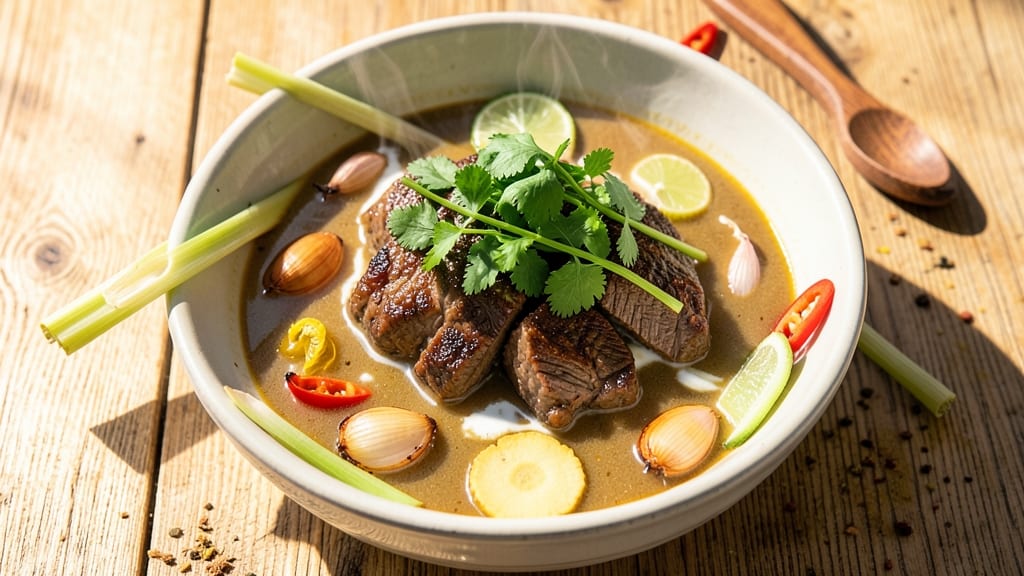
This beef lakssa soup recipe brings the bold flavors of Malaysia and Singapore to your kitchen with its aromatic coconut broth and tender beef. The secret lies in slow-cooked spices that infuse the broth with layers of warmth, while fresh herbs and lime add brightness.
I've perfected this recipe over years of testing, balancing heat and richness for a dish that's both comforting and exciting.
The recipe begins with a fragrant paste of lemongrass, galangal, and turmeric, simmered in coconut milk until deeply flavorful. Thinly sliced beef cooks until fork-tender, absorbing the rich spices, while rice noodles soak up the aromatic broth.
What makes this version special is the attention to texture—each spoonful delivers tender beef, silky noodles, and crisp toppings like bean sprouts and cucumber.
By the time you're done, you'll have a steaming bowl of laksa that's packed with complex flavors—spicy, creamy, and fresh all at once. The broth is rich yet balanced, with just enough heat to warm you up, while the fresh herbs and lime keep it vibrant.
This is the kind of dish that transforms a simple meal into a celebration of Malaysian-Singaporean cuisine.
Serve it with lime wedges on the side so everyone can adjust the spice level to their taste. The leftovers reheat beautifully, making it perfect for meal prep or feeding a crowd. Let's get started on this aromatic journey!
Ingredients for beef laksa soup
Spices, coconut milk, and tender beef—this is your aromatic laksa shopping list.
| Ingredient | Amount | Notes |
|---|---|---|
| Thinly Sliced Beef Chuck 🥩 | 1 ½ lb | Cut against the grain for tenderness |
| Lemongrass Stalks 🌿 | 4 whole | Bruised and cut into 2-inch pieces |
| Galangal Root 🍃 | 2 oz | Peeled and sliced thinly |
| Fresh Turmeric Root 🧅 | 1 oz | Peeled and sliced thinly |
| Shallots 🧅 | 6 whole | Minced finely |
| Garlic Cloves 🧄 | 6 cloves | Minced finely |
| Coconut Milk 🥥 | 2 cans | Full-fat, 13.5 oz each |
| Beef Broth 💧 | 4 cups | Homemade or quality store-bought |
| Red Curry Paste 🌶️ | 2 tbsp | Store-bought or homemade |
| Fresh Chili 🌶️ | 1 whole | Bird's eye or Thai chili, sliced |
| Rice Noodles 🍜 | 8 oz | Flat or round, uncooked |
| Lime Juice 🍋 | ½ cup | Freshly squeezed |
| Fresh Cilantro 🌿 | ½ cup | Chopped, for garnish |
| Bean Sprouts 🌱 | 1 cup | Fresh, for topping |
| English Cucumber 🥒 | 1 whole | Thinly sliced, for topping |
| Fish Sauce 🌊 | 2 tbsp | For umami depth |
| Palm Sugar 🍯 | 2 tbsp | Or brown sugar substitute |
| Salt 🧂 | 1 ½ tsp | To taste |
The galangal and turmeric are non-negotiable—they give laksa its signature depth. Asian markets have the best selection, but if you can't find fresh galangal, ginger works in a pinch (though it won't be identical). Look for bright, firm roots with no mold. The beef should be thinly sliced against the grain for that signature tender texture—Costco often sells pre-sliced chuck for stir-fry, which saves time. Fresh lemongrass is a game-changer, but if you must use dried, soak it in warm water for 10 minutes first. For the coconut milk, full-fat is a must—light versions won't give you that rich, creamy base.
No galangal? Ginger plus a pinch of cardamom gets you close. Substituting fish sauce? Soy sauce plus a splash of Worcestershire works, but the umami won't be quite the same. The red curry paste can be swapped for 2 tbsp of homemade paste with turmeric, chili, and garlic, but store-bought cuts prep time in half. Fresh herbs are ideal, but dried cilantro at half the amount works if you're in a bind. The bean sprouts and cucumber should be crisp—soak the sprouts in cold water for 10 minutes if they look wilted. Palm sugar is worth hunting down for that authentic sweetness, but brown sugar or coconut sugar are fine substitutes.
This soup tastes even better the next day as the flavors meld. Store leftovers in the fridge for 3-4 days, covered with a splash of lime juice to keep the herbs vibrant. Freezes beautifully for up to 3 months—just reheat gently on the stove and add fresh herbs at the end. For meal prep, cook the broth and beef ahead, then assemble with noodles and toppings when ready to serve. The noodles cook in minutes, so they're best added fresh. Lime wedges on the side let everyone adjust the tang to their taste—always include them!
Why You'll Love This Recipe
- Foolproof Prep: I swear by this recipe—no fancy knife skills needed. The beef chucks slice effortlessly with a sharp cleaver, and the galangal and turmeric just need rough chopping (peel first, then smash with the flat side of your knife). Honestly, my first attempt took 15 minutes, and now I do it half-asleep.
- Umami Bomb: That first sip? Chef’s kiss. The galangal and turmeric simmer into the broth like a spice bomb, while the lemongrass infuses a bright, citrusy backbone. The beef chucks melt into tender, savory ribbons—no dry bites, just pure, rich satisfaction.
- Weeknight to Party: Same ingredients, endless uses. Toss in rice noodles for a quick lunch, or pile it high with rice and fresh herbs for a dinner guest showstopper. My roommates call it their "emergency soup"—because it’s always welcome, whether it’s a lazy Sunday or a last-minute gathering.
- Leftovers That Don’t Suck: Most soups turn sad after day two, but this one? Gets better. The flavors deepen, and the broth thickens just enough to cling to noodles or rice. I make a double batch on Sundays and reheat portions all week—no one ever complains. (Yes, even my picky teenager.)
Step-by-step instructions for beef laksa soup
Let's build this aromatic, spicy coconut broth from scratch—layer by layer.
Prepare the Aromatic Base
First, bruise the 4 whole lemongrass stalks by gently pounding them with the flat side of a knife. Cut them into 2-inch pieces and set aside. Peel and slice the 2 oz galangal root and 1 oz fresh turmeric root into thin rounds—these will give the soup its signature depth of flavor.
In a large pot over medium heat, add 2 tablespoons red curry paste and let it bloom for 1 minute until fragrant. Add the sliced galangal, turmeric, 6 minced shallots, and 6 minced garlic cloves, stirring constantly for 2 minutes until the shallots soften and turn translucent. Here's where the magic happens—the aromatics should smell earthy and pungent, not burnt. If it starts to darken too quickly, reduce the heat slightly.
Simmer the Beef and Broth
Add the 1.5 lb thinly sliced beef chuck to the pot and sear for 2-3 minutes until the edges turn slightly opaque. Pour in the 4 cups beef broth and bring to a gentle boil. Once boiling, reduce heat to low and let it simmer uncovered for 45-50 minutes, stirring occasionally, until the beef is fork-tender. You'll know it's ready when the meat pulls apart easily and the broth has reduced slightly.
Here's the trick: skimming any foam that rises to the surface keeps the broth clear. If the beef isn't tender after 50 minutes, add ½ cup hot water and continue simmering. The goal is tender beef without overcooking the broth.
Build the Coconut Milk Base
While the beef simmers, open the 2 cans coconut milk and let them sit at room temperature for 5 minutes—this prevents curdling when added to the hot broth. Stir 2 tablespoons fish sauce and 2 tablespoons palm sugar into the coconut milk until dissolved.
Once the beef is tender, carefully ladle 1 cup of the beef broth into the coconut milk mixture and whisk vigorously. Then, slowly pour this mixture back into the pot with the beef, stirring constantly. The heat will cause the coconut milk to thicken slightly, creating a velvety texture. If the soup looks too thick, add ¼ cup hot beef broth to balance the consistency. The final broth should coat the back of a spoon but still be pourable.
Finish with Fresh Herbs and Garnishes
Remove the pot from heat and stir in the 0.5 cup lime juice, 1 sliced fresh chili, and 1.5 teaspoons salt. Taste and adjust the seasoning—you want a balance of spicy, tangy, and umami. The lime brightens the rich coconut flavor, while the chili adds a sharp kick.
Divide the 8 oz rice noodles among 4 bowls and ladle the hot beef laksa soup over them. Top each serving with 1 cup bean sprouts, thinly sliced english cucumber, and 0.5 cup chopped fresh cilantro. The contrast of crisp, cool toppings against the warm, spicy broth is what makes this dish truly special. Serve immediately while the noodles are still al dente.
Pro Tips For Making Beef Laksa Soup
- Char the Shallots First: I used to toss chopped shallots straight into the pot with the aromatics, but they’d just soften into the broth without adding real depth. Now I brown them in a dry pan for 3-4 minutes until dark and crisp—yes, it looks like you’re burning them, but that’s the magic. The caramelized bits cling to the beef and give the soup a smoky backbone that store-bought pastes can’t match.
- Slice Beef Against the Grain: Thinly sliced beef chuck is forgiving, but if you cut with the grain, you’ll end up with chewy strips that fight the broth instead of melting into it. Look for the muscle fibers, then slice perpendicular—almost like you’re shaving against them. A sharp knife and 1/4-inch thickness is your sweet spot. (I learned this after serving my first batch with "al dente" beef.)
- Blanch the Galangal: Galangal’s fibrous skin can make your broth gritty if you don’t handle it right. Peel it first, then slice into thick coins and blanch in boiling water for 30 seconds. The shock removes bitterness and softens it just enough to release flavor without turning the soup into a pulp. Drain and add it to the pot raw—it’ll break down beautifully. (Skipping this step is how you get that "mystery texture" at the bottom of the pot.)
- Simmer Low and Slow: Letting the soup boil vigorously after adding the beef will turn it rubbery. Once the beef hits the pot, drop the heat to a bare simmer—just enough to see tiny bubbles at the edges. Thirty minutes of gentle cooking is what transforms tough chuck into tender, fork-friendly slices. (I know, it’s tempting to rush, but your future self will notice the difference.)
Storing and reheating your beef laksa soup
Refrigerator Storage
Let your beef laksa cool to room temperature for no more than 2 hours before transferring to airtight containers—I use glass Pyrex with snap-on lids for best results.
Store in the fridge at 40°F or below for up to 4 days, covered with a splash of fresh lime juice to preserve the herbs' vibrancy. The flavors actually deepen overnight as the spices meld together beautifully. 🌿
Freezer-Friendly Tips
For longer storage, freeze your laksa for up to 3 months using quart-sized freezer bags—leave 1 inch of headspace for expansion. I recommend freezing the broth and beef separately from the noodles, as they absorb moisture and become mushy when thawed.
Label bags with the date and reheat only the broth portion before adding fresh noodles and toppings. 🧊
Stovetop Reheating
My preferred method is reheating on the stovetop to maintain the soup's silky texture. Pour the laksa into a pot and heat over medium-low heat for 8-10 minutes, stirring occasionally.
Add 2-3 tablespoons of hot water or beef broth if it thickens too much. Always finish with fresh herbs and lime juice—this restores the dish's brightness after freezing. ✨
Microwave Method
For quick reheating, transfer laksa to a microwave-safe bowl and cover with a damp paper towel. Heat on 70% power for 2-3 minutes, stir, then continue in 30-second intervals until reaching 165°F.
Avoid full power to prevent curdling the coconut milk. Stir in fresh lime juice after reheating to revive the flavors. 🔥
Noodle Prep Shortcut
Cook rice noodles fresh when reheating—simmer them in hot broth from the reheated laksa for just 2-3 minutes until pliable. This ensures perfect texture without sogginess.
Keep the original toppings separate until serving to maintain their crispness. The contrast of warm soup and cool garnishes is what makes laksa so special! 🥗
Garnish Refresh
Never skip the fresh garnishes when reheating! Add chopped cilantro, bean sprouts, and cucumber slices just before serving to restore that essential crunch and freshness.
A squeeze of lime brightens the flavors and balances any richness that developed during storage. This simple step transforms reheated laksa into something restaurant-quality! 🍋
Nutrition facts
Frequently asked questions
What's the secret to making the broth extra flavorful?
Slow-cooking the beef for 45-50 minutes is key—this breaks down collagen for depth. Always bloom the spices in oil first (like red curry paste) to release their aromas before adding liquids. Skim foam while simmering for a clearer, richer broth.
Can I make this laksa less spicy?
Reduce the fresh chili to ½ or none and use 1 tsp mild chili flakes instead. For extra control, serve lime wedges on the side—squeezing them cools the heat. The coconut milk naturally balances spice, so don't skimp on it!
Why did my coconut milk curdle?
Curling happens when cold coconut milk hits hot broth. Prevent it by letting cans sit at room temp for 5 minutes first. If it curdles, whisk in 1 tbsp cornstarch mixed with water to smooth it out. Stir constantly when adding coconut milk to hot broth.
What noodles work best for laksa?
Use rice noodles (flat or round) for authentic texture—they soften beautifully in hot broth. Avoid wheat noodles, which won't hold up. Soak them in hot broth for 2-3 minutes before serving to avoid mushiness.
Can I prep ingredients ahead of time?
Yes! Chop all aromatics (shallots, garlic, galangal) and store in airtight containers for 3 days. Make the spice paste (curry paste + aromatics) 1 day ahead. The beef can be seared and refrigerated for 24 hours before completing the broth. Fresh herbs should be added last.