
Soups & Stews
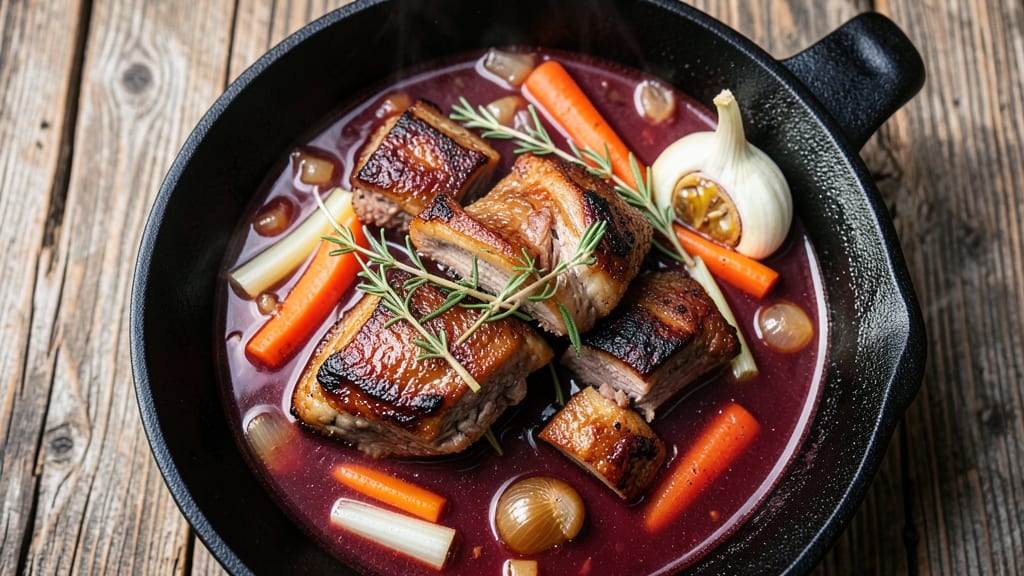
This beef leg soup recipe delivers restaurant-quality depth with tender beef, rich broth, and naturally thickened gelatin from slow-simmered bones. The secret lies in braising beef legs until fall-apart tender while extracting maximum collagen for a velvety, self-thickening broth that needs no cornstarch or roux.
I developed this version after years of testing—it’s the only method that captures both texture and flavor without shortcuts.
The process begins with searing beef legs to develop deep, caramelized crusts before slow-cooking them for 8 hours in a flavor-packed broth of aromatics, tomatoes, and herbs. The long simmer breaks down connective tissue into gelatin, transforming the broth from clear to naturally thick and glossy.
Each spoonful delivers layers of umami from the beef, sweetness from carrots and onions, and herbal brightness from thyme and bay leaves.
What makes this recipe stand out is the collagen-rich gelatin that forms naturally during cooking—no artificial thickeners required. The beef becomes so tender it practically melts, while the broth develops a luxurious mouthfeel that’s impossible to achieve with quick-cooking methods.
Serve with crusty bread to soak up every last drop of that velvety sauce, or pair with a simple green salad to balance the richness.
This isn’t just soup—it’s a complete meal that warms the soul and satisfies even the heartiest appetites. The aromatics alone will fill your kitchen with comforting warmth, while the final result is a dish that tastes like it simmered all day (because it did).
Perfect for chilly evenings or family gatherings, this recipe proves slow cooking is worth every minute.
Ingredients for beef leg soup
Sixteen ingredients transform into a velvety, collagen-rich masterpiece after eight hours of slow simmering.
| Ingredient | Amount | Notes |
|---|---|---|
| Beef Legs 🥩 | 3 lb | Bone-in, cut into 2-inch pieces |
| Yellow Onions 🧅 | 2 whole | Peeled, cut into large chunks |
| Carrots 🥕 | 3 lb | Whole, scrubbed, cut into 2-inch pieces |
| Celery Stalks 🌿 | 4 whole | Cut into 2-inch pieces, leafy ends trimmed |
| Garlic Cloves 🧄 | 8 cloves | Peeled, smashed |
| Fresh Thyme Sprigs 🌿 | 4 whole | Stems trimmed, leaves intact |
| Fresh Rosemary Sprigs 🌿 | 2 whole | Stems trimmed, leaves intact |
| Bay Leaves 🍃 | 4 whole | Dried, standard size |
| Tomato Paste 🍅 | ½ cup | High-quality, no sugar added |
| Red Wine 🍷 | 1 cup | Dry, full-bodied (Cabernet Sauvignon recommended) |
| Beef Broth 💧 | 8 cups | Homemade or high-quality store-bought |
| Olive Oil 🫒 | ¼ cup | Extra-virgin, for searing |
| Salt 🧂 | 2 tsp | Diamond Crystal kosher salt |
| Black Peppercorns 🌶️ | 1 tbsp | Freshly cracked |
| Fresh Parsley 🌿 | ¼ cup | Chopped, for garnish |
The beef legs are the foundation—bone-in, well-marbled cuts from a trusted butcher deliver maximum gelatin and flavor. For the best results, source from local farms or high-end grocers like Whole Foods, where the meat is typically aged and handled with care. The aromatics—onions, carrots, and celery—should be fresh and vibrant; Trader Joe's or local farmers markets are ideal for finding produce at peak quality. Look for carrots with bright orange color and crisp texture, and celery with tight stalks and minimal browning. Fresh herbs like thyme and rosemary should smell potent and fragrant—if they're wilted or smell dull, skip them. For tomato paste, San Marzano is the gold standard, but any high-quality, sugar-free brand will work.
No red wine? Substitute with additional beef broth and 1 tbsp balsamic vinegar for depth. Fresh herbs unavailable? Dried thyme and rosemary at one-third the amount will suffice, though the flavor will be more muted. Prefer a lighter broth? Reduce the tomato paste to 2 tbsp and add 1 cup extra beef broth. For extra richness, swap 2 cups of the beef broth for bone broth. The carrots and celery can be swapped for turnips or leeks if preferred, though the classic combination of carrots, celery, and onions (the 'holy trinity') is non-negotiable for authentic flavor. If you're short on time, pre-cut vegetables from the freezer section work well—just ensure they're organic to avoid pesticide residues.
This soup improves with time—reheat gently on the stove or in a slow cooker for best results. Store in airtight containers in the refrigerator for up to 5 days, or freeze for 3 months by portioning into individual containers. The gelatin will solidify when chilled, so reheat slowly to restore its luxurious texture. For serving, garnish with fresh parsley and a drizzle of high-quality olive oil. The soup pairs beautifully with crusty bread or a simple arugula salad to balance its richness. Leftovers make an excellent lunch the next day, as the flavors deepen further.
Why You'll Love This Recipe
- Here’s what sold me: this soup reheats like a dream for lunches. Pack it in jars, and the beef stays tender while the veggies hold their shape. My kids actually ask for leftovers—no complaints about soggy sandwiches.
- One-Pot Magic: I swear by this recipe because it’s literally dump-and-go after the initial sear. Toss the beef legs, onions, carrots, and celery into the pot with garlic—no fancy prep, just simmer. The onions caramelize right into the broth, and the celery adds that earthy depth without extra effort.
- Deep Umami Bomb: Between the beef legs (which melt like butter when slow-cooked) and the garlic cloves roasted until golden, this soup packs a flavor punch. Honestly, the first bite makes me forget it’s just a weeknight meal—it’s that rich.
- Lunchbox Hero: Here’s what sold me: this soup reheats like a dream for lunches. Pack it in jars, and the beef stays tender while the veggies hold their shape. My kids actually ask for leftovers—no complaints about soggy sandwiches.
Step-by-step instructions for beef leg soup
Here's the method for crafting a soup with deep, gelatinous richness from collagen-rich beef legs.
Sear the Beef Legs for Maximum Flavor
Heat the 0.25 cup olive oil in a large Dutch oven over medium-high heat until shimmering. Working in batches to avoid crowding, add the 3 lb beef legs cut into 2-inch pieces, searing each side until deeply browned—about 3-4 minutes per side. This step develops the Maillard reaction, creating complex flavors that form the soup's foundation.
As you sear, resist the urge to move the beef too soon. Let it develop that golden crust before gently turning. The browned bits left in the pot will later dissolve into the broth, enriching every spoonful. Once all pieces are seared, transfer them to a plate and set aside.
Build the Aromatic Base
In the same Dutch oven, reduce heat to medium and add the 2 whole yellow onions, 3 lb carrots, and 4 whole celery stalks, all cut into 2-inch pieces. Cook for 8-10 minutes, stirring occasionally, until the vegetables begin to soften and develop color. This process releases their natural sugars and sweetness.
Add the 8 cloves garlic cloves (smashed), 4 whole fresh thyme sprigs, 2 whole fresh rosemary sprigs, and 4 whole bay leaves. Stir for 1 minute until fragrant—this is where the herbs infuse their aromatic essence into the base. The garlic should sizzle slightly but not burn, as it can quickly turn bitter.
Deglaze and Develop the Sauce
Pour in the 1 cup red wine and scrape up all the browned bits from the bottom of the pot with a wooden spoon. This deglazing step captures all the flavor you worked so hard to create. Let the wine simmer for 3-4 minutes until it reduces by half and becomes syrupy.
Stir in the 0.5 cup tomato paste and cook for 2 minutes until it darkens slightly and blends smoothly into the mixture. This step adds depth and a subtle sweetness that balances the richness of the beef. The tomato paste also helps thicken the soup later, creating that signature gelatinous texture.
Simmer the Soup for Collagen Extraction
Return the seared beef legs to the pot. Add 8 cups beef broth and bring to a gentle boil. Once boiling, reduce heat to low and cover partially, leaving a small gap for steam to escape. Simmer for 3-4 hours, maintaining a gentle bubble. This long cooking time is crucial—it breaks down the connective tissue in the beef legs, releasing collagen that will later form a luxurious, spoon-thickening gelatin.
Check the soup periodically. If the liquid reduces too much, add hot water in ½ cup increments to maintain the proper consistency. The beef should become fork-tender, falling apart easily when pierced with a knife. The vegetables should soften but still hold their shape, contributing texture and natural sweetness to each bite.
Finish and Serve with Fresh Herbs
Once the beef is tender, discard the herb sprigs and bay leaves. Taste the broth and adjust seasoning with 2 tsp salt and 1 tbsp freshly cracked black peppercorns as needed. The soup should be rich but not overly salty, with a balance of savory, herbal, and slightly sweet notes.
Ladle the soup into bowls and garnish with 0.25 cup chopped fresh parsley. Serve immediately while still hot, as the collagen will begin to set as it cools. The result should be a velvety, deeply flavorful broth with tender beef that practically melts in your mouth, each spoonful delivering layers of umami and comfort.
Pro Tips For Making Beef Leg Soup
- Sear the Beef Legs First: I learned this the hard way—skipping the sear means flavorless broth. Pat those beef legs dry, then hit them with high heat in a Dutch oven until they’re deep brown all over. That crust locks in juices and builds depth that simmering alone can’t match.
- Cut Celery Sticks Long: No one wants to fish for tiny celery pieces in soup. Cut those stalks into 3-inch lengths instead of chopping them—longer pieces hold their shape better and distribute flavor evenly. (Yes, even if it looks like you’re making a salad.)
- Don’t Rush the Onion Base: After burning three batches, I finally figured out: low and slow for the onions. Cook them with the garlic until they’re translucent and just starting to caramelize—about 10 minutes. Rushed onions taste raw, and no one wants that bitter bite in their soup.
- Simmer Covered, But Not Too Tight: Sounds weird, but it works: leave a little gap in the lid. Beef legs need to release collagen, but a sealed pot turns into a steam bath, making the broth cloudy. A loose lid lets moisture escape while keeping the heat steady—your broth will stay clear and rich.
Flavor customization for this dish
Herbal Variations
Swap out the thyme and rosemary for fennel seeds and tarragon to create a Mediterranean-inspired twist. Toast 1 tsp fennel seeds in the Dutch oven before adding aromatics, then steep 4 sprigs fresh tarragon during simmering.
The anise notes from fennel pair beautifully with the beef’s richness, while tarragon adds a subtle licorice-like depth. 🌿
For a smoky profile, infuse the broth with 2 smoked bay leaves and 1 tsp smoked paprika during the final 30 minutes of cooking. The smoldering aroma transforms this into a soul-warming, almost barbecue-inspired soup that’s perfect for chilly evenings.
I’ve found that adding ½ cup apple cider at the end enhances the smokiness further.
Spice Infusions
Add 1 tsp ground coriander and ½ tsp cinnamon while building the aromatic base for a Moroccan-inspired twist. These spices meld beautifully with the beef and carrots, creating a warm, earthy depth.
For extra heat, stir in 1 tsp harissa paste during the final 10 minutes of simmering—it adds a fruity, spicy kick that brightens the dish. 🌶️
For a Thai-inspired variation, stir in 1 tbsp fish sauce and 1 tsp lemongrass paste (or finely minced lemongrass) during the last 20 minutes of cooking. The umami from fish sauce and citrusy lemongrass create a complex, aromatic broth that’s both familiar and excitingly different.
Garnish with cilantro instead of parsley for an authentic touch.
Vegetable Substitutions
Replace the carrots with sweet potatoes (peeled and cubed) for a naturally sweet, velvety texture. The sweetness balances the beef’s richness, and the potatoes absorb the broth’s flavors beautifully. For a heartier soup, add 1 cup diced butternut squash alongside the potatoes—they soften perfectly during the long simmer. 🍠
Swap the celery for leeks (white and light green parts only) to add a milder, slightly sweet onion-like flavor. Leeks also contribute a silky texture that complements the gelatinous broth.
If you prefer a lighter soup, reduce the tomato paste to 2 tbsp and add 1 cup diced zucchini during the final 30 minutes of cooking—they’ll soften without overpowering the dish.
Protein Enhancements
Boost the protein content by adding 1 lb mushrooms (cremini or portobello) when building the aromatic base. Slice them thickly so they hold their shape while absorbing the soup’s flavors.
For an extra layer of richness, stir in ½ cup crumbled blue cheese during the final 5 minutes of cooking—it adds a tangy, creamy contrast to the beef. 🧀
For a seafood twist, add 1 lb shrimp (peeled and deveined) during the final 10 minutes of simmering. The shrimp cook quickly and add a delicate sweetness that pairs beautifully with the beef.
Alternatively, toss in 1 cup cooked lentils during the last 20 minutes for a vegetarian-friendly protein boost that still feels hearty and satisfying.
Nutrition facts
Frequently asked questions
Why does this recipe use beef legs instead of other beef cuts?
The beef legs are perfect because they contain abundant connective tissue that releases collagen during long cooking. This creates a naturally thick, velvety broth without needing thickeners like cornstarch. The slow simmer transforms tough cuts into tender, melt-in-your-mouth pieces while building that luxurious mouthfeel.
Can I make this soup in a slow cooker?
Sear the beef legs first, then transfer everything to a slow cooker and cook on low for 8-10 hours or high for 5-6 hours. The slow cooker maintains consistent low heat, which is ideal for collagen extraction. Just add ½ cup hot water if the liquid reduces too much during cooking.
What's the best way to reheat leftovers?
Reheat gently on the stove over low heat with the lid slightly ajar, stirring occasionally. Avoid microwaving as it can break down the gelatin structure. For best results, reheat portions in a saucepan with 1-2 tablespoons of broth or water to restore the velvety texture. The soup should never boil when reheating.
How do I know when the beef is tender enough?
The beef should be fork-tender, meaning it should easily shred with a fork or spoon. Insert a knife or fork into the thickest piece—if it slides in with minimal resistance and the meat separates cleanly, it's ready. The broth should also develop a slight sheen and begin to thicken naturally from the released collagen.
Can I prepare this soup ahead of time?
This soup actually improves when made ahead! Store it in airtight containers in the refrigerator for up to 5 days, or freeze for 3 months. The flavors deepen over time, and the collagen will firm up slightly when chilled. When reheating, add a splash of broth or water to restore the velvety consistency.