
Soups & Stews
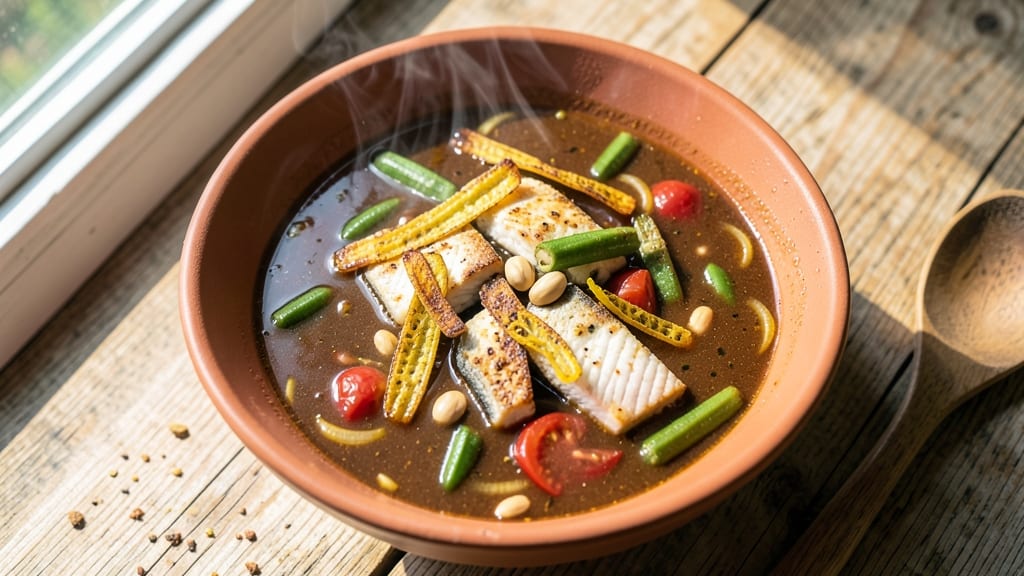
This Adasi soup recipe brings the rich, nutty flavors of West Africa to your kitchen with its signature peanut stew and crispy fried plantains. The dish starts with a fragrant base of tomatoes, onions, and peppers, simmered with ginger, garlic, and thyme to build deep, aromatic layers.
What sets it apart is the addition of fresh okra and tender fish—traditionally tilapia or mackerel—that infuses the broth with oceanic sweetness.
The real magic happens when toasted peanuts are blended into a smooth paste and slowly cooked into the stew, creating a velvety texture that clings to every bite. This crispy plantain topping adds a satisfying contrast, balancing the stew’s richness with a sweet, golden crunch.
The dish is hearty enough for a family meal but simple enough to prepare in one pot, making it perfect for weeknight dinners or special gatherings.
What makes Adasi soup special is its ability to bring people together—whether for a celebratory meal or a comforting weeknight dinner. The combination of smoky fish, tender vegetables, and nutty peanut sauce creates a dish that’s both deeply flavorful and surprisingly easy to master.
With just a few key ingredients and a patient simmer, you’ll achieve a restaurant-quality result that tastes like home.
Serve with jollof rice or crusty bread to soak up every last drop of that flavorful broth. The crispy plantains add the perfect finishing touch, ensuring each bite is a balance of textures and tastes. Let’s get cooking—this soup is worth every moment of preparation.
Ingredients for adasi soup
Sixteen ingredients transform into West Africa's beloved peanut stew with crispy plantain contrast.
| Ingredient | Amount | Notes |
|---|---|---|
| Tilapia Fillets 🐟 | 1 ½ lb | Fresh or frozen, skinless preferred |
| Green Plantains 🍌 | 2 whole | Ripe but firm for frying |
| Raw Peanuts 🥜 | 1 cup | Unsalted, skin-on preferred |
| Fresh Okra 🥬 | 1 lb | Trimmed, cut into 1-inch pieces |
| Medium Tomatoes 🍅 | 4 whole | Ripe, chopped for base |
| Yellow Onions 🧅 | 2 whole | Medium, finely chopped |
| Scotch Bonnet Peppers 🌶️ | 2 whole | Seeds removed, chopped |
| Fresh Ginger 🌿 | 1 ½ oz | Peeled, grated (about 2 tbsp) |
| Garlic Cloves 🧄 | 6 cloves | Minced for aromatic base |
| Fresh Thyme 🌿 | ¼ cup | Stems removed, chopped |
| Vegetable Oil 🫒 | 2 cups | For frying plantains |
| Salt 🧂 | 2 tsp | Kosher or sea salt |
| Black Pepper 🌶️ | ½ tsp | Freshly ground preferred |
| Fish Stock 💧 | 2 cups | Homemade or quality store-bought |
| Coconut Milk 🥥 | 1 can (13.5 oz) | Full-fat for creaminess |
The peanuts are non-negotiable—raw, unsalted gives the best flavor. Costco or bulk bins are your best bet for quality, but any store's peanut section works. Look for vibrant, plump peanuts with no off smells. The fish should be fresh—tilapia or mackerel hold up best to the long simmer. If using frozen, thaw overnight in the fridge. The plantains? Green but firm—they'll turn golden and crispy when fried. Ripe ones get mushy. For the ginger, fresh is essential—dried lacks the bright punch this dish needs.
No peanuts? Cashews or almonds work in a pinch, but toast them first for depth. Short on fish stock? Vegetable stock with a splash of soy sauce mimics that umami. The scotch bonnet peppers can be swapped for milder jalapeños if you prefer less heat. Pre-chopped frozen okra saves time—just thaw and drain. For the plantains, if you can't find green ones, yellow with slight green spots work. The coconut milk? Full-fat only—light versions thin the soup. And skip the pre-shredded cheese—freshly grated makes all the difference.
The peanut paste keeps for 1 week in the fridge, covered with oil. The stew reheats beautifully—2-3 minutes on the stove is all it needs. Plantains stay crispy for 2 days if stored in an airtight container. Freeze the stew (without plantains) for 3 monthsthey reheat best in the oven at 350°F for 5 minutes.
Why You'll Love This Recipe
- No Chopping Chaos: I swear by this—just slice the green plantains into chunks, dice the tomatoes, and toss the okra in whole. The peanuts? Buy them pre-shelled. Tilapia fillets need zero prep beyond a quick rinse. Honestly, my hands stay cleaner than my kitchen counter.
- Peanut-Packed Magic: That nutty, earthy crunch from raw peanuts? It’s the star. The tomatoes and okra soften into a velvety base, while the peanuts add texture that makes every bite satisfying. Between us, it’s the kind of flavor that lingers—like a hug from your favorite aunt.
- Leftovers That Beg for More: This soup actually tastes better the next day. The peanuts soften just enough to blend into the broth, and the plantains absorb all the rich flavors. I’ve reheated mine three times, and my family still fights over the last bowl—no sad, watery leftovers here.
- Weeknight to Celebration: Serve it with rice for a quick weeknight meal, or pile it high on a platter with extra plantains for a Sunday feast. The tilapia stays tender, the peanuts add crunch, and the whole thing comes together faster than takeout. (Yes, even on a Tuesday night.)
Step-by-step instructions for Adasi soup recipe
Master this West African classic with perfectly crispy fried plantains and rich peanut stew.
Fry the Green Plantains Until Golden
Slice each of the 2 whole green plantains lengthwise into ½-inch thick strips. Heat 2 cups vegetable oil in a deep skillet over medium-high heat until it reaches 350°F—test with a small piece of plantain that sizzles immediately and turns golden in 2-3 minutes. This high heat is crucial for achieving that signature crispy texture.
Working in batches, fry the plantain strips for 3-4 minutes per side until they develop a deep golden-brown color. The plantains should be firm to the bite but not hard. Transfer to a paper towel-lined plate to drain excess oil. Keep them warm in a 200°F oven while you prepare the stew base—this maintains their crispness until serving.
Build the Peanut and Tomato Base
In a large pot, combine 1 cup raw peanuts and toast them over medium heat for 5-7 minutes, stirring constantly, until they turn a rich golden color and release their nutty aroma. Immediately remove from heat and let cool slightly—this prevents the peanuts from burning when added to the sauce later.
Add 2 cups fish stock, 4 whole medium tomatoes (chopped), 2 whole yellow onions (finely chopped), 2 whole scotch bonnet peppers (seeds removed and chopped), 1.5 oz fresh ginger (grated), and 6 cloves garlic (minced). Bring to a boil, then reduce heat to medium-low and simmer uncovered for 15 minutes, stirring occasionally. You want the mixture to reduce slightly, concentrating the flavors while the tomatoes break down into a smooth base.
Incorporate Okra and Aromatics
Add the 1 lb fresh okra (trimmed and cut into 1-inch pieces) and 0.25 cup fresh thyme (chopped) to the simmering tomato mixture. Stir well to distribute the okra evenly—this thickens the stew naturally as it cooks. The okra should soften slightly but remain slightly crisp, adding texture to the dish.
Simmer for another 10 minutes until the okra is tender and the sauce begins to thicken. Season with 2 tsp salt and 0.5 tsp black pepper, adjusting to taste. The stew should have a rich, slightly tangy flavor from the tomatoes and a subtle heat from the scotch bonnet peppers. Taste and make any final adjustments to the seasoning before proceeding.
Add Coconut Milk and Cook the Fish
Pour in the 1 can (13.5 oz) coconut milk, stirring vigorously to combine with the peanut-tomato mixture. The coconut milk should create a velvety texture while adding a subtle sweetness that balances the stew's richness. Return the heat to medium and bring the mixture to a gentle simmer.
Add the 1.5 lb tilapia fillets, arranging them in a single layer. Simmer gently for 8-10 minutes until the fish is opaque and flakes easily with a fork. Be careful not to overcook—tilapia becomes dry quickly. The fish should be just cooked through, with a delicate, flaky texture that absorbs the flavors of the stew.
Finish and Serve with Crispy Plantains
Remove the pot from heat and let the stew rest for 5 minutes. This allows the flavors to meld and the sauce to thicken slightly. Gently stir in the toasted peanuts, reserving a small handful for garnish. The peanuts should be evenly distributed throughout the stew, adding a satisfying crunch and nutty depth to each spoonful.
Serve the adasi soup immediately in deep bowls, garnished with the reserved toasted peanuts and the crispy fried plantains on the side. The contrast between the creamy, spiced stew and the golden, crispy plantains is what makes this dish truly special. Each bite delivers a perfect balance of textures and flavors—rich, slightly sweet, and just spicy enough.
Pro Tips For Making Adasi Soup
- Simmer Peanuts First: Toss raw peanuts into the pot before adding tomatoes or okra—this softens them faster and prevents the soup from tasting bitter. I used to add them at the end, and they’d stay rock-hard no matter how long I simmered.
- Cut Plantains Thin: Slice green plantains paper-thin—about 1/8-inch thick—or they’ll turn mushy before the soup’s done. Use a sharp knife and work in batches if needed; thick slices hide in the soup instead of soaking up flavor.
- Don’t Overcrowd Okra: Add okra in two batches, 5 minutes apart, or it’ll clump into a slimy mess. I learned this the hard way—my first batch turned into a gluey blob that ruined the texture. Stir well after each addition.
- Salt Tilapia Last: Hold off on salting the tilapia until the very end—after it’s cooked but before serving. The fish absorbs too much liquid early, making the soup watery, and the seasoning gets diluted in the long simmer.
Best sauces and condiments for adasi soup
Peanut Sauce Perfection
The heart of Adasi soup lies in its peanut sauce, where 1 cup raw peanuts toasted to a golden brown create a velvety base. I blend them with 1 cup hot water and a pinch of salt until smooth—this prevents grittiness.
For extra richness, add 1 tbsp tomato paste to deepen the color and flavor. The sauce should coat the back of a spoon when stirred into the stew. 🥜
Spicy Tomato Base
Don’t skip the Scotch bonnet peppers—they bring the signature heat. For a milder version, reduce to 1 pepper or swap for jalapeños. I like to blend 2 cups chopped tomatoes with 1 tsp sugar and 1 tsp smoked paprika before adding to the pot.
This caramelizes the flavors while simmering. The base should reduce to a thick, jammy consistency before adding coconut milk. 🌶️
Coconut Milk Magic
Use full-fat coconut milk—it’s non-negotiable for that creamy texture. I stir in 1 can (13.5 oz) after the peanut sauce, letting it simmer for 5 minutes to meld flavors. For a lighter version, mix ½ coconut milk with ½ vegetable broth, but the richness will be noticeably different.
The milk should coat the fish and vegetables evenly, creating a luxurious mouthfeel. 🥥
Okra’s Thickening Power
Fresh okra is key—it thickens the stew naturally as it cooks. I cut it into 1-inch pieces and add it 10 minutes before the fish to prevent mushiness. For a smoother texture, blend ½ cup okra into the sauce before adding the rest.
If using frozen okra, thaw and drain well to avoid a watery stew. The okra should soften but retain slight bite. 🥬
Fish Stock Secrets
Homemade fish stock elevates the dish, but a quality store-bought version works in a pinch. I use 2 cups to build depth, adding 1 tsp soy sauce for umami if needed.
For extra richness, simmer fish heads or bones with 1 onion, 1 carrot, and 2 celery stalks for 30 minutes before straining. The stock should be clear but flavorful—this is the foundation of the stew’s depth. 💧
Garnish Game-Changers
Top with toasted peanuts for crunch and fresh cilantro for brightness. I also drizzle with 1 tbsp palm oil (or vegetable oil) for a glossy finish. For heat lovers, add 1 tsp hot pepper sauce at the table.
The plantains should be crispy but not burnt—fry them in 350°F oil until golden brown. These final touches make the soup feel restaurant-worthy. ✨
Nutrition facts
Frequently asked questions
What type of fish works best for Adasi soup?
Tilapia and mackerel are the most common choices for Adasi soup because they hold up well during the long simmering process. Tilapia stays tender and flaky, while mackerel adds a richer, slightly oily flavor. If you prefer a milder taste, cod or snapper also work beautifully—just be sure to cook them gently to avoid drying out.
Can I make Adasi soup without peanuts?
While peanuts are traditional, you can substitute with cashews or almonds for a similar nutty flavor. Toast them first to enhance their richness, but expect a slightly different texture. For a peanut-free version, try blending ½ cup tahini with ½ cup water to mimic the creamy consistency, though the taste will differ significantly.
How do I adjust the spice level in Adasi soup?
The scotch bonnet peppers provide the heat, so reduce to 1 pepper for mild or remove seeds entirely. For extra spice, add ½ tsp cayenne pepper or a dash of hot pepper sauce at the end. Always taste before serving—you can always add more heat, but you can't remove it!
What's the best way to reheat leftover Adasi soup?
Reheat gently on the stove over low heat for 5-7 minutes, stirring occasionally to prevent separation. For best results, add a splash of water or fish stock to restore creaminess. Avoid microwaving—it can make the plantains soggy and the sauce watery. Store leftovers in an airtight container for up to 3 days.
Why did my plantains turn out mushy instead of crispy?
Mushy plantains usually mean the oil wasn't hot enough (350°F is ideal) or they were overcooked. Use a thermometer to check oil temperature and fry in batches—don't overcrowd the pan. For extra crispiness, keep fried plantains in a 200°F oven while finishing the soup.