
Soups & Stews
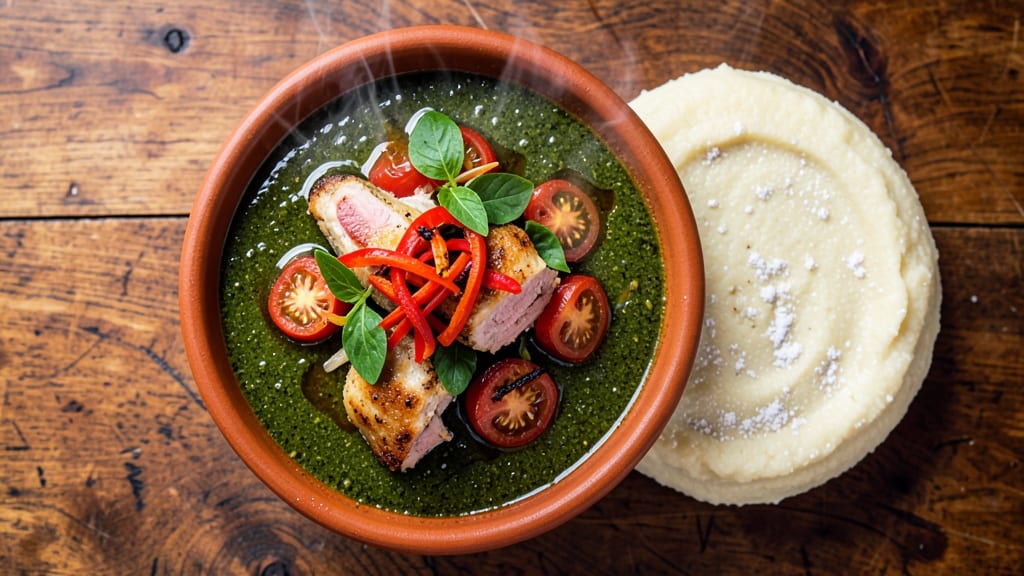
This African egusi soup and fufu recipe brings the rich flavors of West African cuisine to your kitchen with its nutty seed stew and hand-sculpted dough. The soup combines ground melon seeds with tender meat or fish, creating a deeply flavorful broth that's both hearty and comforting.
What makes this dish truly special is the fufu—a smooth, dough-like side that requires traditional pounding techniques to achieve the perfect texture.
The preparation begins with creating the egusi paste, which forms the base of the soup. Simmered with vegetables, spices, and protein, this nutty stew develops layers of flavor that are both earthy and satisfying.
Meanwhile, the fufu dough is fermented and pounded into a smooth, elastic consistency, ready to be shaped by hand into traditional balls or rolls.
What you'll achieve is a complete dining experience that balances rich, savory soup with the smooth, slightly chewy texture of fufu. The combination of these two elements creates a meal that's both nourishing and deeply cultural. This recipe delivers authentic flavors while making the process accessible for home cooks.
The result is a dish that's perfect for family gatherings or special occasions, where the act of serving fufu by hand becomes part of the experience. The soup's depth of flavor pairs beautifully with the neutral, satisfying texture of the fufu, creating a harmonious balance that's quintessentially African.
Ingredients for african egusi soup and fufu
Sixteen ingredients for a dish rich in tradition, where nutty egusi seeds meet tender fufu dough.
| Ingredient | Amount | Notes |
|---|---|---|
| Egusi Seeds (Melon Seeds) 🌰 | 1 cup | Toasted and ground into paste |
| Chicken Thighs (Bone-In) 🍗 | 2 lb | Skin-on, cut into pieces |
| Fresh Leafy Greens 🌿 | 4 cups | Spinach or bitter leaf preferred |
| Onions (Yellow) 🧅 | 2 whole | Chopped into quarters |
| Tomatoes (Ripe) 🍅 | 4 whole | Chopped, or 1 can diced tomatoes |
| Red Bell Pepper 🌶️ | 1 whole | Chopped, or 1/2 cup chopped |
| Fresh Cilantro 🌿 | ¼ cup | Chopped, for garnish |
| Garlic Cloves 🧄 | 6 cloves | Minced, or 1 tsp garlic powder |
| Scotch Bonnet Pepper 🌶️ | 1 whole | Seeds removed, chopped |
| Ground White Pepper 🌶️ | ½ tsp | Freshly ground preferred |
| Ground Nutmeg 🌿 | ¼ tsp | Freshly grated |
| Salt 🧂 | 1 ½ tsp | Adjust to taste |
| Vegetable Oil 🫒 | ½ cup | For cooking |
| Cassava Tubers 🥔 | 2 lb | Peeled and grated |
| Yam Tubers 🍠 | 2 lb | Peeled and grated |
| Water 💧 | 4 cups | For dough fermentation |
The egusi seeds are the heart of this soup. African and Caribbean markets carry the best quality, often pre-toasted and ready to grind. If using raw seeds, toast them in a dry pan for 3-5 minutes until fragrant. Guarantee freshness by checking for a rich, earthy aroma—no mustiness. For the fufu dough, cassava and yam are essential; both should be firm and free of sprouts. If you can't find yam, substitute with more cassava, but the texture will differ slightly. The chicken thighs should have visible fat for moisture during cooking, and skin-on pieces render the most flavor.
No egusi seeds? Ground peanuts at half the amount can mimic some of the nuttiness, though the texture will vary. Fresh leafy greens like spinach or bitter leaf are traditional, but kale or collard greens work in a pinch. The scotch bonnet pepper is critical for authentic heat—if unavailable, jalapeño or habanero can substitute, but reduce the amount by half. For the fufu dough, if you can't find cassava or yam, plantains or green bananas can be boiled and mashed as a substitute, though the texture will be denser. The tomatoes can be swapped for tomato paste (2 tbsp) if fresh isn't available, but the flavor will be more concentrated.
Toasted egusi seeds keep for 3 months in an airtight container in a cool, dark place. The fufu dough can be prepped ahead and refrigerated for 2 days, but it’s best served fresh. For the soup, store the broth separately from the protein and greens—reheat the broth first, then add the other components. The dough should be pounded fresh for the best texture, but you can shape it ahead and reheat in a steamer. Leftovers of the soup reheat well, but the fufu is best enjoyed immediately after pounding.
Why You'll Love This Recipe
- No-Fuss Ingredients: I swear by this recipe because it uses pantry staples I already have—egusi seeds, bone-in chicken, and a handful of greens. Honestly, the only shopping trip I take is for ripe tomatoes and onions, and that’s it.
- Rich, Nutty Depth: That toasted egusi releases the most incredible aroma—like peanut butter meets savory broth. The bone-in chicken adds marrow-rich flavor, while the greens keep it vibrant. Between us, it’s the kind of soup that makes you want seconds before you even finish your first bowl.
- Weeknight to Celebration: I make this for lazy Sundays when I don’t want to fuss, but it also feels fancy enough for guests. The fufu’s stretchy texture pairs perfectly with the soup’s heartiness—no one ever guesses how little effort it took.
- Leftovers That Taste Better: The soup actually improves the next day—more flavors melded, the fufu stays soft if reheated properly. And since egusi is cheap and chicken thighs are budget-friendly, I can stretch this into three meals without breaking the bank. (Yes, even on a Tuesday night.)
Step-by-step instructions for African egusi soup and fufu
Master the art of this West African classic with precise technique for rich soup and perfect fufu.
Prepare the Egusi Paste and Chicken
Toast the 1 cup Egusi Seeds (Melon Seeds) in a dry skillet over medium heat for 3-4 minutes, stirring constantly, until they become fragrant and slightly golden. Immediately transfer to a clean bowl and grind into a fine paste using a mortar and pestle or high-speed blender. Set aside.
In a large pot, heat 0.5 cup Vegetable Oil over medium-high heat. Add the 2 lb Chicken Thighs (Bone-In) cut into pieces, skin-side down, and cook for 5-6 minutes until golden brown. Remove chicken and set aside. In the same pot, add the chopped 2 whole Onions (Yellow) and cook for 3 minutes until softened. Add the 6 cloves Garlic Cloves and 1 whole Scotch Bonnet Pepper (seeds removed) and cook for 1 minute until fragrant.
Build the Soup Base
Return the chicken to the pot along with the 4 whole Tomatoes (Ripe) (chopped), 1 whole Red Bell Pepper (chopped), 0.5 tsp Ground White Pepper, 0.25 tsp Ground Nutmeg, and 1.5 tsp Salt. Stir well and bring to a boil. Reduce heat to medium-low and simmer for 30 minutes, partially covered, until the chicken is tender and the sauce thickens.
Remove the chicken from the pot and shred the meat, discarding bones and skin. Return the shredded chicken to the pot. Gradually whisk in the 1 cup Egusi Seeds (Melon Seeds) paste, stirring constantly to prevent lumps. Add 4 cups Water and simmer for 15 minutes until the soup thickens to a rich, nutty consistency. Taste and adjust seasoning if needed.
Prepare the Fufu Dough
In a large bowl, combine the peeled and grated 2 lb Cassava Tubers and 2 lb Yam Tubers. Gradually add the 4 cups Water while stirring until a smooth, thick dough forms. Cover the bowl with a damp cloth and let the dough ferment at room temperature for 1-2 hours, stirring occasionally. The dough should become slightly sticky and elastic.
Once fermented, transfer the dough to a clean surface dusted with a little flour. Divide into 6 equal portions. Using your hands, knead each portion into a smooth ball, rolling it between your palms to create a soft, pliable texture. Keep the remaining balls covered with a damp cloth to prevent drying.
Cook the Fufu and Serve
Bring a large pot of salted water to a gentle boil. Working with one portion at a time, drop the fufu balls into the boiling water. Using a wooden spoon, gently press and shape each ball into a smooth, round dough as it cooks. The fufu is ready when it floats to the surface and can be easily shaped into a smooth ball. Remove with a slotted spoon and transfer to a serving plate.
To serve, place a portion of fufu on each plate and ladle the hot Egusi Soup over the top. Garnish with 0.25 cup Fresh Cilantro (chopped) and serve immediately with the 4 cups Fresh Leafy Greens (spinach or bitter leaf) on the side. The fufu should be soft and stretchy, while the soup should be rich, nutty, and flavorful.
Pro Tips For Making African Egusi Soup And Fufu
- TOAST EGUSI FIRST: I learned this the hard way—raw egusi seeds taste bitter and never blend smooth. Heat them dry in a pan for 3-4 minutes until fragrant, then grind. This step removes bitterness and makes the soup creamier without extra oil.
- SKIN CHICKEN BEFORE SEARING: Chicken thighs with skin stay juicier, but you’ve got to handle it right. Score the skin in a crosshatch, then rub with salt and let sit 15 minutes. When you sear, the skin crisps while the meat stays tender—no dry, rubbery disappointment.
- BLANCH GREENS IN STOCK: Tossing raw spinach or bitter leaves directly into the pot? Skip it. Blanch them first in the chicken stock for 2 minutes, then add back. This softens them without wilting and keeps the soup from turning muddy.
- STIR CONSTANTLY AFTER EGUSI ADDS: The second you mix egusi into the pot, stop everything and stir like your life depends on it. After burning three batches, I finally figured out that egusi clumps and burns fast—constant stirring keeps it even and prevents scorching.
Dietary considerations for this recipe
Gluten-Free Adaptations
This recipe is naturally gluten-free since it relies on cassava, yam, and egusi seeds—all gluten-free ingredients. The only potential concern is cross-contamination during fufu preparation if using shared equipment.
I always clean my mortar and pestle thoroughly with hot, soapy water between uses to avoid any gluten traces from previous recipes. 🌱
Vegetarian Options
Swap the chicken for smoked fish (like mackerel or stockfish) or tofu for a plant-based version. I’ve made this with extra-firm tofu pressed for 30 minutes and cubed, then simmered in the broth until tender. For extra protein, add 1 cup cooked black-eyed peas to the soup.
Nut-Free Considerations
While egusi seeds are melon seeds (not tree nuts), if you have nut allergies, you can replace the egusi paste with 2 tbsp tomato paste plus 1 tbsp ground flaxseed for thickness.
The flavor won’t be identical, but it keeps the dish safe while maintaining a similar texture. Always check your seed source for cross-contamination warnings.
Protein Flexibility
This recipe works with any protein—try beef stew meat (simmer for 1.5 hours), shrimp (add in the last 5 minutes), or chickpeas (for a vegan option).
For shrimp, I recommend 1 lb large shrimp peeled and deveined, added with the greens in the final 10 minutes of cooking to avoid overcooking.
Low-Carb Adjustments
Reduce the cassava and yam by half (1 lb each) and replace with 2 cups grated zucchini or cauliflower rice for a lighter fufu. The texture will be less dense but still satisfying.
I’ve also made a "soup-only" version by omitting fufu entirely and serving with steamed broccoli or roasted Brussels sprouts for fiber.
Spice Control Tips
The scotch bonnet pepper delivers serious heat—remove seeds for mild heat or use ½ tsp cayenne powder for controlled spice. For a completely mild version, substitute with 1 tsp sweet paprika.
I keep a bowl of plain yogurt on the table to help balance the heat for guests who prefer milder flavors. 🌶️
Nutrition facts
Frequently asked questions
Why does traditional fufu need to be pounded by hand?
The pounding process breaks down the starches in cassava and yam, creating that signature smooth, elastic texture. Using a mortar and pestle (or even a wooden mallet) achieves the perfect consistency—modern mixers can't replicate the air pockets that make fufu light and satisfying. The effort is part of the cultural experience!
Can I make fufu ahead of time?
Yes, but with limitations! The dough can ferment for 2 days in the fridge, but it's best pounded fresh. For serving later, shape the fufu balls and steam them—reheat in a dry pan for 2-3 minutes to restore moisture. The texture won't be as perfect as freshly pounded, but it's still delicious.
What if my egusi soup tastes too bitter?
Bitterness usually means the egusi wasn't toasted enough or the soup simmered too long. For future batches, toast seeds until golden (not burnt) and simmer soup only 15 minutes after adding the paste. Immediately remove from heat if it thickens too quickly. A splash of lemon juice or extra tomatoes can also balance flavors.
How do I know when fufu is fully cooked?
Fufu is done when it floats to the surface and can be shaped into a smooth ball without sticking. Test by pressing gently with a spoon—it should hold its shape when released. If it crumbles, cook 2-3 more minutes. Never overcook or it'll become gummy!
Can I substitute yam for cassava in fufu?
You can, but the texture changes! Yam makes fufu denser and slightly chewier. For best results, use 75% cassava and 25% yam. If using only yam, add 1 extra cup water** to compensate for its higher starch content. The flavor remains authentic, just with different mouthfeel.