
Soups & Stews
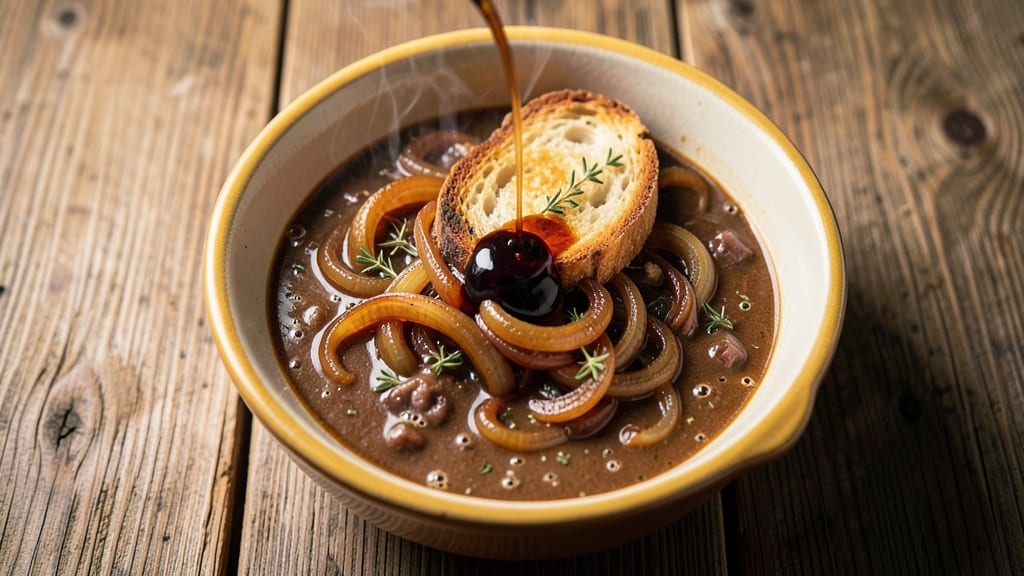
This ale house French onion soup recipe delivers the rich, caramelized depth and velvety Gruyère cloud that make it a classic comfort dish. The slow-cooked onions develop layers of sweetness and complexity, while the beef broth and white wine create a robust, savory foundation.
This is the kind of soup that transforms a simple meal into an inviting, restaurant-style experience—perfect for chilly evenings or when you crave something hearty and satisfying.
The secret to achieving that signature ale house flavor lies in patience: caramelizing the onions for at least 45 minutes until they’re deep amber and jammy. A splash of ale or a pinch of thyme adds depth, while the Gruyère topping creates a golden, bubbling crust that’s impossible to resist.
Every spoonful delivers a balance of sweet, savory, and umami notes that make this soup unforgettable.
What sets this recipe apart is the textural contrast—the crispy, caramelized onions against the silky broth and the creamy, melted cheese. The slow simmer ensures the broth is rich and flavorful without being overpowering, while the toasted bread adds a sturdy base for serving.
It’s the kind of dish that feels indulgent yet comes together with straightforward techniques, making it achievable for home cooks.
Serve it piping hot with a sprinkle of fresh parsley and a side of crusty bread to soak up every last drop. This is the French onion soup you’ll want to make again and again—simple enough for weeknights but impressive enough for guests.
Let’s get started on creating your own ale house masterpiece.
Ingredients for ale house french onion soup
Four onions, a splash of wine, and slow caramelization—this is your ticket to ale house perfection.
| Ingredient | Amount | Notes |
|---|---|---|
| Yellow Onions 🧅 | 4 whole | Thinly sliced, 1/4-inch thick |
| Unsalted Butter 🧈 | ½ cup | European-style preferred |
| Beef Broth 🍲 | 6 cups | Homemade or high-quality store-bought |
| Dry White Wine 🍷 | ½ cup | Sauvignon Blanc or Chardonnay |
| Dark Ale or Beer 🍺 | ½ cup | Stout or porter for depth |
| Fresh Thyme 🌿 | ¼ cup | Leaves only, chopped |
| Garlic Cloves 🧄 | 4 cloves | Minced, not powdered |
| Gruyère Cheese 🧀 | 1 ½ cups | Freshly grated, aged |
| Baguette 🍞 | 1 whole | Crusty, sliced 1/2-inch thick |
| Olive Oil 🫒 | 2 tbsp | For toasting bread |
| Fresh Parsley 🌿 | ⅛ cup | Chopped, for garnish |
| Salt 🧂 | 1 ½ tsp | Diamond Crystal kosher |
| Black Pepper 🌶️ | ½ tsp | Freshly ground |
| Sugar 🍬 | 1 tbsp | For caramelizing onions |
The onions are everything here. Yellow onions are your best bet—they caramelize beautifully, developing that sweet, jammy depth. Whole Foods or local farmers markets usually have the freshest, most flavorful ones. If you're in a pinch, the grocery store's yellow onions work fine, but avoid red—they burn too quickly. Thinly slice them (about 1/4-inch thick) and don’t skip the sugar—it helps kickstart the caramelization. For the Gruyère, buy a wedge from a specialty cheese shop if you can. Pre-shredded cheese is a flavor crime in this dish—it lacks the melt and richness. If you can’t find Gruyère, Comté or Emmental are solid backups, though they won’t be quite the same.
No white wine? Dry vermouth or even apple cider works in a pinch. Short on ale? Substitute with beef broth and a splash of soy sauce—it adds umami depth. Fresh thyme is ideal, but dried works at half the amount. The beef broth is non-negotiable—store-bought is fine, but if you’re making it from scratch, use beef bones and simmer for 6+ hours. The baguette should be crusty—French-style or sourdough from a bakery is perfect. If you can’t find one, toast regular bread slices in olive oil until crispy. And for the love of soup, don’t skip the caramelization—45 minutes minimum, or it won’t have that restaurant-quality depth.
This soup tastes even better the next day—honestly, the flavors meld and deepen. Store leftovers in the fridge for up to 5 days, but reheat gently (low heat, covered) to avoid breaking the cheese. The bread topping? Toast it fresh before serving—5 minutes in a 375°F oven with olive oil makes all the difference. Freeze portions of the broth (without cheese) for up to 3 months. I always make a double batch—one for dinner, one to freeze for lazy nights. Just add fresh bread and cheese when reheating.
Why You'll Love This Recipe
- One-Pot Magic: I swear by this recipe—just onions, butter, and a slow simmer. No fancy gadgets, no extra bowls, and honestly? The caramelization happens while you stir in the broth. That’s it. The beer and wine do the rest.
- Deep, Rich Layers: The dark ale cuts through the sweetness of the onions, while the white wine adds brightness. You get this perfect balance—savory, slightly sweet, with a hint of malty depth. It’s the kind of flavor that makes you linger over the bowl.
- Weeknight Crowd-Pleaser: Between us, this feeds four easily and still feels special enough for company. My kids ask for it after soccer games, and my partner orders it when we’re out. It’s that kind of universally loved dish.
- Budget-Friendly Leftovers: A single batch stretches for two meals, and the flavors only get better the next day. Freeze the broth if you’re prepping ahead—just reheat and top with fresh bread. Minimal waste, maximum satisfaction.
Step-by-step instructions for ale house French onion soup
Here's how to build that perfect balance of sweet, savory, and rich in every spoonful.
Caramelize the Onions Slowly
Start by melting the 0.5 cup unsalted butter in a large, heavy pot over medium-low heat. Add the 4 whole yellow onions sliced into ¼-inch thick pieces and sprinkle with 1 tablespoon sugar. Stir to coat the onions evenly - this helps create that signature sweetness.
Let them cook undisturbed for 30 minutes, stirring occasionally. You're looking for deep golden color and a jam-like consistency - this is where all the flavor develops. If they start to brown too quickly, reduce the heat slightly. Patience here makes all the difference - these onions need time to break down into sweet, caramelized perfection.
Build the Flavor Base
Once the onions are beautifully caramelized, stir in the 4 cloves minced garlic and cook for 1 minute until fragrant. Add the 0.25 cup chopped fresh thyme, 1.5 teaspoons salt, and 0.5 teaspoon black pepper, stirring well to combine all the flavors.
Pour in the 0.5 cup dry white wine and let it simmer for 2-3 minutes until mostly evaporated. This step deglazes the pot and adds brightness to the rich onion base. Then add the 6 cups beef broth and bring everything to a gentle simmer. Cover and let it cook for 20 minutes to let all the flavors meld together.
Finish with Depth and Richness
After the broth has simmered, stir in the 0.5 cup dark ale or beer. This adds that malty, roasted depth that makes ale house versions stand out. Let the soup simmer uncovered for another 10 minutes to reduce slightly and concentrate the flavors. Taste and adjust seasoning if needed - you might need a touch more salt to balance the beer's bitterness.
The soup should be rich and flavorful but not overly thick. If it's too thick, add a splash of water or broth to reach your desired consistency. Keep it warm while you prepare the cheese topping.
Toast the Baguette Slices
While the soup simmers, slice the 1 whole baguette into ½-inch thick pieces. Brush both sides generously with 2 tablespoons olive oil and toast in a 400°F oven for 5-7 minutes until golden and crisp. The bread should be firm enough to hold its shape when placed on top of the soup.
Keep the toasted bread warm while you prepare the cheese topping. The contrast between the crispy bread and creamy cheese is what makes this soup so special.
Assemble and Melt the Gruyère Cloud
Preheat your broiler to high. Ladle the warm soup into 4 oven-safe bowls, placing 2 toasted baguette slices in each bowl. Sprinkle about ¼ cup freshly grated Gruyère cheese evenly over each serving.
Place the bowls under the broiler for 2-3 minutes until the cheese is bubbly and golden brown on top. Watch carefully - you want it to melt into a beautiful, creamy cloud without burning. Finish with chopped fresh parsley for a pop of color and freshness.
Serve Immediately
Let the soup rest for 1-2 minutes after coming out of the oven to allow the cheese to set slightly. The combination of crispy bread, rich caramelized onions, and melted Gruyère creates the perfect textural experience with every spoonful.
Serve with extra bread on the side if desired - this soup is hearty enough that you'll want seconds. The contrast between the warm soup and cool beer makes this dish even more satisfying.
Pro Tips For Making Ale House French Onion Soup
- SWAP THE BEER HALFWAY: After the wine reduces, add just half the beer first—let it simmer until the alcohol cooks off (about 5 minutes) before adding the rest. This keeps the soup from tasting harsh or overly bitter, especially if you’re using a strong dark ale. I learned this the hard way when my first batch ended up tasting like a brewery floor.
- CARAMELIZE IN BATCHES: Onions won’t brown evenly if you crowd the pan. Work in two batches—sauté the first until deep golden, then set aside before adding the second. Rushing this step means you’ll end up with pale, underflavored onions instead of the rich, sweet base the soup needs. Trust me, the extra 10 minutes saves you from starting over.
- SALT THE BROTH LIKE THE SEA: Beef broth is often underseasoned, and adding salt later won’t fix it. Taste the broth before combining it with the onions—aim for a flavor that’s almost too salty, then back off slightly. Unsalted butter doesn’t help here; the broth carries the weight. This is the thing that matters most if you want that restaurant-quality depth.
- BREAD THE TOAST TO PERFECTION: Skip the sad, soggy garlic bread trick—toast the baguette slices hard in the oven (400°F for 8–10 minutes) until they’re crisp enough to stand up to the soup’s moisture. Then, rub the cut sides with a raw garlic clove (yes, the skin-on kind) before adding cheese. The extra crispness and garlic punch make all the difference when it melts into the bubbling broth.
Troubleshooting this dish
Onions Not Caramelizing
If your onions aren’t turning golden after 30 minutes, you might be cooking them too fast. Keep the heat at medium-low—if they brown too quickly, reduce it further. The sugar helps kickstart caramelization, but if they’re still pale, add another ½ teaspoon sugar and stir.
Patience is key—45 minutes minimum is ideal for that deep amber color. 🔥
Broth Too Thin or Watery
If your broth seems too thin after simmering, reduce it uncovered for 5-10 minutes to concentrate the flavors. Alternatively, use 1 cup less broth next time.
For extra richness, stir in 1 tablespoon cornstarch mixed with 2 tablespoons cold water to thicken it slightly. Avoid over-salting early—you can always adjust later.
Cheese Not Melting Properly
If your Gruyère isn’t melting into a creamy cloud, it might be too cold. Ensure your soup is steaming hot before adding cheese. Use freshly grated Gruyère (not pre-shredded) and broil on high for 2-3 minutes—watch closely to avoid burning.
For extra insurance, sprinkle a pinch of nutmeg on top before broiling to enhance meltiness. 🧀
Bread Getting Soggy
To prevent soggy bread, toast it golden and crisp in the oven before adding it to the soup. If it softens too quickly, broil the soup with cheese for just 2 minutes instead of 3.
For extra crunch, toast the bread again for 1 minute right before serving. Store-bought bread? Brush with olive oil and toast until firm.
Flavor Too Mild or Flat
If your soup lacks depth, boost the umami with 1 teaspoon soy sauce or ½ teaspoon Worcestershire sauce during simmering. For extra richness, add 1 tablespoon beef consommé or a splash of balsamic vinegar at the end.
Fresh thyme and garlic are non-negotiable—don’t skip them! A pinch of black pepper and salt at the end can also brighten flavors. ✨
Broiler Burns Cheese Too Fast
If the cheese browns before melting, reduce the broiler heat to medium or broil for shorter intervals (1-2 minutes). Keep the soup covered while preheating the broiler to maintain heat.
For even melting, sprinkle cheese in two layers, letting the first melt before adding the second. A wire rack under the bowl prevents sogginess and ensures even browning. 💡
Nutrition facts
Frequently asked questions
Why does this French onion soup need such a long caramelization time?
The 45-minute caramelization transforms simple onions into sweet, jammy layers that form the soul of this dish. This slow process develops complex flavors—sweet, nutty, and slightly bitter—that you won't get with quick cooking. Patience here makes all the difference between ordinary and restaurant-quality soup!
Can I make this soup ahead of time?
Prepare the soup base (without cheese) up to 3 days ahead and store it in the fridge. Reheat gently on the stove, then add fresh toasted bread and cheese just before serving. The flavors actually improve overnight as the onions rehydrate slightly. For the bread topping, toast it fresh—it's best served crispy!
What's the best way to substitute Gruyère if I can't find it?
For the closest flavor, use a mix of Comté and Emmental (50/50). If you only have one, Comté is better than Emmental for its nutty depth. Avoid pre-shredded cheese—it contains anti-caking agents that prevent proper melting. Freshly grated cheese creates that perfect creamy cloud on top!
How can I make this soup vegetarian?
Replace the beef broth with mushroom or vegetable broth and use dark ale or soy sauce for umami depth. Add 1 tablespoon nutritional yeast to the broth for a cheesy flavor. The caramelized onions and Gruyère will still shine, though the flavor profile will be more earthy than meaty.
Can I use store-bought caramelized onions?
While it saves time, store-bought caramelized onions lack the depth of homemade. They're often too sweet and lack the complex, jammy texture. For the best results, caramelize your own—it's worth the 45 minutes! If you're short on time, use them as a base but add 1 extra tablespoon sugar and cook for 10 minutes to deepen the flavor.