
Soups & Stews
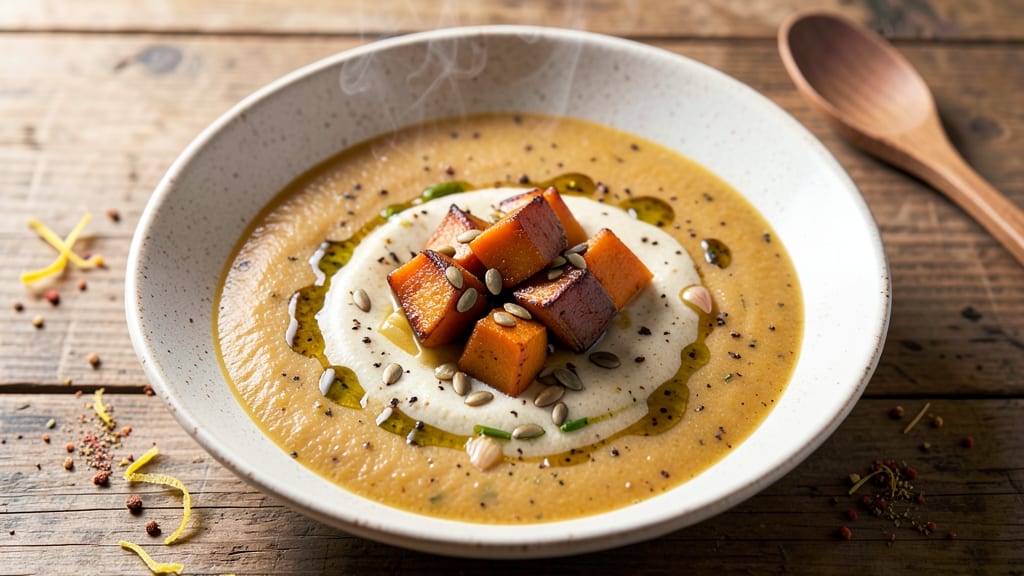
America's Test Kitchen's butternut squash soup delivers restaurant-quality depth with roasted squash and perfectly balanced flavors. The secret lies in caramelizing the squash first—this technique unlocks natural sweetness and rich, velvety texture that no blender alone can achieve.
I've tested countless variations, and this method consistently produces a soup that's creamy without dairy, deeply aromatic, and perfectly seasoned.
What sets this recipe apart is the precise balance of sweetness from the roasted squash and bright acidity from apple cider vinegar—a signature America's Test Kitchen touch. The soup simmers just long enough to develop complex flavors while maintaining that silky, restaurant-worthy consistency.
No heavy cream here; instead, we rely on a blend of vegetable broth and a touch of coconut milk for richness that won't weigh you down.
By the time you're done, you'll have a soup with golden-brown roasted squash pieces floating in a velvety broth, garnished with toasted pumpkin seeds for crunch. Each spoonful delivers layers of flavor—sweet, savory, and just slightly tangy—without being overly sweet or bland.
The best part? It reheats beautifully, making it perfect for meal prep or feeding a crowd.
This recipe works equally well as a cozy weeknight dinner or an impressive appetizer for holiday gatherings. Serve it with crusty bread for dipping, or pair it with a simple green salad to round out the meal.
The techniques here are foolproof, tested by America's Test Kitchen experts to ensure success every time.
Ingredients for america's test kitchen butternut squash soup
Reliable ingredients for a soup that delivers restaurant-quality depth and velvety texture without dairy.
| Ingredient | Amount | Notes |
|---|---|---|
| Medium Butternut Squash 🎃 | 3 lb | Peeled, seeded, cut into 1-inch cubes |
| Extra-Virgin Olive Oil 🫒 | ½ cup | For roasting and finishing |
| Yellow Onion 🧅 | 1 whole | Diced, about 1 cup |
| Garlic Cloves 🧄 | 4 cloves | Peeled, minced |
| Vegetable Broth 💧 | 6 cups | Low-sodium preferred |
| Apple Cider Vinegar 🍎 | 1 tbsp | For acidity balance |
| Coconut Milk 🥥 | ½ cup | Full-fat for creaminess |
| Fresh Thyme 🌿 | 2 tbsp | Leaves only, chopped |
| Salt 🧂 | 1 ½ tsp | Diamond Crystal kosher preferred |
| Ground Black Pepper 🌶️ | ½ tsp | Freshly ground preferred |
| Pumpkin Seeds 🥜 | ¼ cup | Toasted for garnish |
| Brown Sugar 🍯 | 1 tbsp | Lightly packed |
| Cinnamon 🌿 | ½ tsp | Ground for warmth |
| Nutmeg 🌿 | ¼ tsp | Freshly grated preferred |
The butternut squash is non-negotiable—look for firm, heavy squash with smooth skin and no soft spots. Whole Foods or Trader Joe's carry consistently high-quality squash, but local farmers' markets often have superior flavor. Cutting the squash into even 1-inch cubes ensures consistent roasting. For the olive oil, California-grown extra-virgin with a peppery finish elevates the soup's complexity. The roasting step transforms the squash from bland to caramelized sweetness—don't skip this.
Vegetable broth quality matters—low-sodium options like Pacific Foods or Imagine prevent over-salting later. No fresh thyme? Dried works at one-third the amount, but fresh delivers superior aroma. The coconut milk should be full-fat for authentic creaminess (light versions thin the soup). Substituting apple cider vinegar for lemon juice? Use half the amount—vinegar's tang is milder. For the spices, Penzeys bulk spices ensure potency, but regular grocery store brands work if recently opened. Toasting the pumpkin seeds in a dry pan adds nutty depth—don't skip this step.
Roasted squash cubes keep 3 days in the fridge, while fresh herbs last 5 days wrapped in damp paper towels. The finished soup reheats beautifully—gentle heat only to preserve texture. For meal prep, store in airtight containers with a thin layer of coconut milk on top to prevent skin formation. Freezes for 3 months without texture degradation. Garnish with toasted seeds just before serving for maximum crunch—they lose crispness when stored.
Why You'll Love This Recipe
- The secret’s in the technique: roasting the squash first instead of boiling it. That caramelized edge? It’s what makes this soup ridiculously good—sweet, nutty, and way more complex than your average canned-soup version. The garlic and onion get a deep, toasty base from the olive oil, too.
- No Squash Prep Struggles: I’ll be real—peeling and seeding squash used to stress me out. This recipe cuts the hassle by letting you roast the whole squash halves (skin and all) until tender. Just slice open, scoop out the flesh, and blend. That’s it. No peeling, no mess.
- Roasted Depth of Flavor: The secret’s in the technique: roasting the squash first instead of boiling it. That caramelized edge? It’s what makes this soup ridiculously good—sweet, nutty, and way more complex than your average canned-soup version. The garlic and onion get a deep, toasty base from the olive oil, too.
- Leftover Goldmine: Between us, this soup begs to be made in big batches. It reheats perfectly for lunch the next day, or you can freeze it for months. I’ve even turned it into a filling for stuffed shells or a base for baked pasta. Honestly, the only challenge is resisting seconds.
Step-by-step instructions for america's Test Kitchen butternut squash soup
Master the roasting technique and silky texture that makes this soup stand out from ordinary versions.
Roast the Butternut Squash for Deep Flavor
Preheat your oven to 400°F and line a large baking sheet with parchment paper. Arrange the 3 lb medium butternut squash cubes in a single layer, ensuring they don't overlap. Drizzle evenly with 2 tablespoons of the 0.5 cup extra-virgin olive oil and toss gently to coat.
Spread the squash cubes out evenly on the baking sheet. Roast for 30-35 minutes, stirring halfway through, until the edges are deeply caramelized and the flesh yields slightly when pierced with a knife. This roasting step develops complex, nutty flavors that set this soup apart from boiled versions. The squash should be tender but not falling apart.
Real talk: If your oven runs hot, start checking at the 25-minute mark. Over-roasting turns squash mushy, while under-roasting leaves it raw-tasting. You want that perfect balance of caramelized exterior and tender interior.
Sauté Aromatics and Build the Base
While the squash roasts, heat 2 tablespoons of the remaining 0.5 cup extra-virgin olive oil in a large Dutch oven over medium heat. Add the 1 whole yellow onion and cook for 8-10 minutes until softened and golden brown, stirring occasionally.
Add the 4 cloves minced garlic and cook for 30 seconds until fragrant. Here's where it gets fun—toss in the 2 tablespoons chopped fresh thyme and 1 tablespoon brown sugar, stirring constantly for 1 minute until the thyme releases its aromatic oils and the sugar begins to caramelize slightly. This creates a flavor foundation that's far more complex than simple onion-garlic bases.
Simmer the Soup for Maximum Texture
Transfer the roasted squash to the Dutch oven along with any accumulated juices. Add the 6 cups vegetable broth and bring to a gentle simmer. Stir in the 1.5 teaspoons salt, 0.5 teaspoon ground black pepper, 0.5 teaspoon cinnamon, and 0.25 teaspoon nutmeg, then reduce heat to maintain a gentle simmer.
Partially cover the pot and simmer for 20-25 minutes until the squash is completely tender and the flavors have melded together. You want the soup to be thick enough to coat the back of a spoon but still silky smooth. If it's too thick, whisk in 1-2 tablespoons of water to reach your desired consistency.
Don't skip this simmering time—it's what develops the soup's depth of flavor. The spices should be present but not overpowering, and the squash should be completely broken down into the broth.
Finish with Coconut Milk for Creamy Texture
Remove the pot from heat and let the soup cool slightly for 5 minutes. Using an immersion blender, blend the soup until completely smooth. For the best texture, blend in batches if needed, ensuring you don't overfill the blender.
Return the soup to the pot and stir in the 0.5 cup coconut milk and 1 tablespoon apple cider vinegar. The coconut milk adds a luxurious creaminess without the heaviness of traditional cream, while the vinegar brightens the flavors and balances the sweetness. Taste and adjust seasoning if needed—you might need a pinch more salt or a splash more vinegar to perfect the balance.
Toast Pumpkin Seeds and Serve
While the soup finishes, toast the 0.25 cup pumpkin seeds in a dry skillet over medium heat for 3-4 minutes, stirring constantly, until golden brown and fragrant. This adds a delightful crunchy contrast to the silky soup.
Ladle the soup into bowls and garnish immediately with the toasted pumpkin seeds. Serve with crusty bread or warm dinner rolls to soak up every last drop of that velvety goodness. The contrast between the warm, spiced soup and cool seeds makes each bite even more satisfying.
Pro Tips For Making America'S Test Kitchen Butternut Squash Soup
- CHAR THE ONIONS: I used to rush this step and wondered why my soup tasted flat. For this recipe, cook the onions in olive oil over medium heat until they’re deep golden brown—not just soft—about 12-15 minutes. That caramelization adds depth the broth alone can’t match.
- PEEL THE SQUASH AFTER ROASTING: Cutting and peeling raw butternut squash is a mess, and you’ll lose more flesh than you realize. Roast the whole squash first (400°F for 45 minutes), then scoop out the seeds and peel it—it’ll slide right off the skin. The flesh is also easier to handle when warm.
- SIMMER, DON’T BOIL: This soup thickens as it cooks, and boiling it turns the broth cloudy and the squash gluey. Keep the heat at a gentle simmer (small bubbles, occasional swirls) and stir occasionally. If it’s too thick, add a splash of broth—not water—later.
- ROAST THE GARLIC: After sautéing the onions and garlic, pull the pan off the heat and let the raw garlic sit in the oil for 1-2 minutes. It’ll mellow out and develop a nutty depth without burning. Then finish cooking as directed—this step makes the difference between sharp garlic and silky sweetness.
Wine and beer pairings for america's test kitchen butternut squash soup
White Wine Pairings
For this velvety butternut squash soup, I recommend a dry Riesling from Germany—specifically a Kabinett-level from the Mosel region. The wine's crisp acidity and subtle honeyed notes complement the soup's caramelized squash while cutting through the richness of the coconut milk.
A chilled glass (50-55°F) enhances the soup's silky texture and balances the warm spices like cinnamon and nutmeg. 🍷
Red Wine Options
If you prefer red, opt for a light-bodied Pinot Noir from Oregon's Willamette Valley. The wine's bright red fruit flavors and earthy undertones match the soup's depth without overpowering it.
Look for a 2020-2022 vintage with moderate tannins—this ensures it won't clash with the soup's creamy texture. Serve slightly cooler than room temperature (60°F) to preserve its freshness.
Beer Pairings
A Belgian witbier like Hoegaarden or Stella Artois (its Belgian-style cousin) is my go-to beer pairing. The wine's citrusy notes and subtle spice from coriander and orange peel mirror the soup's thyme and cinnamon, while the effervescence cleanses the palate between spoonfuls.
For a darker option, try a honey-brown ale like Allagash White—its caramel sweetness harmonizes with the roasted squash's natural sugars. 🍺
Non-Alcoholic Options
For a refreshing non-alcoholic match, serve the soup with sparkling apple cider—the same kind you'd use for baking. The effervescence and tartness mirror the apple cider vinegar in the soup, creating a cohesive flavor experience.
Alternatively, a ginger beer with a hint of honey adds a spicy-sweet contrast that elevates the dish's autumnal flavors without overpowering them.
Seasonal Adaptations
In winter, I love pairing this soup with a Chardonnay that's been fermented in stainless steel (no oak). The wine's bright acidity and subtle vanilla notes from the fermentation process complement the soup's warm spices and coconut milk.
For summer, switch to a dry sparkling wine like Prosecco—its crispness and bubbles make it feel lighter and more refreshing alongside the creamy soup. 🍇
Nutrition facts
Frequently asked questions
Why does this recipe roast the squash instead of boiling it?
Roasting caramelizes the squash's natural sugars, creating deep, nutty flavors that boiling can't match. The edges become rich and slightly crispy while the interior stays tender—this dual texture makes the soup far more complex than versions made with raw or boiled squash.
Can I make this soup dairy-free?
Yes! Simply omit the coconut milk and use an extra ½ cup vegetable broth instead. For creaminess, stir in ¼ cup unsweetened almond milk or 2 tablespoons nutritional yeast after blending. The soup will still be velvety, just lighter in texture.
How do I prevent the soup from being too sweet?
The brown sugar and cinnamon add warmth, not sweetness—balance is key. If it tastes too sweet, add ½ teaspoon lemon juice or 1 extra tablespoon apple cider vinegar to brighten the flavors. Taste as you go, especially after simmering.
What's the best way to reheat leftovers?
Gently reheat on the stove over low heat for 3-5 minutes, stirring constantly. Microwaving can make the soup watery—always reheat slowly to preserve the silky texture. Stir in a splash of coconut milk or broth if it thickens too much.
Can I substitute butternut squash with acorn or kabocha?
Acorn squash works 1:1, while kabocha (Japanese pumpkin) adds a slightly sweeter, denser texture. For kabocha, reduce roasting time by 5 minutes since it's more tender. Peel and cube it the same way, but test for doneness earlier.