
Soups & Stews
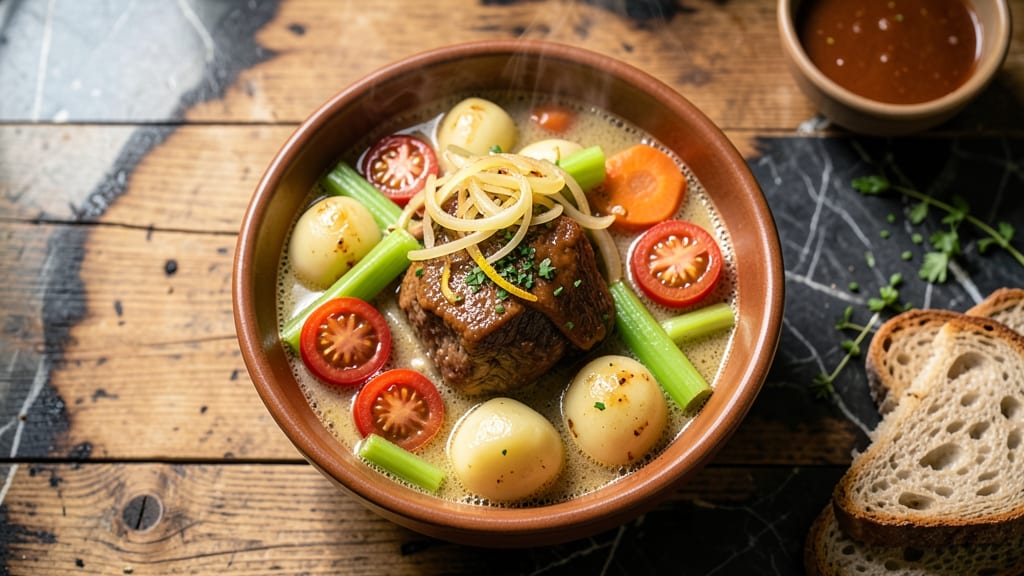
This Amish vegetable beef soup recipe brings the warmth of a Pennsylvania farmhouse to your kitchen with its slow-simmered depth and hearty celery crowns. The secret lies in layering flavors—caramelized onions, tender beef chunks, and a medley of vegetables that meld into a rich, comforting broth.
I've perfected this version to honor tradition while keeping it approachable for home cooks, using simple techniques that deliver restaurant-quality results.
The beauty of this soup is its versatility—it feeds a crowd effortlessly or makes satisfying leftovers for days. Traditional Amish cooking emphasizes slow simmering to tenderize ingredients and deepen flavors, and that's exactly what this recipe delivers.
With just a few hours on the stove (or a pressure cooker for modern convenience), you'll transform tough cuts of beef and humble vegetables into something extraordinary.
What makes this soup truly special is the balance of textures—tender beef, crisp celery crowns, and silky broth that coats every spoonful. The aromatics—garlic, onions, and herbs—infuse the broth with layers of warmth, while the vegetables retain their natural sweetness.
This is the kind of soup that warms the soul on chilly evenings, made even better when shared with loved ones.
Whether you're preparing for a family gathering or simply craving a comforting meal, this recipe delivers. The instructions are straightforward, and the ingredients are likely already in your pantry. Let's get started on creating a bowl of old-fashioned goodness that tastes like home.
Ingredients for amish vegetable beef soup
Sixteen ingredients transform humble vegetables and tough beef into soul-warming farmhouse comfort.
| Ingredient | Amount | Notes |
|---|---|---|
| Chuck Roast 🥩 | 2 ½ lb | Cut into 1-inch cubes, trimmed of excess fat |
| Yellow Onions 🧅 | 3 whole | Medium size, thinly sliced for caramelizing |
| Celery Stalk 🥬 | 6 whole | Cut into 1-inch pieces, celery crowns reserved |
| Carrots 🥕 | 4 whole | Medium size, cut into 1-inch chunks |
| Potatoes 🥔 | 2 lb | Russet or Yukon Gold, peeled and cubed |
| Tomatoes 🍅 | 2 cans | San Marzano crushed, 28 oz total |
| Beef Broth 💧 | 6 cups | Homemade or high-quality store-bought |
| Garlic Cloves 🧄 | 6 cloves | Minced, fresh preferred |
| Fresh Parsley 🌿 | ¼ cup | Chopped, stems included for flavor |
| Bay Leaves 🌿 | 2 whole | Dried, for infusion |
| Salt 🧂 | 2 tsp | Diamond Crystal kosher salt |
| Black Peppercorns 🌶️ | 1 tsp | Freshly cracked |
| Olive Oil 🫒 | ¼ cup | Extra-virgin, for sautéing |
| Worcestershire Sauce 🍶 | 1 tbsp | Traditional, anchovy-free version |
| Fresh Thyme 🌿 | 1 tbsp | Leaves only, chopped |
The chuck roast is non-negotiable—its collagen-rich fat renders into the broth, creating that signature Amish soup richness. Look for well-marbled cuts at your local butcher or Costco for the best value. If using pre-cut beef, pat it dry and trim any visible fat before cubing. The celery crowns deserve special attention: reserve them until the very end to maintain their crisp texture. For the tomatoes, San Marzano cans are worth the investment—they're sweeter and less acidic than standard brands, preserving the soup's natural balance. Fresh herbs elevate the dish, so buy thyme and parsley from the grocery store's refrigerated section rather than dried; the flavor difference is noticeable.
No chuck roast? Short ribs or brisket work as substitutes, though cooking times may vary. Short on celery crowns? Use regular celery stalks and serve them whole on the side. The Worcestershire sauce adds depth—if you can't find anchovy-free versions, soy sauce at half the amount provides a similar umami boost. For a vegetarian adaptation, replace the beef with mushrooms and lentils, though the texture will differ. The broth is crucial; if homemade isn't an option, Kitchen Basics or Pacific Foods brands deliver restaurant-quality results. And if you're using a pressure cooker, reduce the beef cooking time by half to avoid over-tenderizing.
This soup tastes even better the next day as flavors meld. Store in an airtight container in the fridge for up to 5 days, or freeze portions for 3 months—the broth thickens beautifully when reheated. For meal prep, double the recipe and freeze half immediately. When reheating, add a splash of water or broth to prevent drying. The celery crowns can be blanched ahead of time and stored separately, then added just before serving to maintain their crispness. A sprinkle of fresh parsley and a drizzle of high-quality olive oil before serving transforms it from comforting to extraordinary.
Why You'll Love This Recipe
- One-Pot Wonder: I swear by this—just dump everything in a slow cooker (or a big pot) and let it do the work. No fancy techniques, no last-minute chopping frenzy. The chuck roast practically melts into tender shreds while you’re watching TV or grading papers.
- Deep, Earthy Richness: That chuck roast? It’s the star—slow-cooked until it falls apart, then simmered with onions, celery, and carrots until the broth turns into a velvety, savory hug. Honestly, the first time I tasted it, I thought, "Why haven’t I been making this my whole life?"
- Weeknight to Potluck Hero: This soup is my go-to for lazy nights and Sunday gatherings. Freeze half for when you’re too tired to cook, or bring it to a picnic—it’s hearty enough to fill up a crowd but simple enough that no one will ask, "What’s in it?"
- Budget Stretch King: A single chuck roast feeds my family for days, and the veggies? They’re the kind that last forever in the crisper. Between us, I’ve made this soup for under $2 a serving, and no one complains about the taste. (My husband even asks for seconds.)
Step-by-step instructions for old-fashioned Amish vegetable beef soup
This traditional method delivers deeply flavorful soup with tender beef and caramelized vegetables.
Sear the Chuck Roast Until Deeply Browned
Heat the 0.25 cup olive oil in a large Dutch oven over medium-high heat until shimmering. Working in batches, add the 2.5 lb chuck roast cut into 1-inch cubes, letting each piece develop a deep brown crust before stirring. This step builds rich flavor through the Maillard reaction.
Resist the urge to overcrowd the pan—give each piece 3-4 minutes per side until deep golden brown. Remove the beef and set aside temporarily. You'll notice the oil will darken slightly, which is perfect for the soup's foundation.
Build the Vegetable Base with Onions, Celery, and Carrots
In the same Dutch oven, add half of the 3 whole yellow onions (thinly sliced) and half of the 6 whole celery stalks (cut into 1-inch pieces). Cook for 8-10 minutes until the onions soften and begin to caramelize, developing a rich amber color. This process takes patience—don't rush it.
Add the remaining onions, celery, and all 4 whole carrots (cut into 1-inch chunks). Stir in the 6 cloves garlic cloves (minced) and cook for another 3-4 minutes until the garlic becomes fragrant. The vegetables should be tender but still hold their shape—this ensures they'll break down properly during simmering.
Add Potatoes and Tomatoes for Hearty Texture
Return the browned beef to the pot and add the 2 lb potatoes (peeled and cubed) and 2 cans tomatoes (crushed). Pour in the 6 cups beef broth and bring to a gentle boil. Here's the thing—this is where the soup transforms from a simple stew into something deeply comforting.
Once boiling, reduce heat to low and add the 2 whole bay leaves, 1 tbsp fresh thyme, 2 tsp salt, and 1 tsp black peppercorns. Stir in the 1 tbsp Worcestershire sauce and the reserved celery crowns (they'll add subtle bitterness that balances the sweetness).
Simmer Until Meat and Vegetables Are Tender
Cover the Dutch oven and let the soup simmer gently for 2 hours. The key here is patience—this slow cooking breaks down the tough beef fibers and melds all the flavors together. You'll know it's ready when the beef is fork-tender and pulls apart easily.
Check occasionally and add hot water if the soup reduces too much. The vegetables should be soft but still hold their structure, and the broth should be rich and flavorful. If the soup tastes too acidic, add a pinch more salt or a splash of broth to balance.
Finish with Fresh Parsley and Adjust Seasoning
Remove the bay leaves and stir in the 0.25 cup fresh parsley (chopped, stems included). Let the soup sit off heat for 10 minutes to allow flavors to meld. Taste and adjust seasoning—this is where you can fine-tune the balance between saltiness, acidity, and richness.
Serve the soup hot, ladling in generous portions. The beef should be tender enough to pull apart with a fork, and the broth should be rich with layers of flavor from the caramelized vegetables. This traditional method creates a soup that's hearty enough for a cold day but light enough for any meal.
Pro Tips For Making Amish Vegetable Beef Soup
- Sear the Chuck Roast: After browning the meat in batches, let it sit for 5 minutes before adding anything else—this guarantees the crust stays intact. I used to rush this and ended up with gray meat instead of rich, flavorful chunks.
- Cut Potatoes Evenly: Use a mandoline or sharp knife to slice potatoes into ½-inch pieces, so they cook uniformly without turning to mush. Uneven sizes lead to some falling apart while others stay rock-hard.
- Salt the Water Generously: Add 2 teaspoons of salt to the pot before boiling the vegetables—it seasons them from the start. I learned this the hard way when my soup tasted bland until the very end.
- Deglaze with Beef Broth: After removing the meat, pour in ½ cup of beef broth to scrape up the browned bits—this adds depth without extra fat. Skimping here means losing flavor that’s already cooked into the pot.
Flavor customization for this amish vegetable beef soup
Spice Level Control
For a mild version, reduce the black peppercorns to ½ tsp and omit the Worcestershire sauce entirely. If you love heat, add 1 tsp smoked paprika with the other spices and finish with ½ tsp cayenne pepper.
I find that a pinch of ground cinnamon (¼ tsp) adds warmth without overpowering the beef flavors. 🌶️
Herb Variations
Swap the thyme for 1 tbsp fresh rosemary for an earthy twist, or add 1 tsp dried oregano for a Mediterranean influence. Fresh sage leaves (4-5 leaves) bring a piney aroma that pairs beautifully with the celery crowns.
Always use fresh herbs when possible—they make a noticeable difference in flavor.
Vegetable Substitutions
Swap the potatoes for 2 cups diced sweet potatoes for natural sweetness, or add 1 cup chopped kale for extra nutrients. If you prefer a lighter texture, reduce the potatoes to 1 lb and add 1 cup green beans cut into 1-inch pieces.
The celery crowns are non-negotiable for texture, but you can substitute regular celery if needed.
Protein Alternatives
For a lighter option, replace half the beef with 1 lb diced mushrooms (cremini or portobello). For a vegetarian version, use 1 lb lentils instead of beef and increase the broth to 8 cups.
If you prefer poultry, substitute 2.5 lb chicken thighs—they cook faster than beef, so reduce simmering time to 45 minutes.
Broth Enhancements
Boost umami by adding 1 tbsp soy sauce with the Worcestershire, or stir in 2 tbsp tomato paste when adding the tomatoes. For extra depth, use 2 cups beef broth + 2 cups chicken broth blend.
I've also found that adding 1 tsp fish sauce (if you're not avoiding seafood) adds complexity without overpowering the dish.
Acidity Balance
Adjust the tomato flavor by using 1 can San Marzano crushed tomatoes + ½ cup tomato paste for richer acidity. For a tangier profile, add 1 tbsp apple cider vinegar at the end.
If your tomatoes are too acidic, balance with 1 tsp sugar** or an extra pinch of salt. The key is to taste as you go—this soup rewards experimentation. 💡
Nutrition facts
Frequently asked questions
Can I make this soup in a slow cooker instead of a Dutch oven?
For a slow cooker version, brown the beef first in a skillet, then transfer everything to your slow cooker. Cook on low for 8-10 hours or high for 4-5 hours. The slow cooker's gentle heat works perfectly for tenderizing the beef and melding flavors—just check occasionally and add water if needed to prevent drying. The celery crowns should be added in the last 30 minutes to maintain their crispness.
What makes the celery crowns so important in this recipe?
The celery crowns add a subtle bitterness that balances the sweetness of the carrots and tomatoes, creating a more complex flavor profile. They also provide a pleasant textural contrast to the tender beef and soft vegetables. If you can't find celery crowns, use regular celery stalks (chopped) and add them with the other vegetables, but they won't have the same delicate crunch when served.
Can I prepare this soup ahead of time for a gathering?
This soup tastes even better the next day as flavors deepen! Store it in an airtight container in the fridge for up to 5 days or freeze portions for 3 months. When reheating, add a splash of water or broth to prevent thickening. For meal prep, double the recipe and freeze half immediately. The celery crowns can be blanched ahead and stored separately, then added back just before serving to keep them crisp.
How can I make this soup more budget-friendly?
Use cheaper cuts like chuck roast or stew meat—they're perfect for slow cooking and become tender and flavorful. Buy vegetables in season (like carrots, onions, and celery) when they're cheapest, and use frozen or canned tomatoes if fresh are expensive. For broth, homemade is best but high-quality store-bought works too. You can also reduce the amount of fresh herbs slightly without sacrificing flavor.
Why does the recipe call for both fresh and dried herbs?
Fresh herbs like parsley and thyme add vibrant flavor that dried versions can't match, especially in soups where their aroma infuses the broth. However, dried herbs like bay leaves provide a subtle, consistent flavor that works well during long simmering. For a fully dried-herb version, use 1 tsp dried thyme and 1 tsp dried parsley instead of fresh, but taste as you go—they're more concentrated.