
Soups & Stews
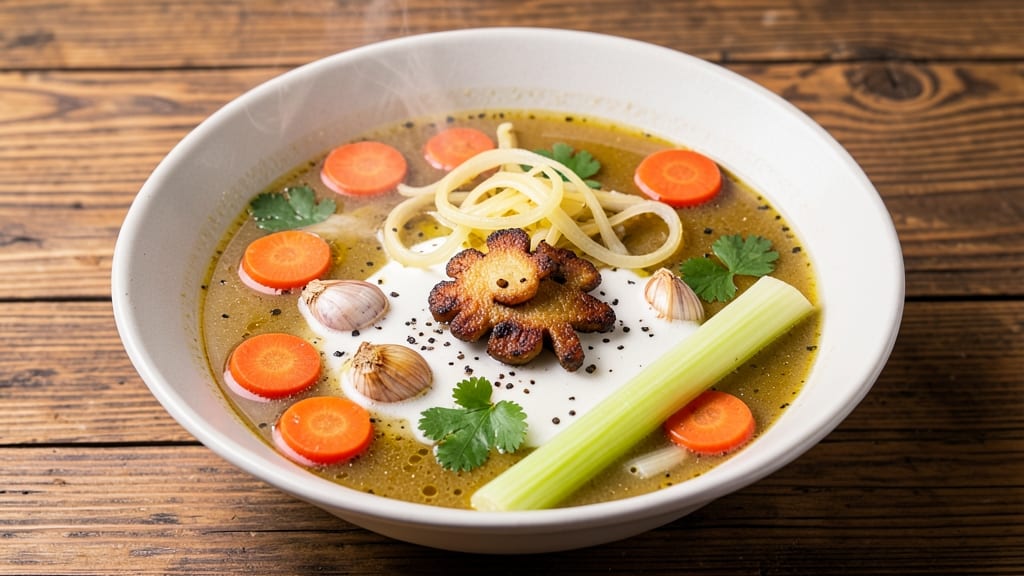
This ancient ginger and garlic soup transports you to medieval kitchens where warmth and spices ruled every meal. The recipe draws from centuries-old traditions where ginger and garlic weren't just ingredients—they were medicine, preserved in broths to fortify against cold winters.
Every sip carries the earthy depth of slow-simmered aromatics, their flavors melding into a comforting embrace that feels like history in a bowl.
The soul of this soup lies in its method: aromatics sautéed until fragrant, broth reduced to concentrate their essence, and spices added in stages to build complexity. No modern shortcuts here—just the patient techniques of ancient cooks who knew flavor develops through time.
The result is a broth so rich it coats your tongue with every spoonful, where ginger's fiery kick meets garlic's mellow sweetness in perfect balance.
What makes this recipe special is its versatility—serve it as a light meal with crusty bread or let it stand as a hearty centerpiece for colder evenings. The broth's depth means it pairs beautifully with everything from grilled meats to simple vegetables.
What you'll achieve is a soup that feels both nostalgic and completely modern, proving that some traditions never go out of style.
For those curious about its origins, this recipe echoes the soups of medieval Europe and Asia, where ginger and garlic were staples in both kitchens and apothecaries. The slow simmering technique preserves their medicinal properties while creating a dish that's as nourishing as it is delicious.
Ready to bring a taste of history to your table? Let's begin.
Ingredients for ancient ginger and garlic soup
These earthy, aromatic ingredients transform simple broth into a medieval-inspired masterpiece of warmth and depth.
| Ingredient | Amount | Notes |
|---|---|---|
| Fresh Ginger Root 🌿 | 2 inches | Peeled, sliced into thin coins |
| Garlic Cloves 🧄 | 8 cloves | Peeled, halved horizontally |
| Yellow Onion 🧅 | 1 whole | Medium size, diced finely |
| Carrots 🥕 | 3 medium | Peeled, sliced into thin rounds |
| Celery Stalks 🌱 | 3 whole | Sliced into 1/4-inch pieces |
| Vegetable Broth 💧 | 4 cups | Homemade or low-sodium store-bought |
| Extra-Virgin Olive Oil 🫒 | ¼ cup | For sautéing aromatics |
| Ground Cumin 🌶️ | ½ tsp | Toasted for deeper flavor |
| Ground Coriander 🌿 | ½ tsp | Freshly ground preferred |
| Turmeric Powder 🧡 | ¼ tsp | For golden hue and warmth |
| Salt 🧂 | 1 tsp | Diamond Crystal preferred |
| Black Peppercorns 🌶️ | ½ tsp | Freshly cracked |
| Fresh Thyme Leaves 🌿 | ¼ cup | Or 1 tsp dried thyme |
| Fresh Parsley Leaves 🌿 | 0.1 cup | Chopped for garnish |
| Lemon Juice 🍋 | 1 tbsp | Freshly squeezed |
The ginger and garlic are the heart of this soup, so source them carefully. Fresh ginger root should be firm and aromatic—avoid any with soft spots or mold. For garlic, organic cloves from a specialty market like Whole Foods or Trader Joe's have the most robust flavor. The onion, carrots, and celery should be crisp and vibrant, not wilted. Local farmers markets often carry the freshest produce, but the grocery store's 'tri-color' carrots work perfectly. Toast your whole spices—cumin, coriander, and black peppercorns—in a dry pan for 30 seconds before grinding to release their essential oils, a technique medieval cooks used to deepen flavor.
No fresh thyme? Dried works at one-third the amount, but the fresh herb's bright, lemony notes are worth seeking out. Running low on vegetable broth? Water plus 1 tbsp tomato paste creates a decent substitute, though it lacks depth. The turmeric adds both color and earthy warmth—if you're avoiding it for dietary reasons, extra ground cumin will compensate. For a more intense garlic flavor, roast the cloves whole at 400°F for 20 minutes before halving, then add to the pot. The lemon juice at the end brightens the dish, so don't skip it—freshly squeezed makes all the difference.
This soup tastes even better the next day as flavors meld. Store in an airtight container in the fridge for up to 5 days, though the broth will thicken slightly—simply add a splash of water when reheating. For longer storage, freeze in glass jars (leave 1-inch headspace) for up to 3 months3 days before simmering, saving you time on busy evenings. Garnish with fresh parsley just before serving to maintain its vibrant color and fresh aroma.
Why You'll Love This Recipe
- Pantry-Friendly Staples: I swear by this soup because it’s made with ingredients I always have—ginger, garlic, onions, carrots, celery. No fancy shopping needed, just chop and simmer.
- Ginger-Garlic Magic: That first sip? Pure warmth. The fresh ginger and minced garlic caramelize into something deeply aromatic—like a hug in a bowl, but way more flavorful.
- Lunchbox or Leftovers: Between us, this soup reheats beautifully. Pack it for work or save it for tomorrow—it’s the kind of meal that gets better the second time around.
- Budget Meal Hero: Carrots and celery stretch thin, but they pack serious punch. For under $10, I feed four people a soup that feels like a restaurant dish. Worth every penny.
Step-by-step instructions for ancient ginger and garlic soup
This traditional broth builds deep, aromatic layers through precise technique and patience.
Sauté Aromatics Until Fragrant
Heat the 0.25 cup extra-virgin olive oil in a large pot over medium heat. Add the 2 inches sliced fresh ginger root and 8 cloves halved garlic cloves, stirring constantly for 2-3 minutes until the ginger becomes translucent and the garlic just begins to color at the edges. This step extracts their full essence without burning.
Add the 1 whole finely diced yellow onion, 3 medium sliced carrots, and 3 whole sliced celery stalks. Cook for another 5 minutes, stirring occasionally, until the vegetables soften slightly and release their natural juices. The base should smell rich and complex—this is where the soup's character develops.
Toast Spices for Depth
Reduce heat to low and add the 0.5 tsp ground cumin, 0.5 tsp ground coriander, and 0.25 tsp turmeric powder. Stir for 30 seconds until the spices are fragrant and the pot smells earthy. This toasting step prevents bitterness and enhances their aromatic qualities.
Increase heat back to medium and sprinkle in the 1 tsp salt and 0.5 tsp cracked black peppercorns. Stir for another 1 minute to distribute the spices evenly throughout the vegetables. The mixture should look vibrant and smell like a warm spice market.
Simmer the Vegetables
Pour in the 4 cups vegetable broth, scraping up any browned bits from the bottom of the pot. Bring to a gentle boil, then reduce heat to low and let it simmer uncovered for 20-25 minutes until the vegetables are fork-tender and the liquid has reduced slightly. You'll know it's ready when the carrots and celery can be pierced easily with a knife.
During this time, the flavors will meld together, creating a complex broth. I like to stir occasionally to prevent the bottom from sticking, but don't over-stir—this can break down the vegetables too much.
Finish with Herbs and Brightness
Remove the pot from heat and stir in the 0.25 cup fresh thyme leaves. Let it steep for 5 minutes to infuse the broth with thyme's piney aroma. Then add the 1 tbsp freshly squeezed lemon juice and stir well. This final touch brightens the soup and balances its earthy flavors.
Finally, stir in the 0.1 cup chopped fresh parsley leaves just before serving. The parsley adds freshness and a pop of color that makes the soup visually appealing. The lemon juice should make the broth glisten slightly, indicating it's properly integrated.
Adjust and Serve
Taste the soup and adjust the seasoning if needed. I usually find it needs a little more salt at this point—remember, the spices should complement, not overpower, the natural flavors of the vegetables. The soup should be aromatic, slightly sweet from the carrots, and have a gentle heat from the ginger and garlic.
Serve immediately in warm bowls, garnished with additional parsley if desired. This soup tastes even better the next day as the flavors continue to develop, but it's best enjoyed fresh when the broth is at its most vibrant. Pair it with crusty bread to soak up every last drop of that aromatic broth.
Pro Tips For Making Ancient Ginger And Garlic Soup
- SWEAT THE GINGER LOW: After burning three batches, I finally figured out—ginger needs patience. Start with a dry pan on medium-low, then add the sliced root and let it bubble gently for 5 minutes. High heat turns it bitter; low heat unlocks the warmth without charring. (Yes, even if you're impatient like me.)
- SMASH THE GARLIC FIRST: Whole cloves? Skip it. Peel and crush them flat with the side of your knife before tossing into the pot. This releases more flavor faster, and you won’t waste time fishing out stubborn cloves later. (Your future self will thank you.)
- DON’T CUT THE ONION TOO SMALL: Tiny onion pieces dissolve into mush. Instead, chop them into ¼-inch chunks—they’ll soften without disappearing, keeping texture in the soup. (I learned this the hard way when my first batch turned into onion paste.)
- SAUTÉ THE VEGETABLES IN BATCHES: Overcrowding steams instead of browns. Cook the onions first, then remove half before adding carrots and celery. This guarantees they caramelize, not just simmer. (Sounds weird, but it works.)
Creative variations of this recipe
Medieval Spiced Twist
For an authentic historical touch, add 1 tsp ground fennel seeds when toasting spices—medieval cooks used fennel to balance ginger's heat. Toast them with the cumin and coriander for 30 seconds, then strain out the seeds before adding broth.
The anise notes complement ginger beautifully and were common in European soups from the 14th century. 🌿
Asian-Inspired Fusion
Transform this into a Thai-inspired version by adding 1 tbsp fish sauce, 1 tsp palm sugar, and 2 kaffir lime leaves. Simmer these with the broth for 10 minutes, then finish with 1 tbsp lime juice.
The umami from fish sauce and sweetness from palm sugar create a completely different flavor profile while keeping the ginger-garlic core. Serve with fresh basil and chili flakes.
Protein-Packed Upgrade
Boost nutrition by adding 1 cup cooked chickpeas, 1 cup shredded chicken, or ½ lb smoked sausage. For chickpeas, simmer them directly in the broth for 15 minutes. For chicken, add it in the last 10 minutes.
Smoked sausage works best if added at the very end to preserve its texture. This turns your soup into a complete meal while keeping the traditional preparation method.
Vegetarian Adaptation
Make this fully plant-based by using mushrooms, tofu, or tempeh. Sauté 8 oz sliced shiitake mushrooms, ½ block firm tofu, or ½ cup crumbled tempeh with the initial aromatics.
For extra depth, add 1 tbsp miso paste when adding the broth. These additions provide hearty texture while maintaining the soup's comforting character. The tofu absorbs the broth beautifully, creating a satisfying bite.
Winter Comfort Version
For extra warmth, add 1 cup diced sweet potatoes and 1 cup chopped kale with the initial vegetables. The sweet potatoes add natural sweetness that balances the ginger's heat, while kale provides earthy depth.
Simmer the kale for only 5 minutes before removing it—this prevents it from becoming bitter. Finish with a sprinkle of nutritional yeast for a cheesy, umami note that medieval cooks would have loved. 🍂
Spice Level Control
Adjust the heat by controlling the ginger quantity: 1 inch for mild, 2 inches for balanced, or 3 inches for fiery. For extra depth without heat, add ½ tsp ground galangal (a ginger relative) when toasting spices.
Galangal has citrusy, peppery notes that complement without the burn. Always taste as you go—this soup's beauty lies in its balance between warmth and freshness.
Nutrition facts
Frequently asked questions
Can I make this soup without fresh ginger?
Yes, but the flavor will be less vibrant. Use 1.5 teaspoons ground ginger instead, but toast it in a dry pan for 30 seconds first to enhance its aroma. For a more authentic touch, try ½ teaspoon ground galangal—it has citrusy notes that complement without the same heat. Fresh ginger's zing is irreplaceable, though!
How long can I store leftovers?
This soup keeps beautifully for 5 days in an airtight container in the fridge. The flavors actually deepen overnight! For longer storage, freeze in glass jars (leave 1-inch headspace) for up to 3 months. Thaw in the fridge overnight—never microwave directly from frozen to preserve texture.
Why does my soup taste bitter?
Bitterness usually comes from overcooked garlic or burnt spices. For next time, remove garlic cloves when they're just golden (about 2-3 minutes of sautéing) and toast spices over low heat for only 30 seconds. A splash of lemon juice or pinch of sugar can also help balance harsh flavors if needed.
Can I use chicken broth instead?
Chicken broth adds rich umami depth that pairs perfectly with the ginger and garlic. Just ensure it's low-sodium if using store-bought. For extra authenticity, add 1 chicken carcass to homemade broth when simmering—it creates a naturally flavorful base that medieval cooks would have used.
What makes this different from regular ginger soup?
This recipe focuses on slow-simmered aromatics and layered spices, creating a complex broth rather than a simple ginger infusion. The toasted spices and staged cooking (sautéing, simmering, finishing with herbs) develop depth that quick recipes miss. Historically, ginger and garlic were preserved in broths for medicinal properties—this method honors that tradition.