
Soups & Stews
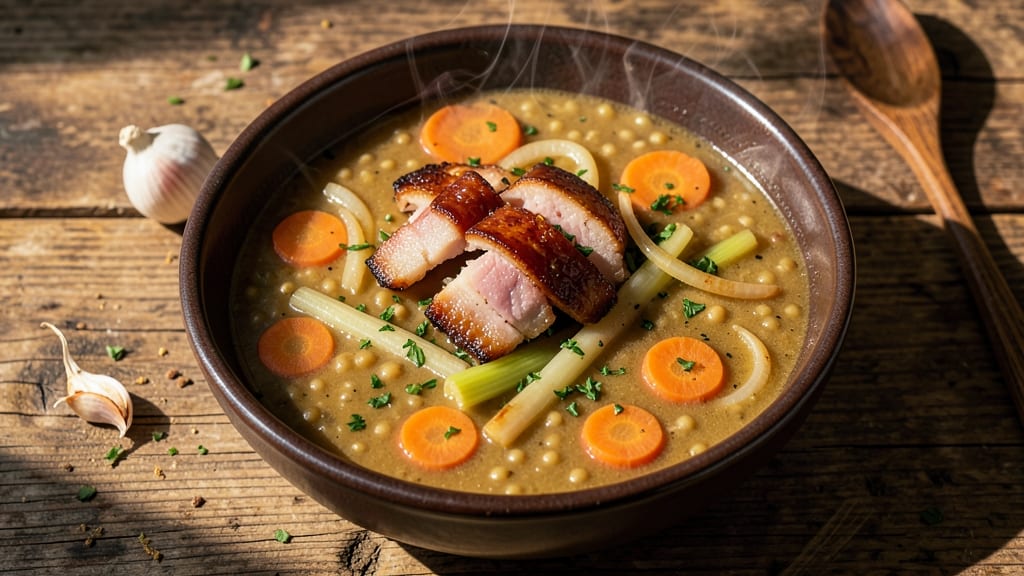
This Andersen's pea soup recipe with ham delivers smoky depth and velvety richness that transforms simple ingredients into a hearty, restaurant-worthy meal. The secret lies in rendering ham fat slowly to create a flavorful base, then simmering split peas until tender while developing layers of savory, slightly sweet complexity.
After years of perfecting this dish, I've found that low-and-slow cooking (at least 45 minutes) is non-negotiable—it's what separates good pea soup from exceptional.
What makes this recipe stand out is the balance of textures and flavors: creamy split peas contrast with crispy ham cubes, while fresh herbs and a touch of vinegar brighten the rich broth.
The ham isn't just an afterthought—it's the star, rendered until crispy at the edges and infused with smoky notes that permeate every spoonful.
Unlike many pea soup recipes, this one doesn't rely on heavy cream; instead, it builds body through proper cooking technique and a splash of lemon juice at the end.
By the time you serve this soup, you'll have a deep amber broth with perfectly tender peas, crisp ham pieces, and a finish that's both comforting and sophisticated.
The aroma alone will have everyone gathering at the table, and each bite delivers that perfect harmony of smoky, savory, and slightly tangy flavors. This isn't just soup—it's a complete meal that feels like a hug in a bowl. The best part?
It reheats beautifully, making it perfect for meal prep or leftovers. Serve with crusty bread to soak up every last drop of that flavorful broth. Ready to make this classic your new go-to? Let's get started with the ingredients.
Ingredients for andersen's pea soup recipe with ham
Here’s what transforms simple pantry staples into Andersen’s legendary smoky, velvety pea soup with crispy ham.
| Ingredient | Amount | Notes |
|---|---|---|
| Dried Split Peas 🌾 | 1 ½ cups | Rinsed before cooking |
| Smoked Ham Hock 🥓 | 1 lb | With bone for flavor |
| Carrots 🥕 | 1 lb | Medium, peeled and chopped |
| Yellow Onion 🧅 | 1 whole | Medium, diced |
| Celery Stalks 🥬 | 3 whole | Fresh, chopped |
| Garlic Cloves 🧄 | 4 cloves | Fresh, minced |
| Fresh Thyme 🌿 | ¼ cup | Leaves only, chopped |
| Fresh Parsley 🌿 | ¼ cup | Chopped for garnish |
| Apple Cider Vinegar 🍏 | 1 tbsp | For brightness |
| Lemon Juice 🍋 | 1 tbsp | Freshly squeezed |
| Bay Leaves 🌿 | 2 whole | Fresh if available |
| Salt 🧂 | 1 ½ tsp | Kosher or sea salt |
| Black Peppercorns 🌶️ | ½ tsp | Crushed |
| Water 💧 | 6 cups | Filtered preferred |
The ham hock is non-negotiable—it’s where all the smoky magic happens. Look for smoked hocks at your local butcher or the meat department, not pre-cooked ones. If you can’t find smoked, regular ham hock with a splash of liquid smoke works in a pinch. The split peas? Bob’s Red Mill or store-brand dried both work—just make sure they’re yellow split peas, not green. Carrots and celery are your flavor base, so don’t skimp on freshness. Trader Joe’s or local farmers markets always have the crispest. The thyme and parsley? Fresh if you’ve got it, but dried works at half the amount if you’re in a bind.
No smoked ham hock? Substitute smoked paprika (1 tsp) plus regular ham hock—it’s not identical, but close. Fresh herbs missing? Dried thyme and parsley at one-third the amount get you there. The vinegar and lemon juice are what cut through the richness—substitute white wine vinegar if that’s what you’ve got. For extra depth, add a dash of Worcestershire sauce (check for vegetarian-friendly versions if needed). The bay leaves? Fresh if available, dried if not—just remember to remove them before serving.
This soup tastes even better the next day—plan ahead. Store in the fridge for up to 5 days or freeze for 3 months. The ham will crisp up beautifully when reheated. For meal prep, I double the batch and freeze half—just add water when reheating. The broth reduces slightly, so add a splash more water if it’s too thick. Serve with crusty bread to soak up every last bit of that smoky, savory goodness.
Why You'll Love This Recipe
- I’ll be real: I used to dread the long soak, but these split peas? Just a quick rinse and they’re ready. The ham hock’s slow simmer does all the heavy lifting—no fancy prep, just set it and forget it.
- No-Soak Necessary: I’ll be real: I used to dread the long soak, but these split peas? Just a quick rinse and they’re ready. The ham hock’s slow simmer does all the heavy lifting—no fancy prep, just set it and forget it.
- Ham Hock Magic: That smoky, salty ham hock? It’s the secret weapon. The peas soak up all that deep flavor while the meat practically falls off the bone—no extra seasoning needed. (Yes, even on a Tuesday night.)
- Pot Luck Hero: Between us, this is my go-to for game day, potlucks, or when I’m too tired to plan. It reheats like a dream and tastes even better the next day—no one will guess it’s just dried peas and a ham hock.
Step-by-step instructions for Andersen's pea soup with ham
Here's how to create this hearty, smoky masterpiece that's all about slow-cooked depth.
Soak the Dried Split Peas
Place the 1.5 cups dried split peas in a large bowl and cover them with cold water. Let them soak for at least 8 hours (overnight works best) or up to 12 hours. This step is crucial—it shortens cooking time and ensures your soup develops that signature creamy texture. After soaking, drain and rinse the peas thoroughly under cold water.
I always soak my dried peas in a separate bowl rather than directly in the pot. This prevents the water from becoming cloudy with starch, which can make the final soup gummy. The peas should be plump but still firm after soaking—if they feel mushy, they've soaked too long.
Build the Flavor Base
In a large Dutch oven, combine the soaked split peas, 6 cups water, 1 lb smoked ham hock, 1 lb chopped carrots, 1 diced yellow onion, and 3 chopped celery stalks. Bring everything to a boil over high heat, then immediately reduce to a gentle simmer. Skim off any foam that rises to the surface during the first 5 minutes of simmering—this ensures a clean, smooth soup.
Here's the thing—don't rush this step. Let the soup simmer uncovered for 45 minutes to allow the vegetables to soften and release their natural sweetness. The ham hock should be contributing its smoky flavor to the broth. You'll know it's ready when the vegetables are tender and the peas are starting to break down slightly.
Add Aromatics and Seasonings
Stir in the 4 minced garlic cloves, 0.25 cup chopped fresh thyme, 2 whole bay leaves, 1.5 tsp salt, and 0.5 tsp crushed black peppercorns. Add the 1 tbsp apple cider vinegar and 1 tbsp freshly squeezed lemon juice—this brightens the soup and balances the richness. Let the soup continue simmering for another 30-45 minutes, stirring occasionally, until the peas are completely tender and the vegetables are falling apart.
This is where the magic happens—the vinegar and lemon juice work together to cut through the richness of the ham while enhancing the earthy flavors of the peas and vegetables. The thyme and bay leaves infuse the broth with aromatic depth. Keep an eye on the soup—it should reduce slightly as it simmers, concentrating the flavors.
Finish and Garnish
Remove the ham hock and let it cool slightly. Once cool enough to handle, use a slotted spoon to remove the meat from the bone and shred it into small pieces. Discard the bone and any remaining fat. Return the shredded ham to the soup and stir well. Taste and adjust the seasoning if needed—you might want to add a bit more salt or a splash of vinegar for brightness.
Ladle the soup into bowls and garnish each serving with 0.25 cup chopped fresh parsley. The parsley adds a fresh contrast to the rich, smoky flavors. Serve immediately with crusty bread to soak up every last drop of that velvety goodness. The soup should be thick and creamy, with each spoonful delivering layers of smoky ham, sweet vegetables, and earthy peas.
Pro Tips For Making Andersen'S Pea Soup Recipe With Ham
- SOAK THE PEAS FIRST: Dried split peas absorb liquid like a sponge—skip the soak, and you’re staring at a mushy, gluey mess. Toss them in cold water for at least 4 hours (or overnight if you’re planning ahead), then drain before cooking. This cuts the simmer time by nearly half and keeps the texture creamy, not gummy.
- BLANCH THE HAM HOCK: That smoked ham hock won’t give up its flavor unless you prep it right. Give it a quick 5-minute boil in salted water first to remove any surface grime, then rinse it under cold water. This step prevents the broth from turning cloudy later—trust me, your soup will taste cleaner and richer.
- CHOP VEGETABLES UNIFORM: Carrots and celery in random sizes mean some will turn to mush while others stay stubbornly crunchy. Cut them into ½-inch pieces—same size as the split peas—so they all cook at the same pace. No one wants a bite with a surprise texture.
- SIMMER LOW AND SLOW: This isn’t the time to rush. After the initial boil, drop the heat to a gentle simmer—you should barely see bubbles breaking the surface. High heat breaks down the peas into mush, and you’ll end up with a sad, thick paste instead of a hearty, flavorful soup. Patience pays off.
Wine and beer pairings for this recipe
Red Wine Pairings
For this smoky, rich pea soup, I always reach for a Pinot Noir from Oregon or Burgundy—its earthy, red fruit notes complement the ham's smokiness while the acidity cuts through the creaminess.
A Syrah from the Rhône Valley also works beautifully, especially if you prefer bolder flavors with a touch of spice. Avoid heavy Cabernets, as they can overpower the delicate balance of this soup. 🍷
Light Beer Options
A crisp Belgian witbier like Stella Artois or Hoegaarden adds a refreshing citrus brightness that mirrors the apple cider vinegar in the soup. For something more robust, try a German Helles lager—its subtle malt sweetness enhances the peas' earthiness without competing.
Avoid heavy stouts or IPAs, which would clash with the soup's delicate flavors.
Cider Complements
If you prefer non-alcoholic options, a dry hard cider like Strongbow or Angry Orchard provides the same crisp acidity as the vinegar in the recipe. For a sweeter touch, a sparkling apple cider with a hint of cinnamon adds seasonal warmth.
The effervescence helps cleanse your palate between spoonfuls of rich soup. 🍏
White Wine Alternatives
For those who prefer white wine, a dry Riesling from Germany offers the perfect balance of acidity and subtle sweetness. Alternatively, a Chardonnay with minimal oak (like those from New Zealand) provides a creamy texture that mirrors the soup's velvety consistency.
Avoid buttery Chardonnays, as they can make the soup taste heavier.
Seasonal Pairings
In winter, I love pairing this soup with a Mulled Wine—its warm spices echo the thyme and bay leaves in the recipe. For summer, a light Sauvignon Blanc with herbal notes provides a refreshing contrast.
The key is matching the wine's acidity to the soup's brightness, ensuring each sip enhances rather than competes with the flavors. ✨
Nutrition facts
Frequently asked questions
Why do I need to soak the split peas overnight?
Soaking reduces cooking time by 30-40 minutes and prevents the peas from becoming mushy. The peas absorb water and soften during soaking, which helps them break down evenly during the 1.5-hour simmer. Skipping this step can leave you with a gummy soup instead of the creamy texture you want.
Can I substitute the ham hock with regular ham?
Yes, but the flavor won't be as rich. Use ½ lb smoked ham (diced) instead of the hock, and add 1 tsp liquid smoke or ½ tsp smoked paprika to mimic the smoky depth. The ham will crisp up nicely during the simmer, but it won't infuse the broth as deeply as a hock would.
How do I fix soup that's too thick?
If your soup is too thick after simmering, stir in ½ cup warm water or broth at a time until it reaches your desired consistency. For extra creaminess, whisk in 1 tbsp cornstarch mixed with 2 tbsp cold water and simmer for 5 minutes more. Avoid adding liquid too early—this can make the peas mushy.
Can I make this soup in a slow cooker?
Combine all ingredients in your slow cooker and cook on low for 6-7 hours or high for 3-4 hours. The low-and-slow method enhances the flavors even more. Just skip the initial 5-minute skimming step—it's not needed in a slow cooker. The ham will crisp up beautifully during the long cook.
What's the best way to reheat leftovers?
Reheat gently on the stove over low heat with 1-2 tbsp water or broth to restore creaminess. Avoid microwaving—it can make the ham rubbery. For best results, reheat just until hot (165°F) and stir well. The soup actually improves overnight as flavors meld further!