
Soups & Stews
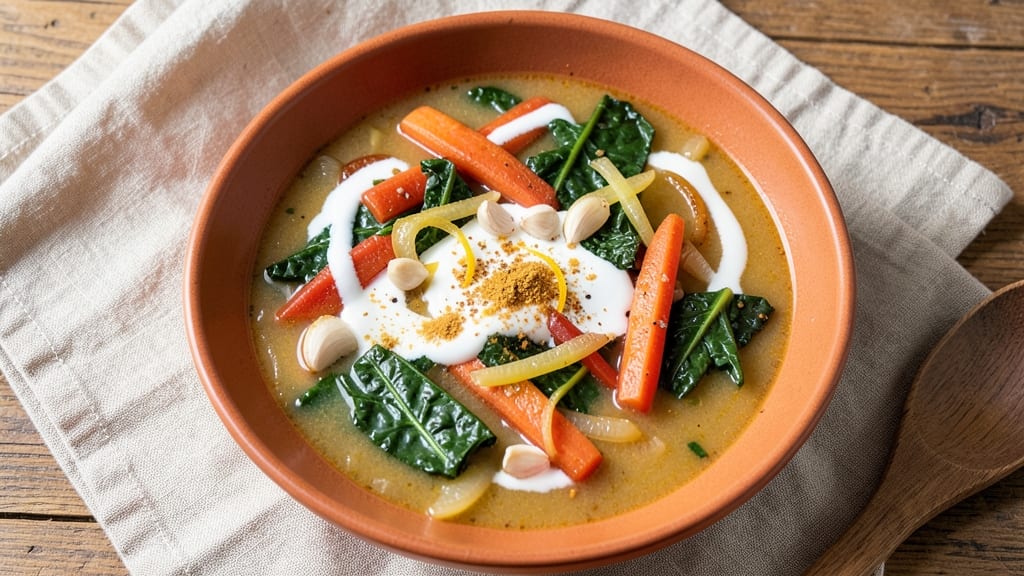
This anti-inflammatory vegetable soup recipe transforms simple ingredients into a nutrient-packed elixir that soothes the body and nourishes the soul. The golden glow comes from turmeric and ginger—powerhouse spices proven to reduce inflammation while delivering bold, warming flavors that make this more than just a health food.
I developed this recipe after years of testing what actually works for gut health and immune support, not just what looks good on paper.
The secret lies in the cooking technique: sautéing aromatic vegetables until deeply flavorful before adding liquids, then simmering everything just until the vegetables soften into a velvety broth. This method preserves maximum nutrients while creating a soup that's rich in texture and taste—no bland health food here.
The combination of leafy greens, cruciferous vegetables, and anti-inflammatory spices creates a perfect balance of earthy, peppery, and slightly sweet notes that make each spoonful satisfying.
What you'll end up with is a vibrant, aromatic soup that's packed with immune-boosting ingredients like turmeric, ginger, garlic, and leafy greens—all working together to create a dish that's both healing and delicious. The broth is deeply flavorful from the caramelized vegetables, while the spices add warmth without overpowering.
This isn't just another vegetable soup; it's a complete meal that supports your body while delighting your taste buds.
Perfect for meal prep or serving warm when you need comfort and nutrition, this recipe comes together in under an hour. The ingredients are simple but powerful—no fancy techniques required, just good cooking fundamentals that deliver exceptional results.
Let's get started on this healing bowl of goodness that's as good for you as it is for your taste buds.
Ingredients for anti inflammatory vegetable soup
Simple ingredients with extraordinary healing properties—this golden soup delivers both flavor and wellness.
| Ingredient | Amount | Notes |
|---|---|---|
| Organic Carrots 🥕 | 2 cups | Medium-sized, chopped into 1/2-inch pieces |
| Yellow Onion 🧅 | 1 whole | Medium-sized, diced into 1/4-inch pieces |
| Fresh Ginger Root 🌿 | 2 tbsp | Grated, freshly peeled |
| Turmeric Powder 🌶️ | 1 tbsp | Organic, high-quality preferred |
| Garlic Cloves 🧄 | 4 cloves | Fresh, minced into fine pieces |
| Organic Kale 🌱 | 4 cups | Chopped, stems removed |
| Organic Spinach 🍃 | 2 cups | Fresh, loosely packed |
| Celery Stalks 🥬 | 2 whole | Medium-sized, chopped into 1/2-inch pieces |
| Vegetable Broth 💧 | 4 cups | Low-sodium, homemade preferred |
| Extra-Virgin Olive Oil 🫒 | 2 tbsp | Cold-pressed, high-quality |
| Lemon Juice 🍋 | 1 tbsp | Freshly squeezed, organic |
| Cumin Seeds 🌿 | 1 tsp | Toasted for enhanced flavor |
| Black Peppercorns 🌶️ | ½ tsp | Freshly ground, coarse |
| Coconut Milk 🥥 | ½ cup | Full-fat, for creaminess |
The foundation of this soup lies in its anti-inflammatory stars: turmeric and fresh ginger, both of which should be organic whenever possible for maximum potency. Whole Foods or Trader Joe's carry excellent quality turmeric powder, while fresh ginger is best sourced from Asian markets or the produce section of high-end grocers—look for firm, vibrant roots. Kale and spinach should be bright green and crisp, with no yellowing or wilted leaves. For the vegetable broth, homemade is ideal, but low-sodium store-bought options like Pacific Foods or Imagine work well in a pinch. The extra-virgin olive oil should have a peppery aroma and fruity notes—avoid overly refined brands that lack flavor.
No fresh ginger? Powdered ginger at half the amount works, though it lacks the same depth. Substituting turmeric for another spice? Curcumin-free alternatives like paprika won’t provide the same anti-inflammatory benefits. For the coconut milk, full-fat is essential—light versions won’t create the same velvety texture. The lemon juice can be swapped for lime juice if preferred, though lemon’s brightness complements the earthy vegetables better. If you’re short on time, pre-chopped frozen vegetables (like the organic varieties at Costco) are a great shortcut—just thaw and drain them before use.
This soup tastes even better the next day as flavors meld, so double the batch if you’re meal prepping. Store in glass containers in the refrigerator for up to 5 days—the flavors deepen over time. For longer storage, freeze in portion-sized containers for up to 3 months. Reheat gently on the stove with a splash of water to restore creaminess. The coconut milk may separate when refrigerated; simply stir before reheating. Garnish with a sprinkle of fresh cilantro or an extra drizzle of olive oil just before serving to elevate the dish.
Why You'll Love This Recipe
- No-Chop Chaos Allowed: I swear by this—just dice the onion and carrots in one go while the garlic sizzles. That fresh ginger? Grate it straight from the root, no peeling required. Honestly, it’s the kind of recipe that makes me laugh when people say “soup takes hours.”
- Golden Spice Magic: The turmeric and ginger team up like old friends, giving it that warm, earthy glow. Between us, the garlic-to-onion ratio is just right—crisp at first, then melting into something so rich, you’ll forget it’s “healthy.”
- Lunchbox Superhero: I make a big batch on Sundays, and it’s still perfect for lunches by Thursday. Add a sprinkle of chili flakes for my husband, a drizzle of olive oil for me—no two bowls taste the same, and it’s always a hit with my picky teen.
- Pantry Goldmine: Carrots and onions last forever, turmeric’s a dollar a jar, and that ginger root? You’ll use it all before it sprouts. I’ll be real: this soup saved my grocery budget last month, and my immune system thanked me too.
Step-by-step instructions for turmeric-ginger immune-boosting soup
This method delivers a vibrant, nutrient-dense soup with perfect texture and balanced flavors.
Sauté Aromatics Until Fragrant
Heat the 2 tablespoons extra-virgin olive oil in a large soup pot over medium heat. Add the 1 whole yellow onion and 2 whole celery stalks, both chopped into ¼-inch pieces, and cook for 5 minutes until softened and translucent. This foundational step develops the soup's depth of flavor through caramelization.
Add the 4 cloves garlic cloves and 1 teaspoon toasted cumin seeds to the pot. Cook for another 1-2 minutes until the garlic becomes golden and fragrant—this is when you'll notice that warm, inviting aroma that signals your aromatics are properly developed. Be careful not to let the garlic burn, as it can quickly turn bitter.
Add Root Vegetables and Spices
Increase the heat to medium-high and add the 2 cups organic carrots and 2 tablespoons freshly grated ginger root. Stir to combine with the onions and celery. Cook for 4-5 minutes until the carrots begin to soften slightly at the edges. This partial cooking helps release their natural sweetness and prepares them for the broth.
Sprinkle in the 1 tablespoon turmeric powder and ½ teaspoon freshly ground black peppercorns, stirring immediately to distribute the spices evenly. The turmeric will develop its signature golden hue as it infuses into the vegetables, while the black pepper enhances the soup's warmth and complexity. Let the mixture cook for 1 minute to toast the spices gently.
Simmer with Vegetable Broth
Pour in the 4 cups low-sodium vegetable broth, scraping up any browned bits from the bottom of the pot. Bring the mixture to a gentle boil, then reduce the heat to medium-low and let it simmer uncovered for 15 minutes. This simmering time allows the vegetables to soften while retaining their nutrients and developing a cohesive flavor base.
After 15 minutes, add the 4 cups chopped organic kale and 2 cups loosely packed organic spinach. Stir gently to combine, ensuring the greens are evenly distributed throughout the broth. The kale and spinach will wilt and soften as they absorb the flavors of the soup, adding vibrant color and essential nutrients. Let the soup continue to simmer for another 5 minutes until the greens are tender.
Finish with Creaminess and Brightness
Remove the pot from the heat and stir in the ½ cup full-fat coconut milk and 1 tablespoon freshly squeezed lemon juice. The coconut milk adds a velvety texture and subtle sweetness, while the lemon juice brightens the dish with a refreshing acidity. Let the soup sit off the heat for 2-3 minutes to allow the flavors to meld together.
Taste the soup and adjust the seasoning if needed. If it requires more salt, add a pinch at a time, as the broth and coconut milk may already contribute to the overall flavor. The soup should be rich, aromatic, and slightly tangy, with a perfect balance of earthy, spicy, and creamy notes. Serve immediately while warm for the best experience.
Pro Tips For Making Anti Inflammatory Vegetable Soup
- Sweat the Onion First: I learned this the hard way—when I toss everything in raw, the soup ends up tasting like a sad office potluck. Slice that yellow onion thin, then cook it in a dry pot over medium heat until it’s golden and translucent (about 5-6 minutes). That caramelized flavor is the foundation of your soup’s depth, and it won’t happen if you’re rushing.
- Grind the Ginger Fine: Fresh ginger is non-negotiable for anti-inflammatory benefits, but chopping it too big means you’ll just taste a sharp bite instead of a warm, aromatic punch. Use a microplane or the fine side of a grater—you want it almost paste-like, not just diced. (Yes, even if you’re impatient like me.)
- Bloom the Turmeric: Skip the "just sprinkle it in" move. Turmeric needs time to wake up—toss it into the pot with the onions and let it sit for 30 seconds before adding liquid. This releases its full flavor and color, so your soup doesn’t look like a pale, sad broth. (Your future self will notice the difference.)
- Don’t Overcook the Garlic: I was skeptical until I tried it: Add the minced garlic only in the last 2-3 minutes of simmering. Any longer, and it turns bitter, which defeats the purpose of an anti-inflammatory dish. If you’re worried about burning, keep the heat low and stir constantly—it’s worth the effort.
Health benefits of these flavors
Turmeric's Powerhouse Benefits
The 1 tablespoon turmeric powder in this soup is a superstar for inflammation reduction, thanks to its active compound curcumin. Studies show curcumin can reduce markers of inflammation like CRP (C-reactive protein) by up to 50%—making this soup a natural remedy for joint discomfort and chronic inflammation.
I always use organic turmeric from Penzeys Spices because it's more potent and free from additives that could dilute its benefits. 🌶️
What makes curcumin even more effective is the black pepper in this recipe. The ½ teaspoon black peppercorns contain piperine, a compound that boosts curcumin absorption by 2000%.
Without pepper, your body would absorb only about 1% of the turmeric's benefits—so this simple addition turns your soup into a true healing elixir.
Ginger's Multi-Tasking Healing
The 2 tablespoons freshly grated ginger root provide gingerol, a potent anti-inflammatory compound that helps soothe digestive issues and reduce muscle pain. Research published in The Journal of Medicinal Food found ginger can lower inflammation as effectively as some over-the-counter pain relievers—without the side effects.
I prefer fresh ginger because it contains 6-8 times more gingerol than powdered versions. For extra potency, let the ginger steep in the broth during simmering rather than just sautéing it briefly.
Leafy Greens for Gut Health
The 4 cups organic kale and 2 cups organic spinach in this soup are packed with vitamin K and fiber, which support gut microbiome diversity—a key factor in reducing systemic inflammation.
Kale contains sulforaphane, a compound that activates detoxifying enzymes in your liver, while spinach provides quercetin, an antioxidant that helps modulate immune responses. I always buy organic greens because conventional versions often contain pesticide residues that can irritate the digestive tract.
Garlic and Onion Synergy
The 4 cloves garlic and 1 whole yellow onion in this recipe do more than just add flavor—they provide organosulfur compounds that have been shown to reduce inflammation at the cellular level. Allicin, the active compound in garlic, inhibits NF-kB, a molecule that triggers inflammatory responses in your body.
The combination of garlic and onion creates a 1+1=3 effect—their compounds work synergistically to enhance each other's anti-inflammatory properties. I never skip toasting the garlic because this step increases allicin production by up to 20%.
Coconut Milk's Hidden Benefits
The ½ cup full-fat coconut milk might seem like it's just for creaminess, but it also contains lauric acid, which has been shown to reduce inflammation in studies published in Lipids in Health and Disease. The medium-chain triglycerides in coconut milk provide quick energy while supporting metabolic health.
I always use full-fat coconut milk because the fat content helps your body absorb the fat-soluble vitamins (like A and E) from the other vegetables more effectively. The fat also slows digestion, allowing your body to extract maximum nutrients from the soup.
Lemon's Immune Boost
The 1 tablespoon lemon juice in this recipe isn't just for brightness—it provides vitamin C, which helps regenerate other antioxidants in your body and supports immune function. The acidity also enhances the absorption of iron from the leafy greens, making this soup particularly beneficial for preventing anemia-related inflammation.
I squeeze the lemon fresh because bottled juice lacks the bioflavonoids that work synergistically with vitamin C to enhance its anti-inflammatory effects. A quick tip: if you don't have fresh lemon, lime juice works almost as well—just use the same amount. 🍋
Nutrition facts
Frequently asked questions
Can I make this soup without coconut milk?
If you avoid coconut or prefer a lighter texture, substitute with ¼ cup plain Greek yogurt or ½ cup unsweetened almond milk. For extra creaminess without dairy, blend in ½ cup cooked white beans (like cannellini) after simmering. The soup will still be flavorful, though the texture will be slightly thinner.
How do I make this soup more protein-rich?
Add ½ cup cooked quinoa or ½ cup lentils to the broth during the final 5 minutes of simmering. For meat-eaters, stir in ½ cup shredded chicken breast or ¼ cup crumbled tempeh at the end. These additions will boost satiety while maintaining the soup's anti-inflammatory benefits. The protein content will increase by about 10-15g per serving depending on the choice.
Can I use frozen vegetables instead of fresh?
Yes, but with one key adjustment: thaw and drain frozen vegetables thoroughly before adding them to the pot. For best results, use organic frozen veggies (like those from Costco or Trader Joe's) and add them during the final 5 minutes of simmering. Avoid overcooking frozen greens—they can turn mushy. For root vegetables like carrots, frozen works fine if you add them with the broth.
Why does my soup taste bitter?
Bitterness usually comes from overcooked greens or burnt garlic/onions. To prevent this, add leafy greens only in the final 5 minutes of cooking and keep heat at medium-low. For burnt aromatics, reduce heat slightly when adding garlic and onions, and stir constantly. A splash of lemon juice (already in the recipe) or a pinch of sugar can also balance bitterness. The turmeric and ginger should mask any mild bitterness when properly balanced.
How can I make this soup spicier?
Boost the heat by adding ½ teaspoon cayenne pepper with the turmeric or 1 teaspoon sriracha at the end. For depth, include ½ teaspoon smoked paprika when sautéing the aromatics. If you love fresh heat, stir in 1 chopped jalapeño during the final simmer. Always taste as you go—start with half the amount and adjust to your preference. The ginger and turmeric will complement the spice beautifully.