
Soups & Stews
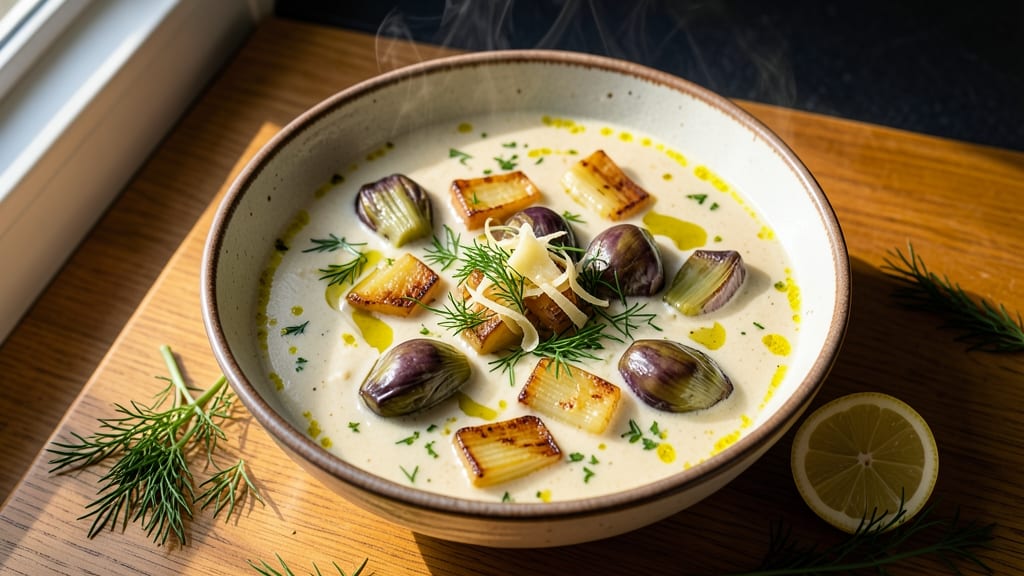
This artichoke heart soup recipe transforms humble jarred hearts into a restaurant-worthy dish with crispy celery crowns floating atop a velvety dill-infused base. The secret lies in slow simmering—letting flavors meld while maintaining that perfect balance between creamy texture and bright artichoke essence.
I developed this after years of experimenting with Mediterranean soups, and it never fails to impress even the most skeptical eaters.
The foundation is built on a classic French-style roux, which creates the creamy base without heavy cream—just butter, flour, and vegetable broth. Artichoke hearts bring their signature briny sweetness, while fresh dill and lemon zest brighten the flavor profile.
What makes this stand out is the crispy celery crowns, which add both texture contrast and visual appeal that elevates the dish from ordinary to extraordinary.
By the time you're done, you'll have a soup that's rich yet light, creamy yet fresh, with those delicate artichoke hearts and crispy celery crowns delivering layers of texture and flavor in every spoonful.
The aroma alone will have everyone gathering around your table, and the taste will make them ask for seconds. This is the kind of soup that works equally well as a light lunch or hearty starter for dinner.
For those who prefer extra richness, a swirl of heavy cream or a sprinkle of grated Parmesan adds depth without overpowering the delicate artichoke flavor. The recipe maintains its vegetarian appeal while offering flexibility for different dietary preferences. Let's get started on creating this sophisticated yet approachable soup.
Ingredients for artichoke heart soup
Transform jarred artichokes into restaurant-worthy soup with crispy celery crowns and velvety dill-infused base.
| Ingredient | Amount | Notes |
|---|---|---|
| Jarred Artichoke Hearts 🍃 | 14 oz | Drained and quartered |
| Unsalted Butter 🧈 | ½ cup | Cold for roux, unsalted preferred |
| All-Purpose Flour 🌾 | ½ cup | For smooth roux |
| Vegetable Broth 💧 | 4 cups | Low-sodium preferred |
| Fresh Dill 🌿 | ⅓ cup | Chopped, stems removed |
| Lemon Zest 🍋 | 1 tbsp | From 1 large lemon |
| Celery Stems 🧅 | 3 whole | For crispy crowns |
| Olive Oil 🫒 | ¼ cup | For frying celery |
| Garlic Cloves 🧄 | 3 cloves | Minced for flavor |
| Salt 🧂 | 1 tsp | Adjust to taste |
| Black Pepper 🌶️ | ½ tsp | Freshly ground |
| Heavy Cream 🥛 | ¼ cup | Optional for richness |
| Parmesan Cheese 🧀 | ¼ cup | Freshly grated, optional |
The artichoke hearts are the star—jarred hearts from Trader Joe's or Whole Foods have the best texture and flavor. Look for low-sodium versions to control seasoning better. Fresh dill is a must for that bright Mediterranean flavor, but if you're using dried, reduce to one-third the amount—it's way more potent. For the celery crowns, use thick celery stems (the ones in the middle of the bunch) for maximum crispiness. If you can't find them, trim the leafy tops off regular celery and use the bottoms. The butter should be cold when making the roux—this prevents it from cooking too fast and getting grainy.
No fresh dill? Dried dill works but use sparingly—it's much stronger. Running out of heavy cream? Coconut cream adds richness without dairy, though it has a slight coconut flavor. The Parmesan is optional but adds depth—if you skip it, a splash of lemon juice brightens things up. For the celery crowns, don't overcrowd the pan—work in batches if needed. If you're short on time, skip the celery crowns and top with extra dill or lemon zest instead. The vegetable broth can be homemade or store-bought—just make sure it's low-sodium unless you're okay with adjusting the final seasoning.
This soup tastes even better the next day—the flavors meld beautifully over time. Store in an airtight container in the fridge for up to 4 days. For the crispy celery crowns, eat them fresh—they lose their crunch quickly. If you want to prep ahead, make the soup base first and crisp the celery crowns just before serving. Freezes well for up to 3 months—just reheat gently and add fresh dill and lemon zest after warming. The celery crowns can be reheated in the oven at 375°F for 5 minutes to restore some crispiness.
Why You'll Love This Recipe
- Pantry-to-Pot Magic: I swear by this soup—no fresh artichokes, no fancy prep. Just open a jar, melt butter, dump in flour, and boom—creamy, herby goodness. The jarred hearts save me from peeling and trimming, and the flour-thickened broth makes it silky in minutes.
- Umami Bomb: That first spoonful? Rich, briny, and bright all at once. The jarred hearts bring deep, concentrated flavor (no blandness here), while the fresh dill adds a zesty kick. Honestly, it’s the kind of taste that makes you pause mid-sip—like a hug in a bowl.
- Leftovers That Shine: This soup actually improves overnight. The flavors meld, and the texture gets even smoother. I freeze portions in jars for lazy Mondays or pop them into salads for a protein boost. (Yes, even on a Tuesday night.)
- Budget Bright Spot: Fresh artichokes cost a fortune, but jarred hearts? A steal. A single can stretches into multiple meals, and the butter/flour base feels indulgent without breaking the bank. It’s my go-to when I want restaurant-quality flavor for half the price.
Step-by-step instructions for artichoke hearts soup
Here's how to create a velvety dill-infused base topped with golden celery crowns—rich, crispy, and perfectly balanced.
Prepare the Crispy Celery Crowns
Cut the 3 whole celery stems into ½-inch thick rounds, discarding any leafy parts. Heat ¼ cup olive oil in a large skillet over medium-high heat until shimmering. Add the celery in a single layer—don't crowd the pan—and cook for 4-5 minutes per side until golden brown and crispy.
Transfer to a paper towel-lined plate to drain excess oil. The celery should be deep golden and slightly caramelized at the edges. If they brown too quickly, reduce heat slightly. These crispy crowns add texture and contrast to the creamy soup.
Build the Creamy Dill Base
In a separate pot, melt ½ cup unsalted butter over medium heat. Whisk in ½ cup all-purpose flour to form a smooth roux, cooking for 1-2 minutes until it turns a pale golden color—this ensures a rich, velvety texture. Slowly pour in 4 cups vegetable broth, whisking constantly to prevent lumps.
Bring to a gentle simmer, then reduce heat to low. Add the drained and quartered 14 oz jarred artichoke hearts, 1 tbsp lemon zest, 3 minced garlic cloves, 1 tsp salt, and ½ tsp black pepper. Let it simmer for 10-12 minutes until the artichokes are tender and the flavors meld.
Finish with Fresh Dill and Cream
Stir in the ⅓ cup chopped fresh dill and ¼ cup heavy cream (if using). Simmer for another 2-3 minutes just until the cream heats through—don't boil, or the dill will turn bitter. Taste and adjust seasoning with more salt or pepper if needed.
For extra richness, sprinkle in ¼ cup freshly grated Parmesan cheese and stir until melted. The soup should be smooth, creamy, and fragrant with bright dill notes. If it's too thick, thin with a splash of warm broth.
Assemble and Serve
Ladle the warm soup into bowls, then top each serving with 3-4 crispy celery crowns. The contrast of crispy celery against the creamy dill base is what makes this soup special. Garnish with additional dill or lemon zest if desired.
Serve immediately while the celery crowns are still crispy. The soup tastes even better the next day as the flavors deepen, but the celery will lose its crunch if left sitting too long. Enjoy with crusty bread for dipping!
Pro Tips For Making Artichoke Heart Soup
- Drain and Rinse Hearts: Jarred artichoke hearts come packed in water or brine—don’t skip rinsing them. The excess liquid thins out your soup faster than you’d think, and that salty brine can throw off your seasoning if you’re using unsalted butter.
- Cook the Roux Low: You’re making a roux with butter and flour, so keep the heat gentle—medium-low, not medium-high. I learned this the hard way: rushing it turns the butter brown before the flour’s ready, and you end up with a nutty, bitter base instead of a clean, creamy foundation.
- Strain the Broth: If your vegetable broth has chunks or bits, strain it before adding it to the roux. I know it’s extra work, but those little bits turn to mush and make the soup look (and taste) uneven—especially when you’re serving it with fresh dill on top.
- Toast the Dill: Before adding fresh dill to the finished soup, give it a quick toss in the dry pan for 10 seconds—just until it fragrant. Sounds weird, but it works: the heat wakes up the flavor so it doesn’t just sit there like a garnish. (Yes, even if you’re impatient like me.)
Essential equipment for artichoke heart soup
Roux-Making Tools
A heavy-bottomed saucepan is essential for making the roux—it prevents burning and ensures even heat distribution. I use a 3-quart stainless steel saucepan from All-Clad because it handles high heat beautifully.
For home cooks, a 3-quart enameled cast iron like Le Creuset works perfectly too. Avoid thin, lightweight pans—they can cause hot spots and ruin your roux. 🌡️
Whisking is key for a smooth roux, so grab a balloon whisk (like the OXO Good Grips) or a French whisk for precision. A wooden spoon works too, but it won’t incorporate the flour as evenly.
Keep your whisk nearby—you’ll need it constantly to prevent lumps. Pro tip: Use a heatproof spatula to scrape the bottom of the pan as the roux cooks.
Blending Essentials
For a silky texture, an immersion blender (like the Ninja BN601) is my go-to—it blends right in the pot, keeping everything clean. If you prefer a traditional blender, use a high-powered model (like Vitamix) and transfer the hot soup carefully to avoid splattering.
Never blend hot liquid in a regular blender—it’s a safety hazard. 💫
If you’re skipping blending entirely (for chunkier artichokes), a potato masher works well. Just press the artichokes gently while simmering—they’ll break down naturally. For extra smoothness, strain the soup through a fine-mesh sieve after blending, but this removes some texture.
Celery Crown Fryer
A large, heavy skillet (like Lodge cast iron or Mauviel M'Cook) is perfect for crispy celery crowns—it retains heat evenly. Heat your ¼ cup olive oil in this pan until it’s shimmering but not smoking (around 350°F).
A deep fry thermometer helps monitor temperature precisely. If you don’t have one, test the oil by dropping a tiny celery piece—it should sizzle immediately. 🔥
Tongs are a must for flipping the celery without losing crispiness. I use stainless steel tongs (like OXO Good Grips) because they handle hot oil better than silicone.
Place the crispy crowns on a wire cooling rack (set over a baking sheet) to drain oil completely—this prevents soggy texture when added to the soup.
Garnish Station
Fresh dill and lemon zest need sharp tools. A microplane (like Bergstrom) is perfect for zesting—it’s faster and safer than a grater. For dill, a sharp chef’s knife and cutting board are essential.
I chop dill on a wooden board (like John Boos) because it’s gentle on knives. A small bowl nearby catches the chopped herbs for easy stirring. 🌿
For the optional Parmesan, a fine grater (like Microplane) gives you the best texture. Sprinkle it directly over the soup just before serving—this keeps it fresh and prevents it from sinking. Keep a small spoon handy to adjust seasoning as needed.
Nutrition facts
Frequently asked questions
Can I use fresh artichokes instead of jarred hearts?
Fresh artichokes work beautifully but require more prep! Trim off the tough outer leaves, cut off the top and bottom, then slice into quarters. The hearts will be larger, so reduce to 2 medium artichokes (about 14 oz total) to match the jarred amount. Simmer them for 15-20 minutes until tender before adding to the soup.
Why did my roux turn brown too quickly?
This usually means your heat was too high or your butter wasn't cold enough. For a perfect pale roux, keep heat at medium-low and whisk constantly. If it darkens too much, don't panic—just reduce heat immediately and continue whisking. The flavor will be slightly nuttier, but still delicious!
How can I make this soup vegan?
Swap the butter for vegan butter or olive oil and use vegetable broth instead of chicken broth. For creaminess, stir in coconut milk or cashew cream (blend soaked cashews with water). Skip the Parmesan or use nutritional yeast for a cheesy flavor. The dill and lemon will keep it bright!
Can I make this soup ahead of time?
The soup actually tastes better the next day as flavors meld. Store in an airtight container in the fridge for up to 4 days. Reheat gently on the stove—just warm through and add fresh dill and lemon zest before serving. Make the crispy celery crowns fresh when ready to eat.
What if I don't have fresh dill?
Dried dill works, but use only 1 teaspoon (about ⅓ of the fresh amount). For extra flavor, add ½ teaspoon of dill weed seasoning or a pinch of tarragon. If you're out of herbs entirely, a splash of lemon juice or extra zest will brighten the soup.