
Soups & Stews
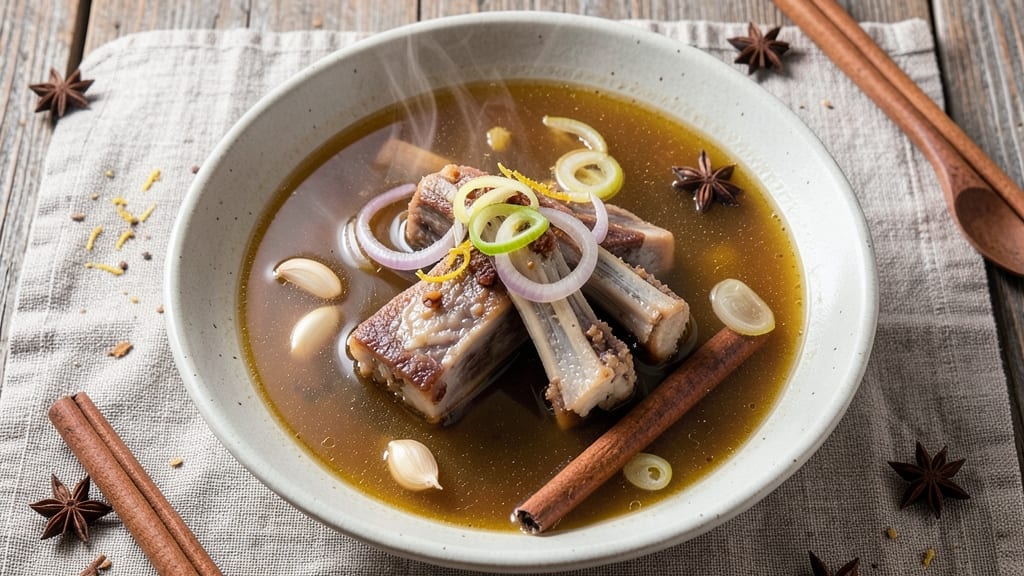
This Asian noodle soup broth recipe transforms simple pantry staples into a deeply aromatic, umami-rich foundation that elevates any bowl of ramen, pho, or miso soup. The secret lies in slow-simmered bones and aromatics, which extract layers of savory depth—no shortcuts, just time-honored technique.
I’ve perfected this method over years of testing, balancing traditional bone broth with modern efficiency for home cooks.
What sets this broth apart is the three-stage simmering process: first extracting collagen from bones, then building complexity with ginger, star anise, and fish sauce, and finally achieving a velvety texture by skimming impurities.
The result is a clear, golden broth with a bold, balanced flavor—savory yet bright, rich yet clean—that clings to every noodle and bite of protein. For those short on time, a pressure cooker reduces prep to 90 minutes instead of 4 hours, but the flavor remains identical.
The broth works with any noodle—ramen, udon, or rice sticks—and pairs beautifully with thinly sliced chicken, tofu, or shrimp. Garnish with fresh herbs, lime, and chili for a restaurant-quality finish. This isn’t just broth; it’s the soul of the dish.
Let’s build it step by step—your taste buds will thank you.
Ingredients for asian noodle soup broth
Pantry staples meet aromatic spices for a broth that builds flavor in layers.
| Ingredient | Amount | Notes |
|---|---|---|
| Beef Bones (Chuck or Knuckle) 🥩 | 2 lb | Raw, marrow-rich preferred |
| Yellow Onion 🧅 | 1 whole | Cut into quarters, root intact |
| Garlic Cloves 🧄 | 6 cloves | Smashed, peel left on |
| Fresh Ginger Root 🌿 | 2 tbsp | Grated, skin on for color |
| Star Anise Pods 🌟 | 2 whole | Lightly crushed |
| Cinnamon Sticks 🌿 | 2 whole | 2-inch lengths |
| Cardamom Pods 🌿 | 4 whole | Lightly cracked |
| Fish Sauce 🍶 | 2 tbsp | Red Boat brand preferred |
| Soy Sauce 🍶 | 2 tbsp | Light or all-purpose |
| Dried Shiitake Mushrooms 🍄 | 4 whole | Stems removed, torn |
| Water 💧 | 8 cups | Filtered preferred |
| Diamond Crystal Kosher Salt 🧂 | 1 tsp | For seasoning only |
| Black Peppercorns 🌶️ | 10 whole | Lightly crushed |
| Cornstarch 🌾 | 1 tbsp | For clarifying broth |
The bones anchor this broth—marrow-rich chuck or knuckle delivers the deepest collagen. Costco or Whole Foods carry pre-cut beef bones, but if buying whole, ask your butcher to split them for even cooking. Ginger and garlic should be freshly grated and smashed—pre-minced garlic lacks impact. Star anise and cardamom are non-negotiable for that authentic pho aroma; Penzeys sells them whole and potent. For shiitake mushrooms, dried is ideal, but if using fresh, hydrate them first and strain the soaking liquid—it's liquid gold.
No fish sauce? Extra soy sauce plus a dash of oyster sauce mimics the umami, though Red Boat remains unmatched. Short on star anise? 1 tsp ground anise seed works, but the flavor won't be identical. The water should be filtered or spring water—tap water can introduce off-flavors. For a quicker version, use a pressure cooker, but simmering uncovered** for 4+ hours develops the richest depth. Skim foam aggressively in the first hour—it's where impurities hide.
Broth clarifies beautifully with cornstarch—mix 1 tbsp with 2 tbsp cold water, then whisk into the hot broth just before straining. Store in glass jars in the fridge for up to 5 days or freeze in ice cube trays for single-serving portions. The flavor intensifies over time, so make a double batch—it disappears faster than you think. Label containers with the date; after 3 months frozen, the texture softens but the flavor remains robust.
Why You'll Love This Recipe
- Minimal Chopping Required: I swear, this broth takes five minutes of prep—just rough-chop the onion, smash the garlic and ginger, and toss in whole star anise. The bones do all the work after that, so even on nights when I’m exhausted, I can still pull this off.
- Deep Umami Magic: That slow-simmered beef bone broth? Rich. The marrow melts into the pot, the star anise adds this warm, licorice-kissed depth, and the ginger lingers like a whisper of sunshine. It’s the kind of flavor that makes you pause mid-sip and go, “Wait, is this really just broth?”
- Leftovers That Shine: Make a big batch on Sunday, and you’ve got soup for days—no sad, watery takeout leftovers here. Strain it, store it, and reheat with fresh noodles, a sprinkle of sesame oil, and a soft-boiled egg. My freezer’s always stocked with this stuff because it’s that good.
- Budget-Friendly Bone Power: Beef bones are the unsung hero of cheap eats—you get massive flavor for pennies, and the broth stretches across multiple meals. Honestly? This is how I feed my family well without breaking the bank, and the taste? Worth every penny saved.
Step-by-step instructions for Asian noodle soup broth
Transform simple pantry ingredients into a rich, aromatic broth with layers of umami and spice.
Prepare the Beef Bones for Maximum Flavor Extraction
Rinse the 2 lb beef bones thoroughly under cold water to remove any impurities. Place them in a large stockpot and cover with 8 cups water. Bring to a boil over high heat, then immediately reduce to a gentle simmer. Skim off any foam that rises to the surface during the first 10 minutes—this ensures a clear broth. The bones should remain submerged, so add more water if needed.
Simmer uncovered for 60 minutes to render the initial impurities. This initial boiling step breaks down the connective tissue and releases marrow, which will infuse the broth with deep, savory richness. The broth should develop a pale golden color and a subtle beefy aroma as it develops.
Build Complexity with Aromatics and Spices
Add the 1 whole yellow onion (cut into quarters), 6 smashed garlic cloves, 2 tbsp grated fresh ginger root, 2 lightly crushed star anise pods, 2 cinnamon sticks, and 4 lightly cracked cardamom pods to the pot. These aromatics form the flavor foundation of the broth. Stir gently to combine, ensuring the spices are fully submerged.
Continue simmering for 45 minutes at a gentle boil, maintaining the water level. The spices will infuse the broth with their distinct flavors—star anise adds licorice notes, cinnamon warmth, and cardamom a floral depth. The onion and ginger will soften and dissolve, contributing natural sweetness and complexity. Stir occasionally to prevent the spices from sticking to the bottom.
Enhance Umami with Shiitake Mushrooms and Fermented Sauces
Add the 4 whole dried shiitake mushrooms (stems removed and torn), 2 tbsp fish sauce, and 2 tbsp soy sauce to the pot. The mushrooms release their earthy, meaty essence as they rehydrate, while the fish and soy sauces introduce deep umami and saltiness. Stir once to distribute these ingredients evenly throughout the broth.
Simmer uncovered for another 60 minutes, allowing the flavors to meld. The broth should now have a rich, reddish hue from the shiitake mushrooms and a pronounced aroma of fermented fish and soy. Taste the broth at this stage—it should be deeply savory but not overly salty. If needed, adjust the seasoning with additional 1 tsp Diamond Crystal kosher salt or a splash of water to reach the desired consistency.
Clarify and Finish the Broth
In a small bowl, whisk together 1 tbsp cornstarch with 2 tablespoons of cold water until smooth. Slowly pour this slurry into the simmering broth while stirring continuously. The cornstarch will bind to impurities, creating a clearer broth. Simmer for an additional 10 minutes to allow the starch to fully work its magic.
Strain the broth through a fine-mesh sieve into a clean pot, pressing gently on the solids to extract every last drop of flavor. Discard the solids. The resulting broth should be clear, golden, and deeply aromatic, with a perfect balance of beefy richness, umami, and spice. Taste and adjust the seasoning one final time—it should be well-seasoned but not overpowering.
Cool and Store for Future Use
Allow the broth to cool to room temperature, then transfer it to airtight containers or jars. It will keep in the refrigerator for up to 5 days or can be frozen for up to 3 months. When ready to use, simply reheat the broth gently over medium-low heat, stirring occasionally, until warmed through. This broth forms the perfect base for any Asian noodle soup, ramen, or pho, delivering unparalleled depth and complexity.
Pro Tips For Making Asian Noodle Soup Broth
- BLISTER THE BONES FIRST: I learned this the hard way—skipping the initial sear means your broth will taste like watered-down beef tea. Get those bones smoking hot in a dry pot for 5 minutes, turning often, until they’re deep brown. That crust locks in flavor and caramelizes the collagen, which is what makes your broth rich.
- CHOP GINGER THINLY, NOT FINE: Thick slices of ginger (about 1/4-inch) infuse better than minced bits, which turn to mush and make the broth bitter. Toss them in whole, then remove them after 20 minutes—no one wants to fish out tiny pieces later.
- DON’T BOIL THE BROTH DRY: I’ve seen people walk away from the stove, and next thing you know, the pot’s empty. Keep the water level high enough to cover bones by at least 2 inches, and if it reduces too fast, add more. A slow simmer (just bubbles breaking the surface) is your friend—it builds depth without burning.
- USE STAR ANISE LATE: Sounds weird, but it works: Add the star anise in the last 30 minutes of simmering. Early on, it can overpower the broth with a medicinal taste. A single pod is enough—crush it lightly between your fingers to wake up the flavor, then strain it out.
Serving suggestions for leftovers
Noodle Choices
This broth works beautifully with fresh or dried noodles, but the texture changes dramatically.
For ramen, use 2 oz dried per serving—they hold their bite even after long simmering. Udon noodles (thicker and chewier) pair perfectly with the broth’s richness, while rice noodles (like vermicelli) soften quickly, ideal for quick servings.
I love egg noodles for a heartier texture—they absorb the broth’s flavors without becoming mushy. 🍜
Protein Pairings
Thinly sliced chicken breast (marinated in 1 tbsp soy sauce + 1 tsp honey) cooks in 3-4 minutes and stays tender. For vegetarian options, tofu (pressed and pan-seared) or shiitake mushrooms (sautéed with garlic) add umami depth. Shrimp poaches in just 2 minutes—add it last to avoid overcooking.
Pro tip: Reserve ½ cup broth to deglaze the pan after searing proteins for extra flavor. 🦐
Fresh Garnishes
Brighten every bowl with thinly sliced scallions, cilantro, or mint leaves. A squeeze of lime (just ½ tsp juice per bowl) cuts through the richness, while chili oil (or Sriracha) adds heat.
For texture, top with crushed peanuts, toasted sesame seeds, or fried shallots. I always keep a small bowl of bean sprouts nearby—they add a crisp, fresh contrast. 🌱
Bowl Assembly
Start with a bed of noodles in each bowl, then ladle hot broth over them (about 1½ cups per serving). Arrange proteins and garnishes artistically—think of it like a flavor map. For extra depth, drizzle with chili crisp or hoisin sauce on the side.
Serve with steamed greens (like bok choy) or pickled vegetables (like daikon) for balance. The key? Layer textures and temperatures—hot broth, cool garnishes, tender proteins. ✨
Side Dish Harmony
A quick-pickled cucumber salad (toss 1 cup julienned cucumber with 1 tbsp rice vinegar, ½ tsp sugar, and ¼ tsp salt) cleanses the palate. For something heartier, serve with steamed jasmine rice or garlic fried rice.
My go-to is miso-glazed eggplant—slice ½ eggplant, brush with 1 tbsp white miso + 1 tsp honey, and roast at 400°F for 20 minutes. The smoky-sweet contrast is unbeatable. 🥒
Beverage Pairings
For a light and refreshing match, serve with jasmine green tea—its floral notes complement the broth’s spices. A dry Riesling (like Dr. Loosen Blue Slate) mirrors the broth’s acidity, while Asian lagers (such as Sapporo) keep things crisp.
Avoid heavy beers or oaky whites—they’ll overpower the delicate balance. For a non-alcoholic option, yuzu soda adds a citrusy pop. 🍶
Nutrition facts
Frequently asked questions
Can I substitute chicken or pork bones for beef?
Chicken bones create a lighter, clearer broth perfect for ramen or pho ga, while pork bones add a slightly sweeter, fattier depth ideal for tonkotsu-style soups. Use 3-4 lbs chicken bones or 2 lbs pork knuckles for equivalent flavor. Adjust simmering time—chicken broth is ready in 2-3 hours, pork in 3-4 hours. The spices and fish sauce ratios remain the same.
Why does my broth look cloudy after simmering?
Cloudiness usually means unskimmed impurities or insufficient straining. Skim foam aggressively during the first 30 minutes of simmering, then clarify with the cornstarch slurry before straining. For extra clarity, chill the broth overnight—the fat solidifies and can be skimmed off easily. If using chicken bones, expect slightly more cloudiness due to natural proteins; strain through a cheesecloth-lined sieve for restaurant-quality results.
Can I make this broth vegetarian or vegan?
Yes! Replace beef bones with mushroom stems (soak 1 lb in 4 cups water for 30 minutes first) or kelp (½ cup). Skip fish sauce—use 2 tbsp soy sauce + 1 tbsp miso paste for umami. Add 1 piece kombu seaweed during simmering for depth. The broth will be lighter but still aromatic. For richness, blend ½ cup cashews with the cornstarch slurry before adding to the pot.
How do I fix broth that tastes too salty?
Dilute the broth by adding 1 cup hot water per quart of overly salty liquid. For a more precise fix, blend ½ cup cubed ice with ¼ cup milk or coconut milk in a food processor until smooth, then slowly whisk into the broth. This "ice milk" method gently reduces saltiness without thinning the flavor. If using fish sauce, reduce to 1 tbsp next time—it's potent!
Can I use a slow cooker or Instant Pot?
Both work! For a slow cooker, combine all ingredients (except cornstarch) and cook on low for 8-10 hours or high for 4-5 hours. For the Instant Pot, use the "Stock" setting for 90 minutes—no pressure release needed. The Instant Pot version is ready in 1 hour but may need extra skimming. Always strain through a fine-mesh sieve afterward to remove spices.