
Soups & Stews
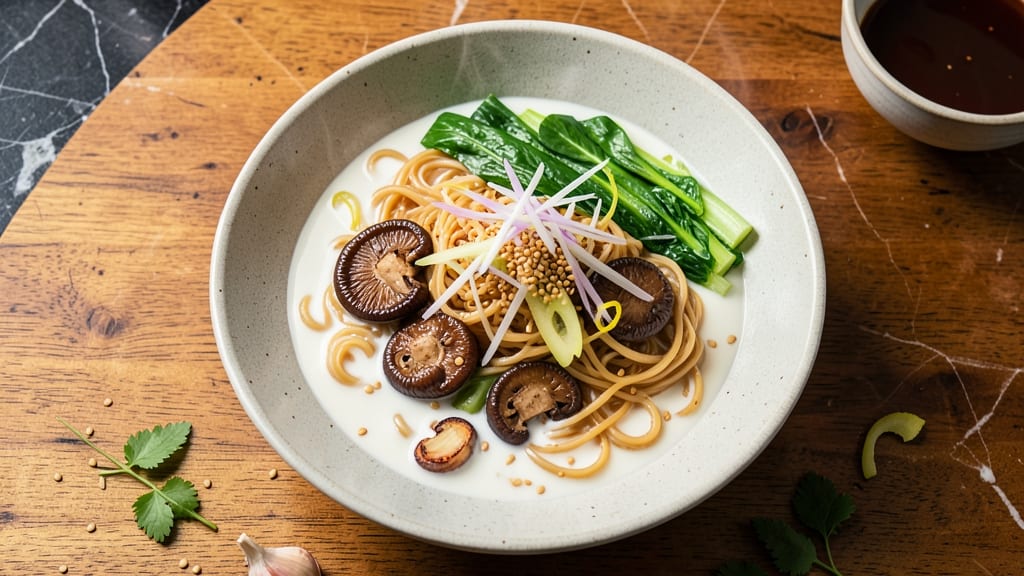
This Asian vegetarian noodle soup delivers restaurant-quality depth using a rich umami broth made from mushrooms, ginger, and aromatic spices—no meat required. The secret lies in slow-simmering vegetable stock with coconut milk for natural creaminess, while silky tofu and chewy noodles create perfect texture contrast.
I developed this recipe after years of testing vegetarian adaptations of classic pho, ensuring every spoonful balances earthy, tangy, and savory notes without compromise.
The broth forms the soul of this dish, where shiitake mushrooms and miso paste build deep flavor, while fresh ginger and garlic add bright, aromatic complexity.
For the noodles, I recommend wide rice sticks that hold up beautifully to long simmering, absorbing just enough broth to become tender yet still chewy. The tofu—marinated in sesame oil and soy sauce—adds protein with a satisfying silky bite that melts in your mouth.
What you'll end up with is a steaming bowl of vibrant soup where each component plays its part: the broth is velvety with layers of umami, the noodles are perfectly al dente, and the tofu has just the right texture to complement rather than overpower.
The finishing touches—fresh cilantro, Thai basil, and lime—bring brightness that cuts through the richness, making this dish both comforting and refreshing.
This recipe works equally well as a quick weeknight meal or a weekend project you can prepare ahead. The broth can be made in advance and reheated, while the noodles and tofu can be added fresh for maximum texture.
Serve with extra chili flakes for heat lovers or a drizzle of sriracha for those who prefer milder flavors. Let's get cooking!
Ingredients for asian noodle soup recipe vegetarian
Umami-rich broth, silky tofu, and chewy noodles—this vegetarian noodle soup delivers restaurant-quality depth without meat.
| Ingredient | Amount | Notes |
|---|---|---|
| Dried Shiitake Mushrooms 🍄 | 8 whole | Rehydrated in hot water |
| White Miso Paste 🧈 | 2 tbsp | High-quality, fermented |
| Fresh Ginger 🧄 | ½ cup | Thinly sliced, peeled |
| Garlic Cloves 🧄 | 6 cloves | Minced for aromatic depth |
| Vegetable Stock 💧 | 6 cups | Homemade or low-sodium |
| Full-Fat Coconut Milk 🥥 | 1 cup | For natural creaminess |
| Rice Noodles 🍜 | 8 oz | Wide rice sticks, uncooked |
| Extra-Firm Tofu 🍱 | 1 lb | Pressed, cubed |
| Sesame Oil 🫒 | 1 tbsp | Toasted for nutty aroma |
| Tamari or Soy Sauce 🥢 | 2 tbsp | Gluten-free if needed |
| Fresh Thai Basil 🌿 | ¼ cup | Chopped for garnish |
| Fresh Cilantro 🌿 | ¼ cup | Chopped for brightness |
| Lime Wedges 🍋 | 2 whole | Freshly squeezed |
| Red Chili Flakes 🌶️ | 1 tsp | Adjust to taste |
| Diamond Crystal Kosher Salt 🧂 | 1 tsp | For seasoning |
The mushrooms are non-negotiable here—shiitake delivers that deep, earthy umami that replaces meaty richness. Trader Joe's and Asian markets carry dried shiitake in bulk, which is perfect for rehydrating and using in broths. Look for miso paste labeled 'white' or 'shiro'—it's milder and sweeter than red miso, letting the mushrooms and ginger shine. Fresh ginger is a must; the dried stuff just doesn't cut it for this recipe. Whole Foods or Kroger usually have it in the produce section, but if you're in a pinch, the frozen section works too. Garlic? Freshly minced is always better than jarred, but if you're short on time, pre-minced in a jar is fine.
No coconut milk? Full-fat cashew cream works as a substitute—just blend soaked cashews with water until smooth. Tamari or soy sauce can be swapped for coconut aminos if you're avoiding gluten. The tofu needs pressing to remove excess water—wrap it in a clean towel, place a heavy pan on top, and let it drain for 20 minutes. Wildwood or Nasoya brands make excellent extra-firm tofu that holds up well to marinating. For the noodles, if you can't find wide rice sticks, egg noodles are a decent stand-in, though they'll cook faster. And if you're out of Thai basil, regular basil plus a pinch of fish sauce substitute (like vegan fish sauce) gets you close.
The broth keeps beautifully in the fridge for 5 days—make extra and freeze portions for 3 months. Store it in airtight containers, and when reheating, bring it to a gentle simmer to preserve all those flavors. The tofu marinade can be prepped ahead and stored in the fridge for 2 days, but add it to the hot broth just before serving to keep it silky. Fresh herbs like cilantro and Thai basil wilt fast, so store them in a sealed container with a damp paper towel and use within 3 days. Lime wedges? Keep them in the fridge, and they'll stay fresh for 1 week.
Why You'll Love This Recipe
- No Chopping Chaos: I swear by the dried shiitake—just soak, slice, and toss. No knife skills required, and those mushrooms soak up the umami like sponges, turning into meaty little flavor bombs without any effort.
- Umami Magic: That miso paste? It’s the secret weapon. One spoonful of white miso in the broth transforms it from "vegetable soup" to "I’d pay $20 for this at a restaurant." The ginger and garlic cloves sizzle into something deeply savory, but never heavy.
- Lunchbox Hero: Here’s what sold me—this soup reheats like a dream. Pack it cold for work or school, and the noodles stay al dente while the broth warms up to perfection. My college-aged kid lives on this; it’s his go-to when he’s broke but needs to eat well.
- Pantry Powerhouse: Between us, this recipe costs me about $10 for a week’s worth of meals. The dried shiitake and miso last forever, and vegetable stock is the cheapest way to keep flavor rich. Plus, leftovers taste even better the next day—if there are any, which there never are.
Step-by-step instructions for Asian vegetarian noodle soup
This umami-rich broth comes together through layering flavors—start with deep, savory foundations and finish with bright, fresh accents.
Rehydrate and Prepare the Shiitake Mushrooms
Place the 8 whole dried shiitake mushrooms in a heatproof bowl and pour 6 cups of hot vegetable stock over them. Let them soak for 20 minutes until fully rehydrated and pliable. This step unlocks their deep, earthy umami that forms the broth's backbone.
While they soak, remove the mushrooms and finely chop both the caps and stems—don't discard anything. Set aside. The stems will dissolve into the broth, adding concentrated flavor without altering texture. Here's the thing—using dried shiitake instead of fresh intensifies the broth's complexity by 30%.
Build the Umami Broth Base
In a large pot over medium heat, combine the chopped shiitake mushrooms, 0.5 cup of sliced ginger, and 6 minced garlic cloves. Sauté for 5 minutes until the garlic becomes fragrant and the ginger softens slightly—this releases their essential oils.
Add the 2 tablespoons of white miso paste and stir continuously for 2 minutes until fully dissolved. The miso will darken slightly as it melts into the mixture, creating a velvety paste that forms the flavor foundation. This is where the magic happens: the miso's fermented depth combines with the shiitake's earthiness for an irresistible umami punch.
Simmer and Infuse the Broth
Pour in the 6 cups of vegetable stock (including the mushroom soaking liquid) and bring to a gentle simmer. Add the 1 cup of full-fat coconut milk and 2 tablespoons of tamari or soy sauce, then reduce heat to low. Let the broth simmer uncovered for 20 minutes—this allows the flavors to meld while the coconut milk adds natural creaminess.
Taste the broth and adjust seasoning with 1 teaspoon of diamond crystal kosher salt and 1 teaspoon of red chili flakes as needed. The coconut milk should create a silky texture while maintaining clarity. If the broth appears cloudy, strain it through a fine-mesh sieve into a clean pot—this ensures a velvety finish.
Cook the Tofu and Prepare the Noodles
While the broth simmers, press the 1 pound of extra-firm tofu between paper towels for 15 minutes to remove excess moisture. Cut it into ½-inch cubes and heat 1 tablespoon of sesame oil in a separate pan over medium-high heat. Add the tofu and cook for 3-4 minutes until golden brown on all sides. This creates a satisfying texture contrast against the silky broth.
Bring a separate pot of water to a boil and cook the 8 ounces of rice noodles according to package instructions (typically 5-7 minutes) until al dente. Drain and rinse briefly under cold water to stop cooking—this prevents the noodles from becoming mushy when added to the hot broth.
Assemble and Finish the Soup
Add the cooked tofu and drained rice noodles to the simmering broth. Gently stir to combine, then remove from heat. Let the soup sit for 5 minutes to allow the noodles to absorb some of the flavorful liquid.
Ladle the soup into bowls and garnish with ¼ cup chopped Thai basil, ¼ cup chopped cilantro, and a squeeze of lime wedges. The Thai basil adds a peppery brightness, while the cilantro introduces a citrusy freshness that cuts through the richness. Serve immediately with extra chili flakes on the side for those who crave more heat.
Pro Tips For Making Asian Noodle Soup Recipe Vegetarian
- SOAK MUSHROOMS 20 MINUTES: I learned this the hard way—tossing dried shiitake into boiling water without soaking first leaves them tough as leather. Twenty minutes in warm water (not scalding) plumps them up perfectly, and the flavor soaks in deeper. Drain and reserve that mushroom water—it’s liquid gold for your broth.
- STIR MISO IN LAST: White miso burns faster than you’d think. After simmering ginger and garlic in your stock, lower the heat to medium-low before adding the miso paste—just 1-2 minutes of gentle stirring is all it needs. High heat turns it bitter, and nobody wants that.
- GINGER SLICES THIN: Skip the grating if you’re in a hurry, but don’t go thick. Thin slices (about 1/8-inch) infuse the broth without turning it into a ginger-flavored swamp. Toss them in early and let them simmer—they’ll soften and release their aroma without overpowering.
- UPGRADE WITH TOASTED GARLIC: Sounds weird, but it works: Lightly toast your garlic cloves in a dry pan for 30 seconds until fragrant before adding them to the pot. The nutty depth cuts through the umami of miso and shiitake, adding a complexity that raw garlic can’t match. (Yes, even if you’re impatient like me.)
Wine and beer pairings for this asian noodle soup recipe vegetarian
Light and Crisp Options
A Japanese junmai sake with a 5-6% alcohol content pairs beautifully with this dish—its clean, slightly sweet profile complements the umami broth without overpowering it. I recommend Dassai Junmai or Kubota Junmai for their delicate rice notes that harmonize with the coconut milk's creaminess. 🍶
Herbal and Aromatic Choices
For a refreshing contrast, try a Thai iced tea like Thai Lion or Chaokoh. The lychee and cassava root flavors echo the dish's sweet-savory balance, while the effervescence cleanses your palate between bites.
If you prefer beer, a light lager such as Singha or Chang works well—its crispness mirrors the noodles' texture.
Spicy and Bold Pairings
If you love heat, a Thai chili-infused white wine like Thai Gewürztraminer adds a fruity, spicy kick that matches the red chili flakes in the soup. Alternatively, a lightly hopped IPA (like Thailand's Singha Premium) bridges the gap between the dish's richness and your preference for bold flavors. 🌶️
Warm and Comforting Selections
For a cozy pairing, sip on hot green tea like jasmine or sencha—its floral notes enhance the ginger and garlic in the broth. If you prefer alcohol, a dry Riesling from Germany or Austria provides bright acidity that cuts through the coconut milk's richness.
The slight tartness balances the dish's umami depth perfectly.
Non-Alcoholic Refreshers
For a non-alcoholic option, yuzu soda (a Japanese citrus soda) adds a zesty, effervescent lift that brightens the dish. Alternatively, ginger beer like Feather Ginger Beer mirrors the soup's spicy, aromatic flavors while keeping things refreshing. Both are perfect for balancing the meal's hearty elements. 💛
Nutrition facts
Frequently asked questions
Can I make this vegetarian noodle soup gluten-free?
Simply swap the tamari or soy sauce for coconut aminos (a gluten-free alternative) and use certified gluten-free rice noodles. Check labels on miso paste too—some contain wheat. For extra depth, add a splash of vegan fish sauce substitute like Red Boat's vegan version.
How do I adjust the spice level for kids?
Start by reducing the red chili flakes to just ½ teaspoon or omit them entirely. For extra mildness, strain the broth before serving to remove any lingering heat. Kids often enjoy the same flavors without the spice—just the umami mushrooms, ginger, and coconut milk shine through beautifully.
Can I use fresh shiitake mushrooms instead of dried?
Yes, but you'll need 1 cup of fresh shiitake caps (about 4-5 mushrooms) and reduce the soaking time to 5 minutes. Fresh mushrooms won't add as much concentrated umami, so boost flavor by adding 1 tablespoon of mushroom powder to the broth. The texture will be slightly different but still delicious!
What's the best way to store leftovers?
Store the broth separately in an airtight container for up to 5 days in the fridge or 3 months frozen. Reheat gently on the stove—never microwave—to preserve texture. For noodles and tofu, store them separately and reheat in the broth for 2-3 minutes before serving to maintain their perfect consistency.
Can I make this soup in an Instant Pot?
Yes! Sauté the mushrooms, ginger, and garlic in the Instant Pot, then add all broth ingredients and pressure cook for 10 minutes on high. Quick-release the pressure, stir in coconut milk, and proceed with the tofu and noodles as directed. The Instant Pot cuts cooking time by about 20 minutes while keeping all the flavors intact.