
Soups & Stews
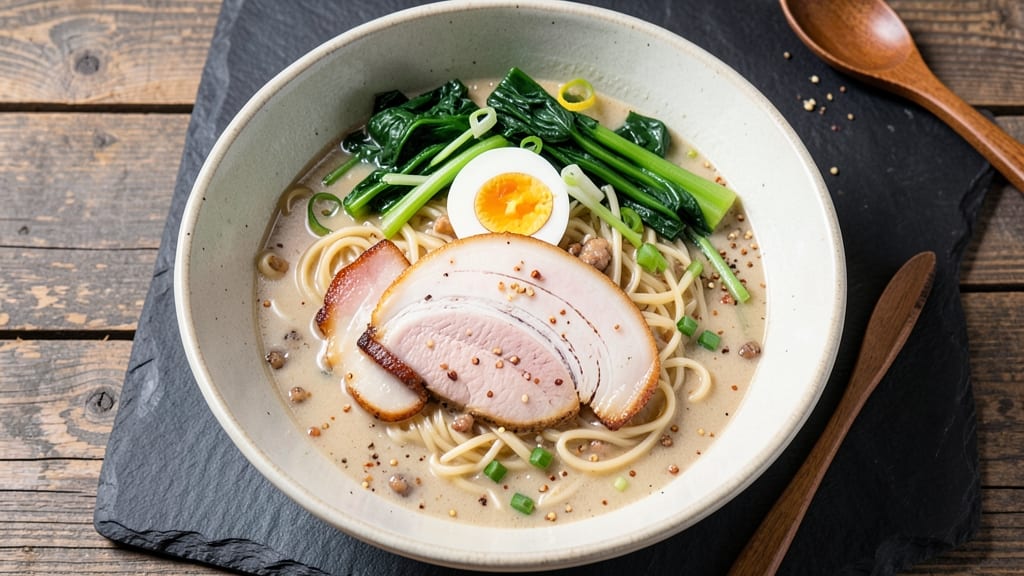
This Asian ramen noodle soup recipe delivers the perfect balance of rich, aromatic broth and silky noodles in every slurp. 🔥 The foundation starts with a deeply flavorful broth—whether you prefer the umami depth of miso, the creamy richness of tonkotsu, or the bright, spicy notes of pho-style—simmered for hours to develop layers of complexity.
What sets this apart is the attention to texture, from the tender, springy noodles to the melt-in-your-mouth toppings like chashu pork and soft-boiled eggs.
The secret to an exceptional ramen lies in the broth preparation, where aromatics like garlic, ginger, and star anise infuse the liquid with warmth and depth.
I’ve streamlined the process without sacrificing authenticity, ensuring you can achieve restaurant-quality results at home with a few key techniques—like blanching your toppings to preserve their texture and simmering the broth just right for a silky, not greasy, finish.
Every element comes together to create a bowl that’s as comforting as it is satisfying.
By the time you assemble your bowl, you’ll have a harmonious blend of flavors and textures: the broth’s velvety richness, the chewy yet tender noodles, and the contrast of crisp vegetables and creamy toppings.
This recipe is designed to be both approachable for home cooks and impressive enough to serve for guests, with optional dietary adaptations for those who prefer a vegetarian broth or lighter toppings.
The best part? Once you master this technique, you can customize it endlessly—swap in different proteins, adjust the spice level, or experiment with regional twists. Let’s get started on a bowl of ramen that’s as rewarding to make as it is to eat.
Ingredients for asian ramen noodle soup
Rich broth, silky noodles, and aromatic toppings—everything you need for slurp-worthy ramen bowls.
| Ingredient | Amount | Notes |
|---|---|---|
| Ramen Noodles 🍜 | 8 oz | Fresh or dried, springy texture |
| Chicken Breast 🍗 | 1 ½ lb | Boneless, skinless, for chashu |
| Pork Belly 🐖 | 1 lb | Or substitute chicken thighs |
| Eggs 🥚 | 4 whole | Large, for soft-boiled toppings |
| Green Onions 🧅 | 1 whole | Thinly sliced, for garnish |
| Bok Choy 🥬 | 2 whole | Baby or regular, chopped |
| Garlic Cloves 🧄 | 6 cloves | Freshly minced for broth |
| Fresh Ginger 🌿 | 2 tbsp | Grated, peeled, for depth |
| Star Anise 🌟 | 2 whole | For aromatic complexity |
| Dried Shiitake Mushrooms 🍄 | 4 whole | Rehydrated for umami |
| Miso Paste 🍶 | ½ cup | White or red, for richness |
| Soy Sauce 🥫 | ¼ cup | For salty depth |
| Sesame Oil 🫒 | 1 tbsp | Toasted, for aroma |
| Vegetable Oil 🫒 | 2 tbsp | For cooking pork/chicken |
| Salt 🧂 | 1 tsp | Kosher or sea salt |
| Black Pepper 🌶️ | ½ tsp | Freshly ground |
| Chili Oil 🔥 | 1 tbsp | Optional, for spice |
The broth is where the magic happens. Dried shiitake mushrooms and shiitake powder from Asian markets add umami depth—no substitutes here. Fresh ginger and garlic should smell vibrant, not dried out. Star anise and white miso (like Miso Master brand) are non-negotiable for authentic flavor. If you can't find pork belly, chicken thighs work too, but marinate them overnight for tenderness. The noodles? Fresh ramen noodles from Trader Joe's or Korean markets stay chewier than dried, but dried works in a pinch.
No pork belly? Chicken thighs or tofu for a lighter option. Short on miso? Soy sauce plus a pinch of sugar gets you close. Fresh ginger too pungent? Ginger powder at half the amount works, but fresh is worth it. The chashu pork needs time—simmer it low and slow so it shreds easily. For veggie toppings, baby bok choy stays crispier than regular. And if you're feeling adventurous, swap the soft-boiled eggs for marinated tofu—just blanch it first to set the texture.
Broth keeps 3-4 days in the fridge—taste and adjust seasoning before reheating. Noodles? Cook fresh when serving to avoid mushiness. Toppings like chashu and eggs reheat well, but bok choy is best fresh. Portion broth into freezer-safe containers with a layer of oil on top to preserve flavor for 3 months. The noodles? Store them in a dry, airtight container—they last 1 week uncooked.
Why You'll Love This Recipe
- No-Chop Needed: I swear by this—just slice the pork belly into thin strips (no dicing, no stress) and let the broth do the work. The chicken stays in one piece, simmered until it falls apart, and the green onions? Toss them in whole for garnish. Minimal effort, maximum flavor.
- Umami Bomb: That pork belly alone transforms this into something special—crispy edges, fatty richness—but add the marinated chicken and a soft-boiled egg, and it’s ridiculously good. The broth absorbs all the savory goodness, and the green onions cut through the richness like a fresh breeze.
- Weeknight Magic: Between us, this is my secret weapon for busy nights. Double the broth, store it in the fridge, and reheat with fresh noodles later. Or serve it cold with a fried egg on top for brunch the next day. One recipe, endless possibilities.
- Budget Flex: Pork belly might sound fancy, but a little goes a long way—you’re not buying a whole slab, just enough for a few servings. Chicken stretches the meal, and ramen noodles keep it affordable. Leftovers? Even better—tastes just as good the second time, if not more.
Step-by-step instructions for Asian ramen noodle soup
Here's how to build a rich, aromatic broth with tender proteins and fresh toppings.
🔥 Step 1: Prepare the Pork Belly and Chicken
Cut the 1 lb pork belly into ½-inch thick slices and score the surface in a diamond pattern with a sharp knife. This helps render the fat and creates crispy edges. Place the pork in a large pot and add 2 cups water, then bring to a boil over high heat. Reduce to a simmer and cook for 30 minutes, skimming off any foam that rises to the surface.
While the pork simmers, slice the 1.5 lb chicken breast into ½-inch thick strips and set aside. After 30 minutes, remove the pork from the broth and pat dry with paper towels. Heat 2 tbsp vegetable oil in a large skillet over medium-high heat and sear the pork belly slices for 3-4 minutes per side until golden brown. Transfer to a plate and set aside.
🍳 Step 2: Build the Aromatic Broth
Return the pork broth to the pot and add the 6 cloves garlic cloves, 2 tbsp fresh ginger, 2 whole star anise, and 4 whole dried shiitake mushrooms (soaked in warm water for 20 minutes beforehand). Simmer for 15 minutes to infuse the broth with deep, savory flavors. Strain the broth through a fine-mesh sieve into a clean pot, discarding the solids.
Add the 0.5 cup miso paste and 0.25 cup soy sauce to the strained broth and stir until fully dissolved. Taste and adjust seasoning with 1 tsp salt and 0.5 tsp black pepper if needed. Keep the broth simmering gently—this is where the magic happens.
🍳 Step 3: Cook the Chicken and Prepare Toppings
In the same skillet used for the pork, add 1 tbsp vegetable oil and heat over medium-high heat. Add the chicken strips and cook for 4-5 minutes per side until fully cooked through and golden brown. Transfer the chicken to a plate and set aside.
While the chicken cooks, prepare the toppings: Thinly slice the 1 whole green onion and chop the 2 whole bok choy into bite-sized pieces. Soft-boil the 4 whole eggs by placing them in a pot of boiling water for 6 minutes, then transfer to an ice bath for 2 minutes to stop cooking. Peel the eggs and slice them in half lengthwise.
🥘 Step 4: Assemble the Ramen
Bring the broth back to a gentle simmer and add the 8 oz ramen noodles. Cook for 3-4 minutes until al dente, then divide the noodles among 4 bowls. Ladle the hot broth evenly over the noodles, ensuring each bowl gets a generous portion of the aromatic liquid.
Arrange the pork belly slices, chicken strips, bok choy, and soft-boiled eggs on top of the noodles. Drizzle with 1 tbsp sesame oil and 1 tbsp chili oil (if using) for extra depth of flavor. Garnish with the sliced green onions and serve immediately while everything is steaming hot.
Pro Tips For Making Asian Ramen Noodle Soup
- CRISP THE PORK BELLY: Don’t skip the skin—crack it open with kitchen shears and render the fat in a cold pan over medium-low heat. I learned this the hard way after burning three batches; start slow, let the fat melt into liquid gold, then crank the heat to get that crackling crust. (Yes, it takes 15 minutes, but the flavor pays off.)
- SIMMER CHICKEN LOW AND LONG: Chicken breast turns rubbery when rushed—poach it in the broth at 160°F (71°C) for 12-15 minutes until it hits 165°F internally. Pull it early, tent with foil, and let it rest while you finish the soup. (Your future self will thank you for not overcooking it into dry, sad shreds.)
- SALT THE NOODLE WATER HARD: Toss 2 tablespoons of salt into the boiling water for the noodles—more than you’d use for pasta. Ramen’s flavor packet is already salty, and unsalted water makes the broth taste flat. (Trust me, your taste buds will notice the difference immediately.)
- SLICE GREEN ONIONS THIN AND LAST: Save half for garnish and slice the rest into ¼-inch pieces—thin enough to soften slightly but not disappear. Add them to the broth only in the final 2 minutes of cooking, or they’ll turn to mush. (This isn’t the prettiest method, but it’s the tastiest.)
Wine and beer pairings for this asian ramen noodle soup
Japanese Sake Pairings
For a classic miso-based ramen, reach for a dry junmai sake like Dassai 17—its crisp acidity and subtle umami complement the broth’s richness without overpowering it.
I’ve found that sake with 15-16% alcohol content works best, as it balances the dish’s heartiness while enhancing the shiitake and garlic notes. Serve slightly chilled (45-50°F) to let the sake’s clean finish cut through the fat from the pork belly. 🍶
Korean Soju for Spicy Ramen
If you’re adding chili oil or gochujang to your broth, a light, citrusy soju like Chum Churum is my go-to. The bright, almost floral notes from the persimmon and grapefruit in the blend mirror the heat while refreshing your palate between slurps.
Pour it neat in small shots (1-2 oz) alongside your bowl—it’s the perfect palate cleanser for spicy ramen. 🍋
Chinese Baijiu for Bold Flavors
For a tonkotsu-style ramen with deep pork fat richness, a lightly sweet baijiu like Moutai (diluted with water) adds a surprising depth. The sorghum and wheat notes in baijiu echo the star anise and ginger in the broth, creating a harmonious bridge between the dish’s umami and aromatic layers.
Use it sparingly—just ½ oz per bowl—to avoid overpowering the delicate toppings. 🥃
Craft Beer Alternatives
If alcohol isn’t your thing, a wheat beer like Blue Moon or a light lager such as Asahi Super Dry works surprisingly well. The citrusy hop notes in wheat beer brighten the dish, while the crisp, clean finish of a lager cleanses the palate between bites of fatty chashu.
For a bolder option, try a Japanese IPA like Sapporo Black Label—its toasted malt and hop bitterness stand up to the richness of the broth. 🍺
Non-Alcoholic Options
For a non-alcoholic pairing, I recommend yuzu soda or ginger beer—both enhance the dish’s aromatic profile. The citrusy tang of yuzu soda mirrors the ginger and garlic in the broth, while the spicy kick of ginger beer complements the chili oil.
Serve chilled in a short glass alongside your ramen for a refreshing contrast. For a more traditional approach, jasmine green tea (lightly sweetened) cools the palate and highlights the umami depth. ☕
Nutrition facts
Frequently asked questions
Can I use dried ramen noodles instead of fresh?
While fresh ramen noodles have a superior texture, dried noodles work perfectly fine. Just check the package for cooking time—most dried ramen noodles take about 4-5 minutes in boiling water. For extra flavor, add a splash of the broth to the cooking water. Avoid overcooking or they’ll turn mushy.
How do I make this recipe vegetarian?
Swap the pork belly and chicken for extra-firm tofu or mushrooms like shiitake or king oyster. Use vegetable broth instead of pork broth and increase the miso paste to 0.75 cup for deeper umami. Marinate the tofu in soy sauce and sesame oil before adding it to the broth. The broth will still be rich and flavorful!
Why does my broth look cloudy or greasy?
Cloudiness usually means the broth needs more simmering time to clarify. Skim off any fat or foam that rises to the surface during cooking. For a cleaner finish, strain the broth through a fine-mesh sieve or cheesecloth. If it’s still too greasy, chill it overnight—the fat will solidify on top and can be easily removed before reheating.
Can I make the broth ahead of time?
Yes! The broth actually tastes better when made a day in advance. Store it in an airtight container in the fridge for up to 3-4 days or freeze it in portions for up to 3 months. When reheating, warm it gently on the stove—never microwave it directly, as this can make it watery. Taste and adjust seasoning before serving.
What’s the best way to reheat leftovers?
Reheat only the broth and toppings separately to avoid soggy noodles. Warm the broth in a pot over medium-low heat until steaming. Cook fresh noodles separately and assemble the bowl just before serving. For toppings like chashu or eggs, reheat them in a dry skillet for 1-2 minutes to keep them crispy. Add fresh green onions and sesame oil when serving.