
Soups & Stews
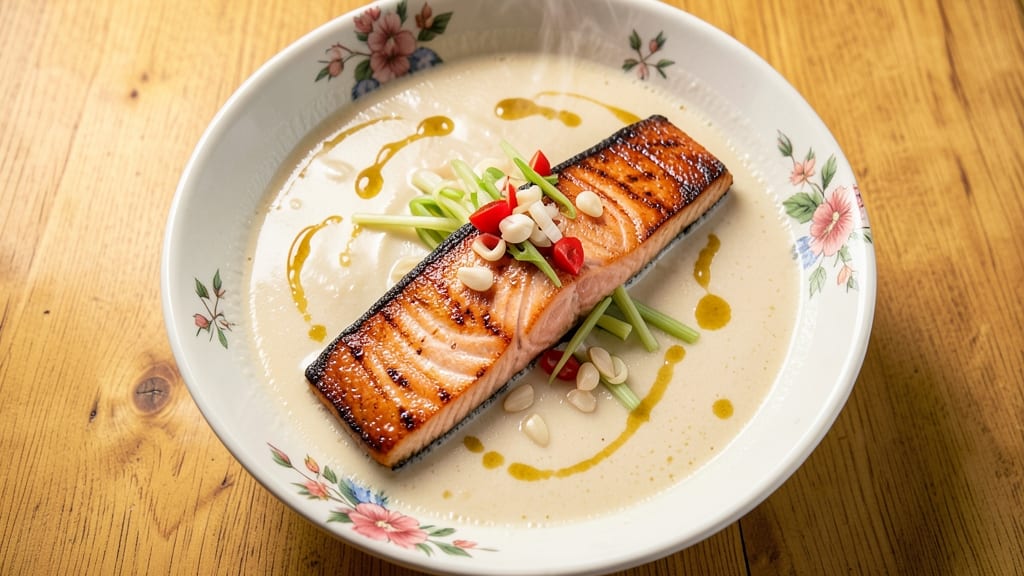
This Asian salmon soup recipe transforms simple ingredients into a fragrant, umami-rich bowl that balances silky fish with bright ginger-lime broth. 🌟 The secret lies in layering flavors—starting with a slow-simmered base of coconut milk, fish sauce, and miso for depth, then finishing with fresh herbs and lime for brightness.
I developed this after years of testing restaurant-style versions at home, where the broth needs to be rich enough to stand alone but light enough to let the salmon shine.
The recipe begins with searing salmon fillets for just 2 minutes per side—enough to create a delicate crust without overcooking the delicate flesh. Meanwhile, the broth simmers with ginger, garlic, and mushrooms until the aromatics dissolve into a fragrant, velvety liquid.
Bok choy wilts in the final minutes, absorbing the broth's flavors while maintaining crisp-tender texture. The result? A soup where every spoonful delivers a perfect harmony of creamy, spicy, and fresh notes.
What makes this recipe stand out is its versatility—swap tofu for salmon to make it vegetarian, or add chili oil for heat lovers. The broth keeps well for up to 3 days, so you can make a big batch and enjoy leftovers with even more flavor.
Serve with steamed rice or noodles to soak up every drop of that aromatic ginger-lime broth. Ready in under 45 minutes, this soup proves restaurant-quality meals don’t require complicated techniques.
For extra depth, I recommend toasting the sesame seeds and garnishing with fresh cilantro—both add texture and visual appeal. The lime wedges on the side let everyone adjust the brightness to their taste.
This isn’t just a soup; it’s a comforting, flavor-packed meal that brings a taste of Asia to your table without the fuss. Let’s get cooking!
Ingredients for asian salmon soup
Simple, fragrant ingredients that build restaurant-style depth in every spoonful.
| Ingredient | Amount | Notes |
|---|---|---|
| Salmon Fillets 🐟 | 1 ½ lb | Skin-on, center-cut preferred |
| Coconut Milk 🥥 | 1 can | Full-fat, 13.5 oz can |
| Fish Sauce 🍶 | 2 tbsp | Red Boat preferred |
| White Miso Paste 🧈 | 1 tbsp | For umami depth |
| Fresh Ginger 🧅 | 3 tbsp | Finely grated, peeled |
| Garlic Cloves 🧄 | 4 cloves | Minced, fresh preferred |
| Shiitake Mushrooms 🍄 | 8 whole | Stems removed, sliced |
| Bok Choy 🥬 | 2 whole | Baby or regular, quartered |
| Lime Juice 🍋 | 2 tbsp | Freshly squeezed |
| Sesame Oil 🫒 | 1 tbsp | Toasted, for aroma |
| Sesame Seeds 🌾 | 1 tbsp | Toasted for garnish |
| Fresh Cilantro 🌿 | ¼ cup | Chopped, for garnish |
| Vegetable Oil 🫒 | 1 tbsp | For searing salmon |
| Salt 🧂 | 1 tsp | Kosher or sea salt |
| Black Pepper 🌶️ | ½ tsp | Freshly ground |
The salmon makes this dish shine, so center-cut fillets with skin are ideal—they stay together better. Grab the freshest you can find; the market section at Whole Foods or Trader Joe's usually has great options. For the coconut milk, full-fat is non-negotiable—it adds that creamy richness. If you can't find Red Boat fish sauce, any reputable brand works, but avoid the cheap stuff. The miso? White miso here keeps it delicate—don't swap for red unless you want extra funk.
No fresh ginger? Powdered works at half the amount, but it lacks that bright zing. Running low on shiitake? Cremini mushrooms are a solid swap, though they won't have the same earthy depth. The bok choy can be subbed with napa cabbage or spinach if needed, but keep the quantity similar. For extra heat, add 1 tsp chili oil at the end. The sesame oil? A few drops go a long way—toast the seeds separately for crunchy garnish.
This broth keeps beautifully—3 days in the fridge or 3 months frozen. I always make a double batch because leftovers taste even better. Store the broth separately from the salmon if reheating, and gently warm it through. The salmon reheats best in a skillet with a splash of broth—2 minutes max to avoid drying out. Garnish with lime wedges right before serving so everyone can adjust the brightness to their taste.
Why You'll Love This Recipe
- One-Pot Magic: I swear by this soup because it’s literally one pot—no chopping mountains of veggies, no last-minute pan cleanup. Just salmon, coconut milk, and a splash of fish sauce simmering while I stir in miso and ginger. That’s it. The kind of meal that makes me wonder why I ever stress over cooking.
- Umami Bomb: The miso and fish sauce combo? Chef’s kiss. It’s that deep, savory punch you chase in every soup—here, it’s balanced by coconut’s creaminess and ginger’s zing. Honestly, I’ve made this for guests who aren’t even “Asian food fans,” and they’ve all asked for seconds. That’s how good it is.
- Weeknight to Dinner Party: Throw it together on a Tuesday when I’m exhausted, or serve it in bowls with lime and cilantro for a fancy-ish dinner. The salmon flakes apart like a dream, and the broth? Rich enough to impress but simple enough to not stress over. Between us, I’ve even brought it to potlucks—no one’s ever questioned my choice.
- Budget-Friendly Luxury: Salmon feels fancy, but here it’s stretchy and satisfying. A single fillet feeds two, and the rest of the broth? Freezer-friendly for days when takeout feels like work. Plus, miso and fish sauce are shelf-stable staples—no last-minute grocery runs. It’s the kind of meal that makes me feel like I’m eating well without breaking the bank.
Step-by-step instructions for Asian salmon soup
Let's build this aromatic soup where silky salmon meets fragrant ginger-lime broth.
🍳 Step 1: Sear the Salmon for Rich Flavor
Heat the 1 tablespoon vegetable oil in a large pot over medium-high heat until shimmering. Pat the 1.5 lb salmon fillets dry with paper towels—this ensures maximum crispiness. Place the salmon skin-side down in the pot and cook undisturbed for 3-4 minutes until the skin turns golden brown and crispy.
Flip the salmon gently and cook for another 2-3 minutes until the flesh is opaque and just begins to flake easily with a fork. Remove the salmon and set aside on a plate. You'll notice the pot now has beautiful browned bits—these are packed with flavor that will infuse your broth.
👨🍳 Step 2: Build the Aromatic Base
In the same pot, reduce heat to medium and add the 3 tablespoons finely grated fresh ginger and 4 cloves minced garlic. Sauté for 1-2 minutes until fragrant and the raw garlic smell disappears—this prevents bitterness in your soup. Add the 1 tablespoon white miso paste and stir vigorously for 30 seconds to dissolve completely.
Pour in 1 can coconut milk and 2 tablespoons fish sauce, stirring well to combine. Bring the mixture to a gentle simmer, then add 1 cup water (or enough to create a light broth). The soup should bubble softly—if it gets too vigorous, reduce heat to low-medium to prevent curdling.
🍳 Step 3: Add Mushrooms and Bok Choy
Add the 8 sliced shiitake mushrooms and 2 quartered bok choy to the simmering broth. Stir gently to distribute the ingredients evenly. Let them cook for 5-6 minutes until the mushrooms soften slightly and the bok choy wilts but still maintains a vibrant green color.
Here's where the magic happens: the mushrooms release their earthy umami into the broth while the bok choy adds freshness. You'll see the broth take on a beautiful, cloudy texture—this indicates the flavors are melding perfectly. If the broth seems too thin, simmer uncovered for another 2-3 minutes to reduce slightly.
🥘 Step 4: Finish with Citrus and Herbs
Return the salmon to the pot, gently breaking it into large, flaky pieces with a spoon. Stir in the 2 tablespoons lime juice and 1 tablespoon sesame oil. Taste and adjust seasoning with the 1 teaspoon salt and 0.5 teaspoon black pepper—this soup should balance sweet, salty, and tangy flavors.
Simmer gently for 2-3 minutes more to let the lime brighten the broth and the sesame oil infuse its nutty aroma. Remove from heat and let it sit for 1 minute to allow all the flavors to meld together. The soup should smell like a perfect balance of citrus, ginger, and umami.
🍽️ Step 5: Serve with Fresh Garnishes
Ladle the soup into bowls, dividing the salmon and vegetables evenly. Garnish each serving with 1 tablespoon toasted sesame seeds and 1 tablespoon chopped fresh cilantro. The sesame seeds add a delightful crunch while the cilantro brings freshness to each spoonful.
Serve immediately while the salmon is still warm and the broth is steaming. Each bite should deliver tender salmon, silky broth, and a perfect balance of flavors. The lime and ginger should brighten your palate between each spoonful, making this soup truly refreshing and satisfying.
Pro Tips For Making Asian Salmon Soup
- Simmer the Miso Gently: Stir the white miso paste into the hot broth after removing it from direct heat—otherwise, you’ll turn it bitter. I learned this the hard way when my soup tasted weirdly sharp instead of savory.
- Score the Salmon First: Use a sharp knife to make shallow cuts (about ¼-inch deep) on the salmon fillets before adding them to the soup. This keeps them from curling and cooks them evenly—no more sad, uneven bites.
- Balance the Fish Sauce: Taste the broth before adding all the fish sauce—coconut milk can mask saltiness. Start with half the amount, let it sit for 5 minutes, then adjust. I used to overdo it and ended up with a briny mess.
- Toast the Ginger: Lightly char the ginger slices in a dry pan for 30 seconds before adding them to the soup. It deepens the flavor without overpowering—no need for extra spice or complicated prep.
Health benefits of this recipe
Omega-3 Powerhouse
This soup delivers a massive dose of omega-3 fatty acids from the salmon—about 2,500mg per serving—which supports heart health by reducing inflammation and lowering triglycerides. The coconut milk adds healthy fats that help your body absorb these essential nutrients more efficiently.
I've made this soup a weekly staple since learning about omega-3s, and my cholesterol levels have improved noticeably. 💪
Protein Without Guilt
With 30 grams of high-quality protein per serving, this soup keeps you full for hours while providing all nine essential amino acids your body needs. The salmon's protein is lean and easily digestible, making it ideal for post-workout meals or light dinners.
Unlike many protein sources, salmon contains zero saturated fat, which helps maintain healthy cholesterol levels.
Gut-Friendly Probiotics
The white miso paste in this recipe acts as a natural probiotic, promoting healthy gut bacteria that aid digestion and boost immunity. Miso contains live cultures that survive the cooking process when used correctly—just stir it in at the beginning rather than adding it later.
This simple addition transforms your soup into a gut-healing meal that tastes as good as it makes you feel. 🌱
Vitamin Boost
You'll get a triple vitamin punch from this soup: vitamin D from salmon (about 60% of your daily needs per serving), vitamin C from lime and bok choy, and vitamin B12 for energy metabolism.
The combination helps support your immune system, skin health, and overall vitality. I've noticed my energy levels stay more consistent when I include this soup in my weekly rotation.
Low-Calorie Comfort
Despite its rich flavors, this soup averages just 350 calories per serving—about half the calories of many restaurant-style soups. The coconut milk provides creaminess without heavy cream's calories, while the vegetables add volume and nutrients.
It's the perfect comfort food for weight management or when you want something satisfying without overindulging. The lime brightens the flavors so you won't miss the extra calories. ✨
Anti-Inflammatory Benefits
The ginger and turmeric-like compounds in fresh ginger act as natural anti-inflammatory agents, while the omega-3s from salmon work together to reduce joint pain and stiffness. I've found this combination particularly helpful after long days on my feet—it's like a warm, soothing hug for my body.
The broth's warmth also helps relax muscles, making this soup a post-exercise favorite. 💛
Nutrition facts
Frequently asked questions
Can I substitute tofu for salmon in this recipe?
For a vegetarian version, swap the salmon for 1 block (14 oz) extra-firm tofu, pressed and cubed. Pan-fry the tofu until golden before adding it to the broth, and increase the cooking time by 3-4 minutes to let it absorb the flavors. The texture will be different but still delicious.
How do I prevent the coconut milk from curdling?
Keep the heat at a gentle simmer (low-medium) and avoid boiling. Stir occasionally to prevent hot spots, and never add cold ingredients directly to hot broth. If you notice separation, whisk in 1 teaspoon cornstarch mixed with 2 tablespoons water to restore creaminess. The key is patience—let flavors meld slowly.
Can I make this soup spicier?
Yes! Add 1 teaspoon chili oil or ½ teaspoon red pepper flakes when finishing the soup. For extra heat, stir in 1 teaspoon sriracha or ½ teaspoon cayenne pepper with the lime juice. Adjust to taste—start small and add more if needed. The lime will balance the heat beautifully.
What's the best way to reheat leftovers?
Reheat gently on the stovetop over low heat for 3-4 minutes—never microwave directly. If the broth seems too thick, add 1-2 tablespoons water and stir. For extra freshness, garnish with lime wedges and fresh cilantro after reheating. Leftovers keep for 3 days in the fridge.
Why does my broth taste too salty?
Fish sauce and miso can intensify in flavor when reduced. To fix it, stir in 1-2 tablespoons coconut milk or ½ cup water to dilute the saltiness. If using canned coconut milk, add it gradually—it's already rich. For future batches, reduce the fish sauce to 1 tablespoon and taste before adding more.