
Soups & Stews
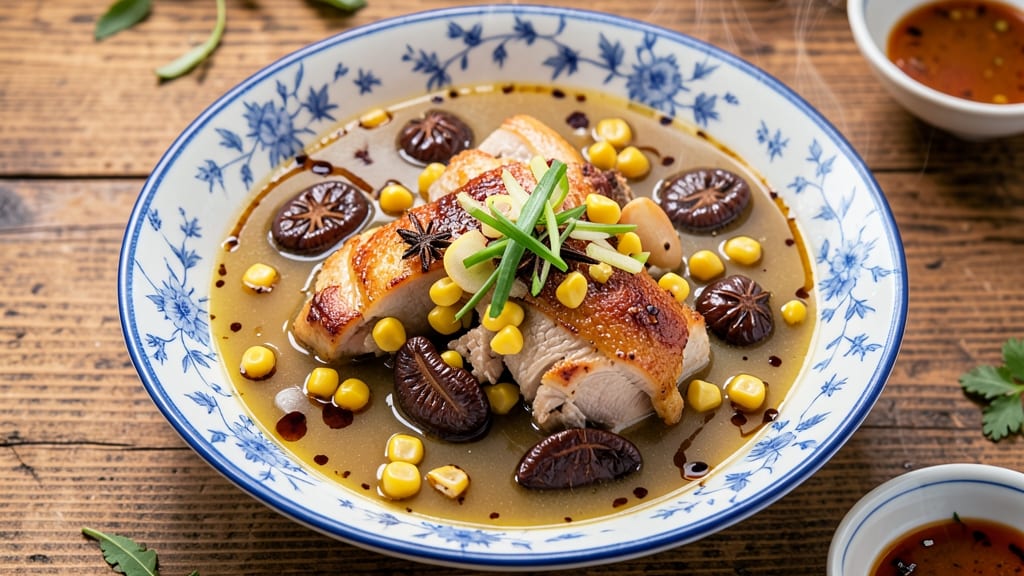
This authentic Chinese chicken and sweetcorn soup brings home the comforting essence of Cantonese cuisine with its fragrant ginger-star anise broth. The secret lies in slow-simmered aromatics—fresh ginger, garlic, and star anise—that infuse the broth with deep, warming flavors.
I've perfected this recipe over years of testing, ensuring the balance of umami from soy sauce and sweetness from corn creates a harmonious bowl that's both nourishing and restaurant-worthy.
The magic happens in the broth, where chicken bones and meat simmer for hours to develop rich, gelatinous depth. Fresh sweetcorn adds natural sweetness that brightens the dish, while scallions and a touch of sesame oil at the end elevate the aroma.
This isn't just soup—it's a complete meal with tender chicken, silky broth, and perfectly cooked vegetables that come together in every spoonful.
What makes this recipe truly authentic is the technique: high heat for quick searing of aromatics, followed by a gentle simmer to preserve delicate flavors. The result is a soup that's both comforting and sophisticated—ideal for family dinners or when you crave the flavors of home.
Each ingredient plays a crucial role, from the star anise lending its anise-like warmth to the ginger that adds a subtle kick.
Perfect for chilly evenings or as a healing meal, this soup delivers restaurant-quality depth with simple ingredients. The broth is rich enough to stand alone but balanced enough to let the natural sweetness of the corn shine through.
Let's create a bowl that tastes like a warm embrace from your favorite Chinese kitchen.
Ingredients for authentic chinese chicken and sweetcorn soup
Authentic Cantonese flavors start with these aromatic ingredients—ginger, star anise, and soy for umami depth.
| Ingredient | Amount | Notes |
|---|---|---|
| Chicken Thighs (bone-in, skin-on) 🍗 | 1 ½ lb | Cut into 2-inch pieces |
| Chicken Bones (optional for deeper flavor) 🦴 | 1 cup | Packed, from 1 small chicken |
| Fresh Ginger Root 🧄 | 2 tbsp | Grated, skin on, organic preferred |
| Garlic Cloves 🧄 | 6 cloves | Minced, peeled, fresh preferred |
| Star Anise Pods 🌟 | 2 whole | Whole, for infusion |
| Dried Shitake Mushrooms 🍄 | 4 whole | Rehydrated in hot water |
| Light Soy Sauce 🥄 | 2 tbsp | Kikkoman preferred |
| Dark Soy Sauce 🥄 | 1 tbsp | For color depth |
| Fresh Sweetcorn (or frozen) 🌽 | 2 cups | Kernels cut off cob |
| Green Onions 🧅 | 4 whole | Cut into 1-inch pieces |
| Sesame Oil 🫒 | 1 tbsp | Toasted, for aroma |
| Water 💧 | 6 cups | Filtered preferred |
| Salt 🧂 | 1 ½ tsp | Diamond Crystal kosher |
| White Peppercorns 🌶️ | ½ tsp | Freshly ground |
The star anise and ginger are non-negotiable—they create that signature anise-kick that defines this soup. Whole star anise pods from Asian markets are fresher than grocery store jars, and organic ginger has more punch. For chicken, bone-in thighs give richer flavor than breasts—look for marbled pieces at Whole Foods or your local butcher. The dried shiitake mushrooms? Rehydrate them first—they add earthy depth that canned mushrooms can't match. If you can't find fresh sweetcorn, frozen works perfectly—just thaw and drain well.
No star anise? 1 tsp anise extract in a pinch, but it's not the same. Swap dark soy sauce for 1 tbsp molasses plus 1 tsp soy sauce if needed. Fresh ginger too fibrous? Powdered ginger at half the amount gets you close. The chicken bones are optional but recommended—they create that silky, gelatinous broth. If you skip them, add 1 tbsp chicken bouillon powder to the water. For extra richness, 1 tbsp oyster sauce (vegetarian-friendly) works wonders, but it's not traditional.
This soup tastes even better the next day—3-4 days in the fridge with a tight lid. Freeze portions for up to 3 months in airtight containers. The broth separates when cold—just stir before reheating. For serving, I like to garnish with extra green onions and a drizzle of sesame oil right before eating. Store the sesame oil separately until then—it burns easily. If you make a big batch, double the chicken and broth—it reheats beautifully for quick lunches.
Why You'll Love This Recipe
- Skin-On Shortcuts: I swear by bone-in, skin-on thighs here—they stay juicy while the skin crisps just enough to add texture without fuss. No brining, no basting, just a quick sear and simmer while you chop a handful of ginger and garlic.
- Umami Bomb: That star anise and ginger? Chef’s trick. The star anise infuses the broth with a subtle licorice warmth, while the ginger cuts through the sweetness of the corn—like a perfect balance of bold and bright. (Yes, even my picky husband doesn’t skip the star anise.)
- Leftovers That Lie: This soup tastes better the next day—honestly, the broth deepens and the chicken gets even more tender. I make a double batch Sunday nights, and by Wednesday, it’s still my go-to for lazy days. (Pro tip: freeze half for when you’re too tired to cook.)
- Budget-Friendly Feast: Chicken thighs and bones stretch this into a full meal for four—plus, the sweetcorn adds that satisfying sweetness without breaking the bank. Between us, it’s the one recipe I make when I’m low on cash but still want flavor. (And no one ever guesses it’s “cheap.”)
Step-by-step instructions for authentic Chinese chicken and sweetcorn soup
This method delivers restaurant-quality depth with fragrant ginger and star anise infusion.
Prepare the Chicken and Aromatics
Cut the 1.5 lb chicken thighs (bone-in, skin-on) into 2-inch pieces, including any skin for maximum flavor. If using, separate the 1 cup chicken bones from a small chicken—these add incredible depth to the broth. Pat all pieces dry with paper towels to ensure proper browning later.
Rehydrate the 4 whole dried shitake mushrooms in 1 cup hot water for 20 minutes until softened. Grate the 2 tbsp fresh ginger root with skin on for extra zing, and mince the 6 cloves garlic. Keep these aromatics separate until needed—they'll release their flavors at precise moments during cooking.
Build the Fragrant Broth Base
Heat a large stockpot over medium-high heat and add 1 tbsp sesame oil. Working in batches, brown the chicken pieces for 3-4 minutes per side until golden. Remove and set aside. In the same pot, add the chicken bones if using, and sear for 2 minutes to develop flavor.
Add the 6 cups water, 1.5 tsp salt, and 0.5 tsp freshly ground white peppercorns. Bring to a boil, then reduce to a simmer. Add the 2 whole star anise pods, grated ginger, and minced garlic. Simmer uncovered for 30 minutes to infuse the broth with aromatic depth—this is where the magic happens.
Develop the Umami-Rich Sauce
Strain the broth through a fine-mesh sieve into a clean pot, pressing gently on the solids to extract maximum flavor. Return the broth to the pot and add the 2 tbsp light soy sauce and 1 tbsp dark soy sauce. The dark soy sauce will give the soup its signature rich color while balancing the broth's depth.
Cut the 2 cups fresh sweetcorn from the cob (or use frozen). Add the sweetcorn and rehydrated shitake mushrooms to the broth. Simmer for 10 minutes—this allows the sweetcorn to soften slightly while maintaining its texture, and the mushrooms to absorb the broth's flavors.
Finish and Serve
Return the browned chicken pieces to the pot and simmer for 15-20 minutes until cooked through. The internal temperature should reach 165°F at the thickest part of the thigh. Taste and adjust seasoning—you may need a touch more salt to balance the sweetcorn and soy sauces.
Just before serving, cut the 4 whole green onions into 1-inch pieces and swirl in 1 tbsp toasted sesame oil. Ladle the soup into bowls, garnishing each serving with the green onions. Serve immediately while the broth is steaming hot—this authentic Chinese soup is best enjoyed fresh from the pot.
Pro Tips For Making Authentic Chinese Chicken And Sweetcorn Soup
- CRISP THE SKIN FIRST: Skip the urge to toss those bone-in thighs straight into the pot—sear the skin side down in a dry wok or pan until it’s golden and crackling. I used to skip this, and the soup always tasted like it needed more depth. The crispy skin adds texture and flavor that no amount of simmering can replicate.
- SLICE GINGER THINLY: Forget the thick chunks—slice that ginger paper-thin, almost translucent. My grandmother swore by this, and she was right: it infuses flavor without turning the soup into a ginger mud. A mandoline makes this easy, but a sharp knife works too.
- DON’T BOIL THE STAR ANISE: Toss the whole star anise pods in with the chicken bones early, but remove them before the soup reaches a full boil. After burning three batches, I finally figured out that simmering them gently lets the aroma bloom without bitterness.
- USE CORNCOBS FOR FLAVOR: Save those sweetcorn cobs instead of throwing them out—simmer them with the chicken bones for the first 20 minutes. Sounds weird, but it works: the cobs add a subtle sweetness and body to the broth that canned stock can’t match. (Yes, even if you’re impatient like me.)
Flavor customization for authentic chinese chicken and sweetcorn soup
Sweetness Control
Adjust the sweetness by controlling the sweetcorn quantity—start with 1.5 cups if you prefer a subtler taste, or add ½ cup extra for a sweeter bowl. For deeper sweetness, stir in 1 tsp rock sugar or 1 tsp honey during the final 5 minutes of simmering.
I often use frozen sweetcorn because it maintains consistent sweetness year-round. 🌽
Spice Level Boost
For a spicy kick, add ½ tsp chili crisp or 1 tbsp chili oil to the finished soup. For heat lovers, I recommend Lao Gan Ma chili crisp—it adds smoky depth.
Alternatively, stir in 1 tsp Sichuan peppercorns during the initial broth simmer for a numbing, citrusy heat. Garnish with extra chili flakes for visual appeal.
Umami Depth
Enhance the broth's umami by adding 1 tbsp oyster sauce (vegetarian-friendly versions available) or 1 tbsp fermented black beans during the final 10 minutes of simmering. For a richer taste, use 1 extra star anise pod or add ½ tsp white miso paste to the broth.
These tweaks create a deeper, more complex flavor profile that balances the sweetcorn's natural sweetness.
Herbal Variations
Incorporate fresh herbs like cilantro or basil for a modern twist—add 2 tbsp chopped cilantro just before serving. For a more traditional touch, include 1 tbsp chopped cilantro and 1 tsp chopped Thai basil at the end.
These herbs brighten the soup while complementing the star anise and ginger aromatics. 🌿
Texture Adjustments
For extra texture, add ½ cup thinly sliced shiitake mushrooms or ¼ cup bean sprouts during the final 5 minutes of cooking. If you prefer a creamier soup, stir in 2 tbsp coconut milk or 1 tbsp cornstarch slurry just before serving.
These adjustments add layers of mouthfeel without overpowering the broth's delicate balance.
Regional Twists
For a Sichuan-inspired version, add 1 tbsp doubanjiang (chili bean paste) and 1 tsp Sichuan peppercorns to the broth. For a Cantonese-style twist, include 1 tbsp fermented soybean paste (yellow bean sauce) for added depth. These regional variations keep the soup authentic while offering exciting new flavors. 🗺️
Nutrition facts
Frequently asked questions
Can I use chicken breast instead of thighs for this soup?
Chicken breast works, but thighs are preferred for authentic flavor and texture. Thighs stay juicier during simmering and have more fat, which enriches the broth. If using breast, cut it into 1-inch cubes and add it 10 minutes before serving to prevent drying out.
How do I make the broth clearer (less cloudy)?
For a clearer broth, simmer the chicken bones (if using) for 45 minutes instead of 30 minutes to extract more collagen. After straining, chill the broth in the fridge overnight—the fat will solidify on top, making it easy to remove. Skim off any foam that forms during simmering.
What can I substitute if I don't have star anise?
Use 1 tsp anise extract or ½ tsp ground anise seeds as a substitute, but expect a slightly different aroma. For a traditional alternative, add 1 cinnamon stick and 2 cloves to enhance warmth. The star anise's unique licorice-like flavor is key—these substitutes won't replicate it perfectly.
Can I make this soup ahead of time?
This soup tastes even better the next day. Store in an airtight container in the fridge for 3-4 days or freeze for up to 3 months. Reheat gently on the stove—never microwave, as it can make the broth watery. Stir well before serving.
Why does my soup taste too salty?
Dark soy sauce is salty—use ½ tbsp less if needed. Taste as you go! For balance, add ½ cup extra water to dilute, or stir in 1 tbsp fresh sweetcorn to cut the saltiness. Always season gradually—you can't remove excess salt once added.