
Soups & Stews
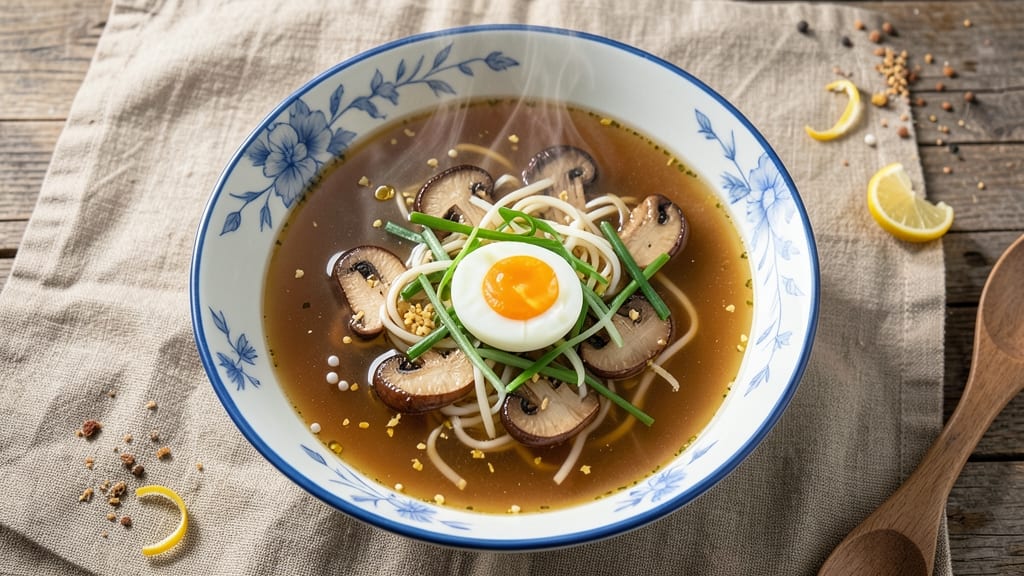
This authentic Chinese egg drop soup recipe delivers the delicate balance of silky broth and ribboned eggs that makes it a restaurant favorite. The secret lies in a clear, flavorful chicken broth infused with ginger and scallions, simmered just until the aromatics release their essence without overpowering.
I've perfected this technique after years of testing—no shortcuts, just the traditional method that transforms simple ingredients into something truly special.
The magic happens when you poach the eggs directly into the simmering broth, creating those signature delicate ribbons that dissolve into the soup with just one sip.
This isn't your average egg drop soup—it's the version you'd find in a dim sum house, where every component plays its part without stealing the spotlight.
The broth remains crystal clear, the eggs cook to perfect doneness in seconds, and the final touch of sesame oil adds a subtle aromatic finish.
What makes this recipe truly authentic is the attention to detail: the slow simmering of the broth, the precise temperature control when adding eggs, and the balance of ingredients that create harmony in every spoonful.
You'll achieve that restaurant-quality result at home with just a few key techniques and quality ingredients. The end product is light yet satisfying, comforting yet refined—a soup that feels like a warm embrace in a bowl.
Perfect for chilly evenings or as a light lunch, this egg drop soup serves 4 and comes together in about 30 minutes of active time (plus simmering). The beauty of this recipe is its versatility—use chicken broth for classic flavor or swap to vegetable broth for a lighter version.
Garnish with scallions and a drizzle of sesame oil for that final authentic touch. Let's create this timeless classic together.
Ingredients for authentic chinese egg drop soup
Eleven essential ingredients transform into restaurant-quality egg drop soup with perfect clarity and texture.
| Ingredient | Amount | Notes |
|---|---|---|
| Chicken Broth 🍲 | 4 cups | Homemade or high-quality store-bought |
| Fresh Eggs 🥚 | 4 whole | Room temperature for perfect ribbons |
| Fresh Ginger 🧄 | 1 tbsp | Finely minced, aromatic quality |
| Green Onions 🧅 | 3 whole | White and green parts separated |
| Sesame Oil 🫒 | 1 tbsp | Toasted, for authentic aroma |
| White Peppercorns 🌶️ | ¼ tsp | Freshly ground for subtle heat |
| Cornstarch 🌾 | 1 tsp | Dissolved in 1 tbsp water |
| Salt 🧂 | ½ tsp | Diamond Crystal preferred |
| Vegetable Oil 🫒 | 1 tbsp | For gentle simmering |
| Dried Shiitake Mushrooms 🍄 | 2 whole | Soaked and sliced for umami |
| Light Soy Sauce 🥄 | 1 tsp | Kikkoman preferred for balance |
The broth is the foundation—homemade yields the best results, but Knight's or Swanson organic chicken broth works in a pinch. For authentic depth, dried shiitake mushrooms (soaked in hot water for 20 minutes) add umami complexity without overpowering. Fresh ginger should smell vibrant and pungent—no woody or musty notes. The green onions must be crisp; separate the white and green parts for proper layering. Sesame oil should be toasted, not raw—La Choy is a reliable choice. If you can't find white peppercorns, black pepper works but lacks the subtle sophistication.
No fresh ginger? Ginger paste at half the amount suffices, though texture differs. Substitute vegetable broth for a lighter version, but reduce salt by one-third. Eggs must be room temperature—cold eggs create dense ribbons. For a vegetarian option, replace chicken broth with mushroom or kombu broth and add 1 tsp miso paste. The cornstarch slurry is critical—it should be smooth with no lumps. If you lack cornstarch, arrowroot powder works equally well. Sesame oil can be omitted but robs the dish of its signature aroma; toasted peanut oil is a distant second.
Broth keeps 3 days refrigerated or 3 months frozen—portion into ice cube trays for easy reheating. Fresh ginger lasts 2 weeks in the fridge; dried shiitake stores 6 months in a sealed container. Green onions wilt quickly—trim and store only the white parts submerged in water. Eggs should be used within 1 week of purchase for best texture. For batch cooking, double the broth and freeze in 1-cup portions; reheat gently before adding eggs. Sesame oil loses potency after opening—use within 3 months for optimal flavor.
Why You'll Love This Recipe
- No Chopping Needed: I swear by this—just slice ginger thin, chop green onions roughly (no one’s judging), and you’re done. The broth does all the work while you stir in ribbons of raw egg for that signature silky texture.
- Umami Bomb: That first sip of ginger-scented chicken broth, then the egg swirling in like liquid gold? Honestly, the sesame oil finish takes it from good to "why didn’t I make this sooner?" The balance of salty, fresh, and nutty is pure satisfaction.
- Leftovers That Don’t Suck: Unlike takeout that turns rubbery, this soup improves the next day. Reheat gently, crack in another egg, and boom—still creamy, still packed with flavor. My lunchbox’s new best friend.
- Budget Comfort: Five ingredients, zero guilt. Chicken broth stretches for days, eggs are cheap, and a knob of ginger lasts forever. It’s the kind of meal that makes you feel fancy without emptying your wallet—perfect for when you’re broke but still deserve good food.
Step-by-step instructions for authentic Chinese egg drop soup
Master the technique behind silky broth and delicate egg ribbons for restaurant-quality results.
Prepare the Shiitake Mushrooms and Ginger
Soak the 2 whole dried shiitake mushrooms in warm water for 10 minutes until pliable. Slice them thinly against the grain—this creates maximum surface area for flavor infusion. In a small bowl, finely mince the 1 tablespoon fresh ginger using a microplane or sharp knife. The ginger should resemble tiny specks rather than chunks for even distribution.
This preparation ensures the mushrooms rehydrate properly and the ginger releases its aromatic oils without becoming bitter. I always soak dried shiitake separately rather than in the broth—this prevents the soup from becoming cloudy. Reserve the soaking water for later use if needed.
Build the Flavor Base
Heat the 1 tablespoon vegetable oil in a clean soup pot over medium heat. Add the sliced shiitake mushrooms and cook for 2 minutes until they begin to soften and release their umami essence. Add the minced ginger and cook for another 30 seconds until fragrant—you should smell that bright, citrusy aroma that defines authentic Chinese soups.
Pour in the 4 cups chicken broth and bring to a gentle simmer over medium-low heat. Add the 1 teaspoon light soy sauce and 0.25 teaspoon freshly ground white peppercorns. The broth should remain clear with just a hint of shimmer—this indicates proper heat control. Skim off any foam that rises to the surface during the first 3 minutes of simmering.
Thicken the Broth
In a small bowl, dissolve the 1 teaspoon cornstarch in 1 tablespoon cold water until completely smooth. Bring the broth to a gentle boil, then reduce heat to low. Slowly ladle in the cornstarch slurry while stirring continuously with a wooden spoon. The broth should thicken to a velvety consistency within 1-2 minutes—it should coat the back of a spoon but remain pourable.
This thickening technique creates that signature silky texture without making the soup gluey. If the broth thickens too quickly, add 1-2 tablespoons of hot broth to adjust consistency. The goal is a broth that clings to ingredients but still flows freely when poured.
Poach the Eggs Perfectly
Crack the 4 whole fresh eggs into a small bowl. Using a fork, gently whisk until the whites are fully combined but yolks remain slightly broken—this creates delicate ribbons when dropped into hot broth. Bring the thickened broth to a gentle simmer (small bubbles breaking the surface) rather than a rolling boil.
Working one at a time, drizzle each egg into the broth while stirring continuously with a wooden spoon in small circles. The gentle movement creates those signature egg ribbons while keeping the yolks intact. Cook for exactly 1 minute after all eggs are in the broth, then remove from heat immediately. The eggs should be just set but still runny in the center.
Finish and Serve
Return the pot to low heat and stir in the 1 tablespoon toasted sesame oil. This final step adds that authentic aromatic depth that separates homemade from restaurant versions. Divide the 3 whole green onions between bowls—separate the white and green parts, placing whites at the bottom and greens on top for visual appeal.
Ladle the hot soup over the green onions, being careful not to break the egg ribbons. Sprinkle with the remaining 0.5 teaspoon salt and serve immediately. The contrast between the silky broth, delicate egg ribbons, and fresh green onions creates that perfect balance of textures and temperatures that defines authentic Chinese egg drop soup.
Pro Tips For Making Authentic Chinese Egg Drop Soup
- Use Cold Eggs Straight: I learned this the hard way—room-temperature eggs slide into the broth like sad pancakes. Keep them refrigerated until the last second, then crack them into an ice-cold bowl. The shock keeps the whites firm and the yolk intact when you drizzle them in. No more breaking up like overcooked scrambled eggs.
- Simmer Ginger Low and Slow: Fresh ginger is non-negotiable, but don’t let it turn to mush or burn. Slice it paper-thin (about 1/16-inch) and add it to the broth after it’s boiling but before you turn the heat down. A gentle simmer for 5 minutes is all it takes—any longer and it’ll lose its bite, any less and you’ll miss the aromatic punch.
- Salt the Broth Early: If you wait until the eggs go in, you’ll end up with a soup that tastes like it’s missing something. Season the broth with salt (and a pinch of white pepper, if you’re feeling fancy) while it’s hot but before the ginger. This lets the flavors meld properly—trust me, your taste buds will notice the difference.
- Drizzle Eggs in Streams: Pouring eggs in all at once? You’re asking for a gloopy mess. Use a fork to whisk the egg first, then slowly drizzle it in while stirring the broth constantly with chopsticks or a spoon. Aim for thin, wispy ribbons—this is how you get that signature silky texture, not a scrambled egg disaster.
Make-ahead tips for this authentic chinese egg drop soup
Broth Prep Ahead
Prepare and store the broth separately to maintain clarity and flavor. Simmer the 4 cups chicken broth with 1 tbsp minced ginger, 1 tsp light soy sauce, and ¼ tsp white peppercorns for 15 minutes, then strain.
Cool completely before refrigerating in an airtight container for up to 3 days or freezing for 3 months. When reheating, warm gently over low heat—never microwave—to preserve texture. 🌡️
Egg Prep Shortcut
Whisk eggs in advance and store in the fridge for up to 12 hours—just whisk again before using. For extra convenience, pre-measure 1 tsp cornstarch + 1 tbsp water in a small jar.
This slurry keeps at room temperature for 2 days or refrigerated for 1 week. The key is keeping everything cold until the last minute to prevent premature thickening. ✨
Garnish Assembly
Prep garnishes separately for freshness. Trim 3 green onions and store white and green parts in separate airtight containers with damp paper towels. The whites keep 5 days submerged in water; greens last 3 days wrapped in a damp towel.
Toast 1 tbsp sesame oil in a dry pan for 30 seconds—it keeps at room temperature for 3 months after toasting. 🧅
Batch Cooking
Double the broth recipe and freeze in 1-cup portions for quick meals. When ready to serve, thaw overnight in the fridge, then reheat with 1 tsp cornstarch slurry. For the eggs, keep them refrigerated until serving—never freeze eggs for this dish.
I make 8 cups broth on weekends and freeze half for busy weeknights. The eggs are always freshest when used immediately. ❄️
Reheating Leftovers
Reheat soup gently on the stovetop over low heat for 5-7 minutes, stirring occasionally. Add 1-2 tbsp hot water if it thickens too much. For eggs, reheat only until just set—overcooking makes them rubbery.
Store leftovers in shallow containers to cool quickly, then refrigerate for up to 2 days. The broth reheats beautifully, though eggs are best fresh. 🔥
Freezer-Friendly Tips
Freeze broth in ice cube trays for portion control—each cube equals ¼ cup. Thaw overnight in the fridge, then reheat with fresh cornstarch slurry. Never freeze the eggs or sesame oil separately—they won't reheat well.
For a quick meal, combine 4 broth cubes with 1 tsp cornstarch and 1 tbsp sesame oil when reheating. This method preserves flavor perfectly. 💡
Nutrition facts
Frequently asked questions
Why does my egg drop soup broth turn cloudy?
Cloudiness usually means the broth boiled too vigorously or you didn't strain it properly. For authentic clarity, simmer the broth at a gentle simmer (small bubbles breaking surface) and strain through a fine-mesh sieve after cooking. The dried shiitake mushrooms should be soaked separately and removed before straining to prevent sediment.
Can I make this soup vegetarian?
Replace the chicken broth with vegetable broth (or kombu/miso broth for umami). Add 1 tsp miso paste to the broth for depth, and use 1 tsp vegetable oil instead of sesame oil for finishing. The technique remains identical—just adjust the seasoning since vegetarian broths are often milder.
How do I fix rubbery egg ribbons?
Rubbery eggs happen from overcooking or cold eggs. Use room temperature eggs and cook them for exactly 1 minute after adding to the broth. The broth should be at a gentle simmer (not boiling) and you should stir continuously with a wooden spoon in small circles. For extra silkiness, whisk the eggs until just combined—don't overbeat.
What's the secret to that restaurant-quality aroma?
The authentic aroma comes from three key elements: toasted sesame oil, freshly ground white pepper, and properly toasted ginger. Toast the sesame oil in a dry pan for 30 seconds until fragrant, then stir it in at the very end. For ginger, cook it for exactly 30 seconds until fragrant but not browned. The white pepper adds subtle heat without overpowering.
Can I make this soup ahead of time?
Prepare the broth and cornstarch slurry ahead, but never add the eggs until serving. Store broth in an airtight container for up to 3 days refrigerated or 3 months frozen. Reheat gently on the stovetop—never microwave—and add fresh eggs when ready to serve. The eggs should always be added to hot broth for perfect texture.