
Soups & Stews
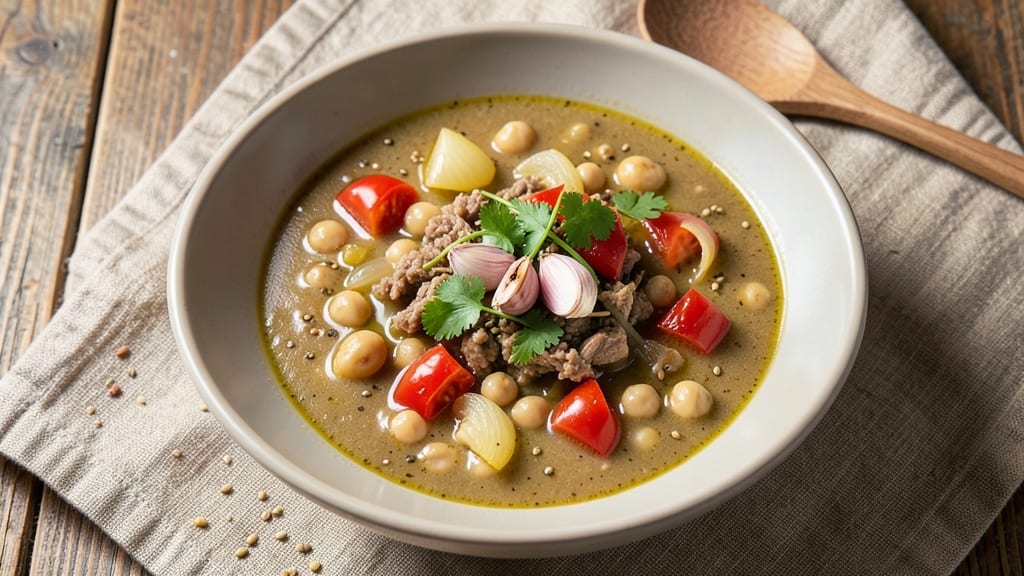
This authentic harira soup recipe brings the rich, spiced flavors of Morocco to your kitchen with tender lamb, hearty chickpeas, and a fragrant blend of traditional spices. The secret lies in slow-simmering the broth until it develops deep, complex flavors—just like my grandmother used to make. 🌟 This isn’t just soup; it’s a comforting embrace in a bowl, perfect for Ramadan or any chilly evening when warmth and tradition meet on your table.
What makes this recipe truly special is the balance of textures and flavors: tender lamb, creamy chickpeas, and a broth infused with cumin, coriander, and turmeric. The tomatoes add a touch of sweetness, while the optional harissa brings a subtle heat that wakes up every spoonful.
I’ve included both vegetarian and meat variations so you can adapt it to your preferences without sacrificing authenticity.
The result is a soup that’s hearty enough to be a meal on its own, with each bite offering layers of savory, spiced, and slightly sweet notes. The lamb, if used, melts into the broth, creating a dish that’s both nourishing and deeply satisfying.
Serve it with warm bread to soak up every last drop of that fragrant, spiced liquid—because in Moroccan culture, harira isn’t just food; it’s a ritual.
Whether you’re preparing it for a special occasion or a cozy family dinner, this recipe delivers restaurant-quality results with minimal effort. The slow cooking process ensures rich, developed flavors, while the blend of spices creates an aroma that fills your home with the essence of Morocco.
Let’s get started—your taste buds are about to take a journey.
Ingredients for authentic harira soup
Six cups of fragrant broth, tender chickpeas, and spices that transport you to Morocco—just these ingredients transform into harira magic.
| Ingredient | Amount | Notes |
|---|---|---|
| Vegetable Stock 💧 | 6 cups | Low-sodium preferred, homemade if possible |
| Dried Chickpeas 🌾 | 1 ½ cups | Soaked overnight or canned, drained |
| Ground Lamb 🐑 | 1 ½ lb | Optional for vegetarian version, omit |
| Tomatoes 🍅 | 3 whole | Ripe, Roma or vine-ripened preferred |
| Yellow Onion 🧅 | 1 whole | Medium size, finely chopped |
| Garlic Cloves 🧄 | 4 cloves | Freshly minced for best flavor |
| Ground Cumin 🌿 | 1 tbsp | Toasted for deeper aroma |
| Ground Coriander 🌿 | 1 tbsp | Freshly ground if available |
| Turmeric Powder 🌶️ | 1 tsp | Fresh root grated works too |
| Harissa Paste 🔥 | 1 tbsp | Optional, for subtle heat |
| Fresh Parsley 🌿 | ¼ cup | Chopped, for garnish |
| Lemon Juice 🍋 | 1 tbsp | Freshly squeezed |
| Olive Oil 🫒 | ¼ cup | Extra-virgin for richness |
| Salt 🧂 | 1 ½ tsp | Adjust to taste |
| Black Pepper 🌶️ | ½ tsp | Freshly ground |
The chickpeas are the heart of this soup, so pick quality dried or canned—none of that mushy stuff. Trader Joe's has great canned ones, but if you're soaking dried, use twice the water and simmer until tender. For the lamb (if using), ground chuck is ideal—it stays tender while cooking. The tomatoes should be ripe, not mealy; San Marzano if you can find them. The spices? Penzeys or bulk bins are your friends here—freshly ground cumin and coriander make all the difference. If you're skipping the lamb, add an extra 0.5 cup of chickpeas for heartiness.
No harissa? Red pepper flakes at half the amount will give you heat without authenticity—trust me, harissa's smoky depth is worth hunting down at a Middle Eastern market. The vegetable stock can be store-bought, but homemade with lamb bones (if you're not vegetarian) or just veggies elevates everything. Fresh parsley is ideal, but dried at one-third the amount works in a pinch. The lemon juice brightens the whole dish—don't skip it. For extra richness, stir in 2 tbsp tahini at the end, but it's not traditional. The key is balancing sweet (tomatoes), savory (lamb/chickpeas), and spicy (harissa)—taste as you go!
This soup tastes even better the next day as flavors meld. Keeps 4-5 days in the fridge, but reheat gently—no boiling, just warm through. Freezes beautifully for 3 months; portion into containers so you can grab a bowl anytime. Warm pita or crusty bread is mandatory for soaking up that fragrant broth. Make a double batch—it disappears fast, especially when you're sneaking bites while cooking. The aroma alone makes your kitchen smell like Morocco.
Why You'll Love This Recipe
- One-Pot Magic: I swear by this recipe—just toss everything into a single pot and let it simmer. No fancy techniques, no last-minute shopping runs. The chickpeas soak overnight (or you grab canned if you’re in a rush), and the lamb browns while you chop onions. That’s it. Minimal cleanup, maximum reward.
- Deep Umami Love: The lamb and tomatoes caramelize into this rich, earthy base that hits different. Honestly, the first time I tasted it, I thought, "This is the kind of soup that makes you close your eyes." The onions add sweetness, the stock builds depth, and the chickpeas bring that satisfying bite. It’s not just flavor—it’s layered flavor.
- Ramadan Ready: Between us, this is my go-to for holy month. It’s hearty enough for iftar but light enough to not weigh you down before suhoor. I’ll make a big batch on Fridays, and it stretches across the week—freezes beautifully, too. The lamb makes it feel special, but the simplicity keeps it stress-free for busy nights.
- Budget-Friendly Feast: Ground lamb stretches far here, and dried chickpeas are a steal compared to canned. A single pot feeds four (or five if you’re generous with seconds), and leftovers taste just as good reheated the next day. I’ll be real: I’ve had this soup three nights in a row without getting tired of it. That’s a win for my wallet and my taste buds.
Step-by-step instructions for authentic harira soup
Here's how to build this aromatic Moroccan classic—layer by layer, spice by spice.
🍳 Step 1: Sauté the Aromatics Until Fragrant
Heat the 0.25 cup olive oil in a large pot over medium heat. Add the finely chopped yellow onion and cook for 5 minutes until soft and translucent. You'll see it start to caramelize slightly—that's when you know it's ready for the next step.
Add the 4 cloves minced garlic and cook for another 30 seconds until the raw garlic smell disappears. Here's the thing—don't let it brown or it'll turn bitter. I always stir constantly at this point to prevent any burning. The base should smell sweet and inviting, setting the stage for the warm spices to come.
🍳 Step 2: Toast the Spices for Maximum Flavor
Add the 1 tbsp ground cumin, 1 tbsp ground coriander, and 1 tsp turmeric powder all at once. Stir vigorously for 30 seconds to toast the spices—you'll see them release their essential oils and fill your kitchen with that unmistakable Moroccan aroma. This step is crucial for building depth of flavor.
Next, stir in the 1 tbsp harissa paste (if using) and cook for another 30 seconds. The harissa adds that subtle heat that makes this soup so special. If you're making a vegetarian version, skip the lamb and add an extra ½ tsp turmeric for color. The spices should look evenly distributed and smell intensely aromatic.
🍳 Step 3: Brown the Lamb (If Using) and Add Tomatoes
Add the 1.5 lb ground lamb (if using) and cook over medium-high heat for 5-6 minutes, breaking it up with a wooden spoon until it loses its raw color and starts to brown. This browning creates the rich, meaty foundation of the soup. If you're making the vegetarian version, skip this step entirely.
Add the 3 whole tomatoes (peeled, seeded, and chopped) to the pot. If you're using fresh tomatoes, I recommend blanching them first in boiling water for 30 seconds to make peeling easier. Stir everything together and cook for 5 minutes until the tomatoes break down and release their juices. This is when the soup starts to come together—watch for that moment when the flavors meld.
🥘 Step 4: Simmer with Chickpeas and Stock
Pour in the 6 cups vegetable stock and bring the mixture to a boil. Add the 1.5 cups dried chickpeas (if using canned, drain and rinse them first). Reduce heat to low and let it simmer uncovered for 45-50 minutes until the chickpeas are tender and the soup has thickened slightly. Stir occasionally to prevent sticking at the bottom.
Here's where it gets good—the flavors should be deeply aromatic with a perfect balance of spice and richness. If the soup looks too thick, add a splash of water or more stock. I like to taste it at this stage to adjust seasoning—add the 1.5 tsp salt and 0.5 tsp black pepper if needed. The soup should be seasoned but still allow room for the lemon to shine.
🍽️ Step 5: Finish with Lemon and Garnish
Remove the pot from heat and stir in the 1 tbsp lemon juice. This brightens the soup and cuts through the richness of the lamb and spices. Let it sit for 5 minutes to let the flavors meld completely. The lemon juice should be evenly distributed throughout the soup.
Ladle the soup into bowls and garnish with the 0.25 cup chopped fresh parsley. Serve immediately with crusty bread to soak up every last drop of that fragrant broth. This is where the magic happens—each spoonful delivers layers of Moroccan comfort in every bite.
Pro Tips For Making Authentic Harira Soup
- SOAK CHICKPEAS OVERNIGHT: I learned this the hard way—rushing chickpeas by soaking them in boiling water for 1 hour leaves them mealy. Instead, cover dried chickpeas in cold water with 1 tablespoon baking soda (yes, it works) and let them sit 12+ hours. They’ll be tender, hold their shape, and soak up flavors like sponges.
- BROWN THE LAMB LOW: Crank the heat to medium-low when cooking the ground lamb—high heat makes it rubbery. Let it sizzle gently for 8-10 minutes, stirring often, until it’s deep brown and crisp at the edges. This builds flavor without drying it out, and you’ll taste the difference when the soup simmers.
- PEEL TOMATOES FAST: Skip the knife and blister whole tomatoes over a gas flame (or broil them) for 30 seconds per side. The skins will peel off like magic—no mess, no waste. Then chop them coarsely for the soup; the char adds smoky depth that store-bought paste can’t match.
- SALT THE STOCK LATE: Hold off on salting the vegetable stock until the very end—after chickpeas, lamb, and tomatoes have all simmered together. This keeps the lamb from releasing too much moisture early and ensures the broth’s seasoning balances the dish perfectly. Trust me, your taste buds will notice.
Regional styles of this authentic harira soup
Moroccan Ramadan Classic
Harira holds sacred significance during Ramadan, traditionally served to break the fast with family and friends. In Morocco, it’s often prepared in large clay pots called couscoussier and shared communally. The lamb version is most common, but vegetarian adaptations are equally honored.
I remember my first Ramadan in Marrakech—every evening, the scent of harira wafting through the medina streets was irresistible. 🌙
The soup’s name comes from the Arabic word for "hot," reflecting its comforting warmth. It’s not just food—it’s a symbol of hospitality and togetherness. In rural areas, women often prepare harira in advance, letting it simmer slowly all day to develop its signature depth.
The longer it cooks, the more complex the flavors become. For an authentic touch, serve it with khobz (Moroccan round bread) and a side of zaalouk (eggplant salad).
Algerian Spiced Variation
Across the border in Algeria, harira takes on a slightly different character with the addition of preserved lemons and carrots. The Algerian version often includes merguez sausage instead of lamb, giving it a distinct smoky flavor.
I first tried this variation in Algiers, where the soup was served in small bowls with a sprinkle of smoked paprika on top. The preserved lemons add a bright, tangy contrast to the richness.
For this Algerian twist, add 1 preserved lemon (thinly sliced) and 2 medium carrots (diced) when you add the tomatoes. Simmer them for 20 minutes before adding the chickpeas. The carrots soften beautifully, adding natural sweetness.
If you can’t find preserved lemons, substitute with ½ tsp lemon zest plus 1 tbsp extra lemon juice. The result is a soup with a perfect balance of sweet, savory, and tangy notes.
Tunisian Herb-Infused Version
In Tunisia, harira often incorporates fresh herbs like cilantro and mint, giving it a lighter, brighter profile. Tunisian cooks also frequently add green lentils alongside chickpeas for extra texture.
I discovered this version in a small café in Tunis, where the soup was garnished with fresh herbs and served with msemen (flaky pancakes). The herbs add a refreshing contrast to the warm spices.
To make this Tunisian adaptation, stir in 2 tbsp chopped fresh cilantro and 1 tbsp chopped fresh mint at the very end, just before serving. For the lentils, add ½ cup green lentils along with the chickpeas and simmer for the full 45-50 minutes.
The lentils hold their shape beautifully, adding a nice bite. If you can’t find fresh mint, dried mint at half the amount works in a pinch, though fresh is definitely preferred.
Libyan Tomato-Heavy Style
Libyan harira is all about the tomatoes—it’s often made with a thick, chunky tomato base that gives the soup a vibrant red color. Libyan cooks also traditionally add eggplant and sometimes even cucumber for a refreshing twist.
This version is lighter but equally flavorful. I fell in love with it during a visit to Tripoli, where the soup was served with a side of fresh labneh (strained yogurt) for dipping bread.
For this Libyan-style harira, blend 2 of the tomatoes with the spices before adding them to the pot, creating a thick tomato paste. Add the remaining 1 whole tomato (chopped) along with 1 cup diced eggplant and ½ cup diced cucumber when you add the stock.
Simmer the eggplant and cucumber for 15 minutes before adding the chickpeas. The eggplant absorbs the flavors beautifully, while the cucumber adds a nice crunch. Garnish with extra tomato slices for a pop of color and freshness.
Nutrition facts
Frequently asked questions
Can I make harira without lamb?
This traditional Moroccan soup is naturally vegetarian and just as flavorful without meat. Simply omit the lamb and increase the chickpeas by 0.5 cup for extra heartiness. The spices—cumin, coriander, and turmeric—create rich depth, while the tomatoes and lemon provide brightness. Many families prepare meat-free versions during Ramadan for guests with different dietary needs.
How do I adjust the spice level?
The harissa paste adds subtle heat, but you can easily customize it. For milder flavor, reduce the harissa to ½ tbsp or omit entirely. For extra kick, add ½ tsp cayenne pepper with the spices. Always taste as you go—Moroccan cuisine balances warmth with sweetness, so don't hesitate to adjust the lemon juice (1-2 tbsp) to refresh the palate.
Can I use canned tomatoes instead of fresh?
Yes, but choose high-quality canned tomatoes for the best results. Drain and rinse them well to remove excess liquid, then chop finely. For extra richness, add 1 tbsp tomato paste when sautéing the aromatics. Fresh tomatoes develop deeper flavor through slow simmering, but canned works perfectly when properly prepared.
Why does my harira taste bland?
Blandness usually comes from skipping the spice toasting step or insufficient simmering time. Always toast the spices (cumin, coriander, turmeric) for 30 seconds to release their oils. Let the soup simmer uncovered for at least 45 minutes—the longer it cooks, the more complex the flavors become. Finish with fresh lemon juice (1 tbsp) and a pinch of salt to brighten the dish.
What's the best way to reheat harira?
Reheat gently on the stove over low heat until warmed through—never boil. Add a splash of water or stock if it thickens too much. For microwave reheating, cover with a damp paper towel and heat in 30-second intervals, stirring between each. The soup tastes even better the next day as flavors meld—just avoid reheating dried-out portions.