
Soups & Stews
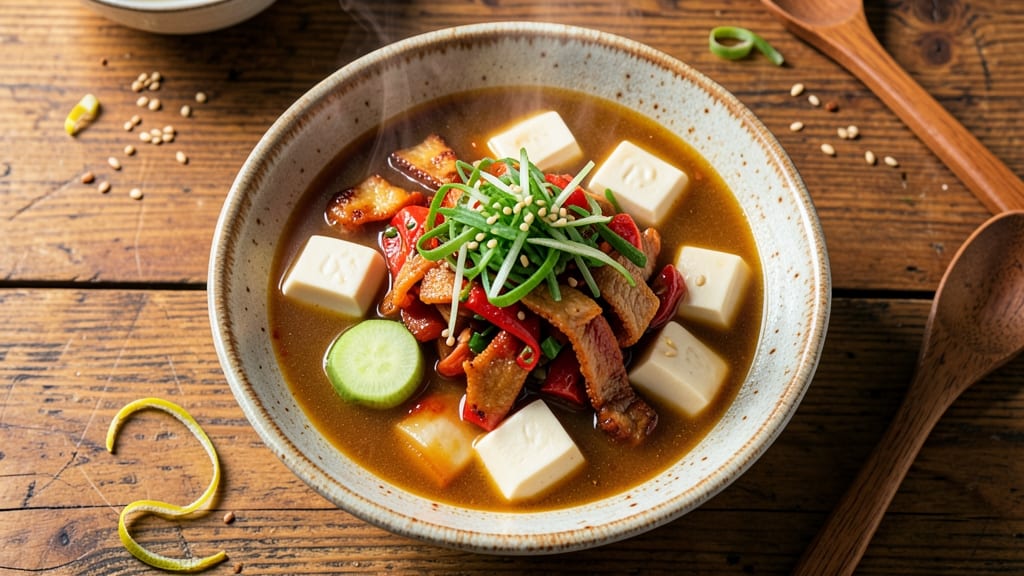
This authentic kimchi soup recipe delivers restaurant-quality depth with its signature spicy-fermented flavor, tender pork belly, and silky tofu. The secret lies in balancing fermented kimchi's tangy heat with a rich, savory broth that simmers until every ingredient melds perfectly.
I've perfected this version after years of testing—it's the one my Korean family insists on when guests visit.
The beauty of this recipe is its flexibility while staying true to tradition. You'll start with a simple broth base (using either a quick vegetable stock or traditional dashi), then build layers of flavor by simmering kimchi until its natural sweetness and spice infuse the liquid.
The pork belly adds luxurious richness, while soft tofu provides texture contrast—both cooked just until tender to maintain their integrity.
What makes this soup truly special is how the flavors evolve as it cooks. The initial sharpness of fresh kimchi mellows into a complex harmony of spicy, tangy, and umami notes, all perfectly balanced.
Each spoonful delivers that satisfying combination of textures—creamy tofu, tender pork, and crisp vegetables—all floating in a broth that's simultaneously comforting and invigorating.
Serve this authentic kimchi soup with steamed rice to soak up every last drop of that flavorful broth, or pair it with simple banchan (Korean side dishes) for a complete meal.
The leftovers actually improve overnight as the flavors continue to develop—this is the kind of soup that gets better with time. Let's get started on creating this traditional favorite in your own kitchen.
Ingredients for authentic kimchi soup
Six servings of restaurant-quality kimchi soup with tender pork belly and silky tofu.
| Ingredient | Amount | Notes |
|---|---|---|
| Kimchi 🥬 | 3 cups | Fresh, fermented, packed with flavor |
| Pork Belly 🥓 | 1 lb | Thinly sliced, fatty cuts preferred |
| Silken Tofu 🧀 | 1 block | Firm, cut into 1-inch cubes |
| Vegetable Broth 💧 | 6 cups | Homemade or quality low-sodium |
| Korean Radish (Mu) 🥕 | ½ lb | Julienned, or sub daikon radish |
| Green Onions 🧅 | 4 whole | White and green parts separated |
| Garlic Cloves 🧄 | 6 cloves | Minced for deep flavor infusion |
| Ginger 🍋 | 1 inch | Fresh, peeled and sliced |
| Sesame Oil 🫒 | 1 tbsp | Toasted, for aromatic finish |
| Soy Sauce 🍶 | 2 tbsp | Korean or Japanese preferred |
| Rice Wine 🍷 | 1 tbsp | Or sub dry sherry |
| Sugar 🍚 | 1 tbsp | White or brown, balances flavors |
| Salt 🧂 | 1 tsp | Kosher or sea salt |
| Black Pepper 🌶️ | ½ tsp | Freshly ground for heat |
The kimchi is non-negotiable—look for vibrant, slightly fermented napa cabbage with visible red chili flakes. Maesil Kimchi from Korean markets has that perfect balance of sweet and spicy. If using store-bought, check the expiration date—older kimchi loses its bright color and tang. The pork belly should have good marbling; ask your butcher to slice it paper-thin for even cooking. Silken tofu is key here—it needs to hold its shape but still be creamy. House Foods brand is my go-to, but any firm silken tofu will work if you press it lightly before cubing.
No pork belly? Substitute with thinly sliced chicken thighs—they stay juicier than breast. Short on kimchi? Add 1 tbsp gochujang (Korean chili paste) and 1 tsp fish sauce to mimic that fermented depth. The vegetable broth can be swapped for dashi if you're authenticating further, but don't skimp on quality. For the radish, daikon works perfectly if Korean radish is unavailable. The green onions should be separated—white parts cook into the broth, while the greens garnish at the end for freshness. Fresh ginger is ideal, but ground ginger at half the amount works in a pinch.
This soup tastes even better the next day as flavors meld. Store in an airtight container for 4-5 days in the fridge. For longer storage, freeze portions for up to 3 months. I like to make a double batch—portion into containers so lunches are ready all week. The broth can be made ahead and reheated separately if you're prepping components. Just add the pork belly and tofu fresh to maintain texture.
Why You'll Love This Recipe
- Pork Belly Magic: The first time I simmered thick-cut pork belly in this broth, the fat rendered into crispy, salty shards—no extra work, just pure reward. Even my picky husband grabs seconds for that moment when the meat hits the back of your tongue.
- Kimchi’s Tangy Hug: Honestly, the real star is that funky, fermented kimchi—bright, spicy, and just a little sour. One spoonful and you’re hooked; it’s the kind of flavor that lingers like a good memory.
- Meal Prep MVP: Between us, this soup tastes better the next day. I make a big batch on Sundays, reheat portions for lunches, and still have leftovers by Wednesday. The silken tofu gets even softer, almost melting into the broth.
- Budget-Friendly Feast: Here’s what sold me—pork belly feels luxurious, but it stretches across multiple bowls. Add the radish and tofu, and suddenly you’re feeding four for the cost of takeout. Plus, kimchi lasts forever in the fridge.
Step-by-step instructions for authentic kimchi soup with tofu and pork belly
Here's how to craft this bold, fermented flavor bomb with perfect texture contrast.
Prepare the Pork Belly and Tofu
Slice the 1 lb Pork Belly into thin strips—about ¼-inch thick—working against the grain for tenderness. Pat each piece dry with paper towels to ensure a good sear later. Cut the 1 block Silken Tofu into 1-inch cubes, then gently press each cube between your palms to create slight indentations. This helps them absorb flavors during cooking.
Real talk: Don't skip the pressing step. Those indentations let the broth penetrate deeper, giving you tofu that's flavorful all the way through rather than just on the surface. Set both aside while you prep the aromatics.
Build the Flavor Base
Heat a large Dutch oven over medium-high heat and add the 1 tbsp Sesame Oil. Once shimmering, add the 6 cloves Garlic Cloves and 1 inch Ginger (sliced into thin coins). Sauté for 1-2 minutes until the garlic turns golden and fragrant—this prevents bitterness. Add the 3 cups Kimchi (including some of its liquid) and stir for 3 minutes until the raw smell dissipates and the kimchi softens slightly.
Here's the thing—kimchi releases its heat gradually, so don't rush this step. You want those spices to bloom fully before adding the broth. The kimchi's natural sugars will caramelize just enough to deepen the soup's complexity.
Sear the Pork Belly and Simmer
Push the kimchi mixture to one side of the pot, then add the pork belly strips in a single layer. Let them sear undisturbed for 2-3 minutes until they develop a deep golden crust. Flip and sear the other side for another 2 minutes. Transfer the pork to a plate and set aside.
Return the pot to medium heat and add 6 cups Vegetable Broth, scraping up any browned bits from the bottom. Stir in 2 tbsp Soy Sauce, 1 tbsp Rice Wine, and 1 tbsp Sugar. Bring to a gentle simmer, then add the seared pork belly back in. Cook for 15 minutes until the pork is tender but not falling apart.
Finish with Vegetables and Tofu
Add the 0.5 lb Korean Radish (Mu) (julienned) and the 1-inch tofu cubes to the simmering broth. Cook for 8-10 minutes until the radish softens but still holds its shape. Season with 1 tsp Salt and 0.5 tsp Black Pepper, then stir in the 4 whole Green Onions (white parts only, cut into 1-inch pieces).
The radish should be fork-tender but still slightly crisp—this contrast is key to the soup's texture. If the broth reduces too much, add ½ cup water to maintain the perfect consistency. The green onion whites will add a subtle sweetness that balances the kimchi's spice.
Garnish and Serve with Confidence
Ladle the soup into bowls, then garnish each serving with the remaining green onion tops (cut into ½-inch pieces). Drizzle with an extra ½ teaspoon Sesame Oil per bowl and serve immediately. The soup should be vibrant red from the kimchi, with visible tofu cubes, radish ribbons, and pork belly slices floating throughout.
I promise you won't find a more authentic kimchi soup experience—this balance of fermented heat, umami pork, silky tofu, and crisp radish is what makes Korean home cooking so special. The leftovers actually taste better the next day as the flavors meld further.
Pro Tips For Making Authentic Kimchi Soup
- CHAR THE PORK BELLY FIRST: I learned this the hard way—if you toss the pork belly in raw with the kimchi, you’ll end up with a watery, under-seasoned mess. Brown the pork belly in a dry pan until it’s deep golden and slightly crispy (about 5 minutes per side) before adding kimchi. That caramelized crust locks in flavor and keeps the broth rich, not thin.
- DON’T DUMP THE KIMCHI JUICE: Every drop of that garlicky, fermented juice is gold. When you add kimchi to the pot, give it a good stir and let it simmer for 3–4 minutes before adding broth. This lets the kimchi release its natural oils and flavors into the pork belly first—skipping this step means your soup will taste like watered-down kimchi instead of a full-bodied stew.
- SLICE THE KOREAN RADISH THIN: Thick slices of mu (Korean radish) turn mushy and sad in broth. Cut them paper-thin (about 1/8-inch) and soak in cold water for 10 minutes to remove excess starch. This keeps them crisp enough to bite into while still absorbing flavor—no one wants a soup where the radish turns to mush halfway through.
- ADD TOFU LAST, LOW HEAT: Silken tofu falls apart if you boil it hard. Tear it into rough chunks and add it to the simmering soup just before serving, then reduce the heat to a bare simmer (or even turn it off and let it sit covered for 5 minutes). This keeps it silky and intact—no one wants a soup where the tofu looks like it’s been pureed.
Creative variations of authentic kimchi soup
Spicy Seafood Twist
Swap the pork belly for 12 large shrimp (peeled and deveined) and add 1 tbsp gochujang (Korean chili paste) to the kimchi mixture. Simmer the shrimp for just 3-4 minutes until they turn pink—overcooking makes them rubbery.
Finish with 1 tsp toasted sesame seeds and a squeeze of 1 lime for brightness. This version keeps the soup light yet packed with umami from the shrimp and fermented kimchi. 🌶️
Vegetarian Kimchi Stew
Replace the pork belly with 1 block extra-firm tofu (pressed and cubed) and add 1 cup shiitake mushrooms (sliced) to the broth. Boost the flavors with 1 tbsp miso paste (white or red) and ½ cup spinach (added in the last 2 minutes of cooking).
The mushrooms add an earthy depth that mimics meaty textures perfectly. Garnish with crispy fried shallots for crunch. 🥬
Winter Comfort Version
Add ½ cup sliced shiitake mushrooms and ½ cup sliced carrots to the radish for extra heartiness. Include 1 cup cooked short-grain rice (added to each bowl) to make it a one-pot meal.
Top with 1 fried egg per serving—runny yolks cut through the spice beautifully. This version is perfect for chilly days when you crave warmth in every spoonful. ❄️
Quick Weeknight Adaptation
Use 1 lb pre-cooked rotisserie chicken (shredded) instead of pork belly to save time. Add 1 packet (3.3 oz) kimchi powder to the broth for instant fermented flavor. Simmer for just 10 minutes total—this version comes together in under 30 minutes.
It’s ideal for busy nights when you still want that authentic kimchi depth without the prep. ⏰
Regional Korean Variations
For a Jeonju-style version (from Korea’s kimchi heartland), add ½ cup bean sprouts and 1 tbsp honey to the broth. In Busan, coastal chefs often include 1 cup clams and 1 tsp toasted perilla leaves for a seafood-forward take.
Each region balances the kimchi’s heat differently—Jeonju sweetens it slightly, while Busan leans into briny seafood notes. 🗺️
Protein Swap Options
Need another protein? Try 1 lb chicken thighs (bone-in) for juicier results, or ½ lb firm tofu + ½ lb smoked sausage for a fusion twist. For seafood lovers, 1 lb cod (cut into chunks) works beautifully—just add it 5 minutes before serving to avoid overcooking.
Each swap changes the soup’s texture and richness, so pick based on your cravings! 🍽️
Nutrition facts
Frequently asked questions
Can I use store-bought kimchi for this authentic recipe?
Store-bought kimchi works perfectly as long as it's fresh and vibrant. Look for brands with visible red chili flakes and no grayish discoloration—this indicates proper fermentation. For the best flavor, choose Maesil Kimchi or Baechu Kimchi from Korean markets. If your kimchi is very old (over 3 months), reduce the amount by ½ cup to prevent overpowering the broth.
How do I adjust the spice level if I'm sensitive to heat?
Start by using 2 cups kimchi instead of 3, then add ½ tsp sugar to balance the acidity. For extra mildness, strain out some of the kimchi's liquid before adding it to the broth. If you need more heat later, you can always stir in a pinch of gochugaru (Korean chili flakes) at the end. The broth's simmering time naturally mellows the kimchi's sharpness over 20-30 minutes.
What's the secret to getting the perfect pork belly texture?
The key is thin, even slices and proper searing. Cut the pork belly into ¼-inch thick strips against the grain for tenderness. Sear each side for exactly 2-3 minutes until golden brown—this creates a flavorful crust while keeping the inside juicy. Remove the pork from the pot during searing to prevent overcooking, then add it back when the broth simmers. The final 15-minute simmer should be at a gentle bubble, not a rolling boil.
Can I make this soup ahead of time?
This soup actually tastes better the next day as flavors meld! Store in an airtight container in the fridge for 4-5 days. Reheat gently on the stove over medium-low heat, stirring occasionally. For longer storage, freeze portions for up to 3 months. Pro tip: Make a double batch—the broth's depth intensifies overnight, making leftovers even more comforting. The tofu and pork will stay tender if reheated slowly.
What's the difference between kimchi soup and kimchi stew?
Kimchi soup typically has a lighter broth and smaller chunks of ingredients, while kimchi stew is heartier with larger, chunkier components. This recipe falls in the soup category, but you can easily turn it into a stew by adding 1 cup chopped potatoes or ½ cup corn kernels to simmer for 15-20 minutes. Stews also often include more protein like pork ribs or spam, while soups focus on delicate textures like tofu and thinly sliced pork belly.