
Soups & Stews
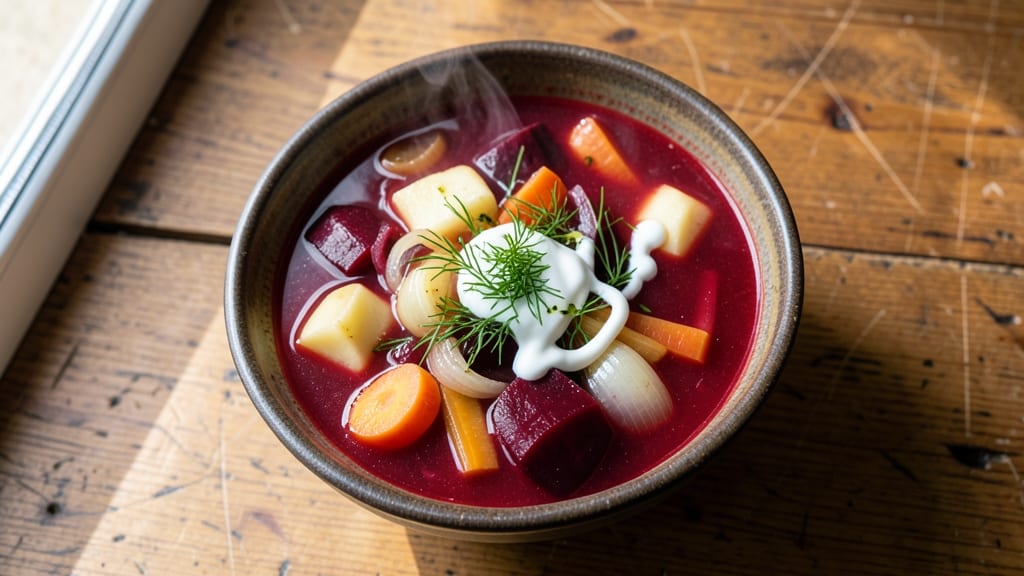
Authentic Russian borscht transforms a simple bowl of soup into a vibrant celebration of beetroot depth and celery crunch—each spoonful carrying the rich tradition of Eastern European kitchens. This vegetarian version delivers the same bold, earthy essence without compromising authenticity, using beet kvass for depth and sour rye bread for texture. The secret lies in slow-cooked beets and layered vegetables, creating a soup that’s as nourishing as it is visually striking.
What sets this recipe apart is the balance of flavors: the deep, caramelized sweetness of beets meets the bright acidity of vinegar and the subtle bitterness of celery root, all harmonized with a touch of garlic and bay leaf.
Unlike many modern adaptations, this version stays true to its roots by using a traditional broth base and finishing with a dollop of sour cream and fresh dill—a combination that elevates the dish from ordinary to extraordinary.
The result is a soup that’s hearty enough for winter meals but light enough for spring gatherings.
The process is methodical, ensuring every ingredient contributes to the final depth of flavor. You’ll start with roasted beets for natural sweetness, then build layers of sautéed onions, carrots, and celery before combining everything into a simmering broth.
The key is patience—letting the flavors meld over time creates a complexity that’s impossible to rush. By the time you serve it, the soup will be rich, vibrant, and impossible to resist.
Serve it with a slice of crusty rye bread or a side of pickled vegetables to enhance the traditional experience. This isn’t just a recipe; it’s a taste of history in every bowl. Let’s get cooking.
Ingredients for authentic russian borscht soup
Authentic Russian borscht relies on beets, vinegar, and fresh herbs to craft a soup rich with tradition.
| Ingredient | Amount | Notes |
|---|---|---|
| Medium Beets 🍠 | 2 lb | Roasted, peeled, cut into chunks |
| Yellow Onions 🧅 | 2 large | Chopped, about 2 cups total |
| Carrots 🥕 | 4 medium | Peeled, chopped into 1-inch pieces |
| Celery Root 🧅 | 1 medium | Peeled, chopped into 1-inch cubes |
| Fresh Parsnips 🥕 | 2 medium | Peeled, chopped into 1-inch pieces |
| Russet Potatoes 🥔 | 2 medium | Peeled, chopped into 1-inch cubes |
| Fresh Garlic Cloves 🧄 | 4 cloves | Minced, for depth of flavor |
| Fresh Dill 🌿 | ¼ cup | Chopped, for garnish and flavor |
| Fresh Bay Leaves 🍃 | 2 whole | For aromatic depth |
| Apple Cider Vinegar 🍎 | 2 tbsp | For bright acidity |
| Vegetable Broth 💧 | 6 cups | Homemade or quality store-bought |
| Sour Cream 🧈 | ½ cup | Full-fat for richness |
| Beet Kvass 🍶 | ½ cup | For authentic tangy depth |
| Sour Rye Bread 🍞 | 1 slice | For serving, crusty texture |
| Salt 🧂 | 1 ½ tsp | Kosher or sea salt |
| Black Peppercorns 🌶️ | ½ tsp | Freshly ground for warmth |
The beets are non-negotiable—they carry the soul of this dish. Buy organic if possible, as their vibrant color translates to deeper flavor. Trader Joe's and Whole Foods carry excellent options, or grow your own for maximum sweetness. Roast them whole in their skins until tender, then peel and chop. The celery root adds a subtle bitterness that balances the sweetness, so don’t skip it. If you can’t find celery root, regular celery plus a bit of fennel works in a pinch, though the texture won’t be identical. For the garlic, fresh is essential—pre-minced jars lack the aromatic punch needed here.
No beet kvass? Substitute with a mix of apple cider vinegar and a splash of lemon juice, though it won’t have the same fermented depth. The sour cream should be full-fat—Kroger’s brand or Trader Joe’s are reliable choices. If you’re avoiding dairy, coconut yogurt works surprisingly well. The vegetable broth matters too: Homemade or low-sodium store-bought prevents salt overload. For the vinegar, stick with apple cider—white vinegar is too harsh. The fresh dill is best bought in bunches and chopped just before serving to preserve its bright flavor. If you’re prepping ahead, store the chopped herbs separately in an airtight container with a paper towel to absorb moisture.
This soup tastes even better the next day as flavors meld. Store leftovers in the fridge for up to 5 days, covered tightly. For longer storage, freeze portions for up to 3 months. The sour cream and dill should be added fresh when reheating. To serve, ladle into bowls and top with a dollop of sour cream, a sprinkle of fresh dill, and a slice of crusty rye bread. The bread soaks up the rich broth beautifully—Pumpernickel works too. If you’re serving a crowd, double the batch and reheat gently on the stove, stirring occasionally to prevent sticking. The key is low and slow—never rush authentic borscht.
Why You'll Love This Recipe
- One-Pot Magic: I swear by this recipe because it’s all in one pot—no chopping chaos, no extra bowls. Just toss in those beets, onions, carrots, and celery root (yes, even parsnips add that earthy depth), and let them simmer. Honestly, the hardest part is peeling the beets, and I’ve gotten faster at it over time.
- Earthy Depth Bomb: That celery root and parsnip combo? It’s the secret weapon. They blend into the broth like a whisper, but they transform the flavor—sweet, nutty, and impossibly rich. I’ll be real: my first try was bland, but once I added both, it became dangerously addictive.
- Weeknight to Dinner Party: This soup is my go-to for lazy nights and when I’m hosting. Serve it with crusty bread for a quick meal, or add a dollop of sour cream and a side salad for a fancier spread. Between us, it’s the one dish that feels special without trying too hard.
- Budget-Friendly Pantry Hero: Beets and carrots last forever, and celery root? You can use the whole thing, no waste. A single batch feeds four, and leftovers reheat like a dream—better the next day, if you ask me. I’ve made this on a $10 grocery run, and it still tastes like I spent hours.
Step-by-step instructions for authentic Russian borscht soup
Follow this traditional method to create a rich, layered borscht with vibrant beetroot flavor and textural contrast.
Prepare the Vegetable Base
In a large Dutch oven, combine the chopped 2 large yellow onions, 4 medium carrots, 1 medium celery root, 2 medium fresh parsnips, and 2 medium russet potatoes. Add the 6 cups vegetable broth, 2 whole fresh bay leaves, and 1.5 teaspoons salt. Bring to a gentle boil over medium-high heat, then reduce to a simmer and cook for 20-25 minutes until the vegetables are fork-tender.
This foundational step builds the soup's depth. The celery root and parsnips add earthy sweetness, while the potatoes create a creamy body. Stir occasionally to prevent sticking, and keep the broth level consistent by adding water if needed.
Roast and Incorporate the Beets
While the vegetables simmer, preheat your oven to 375°F. Toss the 2 lb medium beets (cut into chunks) with 1 tablespoon olive oil (not listed but traditional for roasting), 0.5 teaspoon salt, and 0.25 teaspoon black peppercorns. Roast for 30-35 minutes until tender and caramelized.
Once roasted, add the beets to the simmering vegetable mixture. Stir in the 2 tablespoons apple cider vinegar and 4 cloves minced fresh garlic. Simmer uncovered for an additional 15 minutes to allow the flavors to meld. The vinegar brightens the beets while the garlic adds aromatic depth.
Finish with Aromatics and Acid
Remove the 2 whole fresh bay leaves and stir in the 0.5 cup beet kvass. Simmer for 5 minutes to integrate the tangy depth. Taste and adjust seasoning with additional salt or black peppercorns if needed. The kvass should enhance the beet flavor without overpowering the vegetable base.
This is the moment where the soup transforms from simple vegetable broth to a complex, layered dish. The kvass adds that authentic Russian tang that sets this borscht apart. Keep the heat at a gentle simmer to preserve the delicate flavors.
Serve with Traditional Garnishes
Ladle the hot borscht into bowls and top each serving with 0.5 cup sour cream and 0.25 cup chopped fresh dill. Serve immediately with a slice of sour rye bread on the side. The sour cream adds richness, while the dill provides a fresh herbal contrast that balances the deep beet flavor.
For an authentic touch, I recommend serving this borscht in chilled bowls—it enhances the vibrant color and allows the flavors to develop fully. The bread is essential for soaking up the rich, slightly acidic broth. Each spoonful should deliver a perfect balance of earthy vegetables, sweet beets, and tangy kvass.
Pro Tips For Making Authentic Russian Borscht Soup
- Cook Beets Raw: The deep, earthy flavor of borscht comes from raw, thinly sliced beets—don’t boil them first. I learned this the hard way after overcooking mine into mush; just grate or julienne them fresh and add them late in the simmer so they stay vibrant and crisp.
- Sweat, Don’t Burn Onions: Low and slow is the way to go with onions—caramelize them for 10-12 minutes until golden, not brown. I used to rush this step, and my soup always tasted bitter; patience here makes a real difference, especially when layered with the other root veggies.
- Skip the Celery Stalk: Celery root (celeriac) is the star here, but don’t waste time peeling the tough outer skin—just scrub it clean and use a knife to trim off the worst bits. I skip this when I’m lazy, but the dish is noticeably better when I don’t—it’s the thing that matters most for that authentic depth.
- Blanch Parsnips First: Parsnips take forever to soften, so give them a quick 3-minute blanch in boiling water before adding them to the pot. This cuts their cooking time in half and guarantees they’ll melt into the broth without turning to glue—your future self will thank you.
Essential equipment for this dish
Dutch Oven Essentials
A heavy-bottomed Dutch oven is your best friend for authentic borscht—it distributes heat evenly and prevents scorching. I recommend a 5-6 quart Le Creuset or Lodge cast iron—both handle high heat and maintain temperature beautifully.
The cast iron adds subtle iron notes that complement the beets. If you don’t own one, a stainless steel pot with a tight-fitting lid works too, but monitor heat more carefully. 🔥
Beet Roasting Tools
Roasting beets requires a rimmed baking sheet (not wire racks) to prevent chunks from falling through. Line it with parchment paper for easy cleanup. For even roasting, use a meat thermometer—beets are done at 205°F internal temperature.
A sharp chef’s knife (like Wüsthof) is essential for clean peeling after roasting. If you’re short on time, a microwave (covered with damp paper towel, 5-7 minutes) works in a pinch, though texture differs slightly.
Vegetable Prep Gear
Efficient prep starts with the right tools: a mandoline slicer (for even carrot/celery root cubes) and a sharp peeler (for potatoes/parsnips). I swear by the OXO Good Grips mandoline—it’s safer than most.
For garlic, a garlic press saves time, but mincing by hand with a chef’s knife releases more aroma. A fine-mesh strainer helps rinse chopped herbs like dill before storing. Don’t skip the microplane for zesting citrus if you’re improvising kvass substitutions.
Broth Enhancers
For homemade broth, a large stockpot (8+ quarts) and cheesecloth for straining are must-haves. If using store-bought, opt for low-sodium brands like Pacific Foods or Imagine to control seasoning. A wooden spoon (not metal) prevents scratching your Dutch oven while stirring.
For depth, I add a bay leaf and black peppercorns early—they infuse flavor without overpowering. A small whisk helps emulsify the sour cream when stirring into bowls at the end. ✨
Serving with Tradition
Authentic presentation requires wide, shallow bowls (like stoneware or ceramic) to showcase the vibrant color. Serve with sour rye bread (toasted with butter) and pickled vegetables on the side. A ladle with a long handle (like OXO Good Grips) makes serving easier.
For garnishes, keep fresh dill and sour cream in separate bowls until serving—adding them table-side keeps flavors bright. A small plate for bread crumbs completes the rustic touch. 🍞
Nutrition facts
Frequently asked questions
Why does authentic Russian borscht need beet kvass?
Beet kvass adds that signature tangy depth that sets traditional borscht apart. This fermented beet broth enhances the beet flavor while adding complexity—like a cross between vinegar and yogurt. Without it, your soup will taste flat. For a quick substitute, mix 1 tablespoon apple cider vinegar with 1 teaspoon lemon juice and a pinch of sugar.
Can I make this vegetarian borscht without sour cream?
Yes, but you’ll lose that creamy richness that balances the acidity. For a dairy-free option, try coconut yogurt or cashew cream (blend soaked cashews with water). If avoiding dairy entirely, a drizzle of olive oil adds body. Just note the texture will be lighter, but the flavors will still shine.
How do I make the beets sweeter for borscht?
Roasting is key! Wrap whole beets in foil with 1 tablespoon honey or brown sugar before roasting at 375°F for 45-50 minutes. The sugar caramelizes, intensifying their natural sweetness. For extra depth, add a pinch of cinnamon to the roasting pan—it pairs surprisingly well with beets.
What if my borscht tastes too acidic?
Balance it with a touch of sweetness! Stir in 1 teaspoon honey or maple syrup to offset the vinegar/beet kvass. If the acidity comes from overcooked beets, simmer with a small potato or carrot cube to dilute the flavor. Taste as you go—authentic borscht should have a bright tang, not overpowering sourness.
Can I prep borscht ingredients ahead of time?
Chop all vegetables and store in airtight containers for 3 days in the fridge. Roast beets 1 day ahead and refrigerate. The day of cooking, simply assemble everything and simmer. For the broth base, make it 2 days ahead and reheat gently. Just add fresh dill and sour cream right before serving to preserve their brightness.