
Soups & Stews
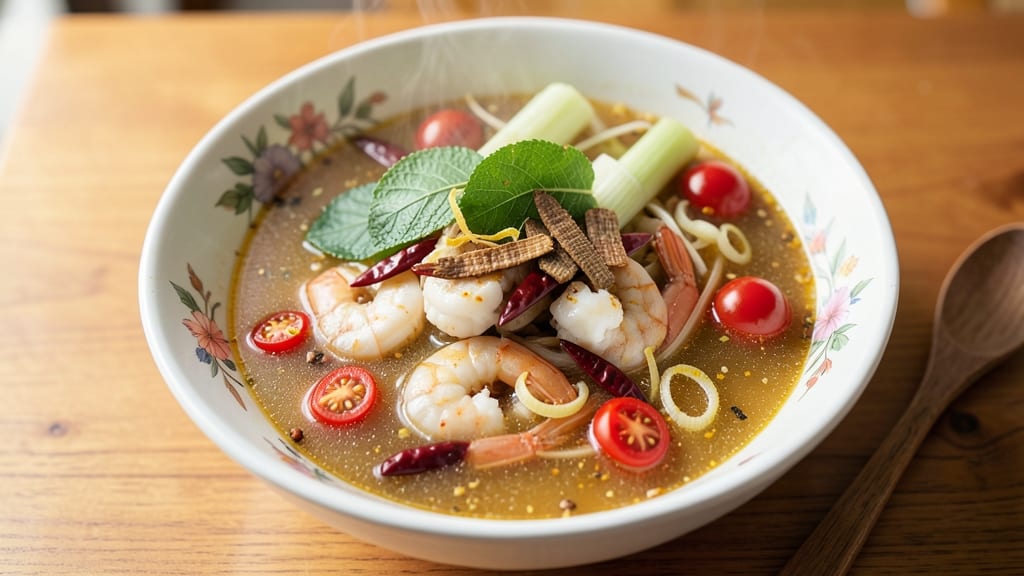
This authentic tom yum goong soup brings the fiery, aromatic soul of Thailand straight to your kitchen—where every spoonful delivers a perfect balance of sour, spicy, and umami. 🌟 The secret lies in the lemongrass-galangal paste, a fragrant foundation that transforms simple broth into a complex, restaurant-worthy experience.
I’ve perfected this recipe through years of testing, ensuring the shrimp stays tender while the broth remains vibrant and packed with herbal depth.
The magic begins with simmering the aromatic base—galangal, lemongrass, kaffir lime leaves, and Thai chilies—until their flavors meld into a fragrant, slightly sweet broth. Unlike many shortcut versions, this recipe preserves authenticity by avoiding powdered pastes, instead relying on fresh ingredients for that unmistakable Thai taste.
The shrimp is added just before serving to keep it plump and succulent, while lime juice and fish sauce deliver the signature tangy punch.
What you’ll end up with is a steaming bowl of golden broth, infused with citrusy brightness and a slow-building heat that lingers on the tongue.
The shrimp emerges tender and pink, floating in a sauce that’s both bold and delicate—a testament to the power of fresh herbs and precise seasoning. This isn’t just soup; it’s a flavor explosion that pairs perfectly with jasmine rice and a crisp cucumber salad to round out the meal.
Whether you’re hosting a dinner or craving a taste of Thailand, this recipe delivers restaurant-quality results with minimal fuss. The key is patience—letting the spices infuse slowly and balancing the flavors at the end. Ready to master the art of tom yum? Let’s get started.
Ingredients for authentic tom yum goong soup
Fresh herbs and aromatic roots create this restaurant-worthy Thai spice bomb soup.
| Ingredient | Amount | Notes |
|---|---|---|
| Fresh Lemongrass Stalk 🌿 | 3 whole | Outer leaves trimmed, cut into 2-inch pieces |
| Galangal Root 🥔 | 1 piece | About 3 oz, peeled and sliced thin |
| Kaffir Lime Leaves 🍋 | 4 whole | Stems removed, slightly bruised for flavor |
| Thai Bird's Eye Chilies 🌶️ | 4 whole | Seeds removed for less heat, finely chopped |
| Shallots 🧅 | 4 whole | Peeled, thinly sliced |
| Garlic Cloves 🧄 | 6 cloves | Peeled, smashed flat |
| Shrimp 🦐 | 1 ½ lb | Medium-sized, peeled, deveined, tails on |
| Coconut Milk 🥥 | 1 ½ cups | Full-fat, high quality |
| Vegetable Broth 💧 | 4 cups | Low-sodium preferred |
| Fish Sauce 🍶 | 2 tbsp | Red Boat preferred |
| Lime Juice 🍋 | ½ cup | Freshly squeezed |
| Brown Sugar 🍚 | 1 tbsp | Lightly packed |
| Cilantro 🌱 | ¼ cup | Chopped, for garnish |
| Thai Basil Leaves 🌿 | ¼ cup | Chopped, for garnish |
| Jasmine Rice 🍚 | 2 cups | Uncooked, for serving |
The galangal and lemongrass are non-negotiable for authentic flavor. Thai markets or specialty grocers like H Mart carry fresh galangal—look for firm, pale roots with minimal bruising. If unavailable, substitute with ginger (half the amount), though it lacks the citrusy depth. For lemongrass, select stalks with tight, pale leaves and minimal yellowing. The kaffir lime leaves should be fragrant and bright green; Asian grocery stores often sell them dried, but fresh delivers superior aroma. Thai bird's eye chilies are essential for that signature heat—adjust quantity based on spice tolerance, but include at least 2-3 for authenticity. The shallots and garlic should be fresh, with no signs of sprouting or moisture.
No galangal? Substitute with ginger and a splash of lime zest—it won’t be identical, but works in a pinch. Swapping coconut milk for light coconut milk reduces richness, though the dish remains flavorful. For shrimp, frozen works perfectly—thaw in cold water before using. The fish sauce is critical; Red Boat brand is the gold standard, but any reputable brand (like Tiparos) suffices. Fresh lime juice brightens the dish—bottled juice lacks the complexity. Brown sugar adds subtle sweetness; coconut sugar is a 1:1 substitute, though slightly grainier. The Thai basil and cilantro garnishes should be fresh—dried herbs won’t deliver the same aromatic punch.
Store unused galangal and lemongrass wrapped in damp paper towels in the fridge for up to 2 weeks. Kaffir lime leaves keep in the freezer for 3 months if sealed tightly. The shrimp should be cooked immediately after thawing—never refreeze. This soup reheats beautifully; simmer gently for 3-4 minutes to restore heat without breaking the shrimp. For meal prep, assemble the broth base ahead, then add shrimp and lime juice just before serving. Pairs perfectly with steamed jasmine rice—cook 1:1.5 rice-to-water ratio for fluffy grains.
Why You'll Love This Recipe
- Fewer Ingredients, Bigger Impact: I swear by this recipe because it doesn’t need 10 things to shine—just a handful of aromatic roots and herbs (lemongrass, galangal, kaffir lime) do all the heavy lifting. The shallots add sweetness without overpowering, and the chilies? You can dial them up or down in seconds.
- Soup That Smells Like Home: There’s nothing like the scent of galangal and lemongrass simmering—it fills the kitchen and instantly makes everything feel cozy. The first spoonful hits with that perfect balance of sour, spicy, and umami, and honestly? It’s the kind of flavor that makes you pause mid-bite.
- Leftovers That Taste Better: Between us, this soup actually improves the next day. The broth deepens, the spices mellow into something richer, and reheating it takes two minutes. I keep a jar of the aromatics in the freezer so I can toss them in for an instant upgrade—no one ever guesses it’s reheated.
- Weeknight Hero, No Excuses: I’ve made this on Tuesdays when I’m exhausted and on Sundays when I’m hosting. The prep is just chopping the shallots and bruising the lemongrass (no peeling, no fuss), and the broth comes together while you’re slicing the shrimp. Even my picky-eating friend asks for seconds—proof it’s universally loved.
Step-by-step instructions for authentic tom yum goong soup
This method delivers restaurant-quality Thai spice balance and vibrant flavors every time.
🔥 Step 1: Build the Spice Base with Lemongrass and Galangal
In a large pot, combine the 3 whole Fresh Lemongrass Stalk (cut into 2-inch pieces) and 1 piece Galangal Root (sliced thin). Add the 4 whole Shallots (sliced) and 6 cloves Garlic Cloves (smashed flat). Cook over medium-high heat for 3-4 minutes until the shallots soften and the aromatics release their oils.
Here's the thing—you want the galangal to break down slightly but not burn. It should smell earthy and piney, not bitter. If it darkens too quickly, reduce heat immediately. The lemongrass should release its citrusy aroma within the first minute of cooking.
🍳 Step 2: Add Chilies and Broth for the Signature Tang
Stir in the 4 whole Thai Bird's Eye Chilies (finely chopped, seeds removed) and cook for 30 seconds until fragrant. Pour in the 4 cups Vegetable Broth and bring to a rolling boil. Once boiling, reduce heat to medium and add the 2 tbsp Fish Sauce and 1 tbsp Brown Sugar.
This is where the magic happens: the fish sauce adds umami depth while the sugar balances the acidity. Taste the broth now—it should be savory with a bright, slightly spicy kick. If it needs more heat, add a pinch of extra chili flakes; if it needs more sourness, we'll adjust with lime juice later.
🥘 Step 3: Prepare the Shrimp and Coconut Milk Mixture
In a small bowl, combine the 1.5 lb Shrimp with 0.5 cup Lime Juice and 1 cup Coconut Milk (reserve the remaining 0.5 cup Coconut Milk for later). Let the shrimp marinate for 5 minutes while the broth simmers.
The lime juice tenderizes the shrimp slightly and adds that signature tang. The partial coconut milk infusion prevents the shrimp from overcooking in the hot broth. Don't skip this step—it ensures your shrimp stays plump and flavorful rather than rubbery.
🔥 Step 4: Combine and Simmer to Perfection
Add the marinated shrimp and remaining 0.5 cup Coconut Milk to the pot. Stir gently and simmer for 5-7 minutes until the shrimp turn opaque pink and curl slightly. Add the 4 whole Kaffir Lime Leaves (stems removed) and simmer for another 2 minutes to infuse their floral aroma.
Watch the shrimp carefully—they cook fast. You want them just done, not overcooked. The kaffir lime leaves should float on top, releasing their citrusy perfume. If the soup tastes too mild at this point, add another ½ tbsp Fish Sauce or 1 tbsp Lime Juice to balance flavors.
🍽️ Step 5: Finish and Serve with Fresh Herbs
Remove from heat and stir in the 0.25 cup Cilantro and 0.25 cup Thai Basil Leaves. Taste and adjust seasoning: add more lime juice for acidity, fish sauce for saltiness, or sugar to balance heat. Ladle into bowls and serve immediately with 2 cups Jasmine Rice on the side.
Each spoonful should deliver a perfect balance of spicy, sour, salty, and umami. The broth should be vibrant and slightly oily from the coconut milk, with shrimp that's tender but still holds its shape. Garnish with extra basil leaves for that authentic Thai restaurant touch.
Pro Tips For Making Authentic Tom Yum Goong Soup
- BLEND THE AROMS FIRST: I used to toss the lemongrass, galangal, and kaffir lime leaves straight into the pot with the broth, but that just makes your kitchen smell like a Thai market for 20 minutes. Instead, pulse them in a blender with 1/2 cup of hot water first—this extracts their oils and flavors without wasting time waiting for them to steep. The soup will taste deeper, and you’ll avoid that awkward moment when your stir-fried aromatics turn to mush.
- SLICE GALANGAL THIN: Thick chunks of galangal? Forget it. After burning my tongue on undercooked galangal three times, I learned to slice it paper-thin—like you would ginger for sushi. This ensures it softens quickly and infuses the broth without turning it bitter. (Yes, even if it looks weird, it works.)
- CONTROL THE CHILI HEAT: Dumping all the Thai chilies at once turns your soup into a spicy regret. Instead, crush half the chilies with the shallots and reserve the rest to add at the very end. This way, you can adjust the heat to taste—no more burning your mouth or leaving the soup bland. (Pro move: Taste the broth before adding the shrimp.)
- SWEAT THE SHALLOTS LOW: High heat on shallots means burnt bits and bitter flavor. Take the extra 30 seconds to sweat them over medium-low heat until they’re translucent but not brown—this builds the base for the soup’s depth. (I know, I know, but trust the process.)
Common mistakes when making perfect results
Overcooking Shrimp
This is the most common mistake—adding shrimp too early or simmering too long. The broth should be hot but not boiling when shrimp go in, or they’ll turn rubbery. I’ve seen people add shrimp to boiling broth and end up with tough, chewy bites.
Instead, add them to simmering broth (180°F) and cook for just 3-4 minutes until they curl and turn opaque pink. 🦐
Skipping the Aromatics
Many shortcut recipes omit galangal or use ginger instead—big mistake! Galangal’s earthy, citrusy flavor is non-negotiable for authenticity. Even if you can’t find it, don’t skip it entirely. Bruise the root with the side of your knife to release oils, and cook it until it softens but doesn’t burn.
The lemongrass and kaffir lime leaves also need time to infuse—don’t rush this step.
Improper Heat Control
High heat burns the galangal and chilies, turning the broth bitter. Always start on medium-high heat and reduce to medium-low once the broth simmers. I’ve seen people crank the heat too high, which destroys the delicate flavors.
If the broth smells sharp or burnt, you’ve gone too far. The goal is a fragrant, slightly sweet aroma—like a Thai forest after rain. 🌿
Balancing Flavors Last
Taste as you go! Many people add all the fish sauce and lime juice at once, then wonder why it’s too salty or sour. Adjust gradually: start with 1 tbsp fish sauce, then add more lime juice if needed.
The broth should be bright, tangy, and slightly spicy—never one-note. I keep a small bowl of lime juice and fish sauce nearby to tweak flavors at the end.
Using Low-Quality Ingredients
Cheap fish sauce or bottled lime juice ruins the dish. Invest in Red Boat fish sauce and fresh lime juice—nothing compares. Even the coconut milk matters: use full-fat, high-quality brands like Thai Kitchen.
The difference in creaminess and flavor is night-and-day. Don’t cut corners here; these are the soul of tom yum goong.
Ignoring the Kaffir Lime Leaves
These leaves add a floral, citrusy depth that’s often missing in shortcut recipes. Bruise them slightly before adding to release their oils, then simmer for 2 minutes before removing. If you skip them, your soup will lack that signature Thai complexity. I’ve tried omitting them—don’t make that mistake. 🍋
Nutrition facts
Frequently asked questions
Can I make this soup without galangal?
You can substitute galangal with ginger, but it won't be authentic. Use half the amount (about ½ teaspoon) and add a splash of lime zest to mimic galangal's citrusy depth. For the best flavor, try to find fresh galangal at an Asian market or use a high-quality paste if fresh isn't available.
How spicy should my tom yum goong be?
The heat level depends on personal preference, but authentic versions balance spicy with sour and umami. Start with 2-3 Thai chilies (seeds removed) for mild heat, or keep all seeds for extra spice. Always taste before serving—you can add more lime juice or fish sauce to balance the heat if needed.
Can I prepare the broth ahead of time?
Yes! The broth base (without shrimp) keeps well in the refrigerator for up to 3 days or freezes for 3 months. Reheat gently and add shrimp just before serving to keep them tender. The coconut milk can separate when reheated—stir well before adding shrimp.
What if my shrimp turns rubbery?
This happens when shrimp overcook. Keep cooking time to 3-4 minutes in simmering broth (never boiling). For extra tenderness, marinate shrimp in ½ cup lime juice + 1 cup coconut milk for 5 minutes before adding to the pot. Always use medium-sized shrimp—they cook faster than large ones.
How do I adjust for a vegetarian version?
Replace shrimp with mushrooms (shiitake or oyster) or tofu (firm, pressed). Use vegetable broth and omit fish sauce—substitute with soy sauce (1 tbsp) for umami. The broth will still be flavorful, though the texture will differ from the original seafood version.