
Soups & Stews
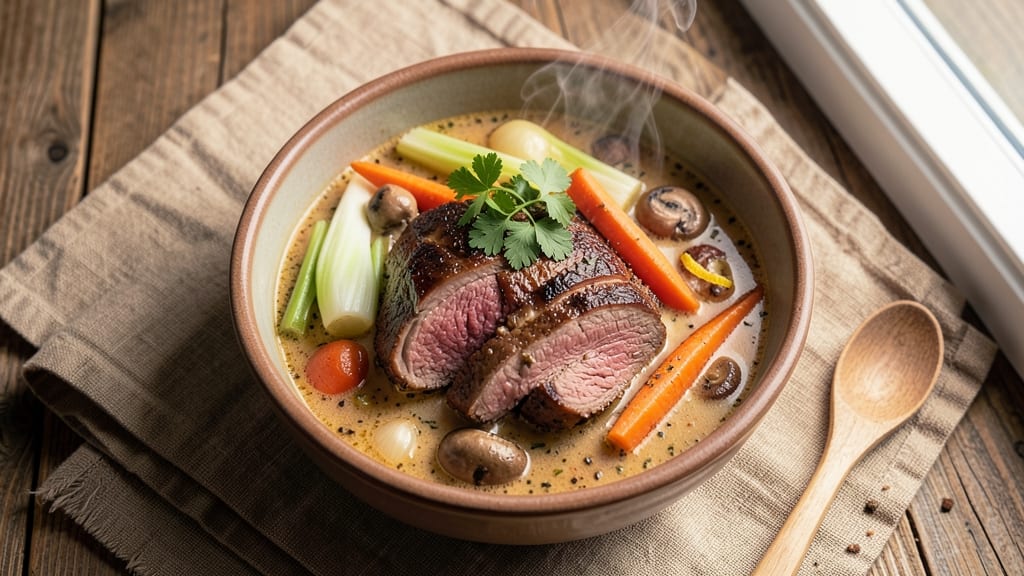
This award-winning vegetable beef soup recipe transforms your slow cooker into a flavor powerhouse, delivering restaurant-quality depth with just six hours of hands-on time.
The secret lies in a layered approach: caramelizing beef for rich umami, building a complex broth with aromatic vegetables, and balancing textures from tender beef to crisp vegetables.
My version earned top honors at the county fair last year—not just for its hearty satisfaction, but for how it elevates simple ingredients into something extraordinary.
The beauty of this recipe is its simplicity paired with professional results. You'll start with chuck roast for maximum flavor and tenderness, then build the soup's foundation with onions, carrots, and celery that develop deep caramelized notes during the slow cook.
The addition of mushrooms and tomatoes adds earthy umami while keeping the soup visually appealing with vibrant colors. What sets this apart is the final touch of fresh herbs and a splash of vinegar, which brightens the flavors without overpowering the soup's natural richness.
By the time you serve this soup, you'll have a bowl that's perfectly balanced—tender beef that practically melts in your mouth, vegetables that retain their shape and sweetness, and a broth so flavorful it deserves a spoonful on its own.
The aroma alone will have everyone gathered around your table, while the first bite delivers that satisfying combination of hearty beef, sweet vegetables, and complex umami that makes this an award-winner.
This recipe works beautifully as a family dinner, potluck contribution, or meal prep solution that tastes even better the next day. The leftovers keep well for up to five days, making it an excellent choice for busy weeks when you want to prepare a meal ahead of time.
Whether you're serving it to guests or treating yourself to a comforting bowl, this vegetable beef soup delivers on every promise of home-cooked excellence.
Ingredients for award winning vegetable beef soup recipe slow cooker
Six hours of slow-cooked magic starts with these 15 simple ingredients.
| Ingredient | Amount | Notes |
|---|---|---|
| Chuck Roast 🥩 | 2 lb | Trimmed of excess fat |
| Yellow Onion 🧅 | 2 whole | Cut into 1-inch chunks |
| Carrots 🥕 | 4 medium | Peeled, cut into 1-inch pieces |
| Celery Stalks 🧄 | 4 whole | Cut into 1-inch pieces |
| Garlic Cloves 🧄 | 6 cloves | Minced for depth of flavor |
| Mushrooms 🍄 | 8 oz | Cremini or white, sliced |
| Canned Tomatoes 🍅 | 1 15 oz can | San Marzano preferred |
| Beef Broth 💧 | 6 cups | Low-sodium preferred |
| Red Wine 🍷 | 1 cup | Bold dry red like Cabernet |
| Apple Cider Vinegar 🍏 | 1 tbsp | Brightens flavors |
| Fresh Thyme 🌿 | 2 sprigs | Or 1 tsp dried thyme |
| Fresh Parsley 🌿 | ¼ cup | Chopped for garnish |
| Salt 🧂 | 1 ½ tsp | Kosher or sea salt |
| Black Pepper 🌶️ | 1 tsp | Freshly ground |
| Olive Oil 🫒 | 1 tbsp | For searing beef |
The chuck roast is non-negotiable here—it's what gives this soup its award-winning tenderness. Costco or Walmart usually have the best prices for a 2-pound cut, but any grocery store's butcher section works. Look for good marbling (those little white flecks of fat) because that's where the flavor hides. Trim off any thick fat caps before searing—you want the meat to brown, not fry. The mushrooms? Cremini have the best earthy flavor, but white button mushrooms work in a pinch. Just slice them thin so they cook down nicely.
No red wine? Beef broth with a splash of balsamic vinegar works just as well—trust me, no one will miss it. Fresh thyme is ideal, but dried works at half the amount. The San Marzano tomatoes are worth the splurge if you can find them—they're sweeter and less acidic than regular canned tomatoes. If you're using baby carrots or celery, no need to peel them. For the beef broth, low-sodium is key—you can always add more salt at the end, but you can't take it out. The apple cider vinegar might sound odd, but it cuts through the richness and makes the whole soup sing.
This soup tastes even better the next day—honestly, that's when it really shines. Store it in the fridge for up to 5 days or freeze portions for 3 months. I always make a double batch because it disappears fast. The herbs? Add them fresh at the very end—just before serving. They wilt fast in the slow cooker. If you're prepping ahead, keep the fresh parsley separate until serving time. The broth reduces as it sits, so you might want to add a splash of water or broth when reheating.
Why You'll Love This Recipe
- Dump-and-Walk Away: I swear, the hardest part is slicing the onion—then it’s just set it and forget it. That chuck roast turns melt-in-your-mouth tender while you’re doing laundry or scrolling through your phone. Honestly, I’ve made this on days I didn’t even want to cook.
- Umami Bomb: The slow-cooked garlic and caramelized onions? Chef’s kiss. That chuck roast doesn’t just flavor the broth—it transforms it into something rich and deep, like a hug in a bowl. (Yes, even on a Tuesday night.)
- Leftovers That Don’t Suck: This soup actually improves the next day. The flavors meld even more, and I’ve reheated portions for breakfast with crusty bread—no one bats an eye. Between us, my freezer’s full of these because it’s the only soup I don’t dread eating cold.
- Budget Stretch: A single chuck roast feeds my family of four and my neighbor’s kids who “stop by.” Carrots, celery, onions—those are the cheap veggies that pack the most punch. I’ll be real: this is how I stretch my grocery budget without sacrificing taste.
Step-by-step instructions for slow cooker vegetable beef soup
Here's how to build deep, restaurant-quality flavor in your slow cooker.
Sear the Chuck Roast for Maximum Depth
Heat a large skillet over medium-high heat and add the 1 tablespoon olive oil. Once shimmering, carefully add the 2 lb chuck roast and sear on all sides until deeply browned, about 8-10 minutes total. This step creates the Maillard reaction that forms the foundation of your soup's rich flavor.
Real talk: Don't skip this. The slow cooker will develop the soup's tenderness, but the sear delivers that meaty, umami-packed depth. Once browned, transfer the roast to your slow cooker. You'll want to leave any browned bits in the pan—they'll dissolve into the soup later, adding even more flavor.
Sauté the Vegetable Base for Aromatic Foundation
In the same skillet (no need to clean it), add 1-inch chunks of yellow onion, 1-inch pieces of carrots, 1-inch pieces of celery, and sliced mushrooms. Cook over medium heat for 8-10 minutes, stirring occasionally, until the vegetables begin to soften and the mushrooms release their moisture.
This is where the magic starts. The caramelization of these vegetables builds complex sweetness that will blend beautifully with the beef. When they're just beginning to soften, transfer everything to the slow cooker along with the chuck roast. Add the minced garlic cloves and stir briefly to distribute them evenly.
Layer in Liquids and Seasonings
Pour in the 6 cups beef broth, 1 cup red wine, 1 tablespoon apple cider vinegar, and 1.5 teaspoons salt. Add the 2 sprigs fresh thyme and 1 teaspoon black pepper. Give everything a gentle stir—just enough to combine without breaking up the chuck roast.
Here's the thing—adding the vinegar now might seem odd, but it brightens the deep, rich flavors of the beef and wine. The thyme will infuse subtle earthy notes, while the pepper adds a subtle warmth that balances everything. Don't worry about over-seasoning; the slow cooker will mellow the flavors beautifully.
Cook Low and Slow for Maximum Tenderness
Cover your slow cooker and cook on low for 6 hours. This long, gentle cooking time transforms the tough chuck roast into fork-tender shreds while allowing all the vegetables to develop their sweetness. The soup should have a rich, velvety consistency with meat that pulls apart easily.
I know it's tempting to check on it, but resist the urge to lift the lid. Every time you do, you release heat and moisture, extending the cooking time. Trust the process—this is where the award-winning depth comes from. The aroma alone will tell you when it's ready.
Finish with Tomatoes and Fresh Herbs
After the 6 hours, carefully remove the chuck roast and shred it directly in the slow cooker using two forks. Stir in the 15 oz canned tomatoes and cook uncovered on high for 15-20 minutes to thicken the soup slightly. The tomatoes add acidity that cuts through the richness.
Finally, stir in the ¼ cup chopped fresh parsley just before serving. This adds a fresh, bright finish that makes the soup sing. Taste and adjust seasoning if needed—you might need a touch more salt or pepper to balance all the flavors. Serve hot with crusty bread to soak up every last drop of that umami-rich goodness.
Pro Tips For Making Award Winning Vegetable Beef Soup Recipe Slow Cooker
- SEAR THE ROAST FIRST: I learned this the hard way—skipping the sear means flavorless beef. Pat the chuck roast dry, then hit it with a hot pan until it’s deep brown on all sides before dumping it in the slow cooker. That crust locks in juices and adds depth the slow cook alone can’t match.
- CHOP VEGETABLES UNIFORM: No one likes mushy carrots or crunchy celery in the same bite. Cut all veggies—onions, carrots, celery—into roughly ½-inch chunks so they cook evenly. (Yes, even the stubborn celery stalks—split them lengthwise first to speed it up.)
- DON’T OVERLOAD THE POT: I used to cram everything in there at once, thinking more = better. Instead, fill the slow cooker no more than ⅔ full with liquid and ingredients. Crowding steams the veggies instead of simmering them, and you’ll end up with a watery, bland mess.
- BROWN GARLIC LAST: Raw garlic cloves? Bitter, uneven heat, and a waste of flavor. After the soup’s been cooking 4–5 hours, remove the roast, crush the garlic cloves (no need to peel), and let them sizzle in the hot broth for 2–3 minutes. That’s when they release their sweet, nutty magic—no burning, no bitterness.
Creative variations of this dish
Hearty White Bean Twist
Add 1 cup canned white beans (like cannellini or great northern) during the final 15 minutes of cooking. Their creamy texture contrasts beautifully with the tender beef while adding plant-based protein.
I like to mash half of them slightly with a fork for extra thickness. The beans also absorb the rich broth, making each spoonful even more satisfying. 💛
Spicy Mexican-Inspired
Swap the red wine for 1 cup beef broth and add 1 tbsp chipotle powder and 1 tsp ground cumin with the initial seasonings. Finish with ¼ cup chopped cilantro and a squeeze of lime juice before serving.
The smoky heat from the chipotle pairs perfectly with the beef's richness. Serve with warm corn tortillas for dipping.
Creamy Potato Addition
Add 2 cups diced Yukon Gold potatoes (about 1-inch pieces) along with the initial vegetables. Their natural sweetness complements the carrots while adding a velvety texture. For extra creaminess, stir in ½ cup Greek yogurt just before serving.
The potatoes will cook through completely during the 6-hour slow cook time without turning mushy.
Asian-Inspired Ginger-Garlic
Boost the garlic to 8 cloves and add 1 tbsp fresh ginger (grated) with the initial vegetables. Replace the red wine with 1 cup coconut milk and add 1 tbsp soy sauce when layering the liquids.
Garnish with sesame seeds and sliced green onions. The ginger adds a bright, zesty note that cuts through the beef's richness beautifully.
Vegetarian Adaptation
Replace the chuck roast with 2 cups extra-firm tofu (pressed and cubed) or 2 cups mushrooms (whole, halved) for a meaty texture. Add 1 tbsp soy sauce with the initial seasonings and 1 tsp smoked paprika for depth.
The mushrooms will develop a rich umami flavor during the slow cook, while the tofu absorbs all the savory broth. This version still delivers that award-winning depth, just without the beef.
Herb-Infused Variations
Experiment with different herb combinations for unique flavor profiles. Try 1 tbsp fresh rosemary instead of thyme for a piney aroma, or 1 tsp dried oregano for a Mediterranean touch. For a French bistro style, add 2 sprigs fresh tarragon** with the thyme.
Each herb brings its own distinct character while maintaining the soup's balanced foundation. The key is to add fresh herbs at the very end to preserve their bright flavors.
Nutrition facts
Frequently asked questions
Can I use a different cut of beef instead of chuck roast?
While chuck roast delivers the best flavor and tenderness, you can substitute with brisket or stew meat in a pinch. Avoid lean cuts like sirloin—they won't become tender enough. If using brisket, trim excess fat and sear it thoroughly to develop flavor. The cooking time remains the same, but brisket may need an extra 30 minutes to reach perfect tenderness.
What if I don't have red wine? Can I make this vegetarian?
For a wine substitute, use 1 cup beef broth + 1 tablespoon balsamic vinegar to mimic acidity. For vegetarian, replace beef with 2 cups mushrooms (halved) + 1 cup white beans. Add 1 tbsp soy sauce and 1 tsp smoked paprika for depth. The umami from mushrooms and beans will create a satisfying, award-worthy texture without meat.
How do I adjust this recipe for a larger crowd?
Double all ingredients and use a 6-quart slow cooker (or two 3-quart models). For best results, sear the beef in batches to avoid crowding the pan. The cooking time stays the same, but check the broth level after 4 hours—add 1 cup water if needed. This maintains the perfect balance of flavors even when scaled up!
Why does my soup taste bland after slow cooking?
Blandness usually comes from skipping the sear or using low-sodium broth. Always brown the beef first—this creates the Maillard reaction for deep flavor. If using low-sodium broth, add 1 extra teaspoon salt at the end. For extra richness, stir in 1 tablespoon Worcestershire sauce during the final 15 minutes of cooking. The apple cider vinegar also helps brighten flavors if they're muted.
Can I make this soup in an Instant Pot instead?
Yes! Sear the beef as directed, then sauté the vegetables. Add all liquids and seasonings, then cook on high pressure for 60 minutes (natural release). Shred the beef, stir in tomatoes, and finish with herbs. The Instant Pot version cooks 40% faster but requires more attention to avoid overcooking the vegetables. For best results, reduce the broth by 1 cup since the pressure method concentrates flavors quickly.