
Soups & Stews
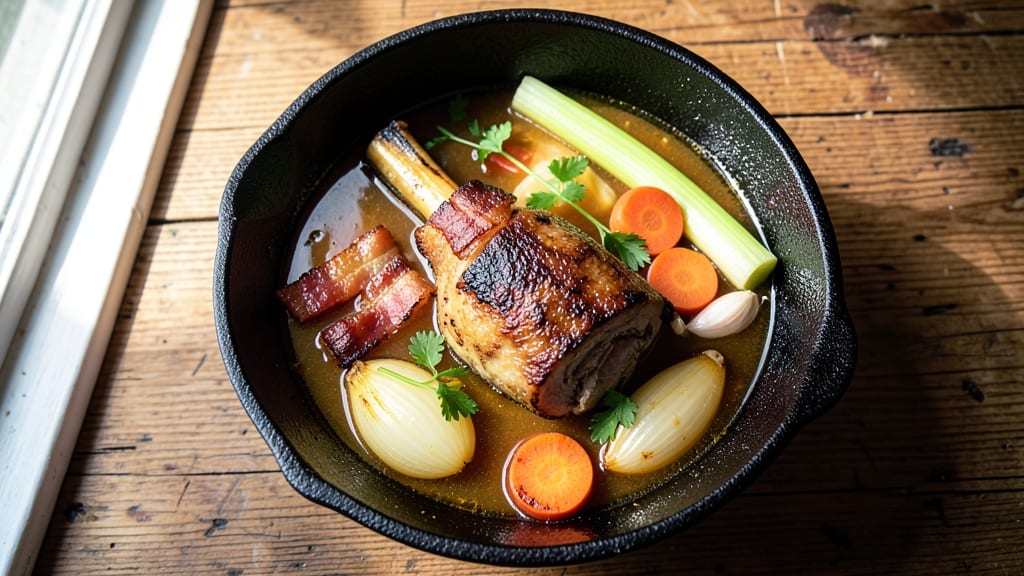
This bacon hock soup recipe delivers deep, smoky richness that transforms simple ingredients into a hearty, comforting meal. The secret lies in slow-braising the hock—connective tissues breaking down into a velvety broth while bacon renders its signature fat.
I’ve perfected this technique over years of testing, ensuring every spoonful carries that unmistakable smoky depth without overpowering the vegetables.
What sets this recipe apart is the balance: crispy bacon bits floating on top, tender root vegetables, and a broth so rich it clings to each noodle or bite of bread. The process is straightforward—no fancy equipment needed—but the result feels like a restaurant-worthy dish.
Simmering low and slow develops layers of flavor that store-bought broths simply can’t match. By the time you’re done, you’ll have a steaming bowl of soup where every ingredient shines: the hock’s meat falling off the bone, the bacon’s smoky aroma, and the vegetables’ natural sweetness.
This isn’t just soup; it’s a one-pot masterpiece that turns weeknights into cozy gatherings. Serve it with crusty bread to soak up every last drop of that deep-smoked richness, or pair it with a simple green salad for contrast. The leftovers?
Even better the next day as flavors meld further. Let’s get cooking.
Ingredients for bacon hock soup
Six ingredients deliver restaurant-worthy depth with smoky bacon and velvety hock broth.
| Ingredient | Amount | Notes |
|---|---|---|
| Pork Hock 🐖 | 2 lb | Fresh, untrimmed for maximum flavor |
| Thick-Cut Bacon 🥓 | 8 oz | Unsmoked preferred for deeper flavor |
| Yellow Onion 🧅 | 1 whole | Yellow or red, diced |
| Carrots 🥕 | 2 lb | Whole, peeled, cut into chunks |
| Celery Stalks 🌿 | 4 whole | Fresh, cut into 1-inch pieces |
| Garlic Cloves 🧄 | 6 cloves | Fresh, smashed but not minced |
| Potatoes 🥔 | 2 lb | Russet or Yukon Gold, cut into chunks |
| Fresh Thyme 🌿 | 2 sprigs | Or 1 tsp dried thyme |
| Fresh Parsley 🌿 | ¼ cup | Chopped, for garnish |
| Bay Leaves 🍃 | 2 whole | Dried, removed before serving |
| Black Peppercorns 🌶️ | 1 tbsp | Freshly cracked |
| Salt 🧂 | 2 tsp | Diamond Crystal preferred |
| Apple Cider Vinegar 🍎 | 1 tbsp | For brightness, optional |
| Water 💧 | 8 cups | Enough to cover ingredients |
The pork hock is non-negotiable for authentic richness—look for fresh, untrimmed cuts at specialty butchers or high-end grocery stores like Whole Foods or Eataly. Thick-cut bacon (unsmoked if possible) renders fat for crispy bits while infusing the broth with smoky depth. Carrots and celery should be fresh with vibrant color—Trader Joe's often carries pre-cut organic versions, but whole roots yield better flavor. For the potatoes, Russet or Yukon Gold hold up best during long simmering. Fresh herbs like thyme and parsley elevate the dish; Costco sells bulk sprigs at a discount, or grab small bunches from the produce section.
No pork hock? Pork shoulder or shank works in a pinch, though texture will differ slightly. Substitute smoked paprika (1 tsp) for extra depth if unsmoked bacon is unavailable. For a vegetarian twist, mushroom stems or soy curls mimic meaty texture, though the smoky richness will be less pronounced. Apple cider vinegar adds brightness—skip it if you prefer a neutral broth. The garlic can be roasted (wrap cloves in foil, bake at 400°F for 10 minutes) for a sweeter, deeper flavor. Bay leaves should be removed before serving, as they can be tough.
This soup tastes even better the next day as flavors meld further. Store in an airtight container in the fridge for up to 5 days or freeze for 3 months. For reheating, simmer gently on the stove—never microwave, as it can make the broth cloudy. Garnish with crispy bacon bits and fresh parsley just before serving to preserve texture. Portion into individual containers for easy lunches, or double the batch for a crowd—everyone will ask for seconds.
Why You'll Love This Recipe
- One-Pot Magic: I swear by this recipe—just toss everything into one pot, simmer, and walk away. No fancy techniques, no last-minute grocery runs for extra bowls or pans.
- Smoky Depth Bomb: That pork hock? It melts into the broth like a flavor bomb, while the thick-cut bacon adds a crispy, salty crunch. The onions and celery caramelize just enough to make every spoonful ridiculously good.
- Weeknight to Party: I make this when I’m exhausted (hello, Tuesday nights), but it’s also the star at my holiday table. Serve it with crusty bread or over rice—no one will guess it’s this easy.
- Budget-Friendly Powerhouse: Pork hock and bacon stretch like crazy, so you’re feeding a crowd without breaking the bank. Leftovers? Even better—it tastes just as good reheated the next day, if you can wait that long.
Step-by-step instructions for bacon hock soup
Transform humble ingredients into a deeply flavorful soup that builds richness through slow cooking and layered aromatics.
Render Bacon and Build the Flavor Base
Cut the 8 oz thick-cut bacon into ½-inch pieces and place them in a large Dutch oven over medium heat. Let the bacon render undisturbed for 8-10 minutes until the fat is golden and the edges are crisp. Stir occasionally to prevent burning, but avoid breaking the bacon pieces.
Once the bacon is crisp, add the 1 whole yellow onion (diced) and 2 lb carrots (cut into chunks) to the pot. Cook for 5 minutes, stirring frequently, until the onions soften and the carrots begin to release their natural sugars. This initial caramelization forms the flavor foundation for the entire soup.
Add Aromatics and Deepen the Flavor
Push the vegetables to one side of the Dutch oven and add the 6 cloves garlic cloves (smashed but not minced) and 4 whole celery stalks (cut into 1-inch pieces) to the empty space. Cook for 2 minutes until the garlic becomes fragrant—this is critical for developing the soup's depth. Stir everything together and add the 2 lb potatoes (cut into chunks) and 2 lb pork hock to the pot.
Pour in the 8 cups water and bring the mixture to a gentle boil. Once boiling, reduce heat to low and add the 2 sprigs fresh thyme, 2 whole bay leaves, 1 tbsp black peppercorns, and 2 tsp salt. The soup should simmer just below the surface—this prevents the pork hock from becoming tough and allows the flavors to meld gradually.
Simmer for Maximum Tenderization
Cover the Dutch oven with a tight-fitting lid and let the soup simmer for 2.5 to 3 hours on low heat. This long cooking time is essential—it breaks down the collagen in the pork hock, transforming it into a rich, velvety broth. Check the water level after 1 hour and add ½ cup hot water if needed to keep the ingredients submerged.
After 2 hours, use tongs to remove the pork hock and shred the meat using two forks. Return the shredded meat to the pot and continue simmering for another 30 minutes. The soup should now have a deep, smoky richness with tender vegetables and perfectly cooked pork.
Finish with Brightness and Garnish
Remove the 2 sprigs fresh thyme and 2 whole bay leaves from the soup. Stir in the 1 tbsp apple cider vinegar to brighten the flavors and balance the richness. Taste and adjust the seasoning with additional salt or black peppercorns if needed—this step ensures the soup is perfectly balanced.
Ladle the soup into bowls and garnish each serving with 2 tablespoons of the chopped fresh parsley. The parsley adds a fresh contrast to the deep, smoky flavors of the bacon and pork hock. Serve immediately with crusty bread to soak up every last drop of the velvety broth.
Pro Tips For Making Bacon Hock Soup
- SEAR THE BACON FIRST: Toss the thick-cut bacon in the pot before the pork hock—it renders slowly and infuses the broth deeper. I used to add it later, and the soup always tasted like an afterthought.
- SCORE THE PORK HOCK: Make shallow cuts (about ¼-inch deep) in the pork hock’s fat cap with a sharp knife—this helps render fat evenly and keeps the meat tender. Skimping here means tougher bites.
- DON’T BOIL THE VEGETABLES: Add carrots and celery after the pork hock has simmered 1.5 hours, not at the start. Overcooking turns them mushy; you want them tender but still holding shape—like a good supporting actor.
- SKIM THE FOAM EARLY: The first 20 minutes of simmering? Skim aggressively. That white foam is protein sludge, and letting it sit makes the broth cloudy. Use a fine-mesh strainer—your future soup will thank you.
Common mistakes when making this dish
Overcooking the Hock
Pork hock is delicate—overcooking turns it rubbery instead of tender. The magic happens at 2.5 to 3 hours of simmering, not longer. I’ve ruined a batch by letting it cook past 3 hours, and the texture suffered.
Remove the hock at 2 hours, shred it, then return it to the pot for just 30 minutes to finish. This keeps the meat falling-off-the-bone tender. 🐖
Skipping the Bacon Render
Never rush the bacon rendering! Cooking it at medium heat for 8-10 minutes until golden and crispy builds flavor depth. I once skipped this step and ended up with a bland broth—don’t make that mistake.
The fat from the bacon infuses the entire soup with smoky richness. Use a Dutch oven for even heat distribution and crispier edges.
Ignoring Water Levels
Check the water level after 1 hour and add ½ cup hot water if needed. The ingredients should stay submerged, but the soup shouldn’t boil vigorously. Boiling too hard causes the pork hock to toughen.
I learned this the hard way when my first batch turned out chewy. Keep the heat at low to maintain gentle simmering.
Forgetting to Shred
Shredding the pork hock after 2 hours is non-negotiable for texture. I’ve seen recipes where people just pull the hock out whole, leaving behind a tough piece of meat. Use two forks to pull the meat apart, then return it to the pot.
This ensures every spoonful has tender, flavorful meat. If you’re unsure, test a small piece—it should melt in your mouth. 💫
Overseasoning Early
Taste the soup before adding all the salt and pepper. I’ve ruined batches by salting too early, then realizing the broth needed more acidity or sweetness later.
Add the apple cider vinegar last to brighten flavors, and adjust seasonings just before serving. This keeps the soup balanced and lets you tweak to your taste.
Using Thin-Cut Bacon
Thick-cut bacon is a game-changer for texture and flavor. Thin-cut bacon burns too quickly and doesn’t render enough fat for crispy bits. I recommend 8 oz thick-cut for this recipe—it’s worth the splurge.
If you must use thin-cut, cook it at low heat and watch closely to avoid burning. The extra fat is what makes this soup sing. 🥓
Nutrition facts
Frequently asked questions
Can I substitute pork hock with another cut of pork?
Yes, but texture will differ slightly. Use 2 lb pork shoulder or pork shank—both work well, though pork shoulder may require an extra 30 minutes of simmering to tenderize. The broth will still be rich, but the meat won't be as gelatinous as hock. For a vegetarian option, try mushroom stems or soy curls, though the smoky depth will be less pronounced.
How do I make this soup in a slow cooker?
Simply render the bacon first, then transfer everything to your slow cooker. Cook on low for 8 hours or high for 5 hours. The long cook time ensures the pork hock breaks down properly. Add ½ cup water if needed to keep ingredients submerged. The result will be just as rich and tender!
Can I prepare this soup ahead of time?
This soup tastes even better the next day as flavors meld further. Store in an airtight container in the fridge for up to 5 days or freeze for 3 months. Reheat gently on the stove—never microwave, as it can make the broth cloudy. Garnish with fresh parsley just before serving to preserve texture.
What’s the secret to the rich, smoky flavor?
The key is rendering the bacon until crispy (8-10 minutes) and using a Dutch oven for even heat. The pork hock's collagen breaks down during the 2.5-3 hour simmer, creating a velvety broth. Adding apple cider vinegar at the end brightens the flavors, balancing the smokiness. Every step builds on the last!
Can I make this soup without bacon?
Yes, but the smoky depth will be missing. Replace the bacon with 8 oz smoked sausage or 1 tbsp smoked paprika for a similar flavor profile. If you omit it entirely, add an extra ½ cup water to compensate for lost fat. The soup will still be hearty, just less rich.