
Soups & Stews
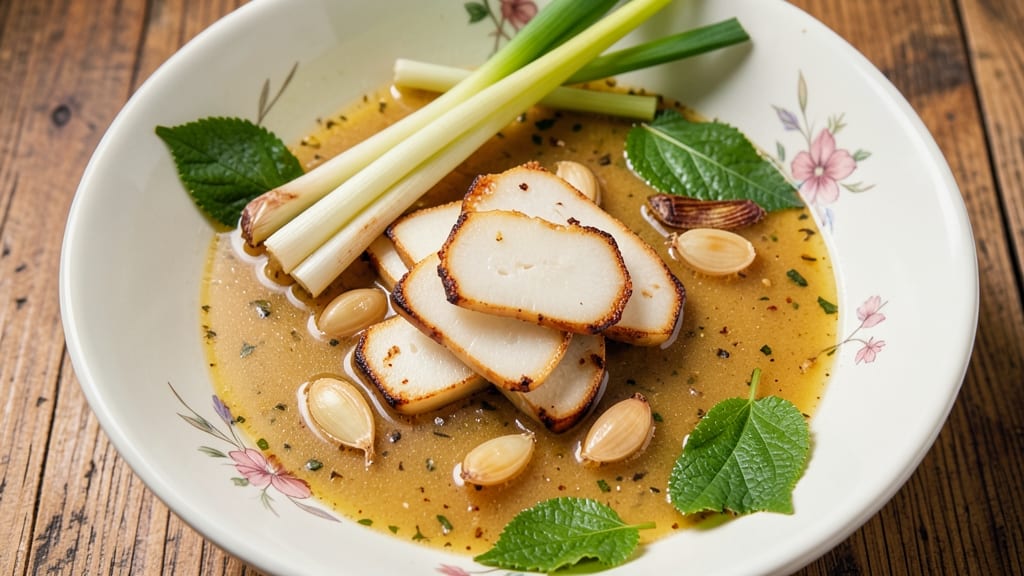
This bamboo pith soup recipe transports you to Southeast Asia's rustic kitchens with its delicate balance of earthy crunch and fragrant broth. The secret lies in properly preparing the bamboo pith—soaking, scraping, and simmering it until tender—while building layers of flavor with lemongrass, galangal, and kaffir lime leaves.
I've perfected this vegetarian-friendly version that honors tradition while adapting to home kitchens.
The velouté begins with a fragrant broth infused with galangal and lemongrass, which develops depth as it simmers for 45 minutes. The bamboo pith absorbs these aromatics while maintaining its signature crunchy texture, creating a perfect contrast.
This soup isn't just nourishing—it's a celebration of Southeast Asian culinary heritage that's surprisingly simple to recreate at home.
What makes this recipe special is the harmony of textures: silky broth, tender bamboo pith, and optional garnishes like fried shallots or fresh herbs. The galangal-lemongrass base delivers a bright, citrusy warmth that cuts through the earthiness of the bamboo, creating a flavor profile that's both comforting and complex.
Serve it with steamed rice and pickled vegetables for the full experience.
Perfect for special occasions or weeknight meals, this soup demonstrates how humble ingredients can create extraordinary results. The preparation method ensures you get that authentic earthy crunch while keeping the process accessible for home cooks. Let's bring this traditional dish to your kitchen.
Ingredients for bamboo pith soup
Authentic Southeast Asian flavors meet home kitchen accessibility with these carefully chosen ingredients.
| Ingredient | Amount | Notes |
|---|---|---|
| Fresh Bamboo Pith 🌿 | 12 oz | Fresh, peeled, and sliced thinly |
| Stems Lemongrass 🌿 | 4 whole | Bruised and cut into 2-inch pieces |
| Galangal 🌿 | 3 oz | Fresh, peeled, and sliced thinly |
| Kaffir Lime Leaves 🍋 | 4 whole | Bruised and cut into strips |
| Shallots 🧅 | 4 whole | Peeled and thinly sliced |
| Garlic Cloves 🧄 | 6 cloves | Peeled and minced |
| Coconut Milk 🥥 | 1 ½ cups | Full-fat for creaminess |
| Vegetable Broth 💧 | 4 cups | Low-sodium preferred |
| Fish Sauce 🍶 | 1 ½ tbsp | Vegan fish sauce substitute |
| Lime Juice 🍋 | 2 tbsp | Freshly squeezed |
| Palm Sugar 🍯 | 2 tbsp | Or substitute brown sugar |
| Fresh Thai Basil Leaves 🌿 | ¼ cup | For garnish |
| Vegetable Oil 🫒 | 2 tbsp | For frying shallots |
| Salt 🧂 | 1 tsp | Adjust to taste |
The bamboo pith is the heart of this soup, and freshness is critical. Seek out specialty Asian markets for the best quality—look for vibrant, firm pith that's been recently harvested. If unavailable, frozen bamboo pith works but should be thawed and drained thoroughly before use. Galangal and kaffir lime leaves can often be found in the same section as lemongrass and Thai basil at Whole Foods Market or well-stocked grocery stores. For galangal, choose pieces that are firm and aromatic—avoid any with dark spots or soft areas, as these indicate spoilage. The lemongrass should be bright green with no yellowing stems, and the kaffir lime leaves should be intact and fragrant.
Substitutions are possible but may alter the authentic flavor profile. No galangal? Use ginger at half the amount, though the flavor will differ slightly. Kaffir lime leaves can be replaced with lime zest and a pinch of lime leaf powder (available at specialty stores), but the aroma won't be identical. For fish sauce, vegan fish sauce made from mushrooms (like Thai Kitchen brand) works well. The palm sugar can be swapped for brown sugar, though it will have a different caramel note. Fresh Thai basil is ideal, but regular basil can be used in a pinch—just add a pinch of lime zest to compensate for the missing anise flavor. The coconut milk should be full-fat for the richest texture, but light coconut milk will work in a bind.
Store fresh bamboo pith in the refrigerator for up to 3 days wrapped in a damp towel to maintain moisture. Galangal and kaffir lime leaves keep for 1 week in the fridge, while lemongrass can last 2 weeks when stored properly. The prepared soup tastes even better the next day as the flavors meld, so consider making a double batch. It reheats beautifully—simply warm on the stove over medium-low heat, stirring occasionally to prevent sticking. For longer storage, freeze portions in airtight containers for up to 3 months. When reheating from frozen, add a splash of water or broth to restore creaminess.
Why You'll Love This Recipe
- Few Ingredients, Big Payoff: I swear by this recipe because it’s that simple—just bamboo pith, lemongrass, galangal, and a handful of shallots. No fancy prep, no hidden pantry staples. Honestly, if you can chop and simmer, you’ve got this.
- Herb-Packed Punch: That galangal and kaffir lime leaves? They turn this soup into a fragrant dream. The lemongrass adds a bright, citrusy kick, while the bamboo pith soaks it all up—creamy, earthy, and ridiculously satisfying in every spoonful.
- Leftover Hero: This soup actually tastes better the next day. Between us, I’ve reheated it twice and still craved more. It’s the kind of dish that works for lunch, dinner, or even a quick reheat when you’re too tired to cook.
- Budget Meal for Crowds: A single bamboo stalk stretches for four servings, and the rest of the ingredients cost pennies. Perfect for feeding a family without breaking the bank—or for when you’re hosting and want to impress without stressing.
Step-by-step instructions for silky bamboo pith velouté
Master this delicate balance of earthy bamboo and aromatic Southeast Asian flavors through precise technique.
Prepare the Bamboo Pith Foundation
Begin by carefully peeling the 12 oz fresh bamboo pith using a sharp vegetable peeler, removing only the outer fibrous layer while preserving the tender inner core. Slice the peeled pith into ¼-inch thick rounds—this even thickness ensures consistent cooking. Soak the slices in cold water for 15 minutes to remove any residual bitterness, then drain thoroughly before using.
In a large pot, combine the drained bamboo pith with 4 cups vegetable broth and bring to a gentle simmer over medium-low heat. The broth should just bubble at the edges—anything more aggressive will cause the bamboo to disintegrate. Simmer uncovered for 20-25 minutes until the pith becomes translucent and the liquid reduces by about one-third, creating a velvety base.
Build the Aromatic Base
While the bamboo simmers, heat 2 tablespoons vegetable oil in a separate skillet over medium heat. Add the 4 whole shallots (peeled and thinly sliced) and cook for 4-5 minutes until they turn golden brown—this develops their natural sweetness. Remove the shallots with a slotted spoon and set aside, leaving the oil in the pan.
To the same oil, add the 6 cloves minced garlic and cook for 30 seconds until fragrant but not browned. Immediately add the 3 oz sliced galangal and 4 whole stems lemongrass (bruised and cut into 2-inch pieces), along with the 4 whole kaffir lime leaves (bruised and cut into strips). Sauté for 2 minutes until the galangal softens slightly and releases its citrusy aroma.
Create the Signature Velouté Texture
Using an immersion blender (or carefully transferring to a blender), purée the cooked bamboo mixture until completely smooth. Strain through a fine-mesh sieve to remove any remaining fibrous bits—this ensures your soup will be silky, not stringy. Return the puréed mixture to the pot and stir in the 1.5 cups coconut milk and 2 tablespoons palm sugar, dissolving the sugar completely.
Return the reserved shallots and the aromatic mixture from Step 2 to the pot. Add 1.5 tablespoons fish sauce and 1 teaspoon salt, stirring well. The soup should now have a rich, golden hue with a complex aroma blending citrus, ginger, and umami notes. Taste and adjust seasoning—you want a balance of sweet, salty, and slightly funky from the galangal.
Finish and Serve with Precision
Reduce the heat to low and let the soup simmer gently for 5-7 minutes to allow flavors to meld. Just before serving, stir in 2 tablespoons lime juice—this brightens the dish and cuts through the richness of the coconut milk. The soup should be warm but not boiling when served to preserve its delicate texture.
Ladle the soup into bowls and garnish immediately with ¼ cup fresh Thai basil leaves torn by hand. The basil adds a fresh herbal note that contrasts beautifully with the earthy bamboo and aromatic base. Serve with a sprinkle of additional lime zest if desired, and accompany with steamed jasmine rice to soak up every last drop of this velvety velouté.
Pro Tips For Making Bamboo Pith Soup
- SOAK BAMBOO PITH FIRST: I learned this the hard way—fresh bamboo pith is tough as a boot if you throw it straight into the pot. Soak the chunks in cold water for 30 minutes to soften them. Yes, it’s an extra step, but it guarantees your soup won’t turn into a chewy nightmare. Drain well before cooking, or you’ll dilute the broth.
- CHAR THE SHALLOTS LOW: Don’t rush this part. Slow-cook the shallots over medium-low heat for 10-12 minutes until they’re deep golden, almost caramelized. High heat burns them fast—you’ll end up with bitter bits instead of sweet, aromatic flavor. Patience here makes a real difference.
- SMASH GALANGAL LIKE IT’S YOUR JOB: Skip the knife for galangal—smash it with the flat side of your cleaver or a heavy pan until it’s bruised and broken. This releases the oils and aroma way better than slicing. (Yes, it looks messy, but your soup will taste like it came from a Thai street vendor.)
- STEAM THE LEAFY BIT FIRST: Toss kaffir lime leaves and lemongrass stems into the pot before the bamboo pith, and let them simmer uncovered for 5 minutes. This extracts their flavor without turning the broth bitter. Cover only after the pith goes in—otherwise, you’ll end up with a swampy, over-extracted mess.
Flavor customization for bamboo pith soup
Spicy Heat Boost
For those who love a kick, add 1-2 tbsp of chili paste (like Maesri Thai Chili Jam) or ½ tsp of red chili flakes when you incorporate the fish sauce. Start with ½ tsp and adjust to taste—the galangal already provides warmth, so you won’t need much.
A splash of 1 tsp of sambal oelek stirred in at the end adds fresh, fruity heat that brightens the soup beautifully. 🌶️
Citrus Zing Variations
Enhance the bright citrus notes by adding 1 tbsp of lime zest when you incorporate the lime juice, or infuse the broth with 2 thinly sliced kaffir lime leaves during the initial simmer.
For extra zing, finish with a drizzle of 1 tsp of yuzu juice (if available) or a sprinkle of 1 tsp of candied lime peel for a sweet-tart contrast.
Creamy Texture Upgrades
For a richer velouté, stir in ¼ cup of coconut cream (instead of coconut milk) during the final simmer. Alternatively, blend in ½ cup of silken tofu after puréeing the bamboo for an ultra-smooth, protein-packed texture. Both options elevate the soup’s luxurious mouthfeel without overpowering the delicate flavors.
Herbal Depth Additions
Infuse the broth with 2 sprigs of Thai basil during the initial simmer for a more pronounced herbal aroma. At the end, garnish with 1 tbsp of chopped cilantro or 1 tsp of mint leaves for a refreshing contrast.
For a smoky twist, add ½ tsp of smoked salt when seasoning or top with 1 tsp of toasted sesame seeds for nutty depth.
Umami Enhancements
Deepens the savory profile by adding 1 tsp of soy sauce or ½ tsp of miso paste when incorporating the fish sauce. For a vegetarian-friendly umami boost, stir in 1 tbsp of mushroom powder (like Umami Burger Seasoning) or 1 tsp of nutritional yeast during the final simmer.
These additions add complexity without altering the soup’s signature texture.
Texture Contrast Options
Add crunch by topping with 2 tbsp of crispy fried garlic or 1 tbsp of toasted coconut flakes. For a fresh crunch, serve with ¼ cup of julienned cucumber or shredded cabbage on the side.
If you prefer a heartier bite, stir in ¼ cup of cooked and shredded bamboo shoots during the final simmer for an extra layer of texture.
Nutrition facts
Frequently asked questions
Can I substitute fresh bamboo pith with canned or frozen?
Fresh bamboo pith is ideal for authentic texture, but frozen works in a pinch. Thaw it completely and drain well before using—never use canned bamboo shoots as they're pre-cooked and lack the tender crunch needed. If you can't find fresh, look for "bamboo pith" specifically labeled in Asian markets, not "bamboo shoots."
What if I can't find galangal? What's the best substitute?
Use ginger at half the amount (1.5 oz instead of 3 oz) for a milder flavor, but expect a slightly different profile. For more authenticity, try Thai ginger (found in Asian markets) which has a closer citrusy note. Never skip this aromatic—it's what gives the soup its signature depth.
How do I know when the bamboo pith is properly cooked?
The pith should be translucent and fork-tender after 20-25 minutes of simmering, with the broth reduced by about one-third. It should hold its shape when pierced but yield slightly—like al dente pasta. Overcooking turns it mushy and ruins the velvety texture.
Can I make this soup ahead of time?
Yes! This soup tastes even better the next day as flavors meld. Store in an airtight container in the fridge for up to 3 days. Reheat gently over low heat, stirring occasionally and adding a splash of water or broth if it thickens too much. For longer storage, freeze portions for up to 3 months.
Why does my soup taste bitter?
Bitter flavor usually comes from either under-soaked bamboo pith (soak for 15 minutes minimum) or overcooked galangal (remove it after 2 minutes of sautéing). Also check your fish sauce—some brands have a stronger umami that can overpower. Start with 1 tbsp and adjust. A splash of lime juice at the end helps balance bitterness.