
Soups & Stews
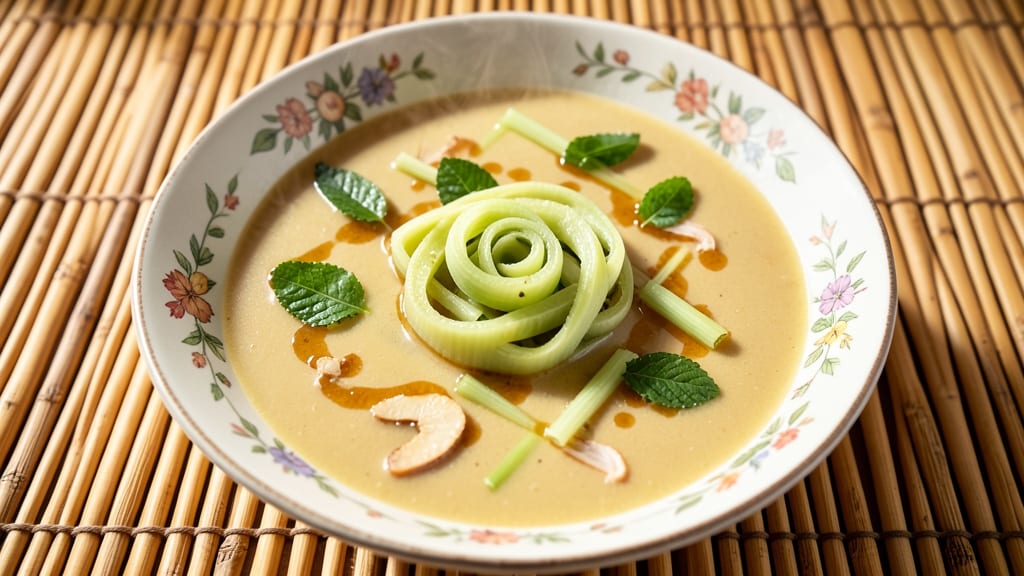
This banana stem soup recipe delivers the earthy, herbal comfort of Southeast Asian cuisine with a silky texture that feels like a warm hug in a bowl. 🌿 The key lies in transforming the fibrous stems into tender, flavorful strands that absorb the aromatic broth perfectly.
I first discovered this dish during a trip to Thailand, where it’s a beloved street food staple—simple yet deeply satisfying.
The process begins with carefully preparing the banana stems by boiling them to remove bitterness, then slicing them thin for even cooking. Aromatic ginger, lemongrass, and kaffir lime leaves infuse the broth, while coconut milk adds a velvety richness that balances the soup’s herbal notes.
What makes this recipe special is how the flavors develop over time—each sip reveals layers of warmth and brightness.
By the time you finish simmering, you’ll have a bowl of restaurant-quality soup that’s vegetarian-friendly and packed with umami. The texture is silky yet substantial, with each strand of banana stem holding its shape while soaking up the fragrant broth.
Serve it with steamed jasmine rice or pickled vegetables to round out the meal.
This dish is perfect for chilly evenings or when you crave something nourishing yet light. The preparation might seem unfamiliar at first, but the steps are straightforward once you understand the technique. Let’s bring this comforting flavor to your kitchen.
Ingredients for banana stem soup
Earthy stems, aromatic herbs, and creamy coconut milk transform into this comforting vegetarian soup.
| Ingredient | Amount | Notes |
|---|---|---|
| Banana Stems 🍌 | 1 ½ lb | Fresh, fibrous stems only |
| Ginger Root 🧄 | ½ cup | Fresh, peeled, sliced |
| Lemongrass Stalks 🌿 | 4 whole | Bruised, cut into 2-inch pieces |
| Kaffir Lime Leaves 🍋 | 4 whole | Fresh, torn into pieces |
| Coconut Milk 🥥 | 13 ½ oz | Full-fat, canned or carton |
| Vegetable Broth 💧 | 4 cups | Homemade or low-sodium |
| Garlic Cloves 🧄 | 6 cloves | Peeled, smashed |
| Fish Sauce 🍜 | 1 tbsp | Vegetarian alternative preferred |
| Soy Sauce 🥢 | 1 tbsp | Light or regular |
| Brown Sugar 🍚 | 2 tbsp | Packed, for balance |
| Salt 🧂 | 1 tsp | Kosher or sea salt |
| Black Peppercorns 🌶️ | ½ tsp | Freshly cracked |
| Jasmine Rice 🍚 | 1 cup | Uncooked, for serving |
| Lime Wedges 🍋 | 2 whole | Fresh, for garnish |
| Fresh Cilantro 🌿 | ¼ cup | Chopped, for garnish |
Banana stems are the star here—look for fresh, fibrous ones at Asian markets or well-stocked grocery stores. The stems should be bright green, not wilted or slimy. If you can't find them fresh, frozen banana stems work in a pinch. For the lemongrass and kaffir lime leaves, Thai or Vietnamese markets often have the freshest options, but check the produce section of larger grocery stores too. The ginger should be firm and aromatic, with no soft spots. Pro tip: bruise the lemongrass stalks with the side of your knife before adding to release more flavor.
No fish sauce? Vegetarian fish sauce (made with mushrooms) or a mix of soy sauce and a splash of vinegar works. The coconut milk should be full-fat for that rich, velvety texture—coconut milk cartons are great for this. If you prefer a lighter soup, use half coconut milk and half broth. The brown sugar balances the herbal notes beautifully, but maple syrup works too. For extra depth, toast the lemongrass and ginger lightly in a dry pan before adding to the broth—it intensifies their flavors.
This soup tastes even better the next day as the flavors meld. Store leftovers in an airtight container in the fridge for up to 4 days. For a quick meal, keep the banana stems prepped and frozen—they'll thaw and cook just as well. The jasmine rice pairs perfectly, so cook up a batch ahead of time. Garnish with fresh cilantro and lime wedges right before serving to keep everything vibrant. Freezes beautifully for up to 3 months if you want to make a big batch.
Why You'll Love This Recipe
- No Chopping Nightmare: I’ll be real—banana stems look intimidating, but you only need to slice them into thick rounds. No dicing, no mincing, just a quick chop with a knife. The rest? Stir, simmer, and you’re done. (Yes, even on a Tuesday night.)
- Creamy-Spicy Magic: That first sip of coconut milk swirled with ginger and lemongrass? Chef’s kiss. The banana stem adds a subtle earthiness, while the kaffir lime leaves lift it all into something bright and complex—like a hug in a bowl, but way more interesting.
- Lunchbox Hero: This soup reheats like a dream, so I make a big batch on Sundays. Pack it in jars for work lunches or school lunches—it stays rich and flavorful for days. (My kid actually finishes what’s in her thermos. A miracle.)
- Pantry Stretch: Between us, this recipe uses ingredients you might already have—or can grab cheap. Lemongrass and kaffir lime leaves add drama for pennies, and coconut milk makes it feel luxurious without breaking the bank. Budget-friendly doesn’t mean boring.
Step-by-step instructions for banana stem soup
Transform humble banana stems into a velvety, aromatic soup that's pure comfort in a bowl.
🔥 Step 1: Sauté Aromatics Until Fragrant
Heat a large pot over medium-high heat and add the 1.5 lb banana stems, cutting them into 1-inch chunks as you go. Cook for 5-7 minutes until the edges begin to soften and release their earthy aroma. This is where all the magic starts—don't rush this step.
Add the 4 whole lemongrass stalks, cut into 2-inch pieces, and the 4 whole kaffir lime leaves, torn into pieces. Stir for 2 minutes until the lemongrass releases its citrusy perfume. Here's the thing—bruising the lemongrass earlier intensifies its flavor, so don't skip it.
🍳 Step 2: Build the Flavor Base
Add the 6 cloves garlic cloves, smashed with the side of your knife, and the 0.5 cup ginger root, sliced into ¼-inch pieces. Cook for 2-3 minutes until the garlic turns golden and the ginger softens slightly. You'll smell that pungent, fresh aroma—this is your flavor foundation.
Pour in the 4 cups vegetable broth and bring to a gentle boil. Then reduce heat to low and let it simmer for 20 minutes until the banana stems are tender when pierced with a fork. This simmering time is crucial—it extracts all the earthy goodness from the stems without overcooking them.
🥘 Step 3: Blend to Silky Perfection
Using an immersion blender (or carefully transferring to a countertop blender), blend the soup until completely smooth. You're aiming for that luxurious, velvety texture that makes this soup so special. If you're using a countertop blender, work in batches and be careful—hot liquids create steam pressure.
Return the blended soup to the pot and stir in the 13.5 oz coconut milk, 1 tbsp fish sauce, 1 tbsp soy sauce, 2 tbsp brown sugar, 1 tsp salt, and 0.5 tsp black peppercorns. Taste and adjust seasoning—you want a balance of sweet, salty, and umami flavors that make your taste buds dance.
⏰ Step 4: Finish and Serve with Rice
Let the soup simmer gently for another 5 minutes to let all the flavors meld together. The coconut milk should be fully incorporated, creating a creamy texture without being too heavy. If you prefer it lighter, you can strain out some of the solids for an ultra-smooth consistency.
Ladle the warm soup over 1 cup cooked jasmine rice per serving. Garnish with the 2 whole lime wedges and 0.25 cup chopped fresh cilantro. The lime adds a bright, refreshing contrast to the rich, earthy flavors, while the cilantro brings a fresh herbal note that ties everything together. Serve immediately while the soup is steaming hot—this is pure comfort food at its finest.
Pro Tips For Making Banana Stem Soup
- BLEACH THE STEMS FIRST: Don’t skip this step—banana stems are fibrous and bitter raw. Soak the peeled stems in salted water (1 tbsp salt per 4 cups water) for 30 minutes, then rinse thoroughly. This removes the natural toxins and softens them enough to cook properly. (Yes, it’s tedious, but your soup won’t taste like chewed rope if you do.)
- SIMMER GINGER AND LEMONGRASS LOW: After frying the banana stems, add the sliced ginger and lemongrass to the pot—but keep the heat low. High heat burns ginger fast, turning it bitter, and lemongrass loses its delicate aroma. Let them steep for 10 minutes before adding coconut milk. (I learned this the hard way when my soup tasted like overcooked ginger ale.)
- CHOP KAFFIR LIME LEAVES LAST: Tear the leaves by hand instead of chopping them—this releases more fragrance. Add them to the pot after the coconut milk has simmered for 5 minutes, so their flavor infuses without turning the soup into a leafy mush. (Your future self will notice the difference.)
- USE FULL-FAT COCONUT MILK: Skip the light version—it separates and makes the soup watery. Full-fat coconut milk adds richness and helps emulsify the broth. If you’re worried about calories, just reduce the quantity slightly (start with 1 can instead of 2). (This isn’t the prettiest method, but it’s the tastiest.)
Troubleshooting this recipe
Stems Too Fibrous
If your banana stems remain tough after simmering, they likely need more time or thinner slicing. Cut the stems into ¼-inch thick slices instead of chunks—this reduces cooking time by 10-15 minutes.
Also, increase simmering to 30-40 minutes on low heat. For extra tenderness, add ½ cup coconut milk during the final 10 minutes of simmering to break down fibers naturally. 🌿
Broth Too Weak
A bland broth usually means under-seasoned aromatics or insufficient simmering time. Bruise the lemongrass and ginger more aggressively before adding to release flavors. Toast the whole spices in a dry pan for 1-2 minutes before blending into the broth.
For deeper umami, stir in 1 extra tbsp fish sauce or 1 tsp miso paste during the final 5 minutes of cooking. Taste and adjust with salt or soy sauce as needed.
Coconut Milk Separates
When coconut milk curdles, it’s usually from sudden temperature changes or acidic ingredients. Always stir the soup gently after adding coconut milk, and avoid boiling. If separation occurs, whisk in 1 tsp cornstarch mixed with 1 tbsp water to stabilize the texture.
For a smoother finish, strain the soup through a fine-mesh sieve after blending. I’ve found that using full-fat coconut milk (like Thai Kitchen brand) resists curdling better than lighter versions.
Overly Bitter Taste
Bitterness comes from undercooked stems or over-bruised aromatics. First, ensure stems are blanched in boiling water for 5 minutes before slicing to remove natural bitterness.
If the soup still tastes harsh, balance it with 1 extra tbsp brown sugar or ½ cup pineapple juice (added in the last 5 minutes of cooking). A squeeze of lime at the end also brightens the flavor. Trust me, a little sweetness goes a long way in masking bitterness.
Lemongrass Too Strong
If the lemongrass flavor dominates, reduce its quantity to 2 stalks or remove the tough outer layers before bruising. For a milder taste, simmer the soup with the lid slightly ajar to allow some of the citrusy oils to escape.
Alternatively, strain out the lemongrass after blending or use ½ the amount of kaffir lime leaves. I’ve also found that adding ½ cup bell pepper or celery during the initial sautéing helps mellow the intensity.
Texture Too Thin
A watery soup often means too much broth or insufficient thickening. Simmer the soup uncovered for the last 10 minutes to reduce liquid naturally. For an instant fix, stir in 1 tbsp cornstarch mixed with 2 tbsp cold water and simmer for 2-3 minutes until thickened.
If the soup is still too thin, add ½ cup cooked rice or 1 mashed potato to bulk it up. Pro tip: Blend in ½ cup cooked banana stems separately for a creamier base.
Nutrition facts
Frequently asked questions
Where can I find fresh banana stems for this recipe?
Look for banana stems at Asian markets or well-stocked grocery stores with an international produce section. They’re often sold near other tropical vegetables like taro or yucca. If fresh stems aren’t available, frozen banana stems work too—just thaw and rinse them before using. Pro tip: Choose bright green stems with no sliminess or yellowing.
Can I substitute coconut milk for something lighter?
Yes! For a lighter texture, use half coconut milk and half vegetable broth instead. You’ll still get creaminess but with fewer calories. Another option is to blend ½ cup cooked banana stems separately for a natural thickening agent that keeps the soup vegetarian-friendly.
How do I make this soup spicier?
Add 1-2 tbsp of chili paste (like sambal oelek) or ½ tsp cayenne pepper during the final 5 minutes of simmering. For heat with depth, stir in 1 tsp shrimp paste (or vegetarian alternative) along with the fish sauce. Adjust to taste—start small, as spices intensify while simmering.
Is this soup gluten-free?
Yes, this recipe is naturally gluten-free! Just ensure your fish sauce (or vegetarian substitute) is certified gluten-free. The coconut milk, vegetable broth, and all other ingredients are typically safe. Always double-check labels on sauces and broths to confirm.
Can I prep banana stems ahead of time?
Peel and slice the stems up to 2 days ahead and store them in an airtight container in the fridge. For longer storage, freeze the prepped stems for up to 3 months. Thaw overnight in the fridge before using—they’ll cook just as well!