
Soups & Stews
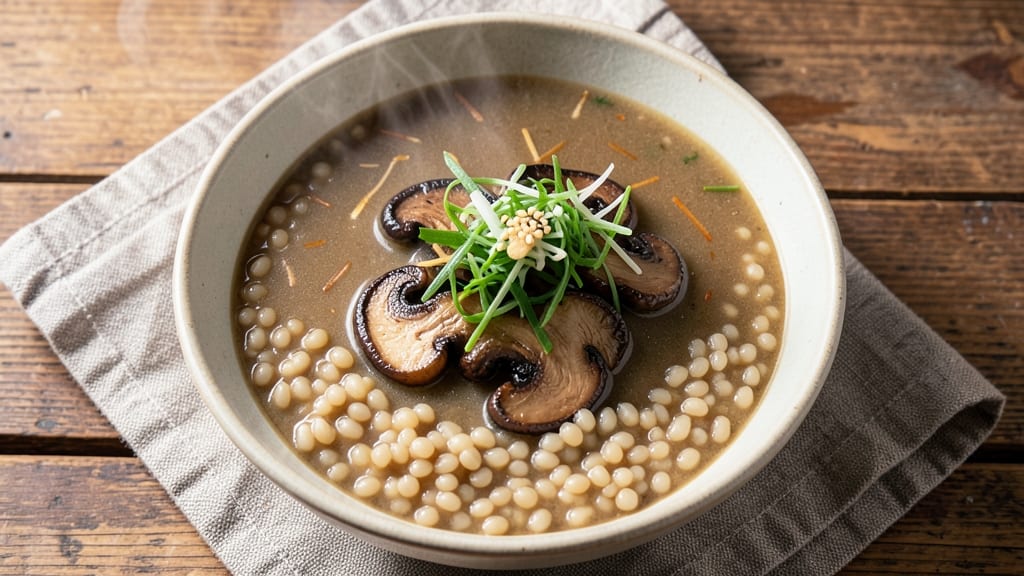
This barley miso soup recipe delivers deep umami richness with every spoonful, transforming simple ingredients into a nourishing, earthy simmer. 💛 The secret lies in balancing fermented miso paste with barley's natural sweetness, creating a broth that's both comforting and complex.
Perfect for chilly evenings or quick weeknight meals, this vegan-friendly version proves hearty soups don't require meat or dairy.
The beauty of this recipe is its versatility—use brown or green miso for different flavor profiles, or add mushrooms and tofu for extra texture. The barley softens perfectly during simmering, absorbing the broth's savory depth while maintaining its satisfying bite.
With just 15 minutes of active prep and 30 minutes of simmering, you'll have a steaming bowl of restaurant-quality soup without the fuss.
What makes this soup truly special is how the flavors develop—the miso's fermented notes mingle with barley's nutty sweetness, creating a harmonious balance that's both warming and invigorating.
The aroma alone will draw everyone to the table, while the first sip delivers that perfect umami punch that keeps you reaching for seconds. This is the kind of soup that transforms ordinary days into moments of comfort.
Serve it as a light lunch, pre-dinner starter, or even a cozy snack with steamed greens on the side. The leftovers taste even better the next day as the flavors continue to meld. Here's how to create this simple yet sophisticated bowl of goodness in your own kitchen.
Ingredients for barley miso soup
Earthy barley and fermented miso create this umami-rich, vegan-friendly simmer that's both comforting and complex.
| Ingredient | Amount | Notes |
|---|---|---|
| Pearl Barley 🌾 | ½ cup | Rinsed thoroughly before cooking |
| Brown Miso Paste 🍶 | 2 tbsp | High-quality, fermented miso preferred |
| Dashi Stock 💧 | 4 cups | Vegan kombu and bonito-free version |
| Fresh Shiitake Mushrooms 🍄 | 4 whole | Stems removed, sliced thin |
| Green Onions 🧅 | 2 whole | White and green parts separated |
| Fresh Ginger 🧄 | 1 tbsp | Grated, for aromatic depth |
| Sesame Oil 🫒 | 1 tsp | Toasted, for finishing |
| Toasted Sesame Seeds 🌱 | 1 tsp | For garnish and texture |
| Silken Tofu 🍫 | ½ cup | Cubed for protein richness |
| Sea Salt 🧂 | ½ tsp | Diamond Crystal preferred |
| White Miso Paste 🍶 | 1 tbsp | Optional for lighter flavor |
| Vegetable Oil 🫒 | 1 tbsp | For sautéing mushrooms |
| Fresh Parsley 🌿 | ¼ cup | Chopped, for vibrant garnish |
| Lemon Juice 🍋 | 1 tsp | Freshly squeezed for brightness |
The miso paste is the soul of this soup—Honten or Marukome brands deliver the deepest umami flavor, but any high-quality fermented miso works. For the barley, Pearl Barley from Bob's Red Mill cooks evenly, but any pearl barley will do. The dashi stock should be vegan—combine kombu seaweed and shiitake mushrooms simmered in water for the best flavor. Fresh shiitake mushrooms add earthy depth, but dried shiitake rehydrated in warm water works beautifully if you're short on time. The ginger should be organic and freshly grated—pre-minced ginger loses its potency quickly.
No brown miso? White miso plus a pinch of soy sauce mimics the flavor profile. Short on shiitake mushrooms? Cremini or oyster mushrooms are excellent substitutes. The silken tofu adds protein without altering the soup's delicate texture—extra-firm tofu works too if cubed small. For extra richness, a splash of coconut milk blends seamlessly. The sesame oil is purely for finishing—toast the seeds in a dry pan first to deepen their flavor. If you prefer a lighter soup, reduce the miso to 1 tbsp total and add 1/4 cup coconut milk to balance the intensity.
This soup tastes even better the next day as the flavors meld—store in an airtight container for up to 4 days in the fridge. For longer storage, freeze portions for up to 3 months. Reheat gently on the stove with a splash of water to restore the broth's consistency. The tofu and mushrooms can be prepped ahead and stored separately for 3 days in the fridge, making assembly quick on busy evenings. Garnish with fresh parsley and sesame seeds just before serving to maintain vibrant colors and textures.
Why You'll Love This Recipe
- No-Chop Needed: I swear by this—just slice those shiitake mushrooms (no dice, no fuss) and toss them in. Pearl barley does all the work while you sip tea. Honestly, the only prep I do is rinse the barley and chop the onions, and that’s it.
- Umami Bomb: That brown miso paste? It’s the star. Rich, salty, and just a little sweet—it turns simple dashi into something ridiculously satisfying. The shiitake mushrooms soak it up like a sponge, giving every bite that deep, savory punch.
- Meal Prep MVP: Make a big batch on Sunday, and you’ve got lunch for the week. The barley thickens just right overnight, and reheating it? Zero effort. I pack it in thermoses for work—warm, hearty, and still delicious cold if I’m lazy.
- Budget-Friendly Powerhouse: Pearl barley and dried shiitake (if you’re not using fresh) keep costs low, but the flavor? It feels like a fancy restaurant dish. Between us, this soup is my go-to when I’m broke but still want to eat well—no guilt, all satisfaction.
Step-by-step instructions for barley miso soup
Transform simple ingredients into a deeply flavorful barley miso soup with this precise method.
🍳 Step 1: Sauté Aromatics and Mushrooms
Heat the 1 tablespoon vegetable oil in a medium saucepan over medium heat. Add the 4 whole fresh shiitake mushrooms (stems removed, sliced thin) and cook for 4-5 minutes until they release moisture and begin to soften. The mushrooms should turn golden at the edges while maintaining their shape.
Add the 1 tablespoon grated fresh ginger and cook for an additional 30 seconds until fragrant. Here's the thing—ginger burns quickly, so keep the heat at medium and stir constantly. This step builds the aromatic foundation that carries through the entire soup.
👨🍳 Step 2: Prepare the Barley and Stock
Rinse the 0.5 cup pearl barley thoroughly under cold water until the water runs clear. This removes excess starch that can make the soup cloudy. Add the rinsed barley to the pan along with the 4 cups dashi stock and bring to a gentle boil over high heat.
Once boiling, immediately reduce heat to low-medium and let it simmer uncovered for 20-25 minutes until the barley is tender but still holds its shape. You'll know it's ready when the barley absorbs most of the liquid and the texture becomes creamy rather than grainy. Stir occasionally to prevent sticking.
🥘 Step 3: Incorporate Miso Pastes
In a small bowl, whisk together the 2 tablespoons brown miso paste and 1 tablespoon white miso paste with 2 tablespoons of the hot soup broth until completely dissolved. This creates a smooth, flavorful base that won't clump. I've found that adding the miso directly to hot broth prevents that gritty texture some people experience.
Slowly ladle the miso mixture back into the simmering soup while stirring constantly. The soup should thicken slightly and develop a rich, umami depth. Simmer for an additional 5 minutes to let the flavors meld together. If the soup appears too thick, add a splash of hot water to reach your desired consistency.
🔪 Step 4: Finish with Tofu and Garnishes
Gently fold in the 0.5 cup cubed silken tofu and 0.5 teaspoon sea salt using a silicone spatula. The tofu should warm through without breaking apart. Remove from heat and stir in the 1 teaspoon sesame oil and 1 teaspoon lemon juice for brightness.
Divide the soup among bowls and garnish with the 2 whole green onions (white and green parts separated, chopped) and 0.25 cup chopped fresh parsley. Sprinkle with 1 teaspoon toasted sesame seeds just before serving. The contrast of textures and temperatures makes each spoonful perfect—warm soup with cool, crunchy garnishes.
Pro Tips For Making Barley Miso Soup
- SOAK BARLEY FIRST: If you skip soaking, your barley will turn to mush and clump like glue—no one wants that. Toss it in warm water for 10 minutes before adding to the pot, and it’ll cook evenly without turning into porridge.
- DILUTE MISO LAST: Brown miso is delicate—heat it directly, and it’ll turn bitter like overcooked coffee. Stir a spoonful of hot broth into the miso paste first to temper it, then mix it back into the pot. This keeps the umami deep and balanced.
- SLICE MUSHROOMS THIN: Thick shiitake chunks stay tough and chewy, no matter how long you simmer. Cut them paper-thin (almost translucent) so they soften in 5 minutes, not 20. Trust me, your soup will thank you.
- SAVE TIME WITH COLD DASHI: No time to simmer dashi from scratch? Use instant granules or a high-quality powdered version—just follow the package directions. It’s not cheating; it’s efficiency, and your soup’s flavor won’t suffer if you’re using good-quality stock.
Best sauces and condiments for these flavors
Miso Paste Variations
For a deeper umami punch, use 3 tablespoons brown miso instead of the recipe's 2 tablespoons. I love Honten Awase Shiro for its balanced sweetness and saltiness.
If you prefer a lighter profile, swap 1 tablespoon white miso for the brown and add ½ teaspoon mirin to brighten the broth. 💛
Sesame Oil Swaps
Toasted sesame oil is key for finishing, but if you're sensitive to its strong flavor, use 1 teaspoon neutral oil (like avocado) and add ½ teaspoon ground toasted sesame seeds instead.
For a nutty twist, try 1 teaspoon tahini—whisk it with a splash of water to emulsify before adding. I find tahini adds a creamy richness that complements the barley beautifully.
Umami Boosters
Add 1 tablespoon soy sauce or 1 teaspoon fish sauce (if not vegan) to the broth for extra depth. For a vegetarian option, use 1 teaspoon mushroom powder or ½ teaspoon nutritional yeast.
These boosters work especially well if you're using a lighter miso paste. The secret is balancing—too much can overpower the delicate barley flavor.
Acidic Brighteners
Beyond lemon juice, try ½ teaspoon rice vinegar or 1 teaspoon yuzu juice (if available) for a citrusy kick. For a tropical twist, add ½ teaspoon lime zest along with the juice.
These acidic elements cut through the richness and make each spoonful feel fresh. I often keep a small bottle of rice vinegar on hand just for this purpose.
Creamy Enhancements
For a silkier texture, stir in 2 tablespoons coconut milk or 1 tablespoon cashew cream at the end. If you love dairy, a splash of ½ cup heavy cream works wonders—just heat it gently before adding.
These additions round out the soup's body while keeping it vegan-friendly. The key is to temper the cream with hot broth first to prevent curdling.
Spicy Kick Options
Add ½ teaspoon chili crisp or ¼ teaspoon red pepper flakes for heat. For a smoky-spicy combo, stir in ½ teaspoon gochujang (Korean chili paste) with the miso.
I like to serve these spicy versions with extra sesame seeds to balance the flavors. Always taste as you go—spicy elements can intensify during reheating.
Nutrition facts
Frequently asked questions
Can I substitute barley with another grain?
Yes! For a quicker version, use ½ cup cooked quinoa or ½ cup cooked brown rice—both add similar texture. If you prefer a nutty flavor, try ½ cup cooked farro or ½ cup cooked wheat berries. Just reduce simmering time by 5-10 minutes since these grains cook faster than barley.
Why does my miso soup taste bitter?
Bitterness usually means the miso paste was added to cold broth or simmered too long. Always dissolve miso in 2 tablespoons hot broth first, then stir into the soup. For extra depth, add ½ teaspoon mirin or 1 teaspoon lemon juice to balance flavors. Overcooking can also concentrate bitterness—simmer for no more than 30 minutes total.
How can I make this soup gluten-free?
Use a certified gluten-free miso paste (like San-J brand) and ensure your dashi stock is made with gluten-free ingredients. Barley itself contains gluten, so replace it with ½ cup cooked quinoa or ½ cup cooked millet. Always check labels on miso and soy sauce alternatives to avoid hidden gluten.
Can I make this soup in an Instant Pot?
Sauté mushrooms and ginger first, then add barley, dashi, and ginger. Seal the lid and cook on High Pressure for 8 minutes, followed by a 5-minute natural release. Dissolve miso in 2 tbsp broth before adding to the pot. The pressure cooker cuts prep time to just 15 minutes while keeping flavors rich.
What's the best way to store leftovers?
Store in an airtight container in the fridge for up to 4 days. The flavors actually improve overnight! For longer storage, freeze portions for up to 3 months. When reheating, add 1-2 tablespoons water per bowl to restore broth consistency. Never microwave directly from frozen—thaw in the fridge first.