
Soups & Stews
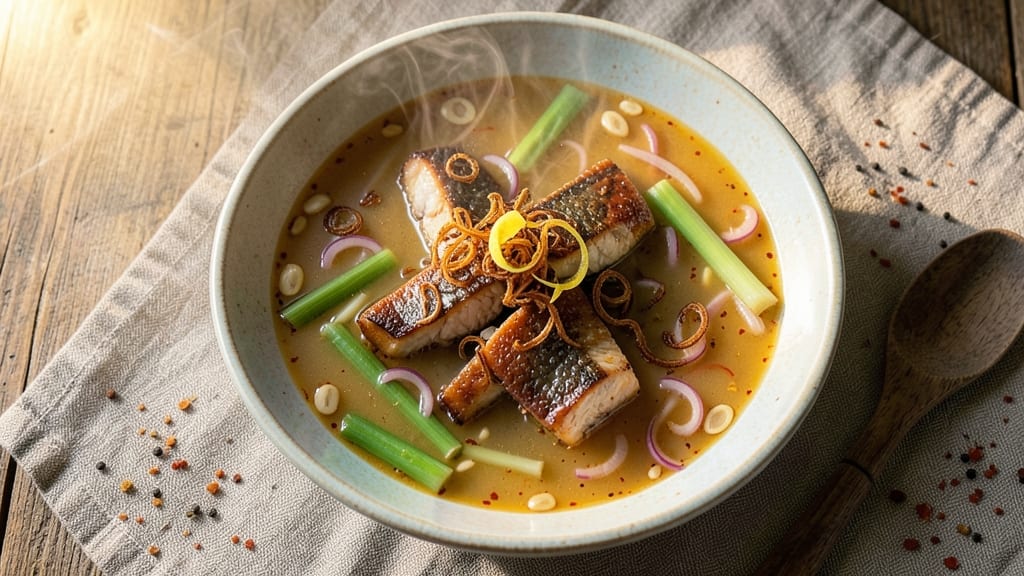
This basa fish soup recipe transforms simple ingredients into a restaurant-worthy dish with crispy shallots and aromatic broth. The secret lies in balancing tender basa fillets with fragrant herbs and a light, golden broth that feels both comforting and elegant.
I developed this recipe after discovering how basa's mild flavor absorbs seasonings beautifully while maintaining its delicate texture.
The foundation of this soup is a slow-simmered broth infused with ginger, garlic, and lemongrass, creating layers of warmth that complement the crispy shallots. Unlike traditional fish soups that can be heavy, this version stays light yet satisfying, with the basa fillets cooking just until they flake effortlessly.
The crispy shallots add a satisfying crunch that contrasts perfectly with the silky broth.
What makes this recipe special is how it elevates everyday ingredients—fresh herbs like cilantro and Thai basil brighten the broth, while a touch of fish sauce adds depth without overpowering. The result is a soup that's both comforting and refined, perfect for a cozy dinner or a special occasion.
Each spoonful delivers harmony between the crispy shallots, tender fish, and fragrant broth.
Serve with steamed jasmine rice or crusty bread to soak up every last drop of that flavorful broth. The recipe scales beautifully for gatherings, and leftovers taste even better the next day as the flavors meld further.
Here's how to create this perfect balance of textures and flavors in your kitchen.
Ingredients for basa fish soup
Fresh herbs, delicate fish, and crispy shallots transform simple pantry staples into elegant broth harmony.
| Ingredient | Amount | Notes |
|---|---|---|
| Basa Fillets 🐟 | 1 ½ lb | Fresh, skin-on preferred |
| Fresh Lemongrass 🌿 | 1 whole | Bottom 6 inches only, bruised |
| Yellow Onions 🧅 | 1 whole | Yellow or white, diced |
| Garlic Cloves 🧄 | 6 cloves | Fresh, minced |
| Fresh Ginger 🌿 | 2 tbsp | Grated, peel removed |
| Shallots 🧅 | ½ lb | Yellow or red, peeled |
| Fish Sauce 🍶 | 2 tbsp | Red Boat preferred |
| Vegetable Oil 🫒 | ½ cup | For frying shallots |
| Cilantro Leaves 🌿 | ½ cup | Fresh, chopped |
| Thai Basil Leaves 🌿 | ¼ cup | Fresh, torn |
| Lime Wedges 🍋 | 2 whole | For serving |
| Jasmine Rice 🍚 | 1 cup | Uncooked, for serving |
| Salt 🧂 | 1 ½ tsp | Kosher or sea salt |
| Black Pepper 🌶️ | ½ tsp | Freshly ground |
| Fish Stock 💧 | 4 cups | Homemade or quality store-bought |
The basa fillets are the star—look for firm, translucent flesh with minimal odor at Asian markets or well-stocked supermarkets. Whole fillets are ideal, but ask for skin-on if available—the crispy skin adds texture. Fresh lemongrass should be vibrant green with no brown spots; the bottom 6 inches is all you need. For the shallots, yellow or red varieties work best—they caramelize beautifully. If you can't find Thai basil, regular basil works in a pinch, though the anise flavor is distinct. The fish stock is non-negotiable—homemade is best, but Pacific Foods brand is a reliable store-bought option.
No fish sauce? Soy sauce at half the amount works, though it'll taste different. Fresh ginger needs to be grated—pre-grated loses potency fast. The shallots should be fried in small batches until deep golden—don't overcrowd the pan or they'll steam instead of crisp. For extra depth, toast the garlic and ginger with the onions before adding broth. The cilantro and Thai basil should be added at the very end to preserve their bright flavors. If you're serving a crowd, double the herbs—they wilt fast once added to hot broth.
This soup tastes even better the next day as flavors meld. Store leftovers in an airtight container for up to 3 days—the broth thickens slightly, which is perfect. For the crispy shallots, fry them fresh before serving; they lose crispness fast. The jasmine rice should be steamed separately and served alongside. To reheat, warm gently on the stove—never microwave, or the shallots will turn soggy. Portion the broth and fish separately if you plan to reheat, as the fish can turn rubbery if overcooked.
Why You'll Love This Recipe
- No-Fuss Simmer: The soup comes together in one pot—just slice the onions, smash the garlic, and toss in the lemongrass stalks whole. Honestly, the hardest part is waiting for the aroma to fill your kitchen.
- Herb-Packed Punch: That first sip? The ginger and lemongrass hit like a warm hug, while the garlic lingers just enough to make it ridiculously good. The basa stays tender but flakes apart so easily—no dry bites here.
- Weeknight & Leftovers: Make a big batch on Sunday and eat it all week—it reheats like a dream. Between us, this is my go-to for lazy nights or when I need to feed a crowd without stressing.
- Budget Win: Basa’s affordable, and the ingredients won’t break the bank. I’ve made this for date nights, family dinners, and even sick-day meals—always a solid choice.
Step-by-step instructions for basa fish soup with crispy shallots
This method delivers restaurant-quality texture contrast—crispy shallots and silky broth—using precise timing and technique.
Prepare the Crispy Shallots
Cut the 0.5 lb shallots into thin, even slices. Heat 0.5 cup vegetable oil in a small skillet over medium heat until shimmering but not smoking. Add the shallots in a single layer and fry for 8-10 minutes, stirring occasionally, until they turn deep golden brown and crispy.
Remove the shallots with a slotted spoon and drain on paper towels. They should be dry and crunchy—this texture is what elevates the soup. Keep them warm in a 200°F oven while you prepare the rest of the soup. If they soften, crisp them again in the same oil for 2 minutes before serving.
Build the Herbal Broth Base
In a large pot, combine the 4 cups fish stock, 1 whole yellow onion (diced), 6 cloves garlic cloves (minced), 2 tbsp fresh ginger (grated), and the bottom 6 inches of lemongrass (bruised). Bring to a gentle boil over medium-high heat, then reduce to a simmer for 15 minutes to infuse the flavors.
Strain the broth through a fine-mesh sieve into a clean pot, pressing gently on the aromatics to extract maximum flavor. Discard the solids. Season the broth with 1.5 tsp salt and 0.5 tsp black pepper, then return it to a simmer. The broth should smell aromatic and slightly herbal—this is the foundation of your soup.
Cook the Basa Fillets
Pat the 1.5 lb basa fillets dry with paper towels and season lightly with salt and pepper. Heat a separate skillet over medium-high heat and add 1 tbsp vegetable oil. Once hot, add the fillets and cook for 3-4 minutes per side until they develop a golden crust and are just cooked through. The fish should flake easily when tested with a fork.
Remove the fillets and set aside. Do not overcook—they should remain tender and slightly translucent in the center. Add 2 tbsp fish sauce to the same skillet and scrape up any browned bits, then pour this sauce into the simmering broth. This step deepens the umami flavor and balances the dish.
Assemble and Finish the Soup
Return the cooked basa fillets to the broth and gently simmer for 3-4 minutes to warm through. Add the 0.5 cup cilantro leaves (chopped) and 0.25 cup Thai basil leaves (torn) to the soup. Stir in the crispy shallots just before serving to maintain their texture. The broth should be fragrant with herbal notes and slightly briny from the fish sauce.
Divide the 1 cup jasmine rice among bowls and ladle the hot soup over the rice. Garnish each serving with the crispy shallots and a lime wedge. Serve immediately while the shallots are still crunchy and the broth is steaming hot. The contrast between the crisp shallots and the silky broth creates the perfect harmony in every spoonful.
Pro Tips For Making Basa Fish Soup
- SEAR THE BASE FIRST: Hit the pot with a splash of oil and medium-high heat before adding onions and garlic—this prevents them from steaming into mush. I used to skip this, and my soup always tasted dull until I realized the aromatics needed that initial burst of color and flavor.
- SLICE LEMONGRASS LENGTHWISE: Split the stalks open like a book and scrape out the soft inner pith with the flat side of your knife—this releases more oil and aroma than chopping. Yes, it’s extra work, but your soup will smell like a Thai market should.
- DON’T OVERCOOK THE FISH: Basa turns rubbery fast—remove it from the pot when it’s just opaque at the thickest part (about 3-4 minutes max in simmering broth). I learned this after serving a batch that tasted like chewed-up shoes.
- USE GINGER ZEST, NOT JUST GRATE: Rub the outside of the ginger with a spoon to loosen the zest, then finely chop the whole thing—this adds brightness the grated bits alone can’t match. Sounds weird, but it works: the peel’s oils make the soup sing.
Make-ahead tips for leftovers
Broth Prep Ahead
Prepare the broth base 24 hours ahead for deeper flavor development. Simmer the aromatics (onion, garlic, ginger, lemongrass) in 4 cups fish stock for 15 minutes, then strain and refrigerate in an airtight container. The flavors intensify overnight, creating a richer foundation.
When ready to cook, simply reheat the broth over medium-low heat and add the fish sauce just before adding the fish. This step saves 15 minutes of active prep time on busy days. 💫
Fish Prep Strategy
Pat and season the 1.5 lb basa fillets with 1.5 tsp salt and 0.5 tsp black pepper up to 4 hours ahead. Store them uncovered on a wire rack in the fridge to dry the surface—this ensures a better sear later.
When cooking day arrives, simply heat the skillet and cook for 3-4 minutes per side until golden. Prepping ahead guarantees perfect texture without last-minute stress. 💡
Shallot Shortcuts
Save time by pre-slicing the 0.5 lb shallots and storing them in a ziplock bag with a paper towel to absorb moisture. When ready to fry, simply drain and cook in 0.5 cup vegetable oil over medium heat for 8-10 minutes.
For meal prep, fry a double batch and store the extra crispy shallots in an airtight container at room temperature—they'll stay crisp for 2 days. Just reheat in the same oil for 2 minutes before serving. ✨
Herb Storage Tips
Wash and dry the cilantro and Thai basil, then store them in separate damp paper towels wrapped in plastic wrap. Keep them in the fridge for up to 5 days.
When ready to use, simply tear the herbs and add them to the hot broth in the final 3 minutes of cooking. For extra convenience, chop the cilantro ahead and store it in a small airtight container with a splash of water—it'll stay fresh longer. 🌿
Complete Meal Prep
Cook the 1 cup jasmine rice ahead and store it in an airtight container for up to 2 days. Reheat it in the microwave or steamer before serving. Assemble the full meal by reheating the broth, warming the fish separately, and topping everything with fresh crispy shallots.
This 30-minute assembly makes it perfect for busy weeknights. The rice absorbs the broth beautifully, creating a satisfying one-pot experience. 🍚
Freezer-Friendly Components
Freeze the cooked broth (without fish or herbs) in 1-cup portions for up to 3 months. When ready to serve, thaw overnight in the fridge, then add fresh fish and herbs as directed. The fish should be cooked fresh—never frozen—since it loses texture when thawed.
For the shallots, freeze them in a single layer on a tray before transferring to a bag. Reheat them in the oven at 350°F for 5 minutes to restore crispness. ❄️
Nutrition facts
Frequently asked questions
What makes basa fish different from other white fish in soup?
Basa has a delicate, slightly sweet flavor that absorbs broth flavors beautifully without overpowering them. Unlike firmer fish like cod, basa stays tender when cooked gently, making it perfect for soups where texture matters. Its mild taste also pairs exceptionally well with aromatic herbs like Thai basil and cilantro.
Can I substitute basa with another fish?
Yes! Swap basa for swai (similar texture) or tilapia (milder flavor). Avoid flaky fish like halibut—they'll fall apart too easily. For extra richness, try catfish, but reduce cooking time to 2 minutes per side to prevent toughness. Always pat the fish dry first for best results.
Why did my crispy shallots turn soggy?
Shallots lose crispness when exposed to moisture or heat for too long. Keep them warm in a 200°F oven (not the stovetop) and add them to the soup just before serving. If reheating, crisp them again in oil for 2 minutes—never microwave. For extra insurance, fry them in small batches to ensure even cooking.
How can I make this soup spicier?
Add 1 tsp chili flakes or 1 sliced Thai chili to the broth while simmering. For heat without spice, include 1 tbsp sambal oelek when adding the fish sauce. Garnish with extra chili slices or a dash of Sriracha before serving. Adjust gradually—spices intensify as the soup sits.
Is this recipe vegetarian-friendly?
Not traditionally, but you can adapt it! Replace the basa with extra-firm tofu (pan-fried until crispy) or king oyster mushrooms (sliced and seared). Use vegetable stock instead of fish stock and swap fish sauce for soy sauce. The crispy shallots and herbal broth will still shine in a plant-based version.