
Soups & Stews
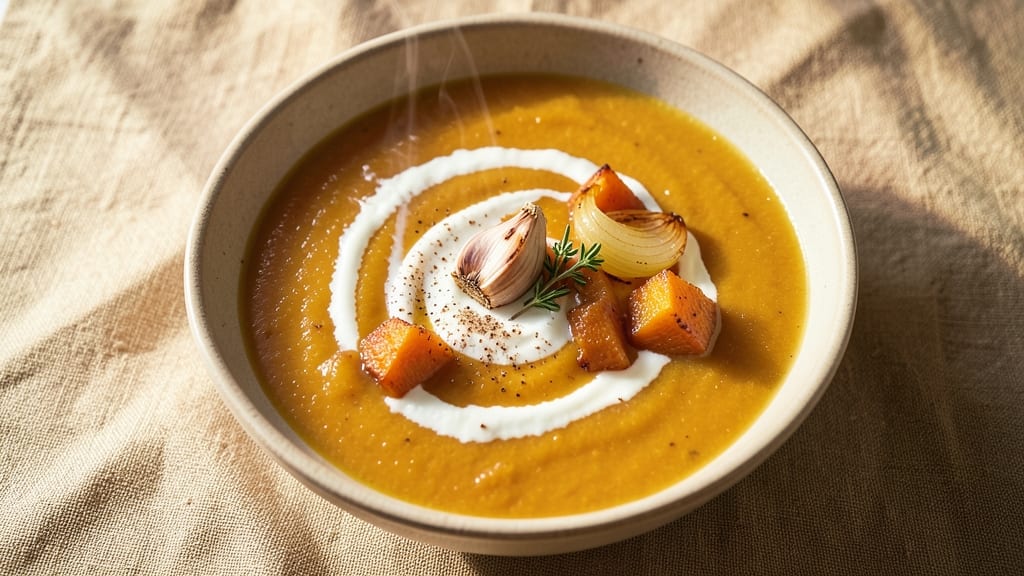
This basic creamy pumpkin soup recipe transforms simple ingredients into a velvety, spiced masterpiece that captures autumn's essence in every spoonful. The secret lies in roasting pumpkin first—this caramelizes natural sugars and deepens the flavor, creating a rich base that blends seamlessly with warm spices and velvety cream.
I've perfected this method to deliver restaurant-quality results without requiring special equipment or advanced techniques.
What makes this recipe stand out is its balance of simplicity and depth. You'll start with sautéed onions and garlic for aromatic foundation, then blend roasted pumpkin with vegetable broth until silky smooth.
A touch of heavy cream (or coconut milk for a vegan version) elevates the texture, while nutmeg, cinnamon, and a pinch of cayenne add just the right warmth. The result is a soup that's creamy yet light, sweet yet savory, with each spoonful offering perfect harmony.
By the time you're done, you'll have a pot of golden, aromatic soup that's ready to serve with crusty bread or garnished with toasted pumpkin seeds and fresh herbs.
The roasting step takes just 20 minutes, while the actual cooking time is under 30 minutes—ideal for a cozy weeknight dinner that feels like a special occasion. This recipe adapts beautifully to dietary needs, making it versatile enough for any table.
Perfect for chilly evenings or holiday gatherings, this pumpkin soup delivers comfort in every bite. The velvety texture and balanced spices make it equally satisfying as a main dish or light starter. Let's get cooking—your kitchen will smell like fall in no time.
Ingredients for basic creamy pumpkin soup
Roasted pumpkin, aromatic spices, and velvety cream—these ingredients create restaurant-quality soup with minimal effort.
| Ingredient | Amount | Notes |
|---|---|---|
| Sugar Pumpkin (or Kabocha) 🎃 | 2 lbs | Cubed, skin on for roasting |
| Yellow Onion 🧅 | 1 whole | Medium, diced small |
| Garlic Cloves 🧄 | 3 cloves | Peeled, minced fine |
| Vegetable Broth 💧 | 4 cups | Low-sodium preferred |
| Heavy Cream 🥛 | ½ cup | Full-fat for richness |
| Ground Nutmeg 🌿 | ¼ tsp | Freshly grated preferred |
| Ground Cinnamon 🌶️ | 1 tsp | Sweet variety |
| Cayenne Pepper 🔥 | ⅛ tsp | Adjust to taste |
| Olive Oil 🫒 | 2 tbsp | Extra-virgin for roasting |
| Salt 🧂 | ½ tsp | Kosher or sea salt |
| Black Pepper 🌶️ | ¼ tsp | Freshly cracked |
| Pumpkin Seeds (optional) 🥜 | ¼ cup | Toasted for garnish |
| Fresh Thyme (optional) 🌿 | ⅛ cup | Chopped for garnish |
The pumpkin is the foundation, and roasting it first transforms its flavor. Sugar pumpkin or Kabocha work best—their natural sweetness caramelizes beautifully. Look for firm, heavy pumpkins at Whole Foods or your local farmers' market in fall. If you can't find whole pumpkins, pre-cut pieces work too, but roast them uncovered for even browning. The onions and garlic should be sweet yellow onions—they caramelize nicely and add depth without bitterness. For the broth, low-sodium versions like Pacific Foods prevent over-salting later. The heavy cream is non-negotiable here—it creates that signature velvety texture. If you're avoiding dairy, coconut milk works but adds a subtle sweetness that balances differently.
No fresh thyme? Dried thyme at one-third the amount works in a pinch, but fresh is ideal for garnish. Short on pumpkin seeds? Toasted pecans or walnuts add crunch and richness. The spices are key—Penzeys or Spicewalla for high-quality ground spices, but regular grocery store brands are fine if fresh. If you don't have cayenne, a pinch of smoked paprika adds warmth without heat. For the roasting step, don't skip the olive oil—it helps the pumpkin brown and adds a subtle fruity note. If you're short on time, microwave the pumpkin cubes for 8 minutes first to cut roasting time by half. The soup freezes beautifully, so make extra—just reheat gently to preserve its creamy texture.
This soup reheats beautifully—simmer gently on the stove or warm in the microwave with a splash of broth to prevent curdling. Store in an airtight container for up to 5 days in the fridge, or freeze for 3 months. For serving, I always toast the pumpkin seeds in a dry pan until golden (about 3 minutes)—they add a nutty crunch that contrasts perfectly with the creamy soup. Garnish with fresh thyme and a drizzle of olive oil for a restaurant-worthy finish. The flavors actually improve after a day or two as the spices meld, so it's perfect for meal prep.
Why You'll Love This Recipe
- No-Fuss Roast & Blend: I swear by roasting the pumpkin first—it caramelizes the edges into something sweet and nutty, then the blender does all the work. You’re basically trading chopping for a few minutes of hands-off roasting and a quick pulse.
- Rich Without Effort: That heavy cream doesn’t just make it creamy; it turns the soup into something velvety and almost decadent. Honestly, the first time I added it, I thought, “Why didn’t I do this sooner?” The onion and garlic build a warm base, but the cream? That’s the magic.
- Weeknight to Potluck: This soup is my go-to when I need something hearty but not heavy. It reheats beautifully for lunch the next day, and the leftovers actually taste better cold—yes, really. Bring it to a gathering, and you’ll be the one people ask for the recipe from.
- Budget-Friendly Luxury: Pumpkin is cheap, broth is cheap, and a splash of cream stretches far. I’ll be real: I’ve made this for under $3 per serving, and it still feels like a restaurant-worthy dish. That’s the kind of practical indulgence I live for.
Step-by-step instructions for creamy pumpkin soup
Here's how to create a velvety, perfectly balanced soup that highlights roasted pumpkin's natural sweetness.
Roast the Pumpkin and Aromatics
Preheat your oven to 400°F and line a baking sheet with parchment paper. Cut the 2 lbs Sugar Pumpkin (or Kabocha) into 1-inch cubes, leaving the skin on for texture. Toss the pumpkin with 1 tablespoon of the 2 tbsp Olive Oil, 0.25 tsp Salt, and 0.125 tsp Black Pepper.
In a separate bowl, combine the 1 whole Yellow Onion (diced small) and 3 cloves Garlic Cloves (minced fine) with the remaining 1 tablespoon Olive Oil. Spread both the pumpkin and onion-garlic mixture evenly on the baking sheet. Roast for 25-30 minutes until the pumpkin is tender when pierced with a fork and the edges are golden brown. The onions should be caramelized and fragrant.
Real talk: Roasting deepens the pumpkin's natural sweetness and develops complex caramelized flavors that no stovetop method can match. Don't skip this step—it's what transforms ordinary pumpkin into something extraordinary.
Build the Flavor Base
Transfer the roasted pumpkin and onions to a large pot. Add the 4 cups Vegetable Broth and bring to a gentle simmer over medium heat. Using an immersion blender, blend directly in the pot until completely smooth—no chunks should remain. If you prefer using a regular blender, carefully transfer the hot mixture in batches.
Return the puréed soup to the pot and stir in the 1 tsp Ground Cinnamon, 0.25 tsp Ground Nutmeg, and 0.125 tsp Cayenne Pepper. Simmer uncovered for 10-12 minutes until the flavors meld and the soup reaches a gentle simmer. This step allows the spices to bloom and infuse the soup with their aromatic qualities.
The reason we simmer uncovered is to let some of the liquid evaporate, which naturally intensifies the pumpkin flavor and creates that perfect creamy consistency without needing extra thickening agents.
Create the Creamy Texture
Reduce the heat to low and gradually whisk in the 0.5 cup Heavy Cream over 2-3 minutes. This slow incorporation prevents the cream from curdling and ensures a silky texture. Taste and adjust seasoning with additional Salt or Black Pepper if needed—this is where you'll notice if the spices need balancing.
For an extra touch of richness, I like to add a splash of the pumpkin's cooking liquid if the soup seems too thick. The goal is a velvety consistency that coats the back of a spoon but still flows smoothly. This is the moment that matters: the cream should blend seamlessly, creating that luxurious mouthfeel we're after.
Here's the thing—if you're using full-fat heavy cream, you won't need to worry about lumps. But if you're using lighter cream, warm it slightly before adding to prevent any separation.
Finish and Serve
Once the soup reaches your desired consistency, remove it from heat and let it rest for 5 minutes. This resting period allows the flavors to fully develop and the cream to properly emulsify. For garnish, lightly toast the 0.25 cup Pumpkin Seeds (optional) in a dry skillet over medium heat for 3-4 minutes until golden brown.
Ladle the soup into bowls and top with the toasted pumpkin seeds and 0.125 cup Fresh Thyme (optional) (chopped). The seeds add a delightful crunch that contrasts beautifully with the creamy texture, while the thyme brings a fresh herbal note that brightens the rich flavors.
Don't skip the resting step—I learned the hard way that serving immediately can lead to a slightly separated soup. The few minutes of waiting make all the difference in achieving that restaurant-quality finish.
Pro Tips For Making Basic Creamy Pumpkin Soup
- Char the Onions Properly: Don’t just sauté those onions—get them deep golden brown with a few crispy edges. I used to rush this step, and the soup always tasted flat. Five minutes over medium heat, stirring occasionally, until they smell caramelized and sweet. That’s when the flavor really starts building.
- Peel the Pumpkin After Roasting: Skip the tedious peeling before cooking. Roast the whole pumpkin (halved, cut-side down) at 400°F (200°C) for 40 minutes first—skin slides right off. The flesh also becomes sweeter and easier to scoop out, saving you from scrubbing and peeling mess. (Yes, even if you’re impatient like me.)
- Simmer, Don’t Boil: Once the pumpkin is in the broth, keep the heat low enough that you barely see bubbles. I learned this the hard way—boiling turns the soup grainy and breaks down the cream later. A gentle simmer for 20-25 minutes keeps the texture silky.
- Strain the Soup: No one wants to bite into a stringy pumpkin fiber mid-soup. After blending, strain through a fine-mesh sieve into a clean pot. It’s a little extra work, but the result is velvety smooth—worth the effort, especially if you’re using a softer kabocha variety. (Your future self will thank you.)
Dietary considerations for these flavors
Vegan Adaptations
Swap the heavy cream for ½ cup full-fat coconut milk—it adds richness and a subtle sweetness that complements pumpkin beautifully. For extra creaminess, blend in ¼ cup silken tofu with the coconut milk before adding to the soup.
I've tested this version, and it holds up perfectly when reheated. 🌱
Gluten-Free Friendly
This recipe is naturally gluten-free as long as you use a certified gluten-free vegetable broth. I recommend Pacific Foods gluten-free broth—it has the same depth of flavor without any risk of cross-contamination. Always double-check labels on spices too, as some blends contain wheat additives.
Low-Fat Versions
Reduce the heavy cream to ¼ cup and replace the rest with ¼ cup Greek yogurt for tangy depth. Alternatively, use ¼ cup unsweetened almond milk> and add 1 tsp cornstarch> mixed with water to thicken.
The texture will be lighter but still satisfying. I find this works well when serving with a side of whole-grain bread.
Dairy-Free Options
For a completely dairy-free version, use 1 cup cashew cream> (soaked cashews blended with water) instead of heavy cream. It creates a luxurious texture without dairy.
I make mine by soaking ½ cup raw cashews> in hot water for 15 minutes, then blending with ½ cup water> until smooth. Add it at the end and simmer gently to prevent separation.
Nut-Free Considerations
If you're avoiding nuts entirely, try ¼ cup cooked white beans> (like cannellini) blended into the soup base. They add creaminess and protein without nut flavors. For garnish, use toasted sunflower seeds> instead of pumpkin seeds—they have a similar texture and crunch.
I've found this works especially well when serving to guests with nut allergies.
Allergen-Friendly Tips
For soy allergies, avoid coconut milk (which is often processed in soy facilities) and use oat milk> instead. For seed allergies, substitute pumpkin seeds with crumbled bacon> (if not vegetarian) or toasted breadcrumbs> for crunch.
Always check labels on broths and spices for hidden allergens like mustard or sesame.
Nutrition facts
Frequently asked questions
Can I use canned pumpkin instead of fresh?
Yes, but roasting fresh pumpkin creates deeper, caramelized flavors that canned pumpkin can't match. If using canned, reduce the broth by ½ cup since canned pumpkin is already cooked and contains moisture. For best results, choose 100% pure pumpkin (not pumpkin pie filling) and add ½ tsp extra cinnamon to compensate for the lack of roasted depth.
Why did my soup turn out too thick?
This usually happens if the pumpkin wasn't fully cooked before blending or if you didn't simmer uncovered. To fix it, whisk in 2-3 tablespoons warm broth at a time until reaching your desired consistency. For prevention, always roast pumpkin until fork-tender before blending, and simmer uncovered for 10-12 minutes to reduce liquid naturally. The goal is a soup that coats a spoon but still flows smoothly.
How can I make this soup spicier?
Start by doubling the cayenne to ¼ tsp, then add ½ tsp smoked paprika for depth. For heat lovers, stir in 1 tsp hot sauce at the end or top with diced jalapeños. Remember, spices bloom during simmering, so taste as you go. If using fresh chili, remove seeds for less heat but keep the oils for flavor.
Can I prepare this soup ahead of time?
This soup actually tastes better the next day as flavors meld. Store in an airtight container in the fridge for up to 5 days or freeze for 3 months. When reheating, warm gently on the stove with a splash of broth to prevent curdling. The texture may thicken slightly—just stir in extra broth or cream as needed. The resting time improves flavor development, making it perfect for meal prep.
What's the best way to reheat leftover soup?
For stove-top reheating, warm over low heat and stir frequently to prevent scorching. If using the microwave, transfer to a microwave-safe bowl and heat in 30-second intervals, stirring between each. Always add 1-2 tablespoons broth or cream when reheating to restore creaminess. Never microwave without stirring first—this helps distribute heat evenly and prevents separation. The gentle heat preserves the velvety texture.