
Soups & Stews
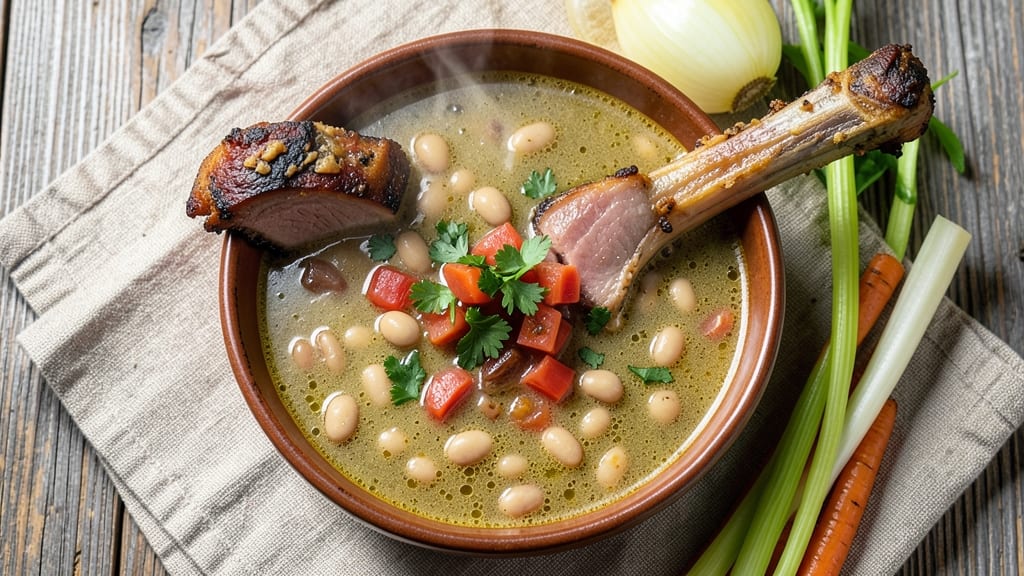
This bean and ham soup recipe with ham bone transforms humble ingredients into a deeply flavorful, hearty meal that tastes like a hug in a bowl. The secret lies in the ham bone—its marrow and collagen infuse the broth with rich, savory depth that no store-bought stock can match.
I developed this recipe after years of experimenting with slow-cooked soups, and the difference the bone makes is nothing short of transformative.
The process is straightforward but rewarding: simmer the ham bone until the meat falls off, then blend it into the broth for unmatched richness.
White beans soak up the flavor while staying tender, and the right balance of herbs and acidity—like a splash of vinegar or a bay leaf—elevates every spoonful. This isn’t just soup; it’s a foolproof way to turn simple ingredients into a restaurant-worthy dish.
What you’ll end up with is a velvety, umami-packed soup where the broth clings to each bean, the ham adds salty-sweet contrast, and the aromatics create layers of warmth. The ham bone doesn’t just flavor the soup—it builds it, turning a basic recipe into something deeply satisfying.
Perfect for chilly evenings or meal prep, this soup gets better as it sits, making it ideal for busy weeks.
Pair it with crusty bread to soak up every last drop, or serve it alongside a simple green salad for balance. The beauty of this recipe is its versatility—adjust the herbs, swap in different beans, or add smoked paprika for extra depth. Let’s get cooking!
Ingredients for bean and ham soup recipe with ham bone
The ham bone transforms simple ingredients into restaurant-quality umami depth.
| Ingredient | Amount | Notes |
|---|---|---|
| Ham Bone 🍖 | 1 lb | With meat attached, preferably smoked |
| Great Northern Beans 🌱 | 1 ½ cups | Dried, soaked overnight |
| Yellow Onion 🧅 | 1 whole | Medium size, diced |
| Carrots 🥕 | 3 medium | Peeled, chopped into chunks |
| Celery Stalks 🧄 | 3 whole | Diced, including leaves |
| Garlic Cloves 🧄 | 4 cloves | Minced, fresh preferred |
| Bay Leaves 🌿 | 2 whole | Dried, standard size |
| Black Peppercorns 🌶️ | 1 tsp | Whole, freshly cracked |
| Apple Cider Vinegar 🍎 | 1 tbsp | For brightness |
| Salt 🧂 | 1 ½ tsp | Kosher or sea salt |
| Water 💧 | 8 cups | Filtered preferred |
| Olive Oil 🫒 | 2 tbsp | Extra-virgin for richness |
| Fresh Thyme 🌿 | 1 tbsp | Leaves only, chopped |
| Parsley 🌿 | ¼ cup | Fresh, chopped for garnish |
The ham bone is non-negotiable here—look for one with meat still attached, ideally smoked for extra flavor. Butcher shops often have these cut specifically for broth, but the grocery store deli counter usually has them too. If you can't find a bone, smoked ham hock works in a pinch, though the texture will differ slightly. The beans? Great Northern hold their shape better than navy or pinto, but use whatever you've got. Soak them overnight for perfect tenderness—no skipping this step—or use the quick-soak method if you're in a hurry. For the aromatics, fresh thyme and parsley make all the difference, but dried will work at half the amount if needed.
No ham bone? Substitute with 2 cups high-quality chicken or vegetable stock, but you'll lose that deep, gelatinous richness. Fresh thyme unavailable? Dried thyme at one-third the amount gets you close, though it won't be as vibrant. The vinegar is key for brightness—lemon juice works too—but don't skip it entirely. For a smokier profile, add 1/2 tsp smoked paprika to the broth. The carrots and celery can be swapped for turnips or parsnips if you prefer, but keep the same rough quantity. If you're using canned beans, drain and rinse them thoroughly to avoid a watery soup.
This soup tastes even better the next day as the flavors meld. Store in an airtight container in the fridge for up to 5 days, or freeze portions for 3 months. I like to make a double batch and portion it into containers—perfect for lunches or quick dinners. The broth thickens as it cools, so add a splash of water when reheating if it seems too stiff. Garnish with fresh parsley right before serving to keep it vibrant.
Why You'll Love This Recipe
- One-Pot Magic: I swear by this recipe because it’s literally one pot—no chopping chaos, no extra dishes. Toss in the ham bone, dump in the beans and veggies, and let it simmer. That’s it. (Yes, even on a Tuesday night when you’re exhausted.)
- Ham Bone Gold: Between us, the ham bone is the star. It melts into the broth, turning every spoonful into rich, savory perfection. The beans soak up that flavor like a sponge—no dry, bland aftertaste here.
- Meal Prep MVP: This soup tastes even better the next day. I make a big batch on Sunday, and it’s my go-to for lunches all week. Freeze half if you’re feeling extra, and thaw it straight into a pot—zero fuss.
- Budget-Friendly Feast: Great Northern beans and a ham bone stretch into a full meal for almost nothing. Honestly, it’s the kind of dish that makes grocery day feel like a win. Plus, the leftovers? They’re just as good cold in sandwiches.
Step-by-step instructions for bean and ham soup with ham bone
Here's the method for building deep, umami-rich bean and ham soup using the ham bone as your flavor anchor.
Prepare the Ham Bone and Vegetables
Begin by rinsing the 1 lb ham bone under cold water and patting it thoroughly dry with paper towels. Place it in a large pot and add the 8 cups water. Bring to a boil over high heat, then reduce to a simmer and cook uncovered for 30 minutes. This initial step helps extract initial flavors and removes any surface impurities.
While the bone simmers, peel and chop the 3 medium carrots into ½-inch chunks and dice the 1 whole yellow onion into ¼-inch pieces. Cut the 3 whole celery stalks into ¼-inch dice, including the leaves. Mince the 4 cloves garlic finely and chop the 1 tbsp fresh thyme leaves. Set these aside until needed.
Build the Flavor Base
After the initial 30-minute simmer, remove the ham bone from the pot and set it aside. Strain the broth through a fine-mesh sieve into a clean pot, discarding the solids. Return the broth to the pot and add the 2 tbsp olive oil, 1.5 tsp salt, 1 tsp black peppercorns, 2 whole bay leaves, and 1 tbsp apple cider vinegar. Bring to a gentle boil over medium-high heat.
Add the prepared carrots, celery, onion, and garlic to the broth. Reduce heat to medium-low and let the vegetables simmer for 20 minutes, stirring occasionally. The vegetables should soften but not disintegrate—you want them to contribute texture and sweetness to the soup. The broth should develop a rich, golden hue and a deep, savory aroma.
Add the Beans and Simmer
Drain the soaked 1.5 cups great northern beans and add them to the pot with the simmering broth and vegetables. Stir gently to combine, then return the ham bone to the pot. The bone will continue to infuse the broth with collagen and gelatin, creating a silky texture as it cooks.
Cover the pot and simmer on low heat for 1.5 to 2 hours, stirring occasionally. The beans should become tender but still hold their shape. The soup will thicken naturally as the beans break down and the ham bone releases its gelatinous richness. Skim off any foam that rises to the surface to keep the broth clear.
Finish and Garnish
Once the beans are tender and the broth has thickened to your desired consistency, remove the ham bone and discard it. Strain the soup through a fine-mesh sieve into a clean pot, pressing gently on the vegetables to extract their flavors. Return the strained soup to the pot and adjust the seasoning with additional salt or apple cider vinegar if needed.
Garnish each serving with 0.25 cup chopped parsley just before serving. The parsley adds a fresh contrast to the deep, savory flavors of the soup. Serve immediately with crusty bread to soak up every last drop of that rich, umami-filled broth.
Pro Tips For Making Bean And Ham Soup Recipe With Ham Bone
- CRACK THE HAM BONE FIRST: Skip the store-bought broth shortcut—roast the ham bone uncovered at 425°F for 20 minutes before adding to the pot. The Maillard reaction on the bone deepens the flavor, and the charred bits infuse the broth like nothing else. (Yes, it’s extra work, but the difference is night and day.)
- SOAK BEANS LONGER THAN YOU THINK: Great Northern beans need at least 8 hours of soaking—overnight is ideal. I learned this the hard way: rushing with a 4-hour soak leaves them mealy. Drain and rinse them right before adding to the pot to avoid cloudy water.
- DON’T BOIL THE VEGETABLES: After sautéing onions, carrots, and celery, add just enough water to barely cover them. Let them simmer gently—no rolling boil—until tender. Boiling turns them mushy and dulls their sweetness. Low and slow keeps them crisp enough to bite into.
- SALT THE POT WELL BEFORE BEANS: Add 1–2 teaspoons of salt to the pot before the beans go in. This seasons the broth properly and prevents the beans from absorbing too much salt later. Taste the broth after simmering 30 minutes—adjust if needed, but don’t oversalt. (Trust me, you’ll regret it.)
Storing and reheating your bean and ham soup recipe with ham bone
Refrigerator Storage
Let your soup cool to room temperature (about 30-45 minutes) before transferring it to airtight containers. I use glass Pyrex containers because they preserve flavor better than plastic.
Store in the fridge at 40°F or below for up to 5 days—the flavors actually deepen overnight as the broth continues to meld with the beans and ham. 💫
When reheating, pour the soup into a pot and warm over medium-low heat until it reaches 165°F. Stir occasionally to prevent sticking, and add a splash of water if the broth thickens too much.
Taste and adjust seasoning—you might need a pinch more salt or a splash of vinegar to balance the flavors after storage.
Freezer Storage
For longer storage, freeze your soup in quart-sized freezer bags or airtight containers, leaving 1-inch headspace for expansion. Portion into single-serving containers for easy lunches.
This soup stays fresh in the freezer for up to 3 months, though I’ve had great results even after 4 months—just check for freezer burn before reheating. ❄️
To thaw, transfer the frozen soup to the fridge overnight. Once thawed, reheat on the stovetop over medium heat, stirring frequently. If the soup seems watery after thawing, simmer uncovered for 10-15 minutes to reduce it back to your preferred consistency.
Avoid microwaving—it can create a skin and uneven heating.
Reheating Tips
For the best texture, always reheat your soup on the stovetop. Start with medium heat and stir constantly to prevent scorching. If the soup separates or looks too thick, add ¼ cup water or broth per quart to restore creaminess.
I like to add a pinch of smoked paprika or a dash of hot sauce when reheating to revive the flavors. 🔥
If you’re short on time, reheat in a microwave-safe bowl on 50% power for 2-3 minutes, stirring halfway through. Cover with a damp paper towel to retain moisture. Garnish with fresh parsley or a drizzle of high-quality olive oil to brighten the dish after reheating.
Nutrition facts
Frequently asked questions
Why is a ham bone better than regular ham or stock?
The ham bone creates a rich, gelatinous broth that regular ham or store-bought stock can't match. As it simmers, the bone releases collagen and marrow that thicken the soup naturally, giving it a velvety texture and deep umami flavor. This is why traditional recipes always use bones—they build depth that can't be replicated otherwise.
Can I use canned beans instead of dried?
Yes, but you'll need to adjust the cooking time. Use 2 (15 oz) cans of white beans (like Great Northern) instead of dried, and simmer for 30-45 minutes after adding them to the pot. Drain and rinse them well first to avoid a watery soup. The texture will be slightly softer than dried beans, but still delicious.
How do I know when the ham bone is done?
The bone is ready when the meat falls off easily and the broth has a rich, golden color. This usually takes 1.5-2 hours of simmering after adding the beans. The meat should separate cleanly from the bone with just a gentle pull—if it resists, keep cooking for another 15-20 minutes.
What if my soup tastes too salty?
Add 1-2 tbsp water or broth per cup of soup and simmer for 5 minutes to dilute the salt. For extra balance, stir in 1 tsp apple cider vinegar or lemon juice—the acidity helps cut through the saltiness while adding brightness. If the soup is still too strong, add more liquid gradually until the flavor is right.
Can I make this soup in an Instant Pot?
Sauté the aromatics (onion, celery, carrots, garlic) in 1 tbsp oil for 3 minutes, then add everything else except the beans. Pressure cook on high for 30 minutes, then add the beans and cook another 10 minutes. Quick-release the pressure, then strain and adjust seasoning. The Instant Pot version will be faster but slightly less rich in gelatin.