
Soups & Stews
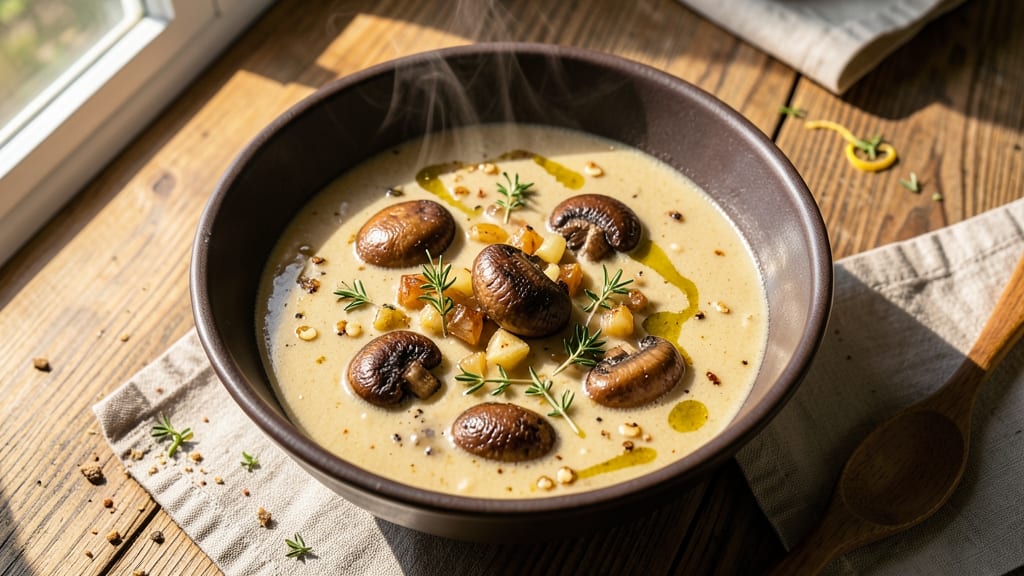
This beech mushroom soup delivers restaurant-quality depth with its umami-rich roasted base and velvety texture. 🌟 The secret lies in roasting the mushrooms first—this caramelizes their natural sugars and intensifies their earthy flavor, creating a foundation that transforms simple ingredients into something extraordinary.
Unlike many mushroom soups that rely on cream or butter for richness, this version builds flavor through proper technique, making it both luxurious and approachable.
What sets this recipe apart is the balance of textures and flavors: tender mushrooms, crispy roasted edges, and a smooth broth that coats your spoon.
The process is straightforward but requires patience—sautéing onions and garlic until golden, roasting mushrooms until deeply caramelized, then simmering everything in vegetable stock until perfectly tender. This method ensures every spoonful is packed with complex, savory depth without overpowering the natural taste of the mushrooms.
By the time you're done, you'll have a soup that's rich yet light, creamy without dairy, and bursting with the earthy, slightly nutty flavor of beech mushrooms.
The aroma alone will draw everyone to the table, and the first sip will reveal layers of umami that make this soup unforgettable. Serve it with crusty bread to soak up every last drop of that velvety broth.
This recipe works equally well as a cozy weeknight dinner or an impressive dish for guests, proving that great soup doesn't require complicated ingredients—just the right technique. Let's get started on creating something truly special.
Ingredients for beech mushroom soup
Eleven ingredients transform into a velvety, umami-rich soup where technique elevates simple mushrooms into something extraordinary.
| Ingredient | Amount | Notes |
|---|---|---|
| Fresh Beech Mushrooms 🍄 | 1 ½ lb | Whole, cleaned and trimmed |
| Yellow Onions 🧅 | 1 whole | Medium, sliced into half-moons |
| Garlic Cloves 🧄 | 4 cloves | Peeled, smashed for deeper flavor |
| Vegetable Stock 💧 | 4 cups | Homemade or high-quality store-bought |
| Extra-Virgin Olive Oil 🫒 | ½ cup | For roasting and sautéing |
| Fresh Thyme Leaves 🌿 | ¼ cup | Stems removed, finely chopped |
| Dried Bay Leaves 🍃 | 2 whole | For subtle aromatic depth |
| Salt 🧂 | 1 ½ tsp | Diamond Crystal kosher salt |
| Ground Black Pepper 🌶️ | ½ tsp | Freshly cracked for intensity |
| Fresh Parsley Leaves 🌿 | ⅛ cup | Chopped, for garnish and brightness |
| Unsalted Butter 🧈 | 2 tbsp | Cold, for finishing (optional) |
The beech mushrooms are the heart of this soup, and their quality matters most. Look for fresh, firm specimens with tight caps and minimal stem—avoid any with slimy spots or bruising. Local farmers markets or specialty grocers like Whole Foods often carry the best selection, though most well-stocked supermarkets should have them in the produce section. If you can't find beech mushrooms, cremini or oyster mushrooms work as excellent substitutes—they'll still develop that deep caramelized flavor when roasted. For the vegetable stock, homemade is ideal, but quality matters whether you make it or buy it. Brands like Pacific Foods or Imagine consistently deliver rich, flavorful results.
No fresh thyme? Dried thyme at one-third the amount works in a pinch, though fresh delivers that bright, herbal punch. The bay leaves are non-negotiable for depth—they infuse subtle aromatic notes that elevate the dish. For the olive oil, avoid the cheap stuff—look for extra-virgin with a fruity, peppery finish. Brands like California Olive Ranch or Bertolli offer excellent quality without breaking the bank. If you're short on time, pre-minced garlic saves steps, though freshly smashed cloves develop more complex flavors. The parsley isn't just for garnish—it adds a fresh contrast that brightens each spoonful, so don't skip it.
This soup tastes even better the next day as flavors meld, so make a double batch if you can. Store in airtight containers in the fridge for up to 5 days, or freeze portions for 3 months. For freezing, cool completely first to prevent ice crystals. The roasted mushrooms can be prepped ahead and stored in the fridge for 3 days before adding to the broth. When reheating, stir in a splash of water or stock to restore silkiness—never let it boil, just warm gently until steaming.
Why You'll Love This Recipe
- No Chopping Struggle: I swear by this recipe because beech mushrooms slice in seconds—no knife skills required. Just a quick wipe with a damp cloth, and you’re ready to go.
- Umami Bomb: That first sip? The mushrooms and garlic sing together in a way that’s rich but not heavy. Honestly, it’s the kind of flavor that makes you pause mid-bite.
- Leftovers That Shine: This soup actually improves the next day—thicker, deeper, and perfect for quick lunches. I freeze portions too; just reheat and add a splash of stock.
- Pantry Staple Magic: Yellow onions and vegetable stock are always on hand, so this never feels like a special occasion. Yet somehow, it still tastes like you slaved over it. (Between us, it’s my lazy-day secret.)
Step-by-step instructions for earthy beech mushroom soup
This method builds deep umami flavor through two-stage cooking—roasting for concentration, then simmering for harmony.
🔥 Step 1: Roast Mushrooms and Aromatics for Intensified Flavor
Preheat oven to 400°F. In a large roasting pan, toss the 1.5 lb fresh beech mushrooms with 0.25 cup extra-virgin olive oil, 1.5 tsp salt, and 0.5 tsp ground black pepper. Spread in a single layer—they need room to brown. Add the 1 whole yellow onions sliced into half-moons and the 4 smashed garlic cloves.
Roast for 25-30 minutes until mushrooms are deeply browned and onions caramelize. You'll see edges crisping and aromas filling your kitchen—this is where the magic happens. The high heat concentrates their natural umami compounds. Real talk: don't skip this step. Raw mushrooms would never deliver the same depth.
🍳 Step 2: Sauté Thyme and Bay Leaves in Rendered Mushroom Fat
Transfer the roasted mushrooms and aromatics to a large stockpot. The pan will have rendered fat—this is pure flavor. Wipe out the roasting pan with a paper towel to collect any stuck bits, then heat over medium heat.
Add 0.25 cup fresh thyme leaves and 2 whole dried bay leaves to the pan. Sauté for 1 minute until fragrant—you should smell piney thyme and earthy bay. Pour this aromatic oil into the stockpot with the mushrooms. Here's the thing: these herbs infuse the rendered mushroom fat, creating a flavor base that's more complex than just simmering everything together.
🥘 Step 3: Build the Soup with Vegetable Stock and Simmer Gently
Pour in the 4 cups vegetable stock and bring to a gentle simmer. The soup should bubble softly—medium-low heat is ideal. Partially cover and simmer for 20-25 minutes until mushrooms are tender and the flavors meld. You'll notice the soup thickens naturally as the mushrooms release their moisture.
Taste and adjust seasoning—you might need an extra pinch of salt since roasted mushrooms intensify flavor. The soup should be rich but not heavy, with visible mushroom chunks. If it's too thick, add a splash of hot water or stock. This is where patience pays off—the longer it simmers, the more complex the flavors become.
🔪 Step 4: Finish with Butter and Fresh Parsley
Reduce heat to low and stir in the 2 tbsp cold unsalted butter. The butter should melt slowly, creating a velvety texture. Add the 0.125 cup chopped fresh parsley leaves and simmer for 1 more minute. This final step adds brightness to cut through the earthiness.
Remove the 2 whole dried bay leaves before serving. Ladle into bowls and garnish with additional parsley if desired. The butter creates that restaurant-quality finish—don't skip it. Your soup should have a silky mouthfeel with visible mushroom pieces throughout, carrying that deep umami flavor we built layer by layer.
Pro Tips For Making Beech Mushroom Soup
- Sear the Mushrooms Twice: Start with a hot pan—no oil yet—and let the mushrooms hit direct heat for 30 seconds to release their moisture. Then add the olive oil and cook in batches until deeply browned. I learned this the hard way: skipping the first sear means watery soup later.
- Slice Onions Paper-Thin: Use a mandoline or sharp knife to cut onions into near-transparent slices. They’ll soften faster and sweeten the soup without overpowering the earthy mushrooms. (Yes, even if you’re impatient like me—this isn’t the step to rush.)
- Simmer Low and Long: After adding stock, keep the heat at a bare simmer (tiny bubbles, occasional swirls). Beech mushrooms need 20–25 minutes to break down properly—rushing this turns them mushy instead of rich. Trust the process.
- Finish with Cold Stock: Stir in ¼ cup of cold vegetable stock at the very end. It cools the soup slightly, sharpens the flavors, and prevents the garlic from burning. Sounds weird, but it works—every time.
Wine and beer pairings for this dish
Earthy White Wine
For this rich, umami-packed soup, I reach for a dry Chardonnay from Burgundy or a crisp Albariño from Spain. The acidity in these wines cuts through the soup's earthy depth while complementing its creamy texture.
A Meursault or Pouilly-Fuissé adds buttery notes that enhance the butter finish, while Albariño's citrus brightness balances the mushrooms' intensity. 🍷
Creamy Red Options
Surprisingly, certain reds work beautifully—especially Pinot Noir from Oregon or Burgundy. Their delicate tannins and red fruit notes harmonize with the soup's caramelized mushrooms. Avoid heavy Cabernets; they'll overpower the dish. A Gamay from Beaujolais offers a lighter alternative with juicy berry flavors that play nicely against the umami.
Crisp Beer Pairings
For beer lovers, a Belgian witbier like Hoegaarden or Stella Artois brings refreshing citrus and spice notes. The effervescence cleanses your palate between spoonfuls. Alternatively, a German Helles lager offers malty sweetness that contrasts the soup's earthiness. Avoid heavy stouts—they'll make the soup taste even heavier.
Herbal Wine Alternative
If you prefer something lighter, try a dry Riesling from Germany. Its mineral notes and subtle sweetness enhance the mushrooms' natural sweetness without clashing. A Gewürztraminer from Alsace adds aromatic complexity that mirrors the thyme and bay leaves in the soup.
Both wines elevate the dish without competing with its earthy flavors.
Non-Alcoholic Options
Don't drink alcohol? Sparkling apple cider with a squeeze of lemon provides acidity and brightness. For something richer, try a sparkling water with a splash of ginger beer—the ginger's warmth complements the soup's depth.
Even a chilled hibiscus iced tea offers floral notes that pair surprisingly well with the earthy mushrooms.
Serving Temperature
Serve your wine or beer slightly cooler than room temperature—about 50-55°F for whites and 55-60°F for reds. Chill the beer for 30 minutes before serving to enhance its crispness. The cooler temperature helps balance the soup's richness and keeps your palate refreshed between bites. 💡
Nutrition facts
Frequently asked questions
Can I substitute beech mushrooms with other varieties?
While beech mushrooms deliver that signature earthy depth, cremini, oyster, or shiitake mushrooms work beautifully as substitutes. For best results, use the same roasting technique—the high heat caramelizes their natural sugars, creating that rich umami base. Just note that oyster mushrooms will add a slightly sweeter note, while shiitake brings extra meaty texture.
Why does the recipe call for roasting mushrooms instead of sautéing?
Roasting intensifies flavor through Maillard reaction—the chemical process that creates deep, caramelized notes. Sautéing mushrooms quickly releases moisture, but roasting at 400°F for 25-30 minutes concentrates their natural umami and develops crispy edges. This two-stage method transforms simple mushrooms into a flavor powerhouse that simmering alone can't match.
How can I make this soup dairy-free?
Skip the butter finish and use 2 tbsp olive oil or vegan butter instead. For extra creaminess, stir in 2 tbsp coconut cream or cashew cream at the end. The soup will still be rich and velvety—just ensure your stock is well-seasoned since dairy often carries flavor. The roasted mushrooms provide enough depth to keep it satisfying without dairy.
Can I prepare this soup ahead of time?
Yes! This soup tastes even better the next day as flavors meld. Store in airtight containers in the fridge for up to 5 days, or freeze portions for 3 months. Reheat gently on low heat, stirring in a splash of water or stock to restore silkiness. Pro tip: Roast the mushrooms a day ahead and refrigerate them—they'll develop even more concentrated flavor when added to the simmering broth.
What if my soup turns out too thick or too thin?
Too thick? Stir in 2-4 tbsp hot water or stock to reach your desired consistency. Too thin? Simmer uncovered for 5-10 more minutes to reduce, or mash a few mushroom pieces with a fork to thicken naturally. Avoid adding flour or cornstarch—it can make the soup taste pasty. The roasted mushrooms should release enough moisture to create that perfect velvety texture when simmered properly.