
Soups & Stews
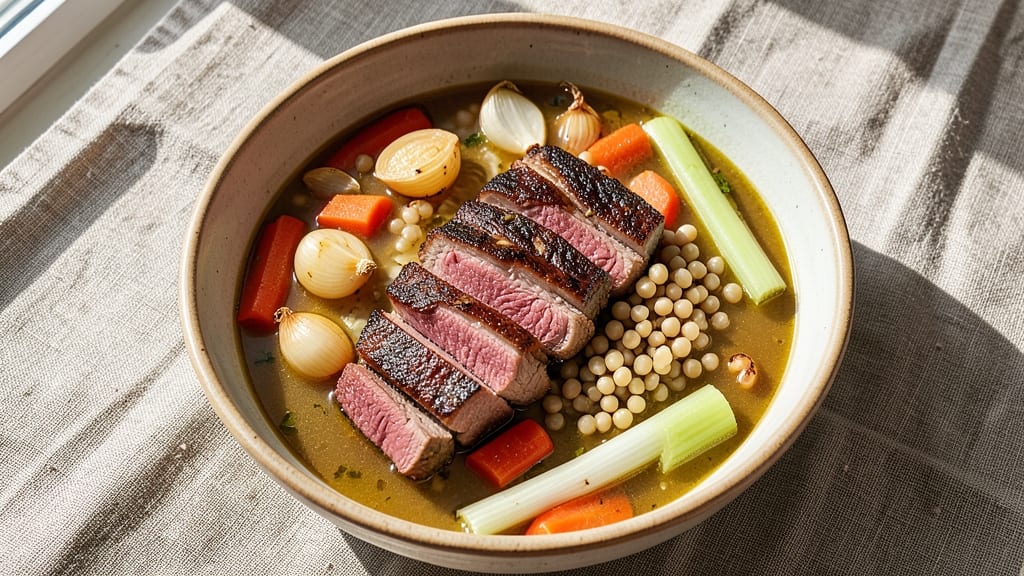
This beef barley soup recipe with its carefully chosen ingredients delivers the ultimate winter comfort—rich, savory broth infused with tender beef and chewy barley. The secret lies in slow simmering, which transforms tough cuts into melt-in-your-mouth perfection while developing deep, aromatic flavors that warm you from the inside out.
I’ve perfected this classic over years of testing, ensuring every spoonful is hearty yet balanced, with barley that stays delightfully al dente.
What sets this recipe apart is the two-stage cooking process: first searing the beef to lock in juices, then simmering everything together for hours to meld flavors.
The result is a soup so satisfying it becomes a staple during cold months, whether served with crusty bread or as a standalone meal. No shortcuts here—just traditional techniques that guarantee restaurant-quality results at home.
The ingredients list is simple but strategic, with carrots and celery adding natural sweetness, onions and garlic building depth, and bay leaves and thyme lending subtle earthiness. The barley absorbs the broth beautifully, creating those signature chewy bites that make this soup irresistible.
Every component works in harmony to create a dish that’s both comforting and impressive.
Ready in about 3 hours (or less with a pressure cooker), this soup tastes even better the next day as flavors deepen. It’s the kind of dish that transforms a simple weeknight into a cozy gathering—perfect for feeding a crowd or savoring alone on a chilly evening.
Let’s get started with the ingredients that make it unforgettable.
Ingredients for beef barley soup recipe ingredients
These carefully selected ingredients create a rich, hearty beef barley soup with restaurant-quality depth.
| Ingredient | Amount | Notes |
|---|---|---|
| Chuck Roast 🥩 | 2 lb | Well-marbled for tenderness |
| Pearl Barley 🌾 | 1 cup | Uncooked, rinsed thoroughly |
| Yellow Onion 🧅 | 1 whole | Medium size, diced |
| Carrots 🥕 | 4 medium | Peeled, cut into chunks |
| Celery Stalks 🧄 | 4 whole | Trimmed, cut into pieces |
| Garlic Cloves 🧄 | 4 cloves | Peeled, minced |
| Fresh Thyme 🌿 | 2 tbsp | Leaves only, chopped |
| Bay Leaves 🌿 | 2 whole | Dried, standard size |
| Beef Broth 💧 | 6 cups | Low-sodium preferred |
| Tomato Paste 🍅 | 2 tbsp | Smooth, not chunky |
| Olive Oil 🫒 | 2 tbsp | Extra-virgin for richness |
| Salt 🧂 | 1 ½ tsp | Kosher or sea salt |
| Ground Black Pepper 🌶️ | ½ tsp | Freshly ground preferred |
| Fresh Parsley 🌿 | ¼ cup | Chopped, for garnish |
The chuck roast is non-negotiable here—its marbling delivers melt-in-your-mouth tenderness after hours of slow cooking. Look for well-marbled cuts at your local butcher or Costco, where they often carry pre-cut chuck roasts in vacuum-sealed packages. For the barley, pearl barley is ideal—it holds its shape beautifully while absorbing the broth. Rinsing it first removes excess starch that can make the soup gummy. Fresh thyme and bay leaves from Penzeys or local farmers markets elevate the aroma, but dried will work in a pinch if you're in a hurry.
No fresh thyme? Dried thyme at one-third the amount gets you close, though fresh is preferred for that bright herbal note. Short on beef broth? Homemade beef stock or even low-sodium chicken broth with a splash of Worcestershire sauce works—just add a pinch more salt at the end. The carrots and celery can be swapped for leeks or fennel if you're feeling adventurous, though the classic combo of onion, carrot, and celery (the 'holy trinity') is hard to beat. For the tomato paste, Trader Joe's squeeze tubes are perfect—they're convenient and keep well in your pantry.
This soup tastes even better the next day as flavors meld together. Store leftovers in an airtight container in the fridge for up to 5 days, or freeze portions for 3 months. I like to portion it into individual containers for easy lunches—just reheat with a splash of water or broth. The barley will soften further, becoming even more tender. For a restaurant-quality finish, always garnish with fresh parsley just before serving—it adds that final pop of color and freshness.
Why You'll Love This Recipe
- One-Pot Magic: I swear by this—just dump everything in one pot. The chuck roast practically melts itself while the barley soaks up all the flavor, and by the time the onions turn golden, dinner’s already happening. No fancy steps, no extra bowls.
- Deep Umami Bomb: That chuck roast? It’s the star. When it’s slow-cooked just right, the meat falls apart like butter, and the barley soaks up the rich broth until every bite tastes like a warm hug. The carrots and celery add that classic sweet-savory balance—no one will guess it’s this simple.
- Meal Prep MVP: Make a double batch on Sunday, and you’ve got lunch for the week. The barley holds up perfectly, and the broth gets even better as it sits. Honestly, I keep a jar in the fridge just for this—it’s my go-to when I’m too tired to think.
- Budget-Friendly Powerhouse: Chuck roast is cheap, barley lasts forever, and veggies stretch across multiple meals. I’ve fed four people for under $15, and no one complains—especially when the leftovers taste even richer the next day. (Yes, even on a Tuesday night.)
Step-by-step instructions for hearty beef barley soup
Transform simple ingredients into a deeply satisfying soup that warms both body and soul.
Sear the Chuck Roast for Deep Flavor
Pat the 2 lb chuck roast completely dry with paper towels—this ensures a proper sear. Heat 2 tbsp olive oil in a large Dutch oven over medium-high heat until shimmering. Add the roast and sear on all sides for 8-10 minutes total, turning occasionally, until it develops a deep mahogany crust. The reason for this step is simple: browning creates complex flavors through the Maillard reaction.
Once browned, remove the roast and set it aside on a plate. Don't drain the Dutch oven—those browned bits (fond) will form the base of your soup's rich flavor. Here's the thing—if you skip this searing step, your soup will taste flat and one-dimensional. This is where the magic begins.
Sauté the Aromatic Vegetables
In the same Dutch oven, add the diced 1 whole yellow onion, 4 medium carrots cut into chunks, and 4 whole celery stalks cut into pieces. Cook over medium heat for 8-10 minutes, stirring occasionally, until the vegetables soften and the onion becomes translucent. This process releases their natural sugars, which will caramelize slightly and deepen the soup's flavor profile.
Add the 4 cloves minced garlic, 2 tbsp chopped fresh thyme, and 2 whole bay leaves, stirring for 1 minute until fragrant. The garlic should sizzle gently but not burn—burnt garlic tastes bitter and will overpower the soup. If you notice the garlic darkening too quickly, reduce the heat slightly. This aromatic trio forms the flavor foundation of your soup, so don't rush this step.
Build the Soup Base
Stir in the 2 tbsp tomato paste and cook for 2 minutes until it darkens slightly and loses its raw taste. This step enhances the soup's depth and balances the richness of the beef. Pour in the 6 cups beef broth, scraping up any browned bits from the bottom of the pot. Bring the mixture to a gentle boil, then reduce heat to low and return the chuck roast to the pot.
Add the 1 cup pearl barley (rinsed thoroughly), 1.5 tsp salt, and 0.5 tsp ground black pepper. The barley should be fully submerged—if not, add a little water. Here's where it gets important: pearl barley needs time to absorb liquid and develop that satisfying chewy texture. Don't be tempted to use quick-cooking barley; the longer cooking time is what gives this soup its hearty character.
Simmer Until Tender Perfection
Cover the Dutch oven and simmer for 1.5 hours on low heat, maintaining a gentle bubble. Check the roast after 1 hour—it should be fork-tender but still slightly firm in the center. If the soup reduces too much before the meat is tender, add ½ cup water at a time as needed. The key is patience; this slow cooking process ensures the meat becomes melt-in-your-mouth tender while the barley absorbs enough liquid to be chewy but not mushy.
After 1.5 hours, use tongs to remove the roast and let it rest for 10 minutes before shredding it with two forks. Return the shredded meat to the pot and discard the bay leaves. The soup should now have a rich, velvety texture with visible barley grains. If it's too thick, thin it with a little more broth or water to reach your desired consistency.
Finish and Serve with Fresh Herbs
Taste the soup and adjust seasoning if needed—this is where you can really make it your own. The 0.25 cup fresh parsley should be added now, just before serving, to maintain its bright, fresh flavor. Ladle the soup into bowls and garnish with additional parsley if desired. The contrast between the warm, hearty soup and the fresh parsley adds a lovely visual and flavor element.
Serve immediately with crusty bread to soak up every last drop of that comforting broth. This soup tastes even better the next day as the flavors continue to meld, but the barley will be slightly softer. The perfect balance of tender beef, chewy barley, and aromatic vegetables makes this more than just soup—it's a complete meal in a bowl.
Pro Tips For Making Beef Barley Soup Recipe Ingredients
- Sear the Chuck Roast: Hit that roast with a screaming-hot pan—no oil needed if it’s dry enough—and let it brown deep for 3-4 minutes per side. I learned this the hard way: skipping the sear means flavorless beef that turns to mush instead of meltingly tender chunks.
- Soak the Barley: Toss the pearl barley in cold water for 20 minutes before adding it to the pot. Sounds weird, but it works: the grains plump slightly and cook faster, so you won’t end up with a mushy, overcooked mess by the time the beef is done.
- Cut Celery Uniformly: Slice the celery stalks lengthwise into quarters first, then chop crosswise into even ¼-inch pieces. This ensures they soften at the same rate as carrots and onions—no one wants a soup with crunchy celery sticks lurking at the bottom.
- Salt the Water Generously: When you add the broth or water, throw in at least 1½ teaspoons of salt per quart—more if you’re using low-sodium ingredients. The barley and veggies soak up flavor like sponges, and underseasoned soup is a crime against comfort food.
Essential equipment for this dish
Dutch Oven
A large Dutch oven is non-negotiable for this recipe—it’s the secret to even heat distribution and deep, rich flavors. I recommend a 5-6 quart model like the Lodge Pre-Seasoned Cast Iron Dutch Oven (about $40), which handles the slow simmer beautifully and lasts for generations.
The heavy cast iron retains heat perfectly, ensuring your soup cooks evenly without hot spots. If you don’t have one, a heavy-bottomed stainless steel pot (like All-Clad) works too, though it may require more attention to prevent burning on the bottom. 🔥
Sharp Knives
Invest in a sharp chef’s knife (like the Wüsthof Classic or Victorinox Fibrox) and a paring knife for precise prep. The yellow onion, carrots, and celery need clean, even cuts to cook uniformly.
A dull knife makes chopping frustrating and can lead to uneven cooking—especially for the celery, which should be cut into ½-inch pieces for even texture. I also keep a sharp serrated knife handy for slicing the fresh parsley at the end.
A sharpener (like the Work Sharp Whetstone) keeps your knives in top form for years. ✨
Measuring Tools
Accurate measurements are key for balancing flavors.
Use a stainless steel measuring cups set (like OXO Good Grips) for the beef broth, barley, and tomato paste, and a digital kitchen scale (such as the OXO Good Grips) for the chuck roast—this ensures you hit the 2 lb mark precisely.
For spices, a spice grater (like Penzeys Spice Grater) gives you ½ tsp of ground black pepper with perfect consistency. Precision here prevents blandness or overpowering flavors later. 💡
Wooden Spoon
A long wooden spoon (like the OXO Good Grips) is essential for stirring without scratching your Dutch oven. Wood distributes heat evenly and won’t react with acidic ingredients like tomato paste.
I use mine to scrape up the fond (browned bits) from the bottom of the pot when adding broth—those bits pack serious flavor. Avoid metal spoons during the searing process, as they can cause hot spots.
For scraping shredded beef back into the pot, a slotted spoon (also wooden) works best. 🌟
Instant-Read Thermometer
An instant-read thermometer (like the ThermoWorks ThermoPop) is your best friend for checking the internal temperature of the beef. Aim for 203°F for fork-tender meat—any lower and it’ll be tough.
I also use it to monitor the soup’s temperature during simmering to ensure it stays at a gentle bubble (around 185-195°F). This tool takes the guesswork out of doneness and prevents overcooking.
Pro tip: Keep it in your pot for the last 10 minutes of cooking to get an accurate reading. 🌡️
Fine-Mesh Strainer
A fine-mesh strainer (like the OXO Good Grips) comes in handy for rinsing the pearl barley before adding it to the pot—this removes excess starch that can make the soup gummy. It’s also useful for straining broth if you’re making it from scratch.
For garnishing, I use a small strainer to drain excess water from the fresh parsley before chopping, keeping it fresh and vibrant. A collapsible strainer (like OXO’s) saves space in your kitchen. 💫
Nutrition facts
Frequently asked questions
Can I substitute pearl barley with another grain?
Yes, but texture will change. For a similar chewy bite, try wheat berries or bulgur wheat—both work well. Quick-cooking barley will turn mushy, while brown rice absorbs too much liquid. If substituting, add grains at the end and simmer for only 15-20 minutes to avoid overcooking.
How do I make this soup in a slow cooker?
Brown the beef first in a skillet, then transfer everything (including seared meat) to a 6-quart slow cooker. Cook on low for 8 hours or high for 4-5 hours. The barley may need an extra 30 minutes of cooking time. Add a splash of broth if it gets too thick during cooking.
Why does my barley turn mushy?
Overcooking is the usual culprit. Pearl barley needs 1.5 hours max of simmering—check it at 1 hour and remove from heat if it softens too quickly. Also, never skip rinsing the barley first (removes excess starch). For extra insurance, use 1 cup barley to 6 cups liquid ratio.
Can I make this soup ahead of time?
This soup tastes even better the next day. Store in an airtight container in the fridge for up to 5 days, or freeze portions for 3 months. Reheat gently with a splash of water or broth—never microwave directly from frozen. The flavors deepen beautifully overnight!
What's the best way to serve beef barley soup?
Classic pairings include crusty sourdough bread or oyster crackers for dipping. For extra richness, top with a dollop of sour cream or grated Parmesan. Serve with a simple green salad to balance the heartiness. Leftovers make perfect lunches—just reheat and enjoy!