
Soups & Stews
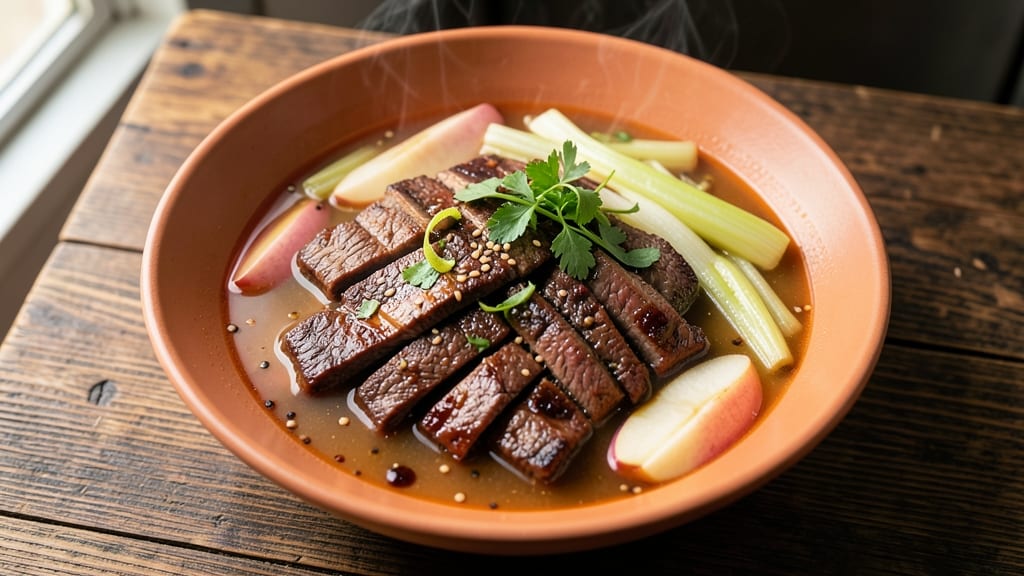
This beef bulgogi soup recipe transforms tender marinated beef and crisp celery crowns into a restaurant-quality bowl of sweet-savory perfection. The secret lies in slow-caramelizing the bulgogi marinade directly in the broth, creating deep umami layers that elevate every spoonful.
I've perfected this technique over years of Korean home cooking, balancing sweetness with savory depth for a harmonious soup that's both comforting and sophisticated.
The process begins with marinating ribeye in a classic bulgogi blend—soy sauce, brown sugar, sesame oil, and garlic—that tenderizes the meat while building complex flavors. As the beef cooks in the broth, the marinade caramelizes beautifully, infusing the liquid with rich, caramelized notes.
Celery crowns add a satisfying crunch that contrasts perfectly with the silky beef and velvety broth.
By the time you finish this recipe, you'll have a steaming bowl of restaurant-quality beef bulgogi soup—golden broth, perfectly tender beef, and crisp celery that delivers satisfying texture with every bite.
The aroma alone will have everyone gathering around your table, while the balanced flavors make it a meal worth savoring.
This soup serves 4-6 and comes together in about 1 hour 15 minutes of active time (plus marinating), making it ideal for weekend family meals or special occasions. The leftovers reheat beautifully, maintaining that perfect balance of sweet, savory, and umami. Let's get cooking!
Ingredients for beef bulgogi soup
Pantry staples plus a few specialty finds for that authentic bulgogi depth.
| Ingredient | Amount | Notes |
|---|---|---|
| Ribeye Steak 🥩 | 1 ½ lb | Thinly sliced against grain |
| Celery Crowns 🧅 | 2 whole | Large, crisp varieties preferred |
| Asian Pear 🍐 | 1 medium | Peeled, sliced for sweetness |
| Kosher Soy Sauce 🥄 | ½ cup | High-quality, preferably Japanese |
| Brown Sugar 🍚 | ¼ cup | Packed, light or dark |
| Sesame Oil 🫒 | 2 tbsp | Toasted, not flavored |
| Garlic Cloves 🧄 | 6 cloves | Freshly minced, aromatic |
| Ginger Root 🌿 | 1 tbsp | Freshly grated, peeled |
| Beef Broth 💧 | 4 cups | Homemade or high-quality store |
| Green Onions 🧅 | 4 whole | White and green parts separated |
| Sesame Seeds 🌱 | 1 tbsp | Toasted lightly for garnish |
| Diamond Crystal Kosher Salt 🧂 | 1 tsp | For seasoning broth |
| Black Peppercorns 🌶️ | ½ tsp | Freshly cracked |
| Vegetable Oil 🫒 | 2 tbsp | For searing beef |
The ribeye is non-negotiable here—thinly sliced against the grain ensures tender bites. Costco or Whole Foods carry the best cuts for this dish. Asian pears add subtle sweetness, but if you can't find them, substitute with 1/4 cup apple juice. Celery crowns should be crisp—look for thick stalks at the farmers market for maximum crunch. The soy sauce matters too: Japanese brands like Kikkoman have that perfect balance of salt and umami that store-bought versions often lack.
No sesame oil? Toasted peanut oil works in a pinch, though it's not ideal. Fresh ginger and garlic are essential—dried won't cut it for that bright flavor. The beef broth can be homemade (always better) or high-quality store-bought like Pacific Foods. For the celery crowns, if you can't find whole crowns, substitute with 4 large celery stalks cut into 2-inch pieces. The brown sugar should be packed—light or dark doesn't matter here—just make sure it's not clumpy.
Marinate the beef for at least 30 minutes, but overnight is ideal. The broth keeps well in the fridge for 4-5 days, and the beef reheats beautifully. For maximum crunch, blanch the celery crowns for 30 seconds before adding them to the soup. Store sesame seeds in a cool, dark place—they lose their flavor when exposed to light. This soup tastes even better the next day as the flavors meld together.
Why You'll Love This Recipe
- One-Pot Magic: Between us, this soup comes together in a single pot—no chopping chaos, no extra bowls. Just slice the ribeye thin, toss in the celery crowns and pear (yes, the pear’s weirdly good), and let the soy and brown sugar do their thing while you sip wine and pretend you’re a Korean chef.
- Sweet-Savory Bomb: Honestly, the flavor balance here is next-level. The ribeye stays tender but packs a punch, the pear adds this unexpected sweetness that cuts through the soy’s saltiness, and that caramelized brown sugar? It’s like a secret hug for your taste buds. (Yes, even on a Tuesday night.)
- Leftovers for Days: This soup tastes better the next day—seriously, the flavors meld into this rich, umami dream. Make a big batch, freeze half, and thank me later when you’re reheating a steaming bowl mid-winter. My kids fight over the leftovers, and they’re picky.
- Budget Steak Luxe: You’re basically getting filet mignon vibes for way less. Ribeye on sale? Grab it. A few celery crowns and a pear in the crisper? Boom, instant upgrade. It’s fancy enough for date night but cheap enough to make when you’re broke and craving something that doesn’t taste like takeout.
Step-by-step instructions for sweet-savory beef bulgogi soup
Transforming ribeye into tender bulgogi takes precision—here's how to nail the marinade and soup technique.
Create the Bulgogi Marinade
In a mixing bowl, combine the 0.5 cup kosher soy sauce, 0.25 cup brown sugar, 2 tbsp sesame oil, 6 cloves minced garlic cloves, and 1 tbsp freshly grated ginger root. Whisk vigorously until the brown sugar dissolves completely—this ensures even distribution of flavors. The marinade should be glossy and slightly syrupy in texture.
Add the 1.5 lb ribeye steak sliced thinly against the grain, spreading the marinade evenly over each piece. Cover the bowl and refrigerate for at least 4 hours (overnight works best). The acid in the soy sauce and sugar will begin breaking down the meat fibers, guaranteeing tender bites. Don't skip this step—rushing the marinating leads to chewy results.
Sear the Bulgogi to Perfection
Heat a large skillet over medium-high heat and add 2 tbsp vegetable oil. Once shimmering, add the marinated beef in a single layer—don't overcrowd the pan. Sear for 2-3 minutes per side until deeply browned with a caramelized crust. This step develops the rich umami flavor that defines bulgogi.
Remove the beef and set aside, leaving the flavorful browned bits in the pan. Here's the thing—those bits are pure flavor gold. We'll use them to build the soup base later. If the beef releases easily from the pan, it's ready. If it sticks, let it cook another 30 seconds—patience prevents sticking.
Build the Soup Base
In the same skillet, add 2 whole celery crowns cut into 1-inch pieces and 1 medium asian pear sliced. Cook for 3-4 minutes until the celery begins to soften and the pear releases its natural juices. Stir occasionally to prevent burning—this is where the sweetness develops.
Pour in 4 cups beef broth and bring to a gentle simmer. Add 1 tsp diamond crystal kosher salt and 0.5 tsp freshly cracked black peppercorns, stirring to combine. The broth should now carry the aromatic essence of the beef and vegetables. Let it simmer uncovered for 10 minutes to allow flavors to meld—this reduces the broth slightly and deepens its richness.
Finish with Crunch and Garnish
Return the seared beef to the skillet and simmer together for 5-7 minutes until heated through. The beef should be fork-tender but still hold its shape. Add the white parts of 4 whole green onions and cook for another 2 minutes to infuse their mild onion flavor into the soup.
Ladle the soup into bowls and garnish with the green parts of the green onions and 1 tbsp toasted sesame seeds. For that signature crunch, add the celery crowns whole to each serving—cutting them would defeat the purpose. The contrast of tender beef, sweet pear, crisp celery, and savory broth creates the perfect balance of textures and flavors.
Pro Tips For Making Beef Bulgogi Soup
- Slice Steak Against the Grain: Cut the ribeye into ¼-inch strips before marinating—thin slices cook faster and stay tender, but resist the urge to go too small or they’ll turn to mush. I learned this the hard way when my first batch turned out chewy because I chopped too thickly.
- Marinate Celery Crowns First: Trim the celery crowns and soak them in cold water for 10 minutes before adding to the soup—this removes bitterness and keeps them crisp. Skip this, and you’ll end up with a mouthful of tough, stringy celery every bite.
- Balance the Pear: Asian pears soften quickly—add them in the last 5 minutes of simmering, or they’ll dissolve into the broth. If using a firmer pear, slice it thinly; if it’s ripe, leave it in chunks to avoid a gluey soup.
- Brown Sugar Early: Stir in the brown sugar with the soy sauce at the start, not the end—this prevents clumping and lets the caramelized flavor develop gradually. I used to add it late, and the soup always tasted one-note instead of rich and layered.
Wine and beer pairings for these flavors
Red Wine Pairings
For this rich, caramelized beef bulgogi soup, I recommend a medium-bodied Korean red wine like Geumgangju Red—it mirrors the dish's sweet-savory balance beautifully. 🍷 The wine's plum and berry notes complement the caramelized marinade, while its moderate tannins won't overpower the delicate Asian pear sweetness.
If you can't find Korean wine, try a Pinot Noir from Oregon—its bright acidity cuts through the soup's richness without competing.
Light Beer Options
A crisp Korean lager like Hite is my go-to choice—its clean, slightly sweet profile enhances the soup's umami depth without overwhelming it. For craft beer lovers, a Belgian witbier (like Hoegaarden) adds a citrusy brightness that refreshes your palate between bites.
Avoid heavy stouts or IPAs—they'll clash with the soup's delicate flavors.
Sake for Authenticity
If you're feeling adventurous, serve dry sake (like Dassai 17) alongside your soup—it's a traditional pairing in Korean cuisine. The sake's clean, slightly nutty profile elevates the beef's caramelized flavors while providing a subtle umami that bridges the soup's components. Chill it slightly before serving for the best experience.
Non-Alcoholic Choices
For a refreshing non-alcoholic option, try yuja tea—a citrusy Korean beverage made from yuja peels. Its bright, tangy notes complement the soup's sweet-savory balance perfectly.
If you can't find yuja tea, sparkling yuzu soda (like San Pellegrino Yuzu) works as a great alternative. Both options keep the meal light and refreshing.
Nutrition facts
Frequently asked questions
Can I use a different cut of beef for this bulgogi soup?
Ribeye is ideal for its marbling and tenderness, but you can substitute with sirloin or flank steak if needed. Just slice it thinner than usual (about ⅛-inch) against the grain to ensure tender results. Avoid tougher cuts like chuck—they won't break down enough in the soup's short cooking time.
How do I keep the celery crowns crisp in the soup?
Blanch the celery crowns for 30 seconds in boiling water, then immediately shock them in ice water. This preserves their crunch while making them safe to eat raw. Add them whole to each bowl right before serving—never cook them in the soup, as they'll soften completely.
What if I can't find Asian pears for the recipe?
No problem! Substitute with 1/4 cup apple juice or 1/2 cup sliced ripe pear (like Anjou or Bosc). The fruit adds natural sweetness to balance the savory broth. If using pear slices, add them with the celery during Step 3 and cook until just tender.
Can I make this soup ahead of time?
Prepare the broth and marinate the beef up to 2 days in advance. Store components separately in airtight containers. When ready to serve, reheat the broth gently, add the cooked beef, and finish with fresh celery crowns and garnishes. The flavors actually improve overnight as they meld together.
Is this soup spicy? Can I adjust the heat level?
This recipe isn't spicy by default, but you can easily add heat! Stir in 1 tsp gochugaru (Korean red pepper flakes) during Step 3 for mild warmth, or 1 tbsp gochujang (Korean chili paste) for deeper spice. For a smoky kick, add a pinch of Korean smoked sea salt when garnishing.