
Soups & Stews
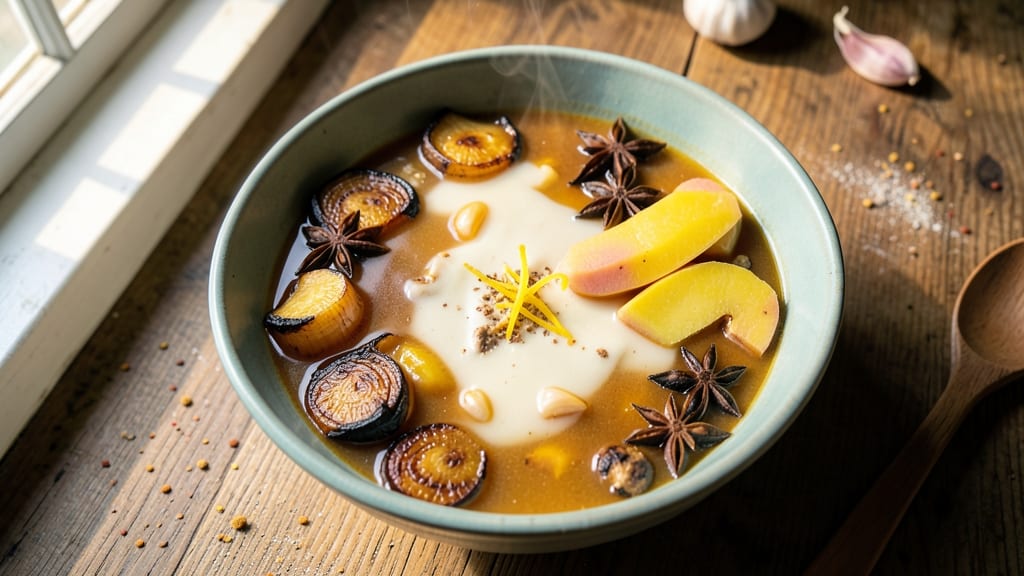
This beef-flavored pho soup base unlocks the deep umami essence that defines authentic Vietnamese broth, using bone-in secrets and precise simmering techniques. The foundation begins with charred aromatics—ginger, onion, and star anise—that infuse the broth with layers of warmth and complexity.
What sets this apart is the combination of beef bones, fish sauce, and rock sugar, which work together to create a rich, balanced flavor that’s both savory and subtly sweet.
The process is methodical but straightforward: sear the aromatics until fragrant, then simmer with beef bones and spices for 3-4 hours to extract maximum collagen and flavor. This slow extraction transforms tough bones into a velvety, gelatinous broth that thickens naturally as it cools.
The result is a concentrated base that can be stored in the fridge for up to 5 days or frozen for 3 months, ready to elevate any pho dish with just a splash of hot water.
What makes this base truly professional is its versatility—use it as-is for a quick pho, or reduce it further to create a paste for later use. The balance of salt, sweetness, and umami ensures every bowl tastes authentically Vietnamese, without the need for expensive ingredients.
Whether you're preparing for a family meal or stocking your pantry, this broth base delivers restaurant-quality depth with minimal effort.
For best results, always use high-quality beef bones and avoid over-simmering, which can turn the broth bitter. The key lies in patience and precision—each step builds on the last to create a flavor concentrate that’s the heart of any great pho. Let’s get started on crafting your foundational broth.
Ingredients for beef flavored pho soup base
Twelve ingredients. Four hours. The secret to restaurant-quality pho broth starts here.
| Ingredient | Amount | Notes |
|---|---|---|
| Beef Bones 🥩 | 4 lb | Knuckle or marrow bones preferred |
| Yellow Onions 🧅 | 2 whole | Charred for depth of flavor |
| Fresh Ginger Root | 3 inches | Peeled, sliced into coins |
| Star Anise Pods 🌿 | 4 whole | Lightly crushed for aroma |
| Garlic Cloves 🧄 | 8 cloves | Smashed for intense flavor |
| Fish Sauce 🍶 | ½ cup | Red Boat brand preferred |
| Rock Sugar 🍬 | ¼ cup | Or substitute brown sugar |
| Cinnamon Sticks 🌿 | 2 whole | For subtle warmth |
| Cardamom Pods 🌿 | 4 whole | Lightly crushed |
| Black Peppercorns 🌶️ | 1 tbsp | Crushed for heat |
| Bay Leaves 🌿 | 2 whole | Dried, for earthy notes |
| Water 💧 | 12 cups | Filtered preferred |
The bones are non-negotiable—marrow or knuckle bones deliver the richest gelatin and flavor. Costco or Asian markets usually carry them pre-packaged, but if you're buying whole, look for bones with good marrow content. Fresh ginger and star anise are available at Whole Foods or any well-stocked grocery store—just make sure the ginger is firm, not shriveled. Fish sauce is the umami powerhouse here, and Red Boat is the gold standard, but Three Crabs works too. The rock sugar adds subtle sweetness without overpowering—substitute brown sugar if needed, but it won't have the same caramel depth.
No star anise? Anise seeds work at double the amount, but the flavor won't be identical. Running out of cardamom? Skip it—it's more about aroma than necessity. The fish sauce can be swapped for soy sauce plus a pinch of sugar, though it won't have the same complexity. Char the onions in a dry pan until blackened—this step is crucial for depth. If you're short on time, broil them for 5 minutes. The cinnamon and cardamom? Lightly crush the pods to release their oils without turning bitter. And yes, you can use pre-sliced ginger, but fresh is always better—just peel and slice it yourself.
This broth develops flavor as it sits, so make extra—it keeps for 5 days in the fridge or 3 months frozen. Store in airtight containers, and let it come to room temperature before freezing to prevent ice crystals. The gelatin will thicken as it cools, so shake before using. For pho paste, reduce the broth by half on the stove—it'll keep for 6 months frozen. Pro tip: save the bones after simmering—roast and grind them for a pho spice blend that's even more flavorful.
Why You'll Love This Recipe
- No Chopping Chaos: I swear by this recipe because the prep is actually simple—just rough-chop the onions and ginger, crush the garlic, and toss in whole star anise. The bones do all the heavy lifting while you sip wine and pretend you’re in a Vietnamese kitchen. (Between us, the star anise pods add depth without fuss.)
- Umami Bomb: That first sip? Chef’s kiss. The beef bones melt into rich, savory goodness, while the ginger and garlic caramelize into a fragrant, almost spicy backbone. Honestly, it’s the kind of flavor that makes you pause mid-slurp—like liquid comfort in a bowl.
- Weeknight Superpower: This base turns into pho, ramen, or even a quick beef broth for rice bowls—no extra work. I’ve used it to revive sad takeout noodles, make a cozy dinner in 20 minutes, and even freeze half for lazy Sundays. (Yes, even on a Tuesday night.)
- Budget-Friendly Goldmine: Beef bones are cheap, and this recipe stretches them into so much broth—enough for leftovers, meal prep, or feeding a crowd. I’ll be real: my freezer is packed with these jars, and I’ve never once regretted making a big batch. (My wallet thanks me.)
Step-by-step instructions for beef flavored pho soup base
Here's how to extract rich umami from bones and build a fragrant pho foundation.
Char the Onions and Prepare Aromatics
Heat a dry skillet over medium-high heat and add the 2 whole yellow onions, cut into quarters. Let them char for 8-10 minutes until deeply browned and blackened in spots, shaking the pan occasionally. This caramelization develops deep, sweet complexity that forms the broth's base.
While the onions cook, peel and slice the 3 inches fresh ginger root into ¼-inch coins. Lightly crush the 4 whole star anise pods, 4 whole cardamom pods, and 8 cloves garlic (leave skins on for easier removal later). Crush the 1 tablespoon black peppercorns coarsely and break the 2 whole cinnamon sticks into 1-inch pieces. These aromatics will infuse the broth with layers of warmth and spice.
Blanch the Beef Bones and Build the Broth
Transfer the charred onions to a large stockpot. Add the 4 lb beef bones and pour in the 12 cups water. Bring to a boil over high heat, then immediately reduce to a simmer. Skim off any foam that rises to the surface for the first 15 minutes—this removes impurities and ensures a clear broth.
After skimming, add the ginger coins, crushed spices, and 2 whole bay leaves. Let the broth simmer gently for 1 hour, partially covered. The bones should release their collagen and marrow, creating a thick, velvety texture. If the broth level drops below halfway up the bones, add 1 cup hot water to maintain coverage.
Strain and Season the Broth
After simmering, strain the broth through a fine-mesh sieve or cheesecloth-lined colander, pressing gently on the solids to extract maximum flavor. Discard the bones and aromatics. Return the strained broth to the pot and stir in the 0.5 cup fish sauce and 0.25 cup rock sugar. The fish sauce adds essential umami depth, while the sugar balances acidity and enhances sweetness.
Taste the broth and adjust seasoning if needed. It should be rich, slightly sweet, and deeply savory with hints of spice. If it needs more saltiness, add a pinch of salt; if it lacks depth, add another 1 teaspoon fish sauce. The broth is now ready to use as a base for pho or store for up to 5 days in the refrigerator.
Reduce for Concentrated Flavor (Optional)
For an even more intense broth, return the seasoned broth to the pot and simmer uncovered over medium-low heat for 30-45 minutes, stirring occasionally. This reduction deepens the flavor and thickens the texture slightly. Watch closely—don't let it boil vigorously, as this can cause the broth to separate.
When reduced, the broth should coat the back of a spoon and have a syrupy consistency. Let it cool slightly before using, as it will continue to thicken as it sits. This concentrated version is perfect for pho bowls where every spoonful needs to pack maximum flavor.
Pro Tips For Making Beef Flavored Pho Soup Base
- Char Bones First: I learned this the hard way—skip the slow start. Get your beef bones smoking hot in a dry pot for 10-15 minutes before adding liquid. That initial Maillard reaction pulls deep, meaty flavor out of the bones faster than any simmer ever will.
- Peel Onions Roughly: Leave the skin on the bottom half of your yellow onions. The charred bits add a smoky depth that store-bought pho bases can’t match—just peel the top half, slice, and toss the rest in whole. (Yes, even if you’re impatient like me.)
- Smash Star Anise: Crack each star anise pod with a heavy pan or rolling pin before dropping it in. The released oils infuse the broth instantly, giving you that signature aromatic punch without waiting for hours of slow extraction.
- Save the Ginger Scraps: Don’t toss the fibrous ends of your ginger root—chop them up and add them to the broth with the rest. They’re packed with flavor and won’t turn to mush like the skinny bits you usually peel away. (Your future self will thank you.)
Make-ahead tips for this dish
Broth Base Prep
Make this beef-flavored pho base ahead of time to save hours on busy days. After simmering the bones for 3 hours, strain the broth and store it in airtight glass containers (I use Le Parfait jars).
Let it cool completely before refrigerating—this prevents bacteria growth and preserves clarity. The flavor actually improves overnight as the spices meld together. 💫
Freezer-Friendly Concentrate
For long-term storage, freeze the broth in ice cube trays—each cube equals ¼ cup, perfect for single servings. Once frozen, transfer cubes to a freezer bag and flatten to save space.
Thaw overnight in the fridge before using. Pro tip: Label bags with the date—this broth keeps its peak quality for 3 months without losing depth. ❄️
Paste for Later Use
Reduce the broth by half on the stove to create a pho paste—simmer uncovered over medium-low heat for 1-2 hours, stirring occasionally. This concentrated version has a syrupy texture and stores beautifully in the freezer for 6 months.
Use 1 tablespoon paste per bowl of pho, then add hot water to reach your desired consistency. 🌟
Batch Cooking Tips
Double the recipe to stock your freezer—8 lbs of bones makes about 2 gallons of broth. Divide into quart-sized portions before freezing for easy thawing. I like to keep one batch in the fridge at all times for quick meals.
The gelatin in the broth will thicken as it cools, so shake well before using—this ensures even distribution of flavors. 💪
Reviving Stored Broth
If your broth has thickened in the fridge, reheat it gently on the stove over low heat, stirring occasionally. Avoid boiling, as this can break down the gelatin and make it cloudy.
For frozen cubes, place them in a bowl and cover with hot water—they’ll thaw in 10-15 minutes without diluting the flavor. 🔥
Flavor Boost After Storage
After thawing, your broth may need a quick refresh. Add ½ teaspoon fish sauce and ¼ teaspoon rock sugar per cup to restore balance. If it tastes flat, simmer for 5-10 minutes with a charred onion and crushed star anise pod to revive the depth.
Always taste before using—this ensures every bowl tastes like it was just made. ✨
Nutrition facts
Frequently asked questions
Can I use chicken or pork bones instead of beef?
Beef bones are ideal for their rich marrow and collagen, but you can substitute with pork bones for a slightly lighter broth. Chicken bones work too, though they yield less gelatin and a clearer broth. For pork, use 4 lbs of pork neck bones—they provide excellent fat and flavor. Chicken bones should be simmered longer (4-5 hours) to extract maximum flavor.
What if I don't have fish sauce?
You can substitute with ½ cup soy sauce plus 1 teaspoon sugar, though the umami won't be identical. For a closer match, use ¼ cup soy sauce plus ¼ cup Worcestershire sauce. The sugar mimics the sweetness from rock sugar, while Worcestershire adds depth. Taste and adjust—you may need extra salt since soy sauce is saltier than fish sauce.
How do I fix a broth that tastes too bitter?
Bitterness usually means over-simmering or burnt aromatics. To fix it, stir in 1 tablespoon rock sugar or brown sugar to balance the flavors. If that doesn't help, simmer the broth with ½ cup fresh ginger slices and 1 charred onion for 15 minutes to mask the bitterness. Strain again before using—this fresh infusion will refresh the broth.
Can I make this broth in an Instant Pot?
Yes! Sear the charred onions and spices first, then add bones and water. Cook on high pressure for 90 minutes, then strain. The Instant Pot will extract flavor faster, but the broth may lack the deep gelatinous texture of a slow simmer. For best results, finish by simmering the strained broth on the stove for 30 minutes to develop richness.
Why does my broth turn cloudy when reheating?
Cloudiness often happens when broth boils vigorously, breaking down gelatin. To prevent it, reheat over low heat and stir gently. If it's already cloudy, strain through a fine-mesh sieve lined with cheesecloth. For future batches, avoid boiling—keep the temperature at a gentle simmer (180°F) to preserve clarity and body.