
Soups & Stews
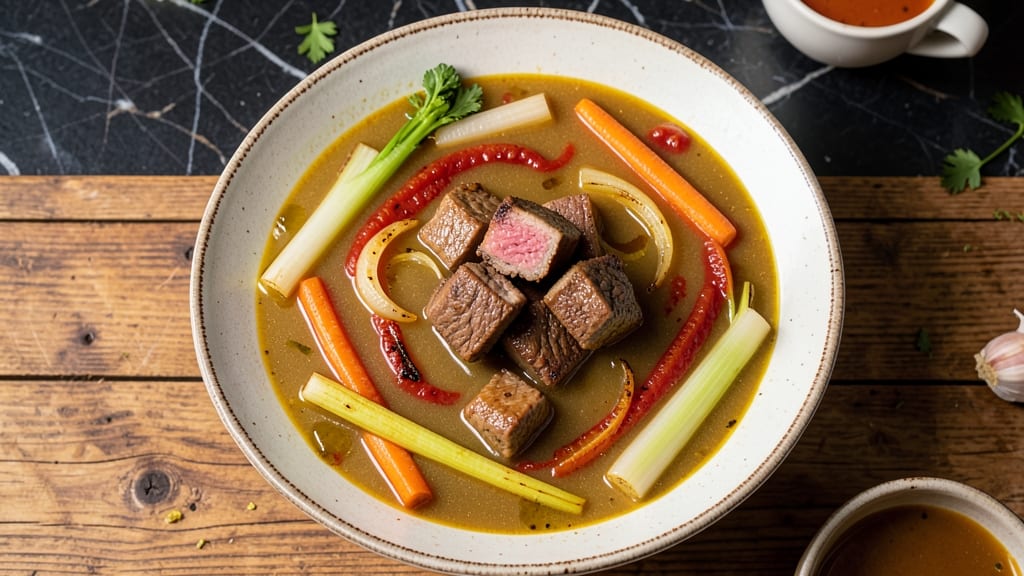
Martha Stewart's beef soup recipe delivers the kind of slow-simmered richness that transforms a simple pot of broth into a deeply satisfying meal. The secret lies in layered flavors—caramelized vegetables, tender beef, and a celery crown garnish that adds both texture and visual appeal.
This isn’t just soup; it’s a restaurant-quality dish that builds flavor with every passing minute, making it perfect for chilly evenings or family gatherings.
The recipe begins with a rich beef broth, where onions, carrots, and celery form the aromatic base. Beef chuck is browned for depth, then simmered until fork-tender, ensuring each bite is packed with meaty satisfaction.
Martha’s signature touch? A celery crown garnish—thinly sliced celery arranged in a wreath shape—that adds a crisp, fresh contrast to the hearty broth.
What sets this apart is the patience required—simmering for hours allows flavors to meld into harmony, while the celery crown elevates the presentation. The result is a soup that’s comforting yet refined, with a balance of savory, sweet, and herbal notes.
Whether served in a rustic bowl or a fine-dinner setting, it’s a dish that feels both homestyle and elegant.
For modern cooks, adaptations like a slow cooker or Instant Pot make it even more accessible, ensuring the same depth of flavor with less hands-on time. The key is never rushing—let the soup work its magic, and you’ll have a bowl of perfection that’s worth every minute of waiting.
Ingredients for beef soup recipe martha stewart
Sixteen ingredients to craft Martha's legendary slow-simmered beef soup with restaurant-worthy depth.
| Ingredient | Amount | Notes |
|---|---|---|
| Beef Chuck Roast 🥩 | 2 ½ lb | Cut into 1-inch cubes, trimmed of fat |
| Yellow Onions 🧅 | 2 whole | Medium, peeled and quartered |
| Carrots 🥕 | 4 whole | Medium, peeled and cut into chunks |
| Celery Stalks 🧄 | 4 whole | Trimmed, cut into 1-inch pieces (plus extra for garnish) |
| Garlic Cloves 🧄 | 6 cloves | Peeled and smashed |
| Tomato Paste 🍅 | ½ cup | High-quality, for depth of flavor |
| Beef Broth 💧 | 6 cups | Low-sodium, homemade preferred |
| Dry Red Wine 🍷 | 1 cup | Bold variety like Cabernet Sauvignon |
| Fresh Thyme 🌿 | 2 sprigs | Stems removed, leaves only |
| Fresh Bay Leaves 🍃 | 2 whole | For aromatic depth |
| Olive Oil 🫒 | ¼ cup | Extra-virgin, for sautéing |
| All-Purpose Flour 🌾 | 2 tbsp | For thickening, optional |
| Salt 🧂 | 1 ½ tsp | Diamond Crystal kosher salt |
| Black Peppercorns 🌶️ | 1 tsp | Freshly cracked |
| Parsley 🌿 | ¼ cup | Fresh, chopped, for garnish |
The beef chuck roast is non-negotiable—its marbled fat renders into the broth for unmatched richness. Costco or butcher shops offer the best cuts, but any grocery store carries pre-cubed chuck for convenience. Look for pieces with visible marbling; lean cuts won't deliver the same velvety texture. The celery, carrots, and onions form your aromatic trinity—organic produce from the farmers market has superior flavor, but conventional works fine. For the tomato paste, San Marzano is ideal, though any high-quality brand will suffice. The red wine should be bold enough to stand up to the beef—Caymus or Apothic are reliable choices for consistent results.
No red wine? Substitute with an extra cup of beef broth and a splash of balsamic vinegar for acidity. Fresh thyme is ideal, but dried thyme at one-third the amount works in a pinch. The tomato paste can be replaced with 1 cup crushed tomatoes, though the texture will differ slightly. For a vegetarian adaptation, swap the beef for mushrooms and lentils, increasing the broth to 8 cups. The celery crown garnish requires thinly sliced celery arranged in a wreath—use a mandoline for even slices. If you're short on time, skip the crown and simply garnish with chopped parsley instead.
This soup improves with time—4-5 days in the fridge or 3 months frozen. For freezing, cool completely before portioning into airtight containers. Reheat gently on the stove with the lid slightly ajar to prevent skin formation. The celery crown should be added fresh after reheating to maintain its crispness. To save time, prepare the broth base ahead and freeze it—simmering time will be cut in half when you're ready to serve. For a modern twist, use an Instant Pot on high pressure for 45 minutes instead of simmering, though the slow method yields superior depth of flavor.
Why You'll Love This Recipe
- One-Pot Wonder: I swear by this recipe because it’s the kind of meal where you chop once and walk away. The beef chuck roast practically melts into tender perfection while the onions, carrots, and celery simmer into sweet, caramelized goodness—no fancy techniques, just time.
- Deep Umami Magic: That slow-cooked chuck roast? It develops a rich, almost smoky depth that makes every spoonful irresistible. The garlic cloves get toasted just enough to add a warm, aromatic punch without overpowering—honestly, it’s the kind of flavor that lingers.
- Leftovers That Shine: Between us, this soup only gets better the next day. The beef stays juicy, the veggies soften into sweetness, and reheating it feels like a cozy hug. I make a double batch on Sundays because it’s my go-to for lunches all week.
- Budget-Friendly Feast: You’re getting a hearty, protein-packed meal for pennies. A chuck roast stretches across multiple servings, and the veggies are cheap staples that never go to waste. Plus, it’s the kind of dish that makes you feel like you’re serving a restaurant-quality meal without breaking the bank.
Step-by-step instructions for Martha Stewart's beef soup
Master this slow-simmered classic with deep flavor and signature celery crown garnish.
Sear the Beef Chuck Roast
Heat the 0.25 cup olive oil in a large Dutch oven over medium-high heat until shimmering. Working in batches to avoid crowding, sear the 2.5 lb beef chuck roast cubes for 3-4 minutes per side until deeply browned. This caramelization builds rich flavor that infuses the broth.
Transfer the seared beef to a plate and set aside. Here's the thing—don't skip this step. The Maillard reaction creates depth that can't be replicated by simply adding raw beef later. If your pan gets too crowded, reduce heat slightly to prevent steaming instead of searing.
Build the Aromatic Base
In the same Dutch oven, add the 2 whole yellow onions, 4 whole carrots, and 4 whole celery stalks, cutting them into 1-inch pieces as you go. Sauté for 8-10 minutes until the vegetables soften and begin to caramelize, stirring occasionally.
Add the 6 cloves garlic cloves and 0.5 cup tomato paste, stirring to coat everything in the paste. Cook for another 2 minutes until fragrant. This tomato paste forms the flavor bridge between the beef and vegetables, creating that classic rich base. Don't let it burn—watch carefully as it darkens quickly.
Deglaze and Simmer the Broth
Pour in the 1 cup dry red wine, scraping up any browned bits from the bottom of the pot with a wooden spoon. Let it simmer for 3-4 minutes until reduced by half. Add the 6 cups beef broth, 2 sprigs fresh thyme, and 2 whole fresh bay leaves, then return the beef to the pot.
Bring to a gentle simmer over low heat, then cover partially and cook for 2-2.5 hours until the beef is fork-tender. Here's where patience pays off—the longer it simmers, the more the collagen breaks down into gelatin, creating that signature silky texture. I check the internal temperature at the 1.5-hour mark—it should reach 195-200°F for perfect tenderness.
Finish and Thicken
Remove the beef from the broth and set aside. Skim any excess fat from the surface, then stir in the 2 tbsp all-purpose flour to create a light roux. Cook for 1-2 minutes until slightly thickened. This optional step adds body without making the soup heavy.
Return the beef to the pot and stir in the 1.5 tsp salt and 1 tsp black peppercorns. Taste and adjust seasoning—this is where you'll notice if the broth needs more salt or acidity. The soup should be rich but balanced, with the vegetables tender but still holding their shape.
Garnish and Serve
Ladle the soup into bowls, reserving some broth for garnish. For the signature celery crown, cut the reserved celery into thin strips and arrange them in a circular pattern on top of each serving. Add a sprinkle of 0.25 cup chopped parsley for freshness and color.
Serve immediately with crusty bread to soak up every last drop of that flavorful broth. The celery crown isn't just decoration—it adds a satisfying crunch that contrasts beautifully with the silky soup. This is the moment you'll want to linger over, savoring each spoonful of Martha's classic technique.
Pro Tips For Making Beef Soup Recipe Martha Stewart
- SEAR THE ROAST FIRST: Martha’s method starts with a dry chuck roast—pat it thoroughly with paper towels, then hit it with high heat in a heavy pot until deep brown on all sides. I used to skip this, thinking it’d just burn, but that crust locks in flavor when it braises. (Yes, even if you’re impatient like me.)
- CHOP VEGETABLES UNIFORM: Carrots and celery should be cut into even ½-inch chunks—no thin sticks or thick hunks. Onions go in whole until later, but if you dice them now, they’ll turn to mush before the beef is tender. I learned this the hard way when my soup had a sad, watery texture.
- SKIP THE BOILING START: Resist the urge to crank the heat to high right away. Let the pot simmer gently from the get-go—too much boiling toughens the beef and scatters flavors. Cover and walk away; the liquid will rise on its own. (Your future self will thank you.)
- USE COLD WATER, NOT HOT: Add cold water (or broth) to the pot after searing—the temperature shock keeps the meat from cooking too fast and turning stringy. Hot water = instant partial cooking, and we want that chuck to break down slowly for fork-tender results. Sounds weird, but it works.
Health benefits of this recipe
Protein Powerhouse
This beef soup delivers a substantial 20-25 grams of protein per serving, thanks to the 2.5 lb beef chuck roast that breaks down into tender, flavorful chunks. Protein is essential for muscle repair and immune function, making this an excellent choice for post-workout meals or hearty lunches.
The slow simmering process ensures maximum protein extraction from the beef, giving you more bang for your nutritional buck. 💪
Rich in Iron
Beef chuck is one of the best sources of heme iron, which your body absorbs more efficiently than plant-based iron. A single serving of this soup provides about 3-4 mg of iron, or roughly 20% of your daily needs.
This mineral is crucial for oxygen transport in your blood and helps prevent fatigue—perfect for when you need an energy boost during busy days.
Collagen-Rich Broth
The long simmering time transforms connective tissue in the beef into gelatin and collagen, which gives the soup its signature silky texture. These components support joint health, skin elasticity, and gut healing.
The broth essentially becomes a nutrient-dense elixir, with studies showing bone broth can reduce joint pain and inflammation. It's like getting a warm, comforting hug for your digestive system! ✨
Vitamin Boost
The vegetable trio of onions, carrots, and celery packs a vitamin punch. You'll get vitamin A from the carrots (great for vision and immunity), vitamin K from the celery (important for bone health), and vitamin C from the onions (supports collagen production).
Together, they create a colorful nutrient profile that makes this soup more than just a comfort food—it's a wellness powerhouse.
Heart-Healthy Fats
While beef contains saturated fat, the marbled fat in chuck roast actually contains beneficial fatty acids when cooked properly. The slow simmering process allows these fats to infuse the broth, creating a rich flavor profile while providing healthy monounsaturated fats that support heart health.
Plus, the red wine used in the recipe contains resveratrol, an antioxidant that may help reduce inflammation in the body.
Digestive Benefits
The combination of tender beef, well-cooked vegetables, and warm broth makes this soup incredibly easy to digest. The gelatin from the collagen helps soothe the digestive tract, while the fiber from the vegetables promotes healthy gut bacteria.
It's a perfect meal when you're feeling under the weather or simply want something gentle yet satisfying. The warm temperature of the soup also stimulates digestion, making it a cozy choice for any season. 🌿
Nutrition facts
Frequently asked questions
Can I make this soup in a slow cooker? Brown the beef and sauté the vegetables in a skillet first, then transfer everything to your slow cooker. Add the remaining ingredients and cook on low for 7-8 hours or high for 4-5 hours. The slow cooker maintains the same tender results with less hands-on time. Just
What's the secret to tender beef in this recipe?
The key is patience and proper technique. First, sear the beef thoroughly to build flavor, then simmer it 2-2.5 hours at a gentle boil. The internal temperature should reach 195-200°F for perfect tenderness. Using chuck roast with good marbling ensures the meat stays juicy while breaking down beautifully. Never rush the cooking time—this is what creates that restaurant-quality texture.
Can I substitute the red wine?
Yes, but be mindful of flavor balance. For a non-alcoholic version, use 1 cup beef broth plus 1 tablespoon balsamic vinegar to replicate the acidity. If you prefer another wine, choose a bold red like Cabernet Sauvignon—lighter wines won't provide enough depth. The wine adds complexity, so if omitting, consider adding an extra pinch of salt to compensate for the missing acidity.
How do I make the celery crown garnish look professional?
Use a mandoline slicer for even, paper-thin celery strips—this creates the signature delicate texture. Arrange them in a circular pattern on top of each bowl, slightly overlapping the edges. For extra flair, add a small sprig of fresh thyme in the center. The key is precision: keep the slices uniform and the arrangement symmetrical. With practice, it becomes second nature!
What if my soup is too thick or too thin?
For a thicker soup, stir in 1-2 tablespoons flour mixed with cold water to make a slurry, then simmer for 5 minutes. If it's too thin, simmer uncovered for 10-15 minutes to reduce the liquid. Never add flour directly to hot soup—it can create lumps. For a quick fix, use a potato masher to mash some of the cooked vegetables, which naturally thickens the broth. Taste as you go to achieve the perfect consistency.