
Soups & Stews
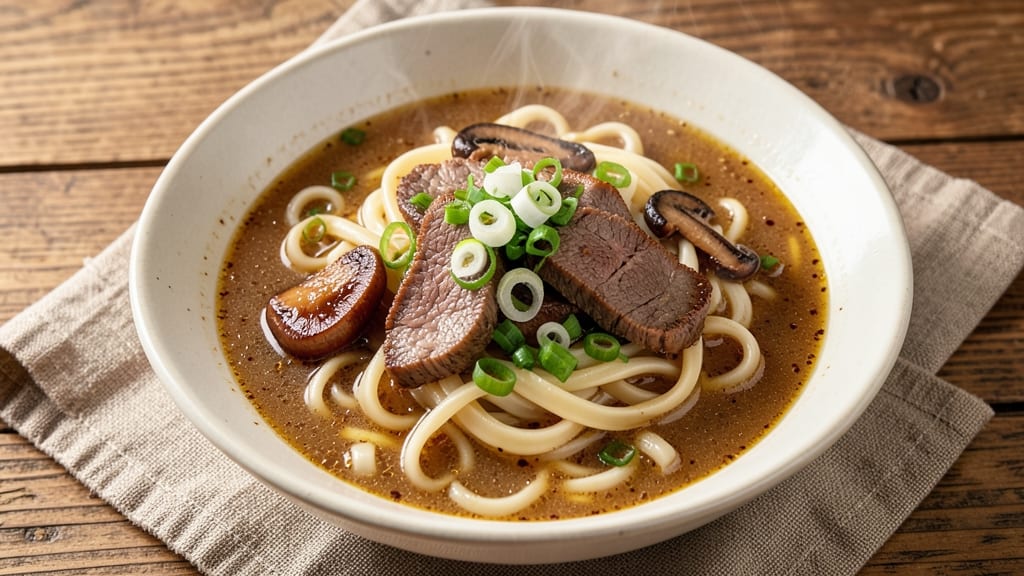
This beef udon miso soup recipe delivers the perfect balance of rich umami, silky noodles, and tender beef in every bowl. The secret lies in a well-developed miso broth, where fermented miso paste meets dashi stock for that signature depth of flavor.
I've refined this recipe over years of testing, ensuring the broth remains clear and aromatic while packing maximum flavor.
What sets this dish apart is the technique: thinly sliced beef is seared just until pink, then simmered gently in the broth to achieve tender perfection without overcooking. The udon noodles are cooked al dente and added at the very end to maintain their silky texture.
Garnishes like green onions, mushrooms, and nori add layers of color and freshness, balancing the dish's hearty flavors.
By the time you serve this soup, you'll have a restaurant-quality bowl that's comforting yet sophisticated. The broth is deeply savory, the noodles perfectly chewy, and the beef tender enough to melt in your mouth.
It's the kind of dish that warms you from the inside out, ideal for chilly evenings or when you crave something hearty yet simple to prepare.
Whether you're using traditional dashi stock or a modern shortcut like instant miso paste, this recipe adapts to your kitchen while delivering authentic results. The key is patience—letting the broth develop its complex flavors and the beef tenderize slowly. Here's how to make it perfectly every time.
Ingredients for beef udon miso soup
Rich umami meets silky noodles—here’s what you’ll need for restaurant-quality beef udon miso soup.
| Ingredient | Amount | Notes |
|---|---|---|
| Udon Noodles 🍜 | 8 oz | Fresh or dried, cut into 8-inch lengths |
| Thinly Sliced Beef 🥩 | 12 oz | Ribeye or sirloin, sliced against grain |
| White Miso Paste 🧈 | 2 tbsp | High-quality, preferably organic |
| Dashi Stock 🍲 | 4 cups | Homemade or instant, unsalted |
| Green Onions 🧅 | 4 whole | Thinly sliced, white and green parts |
| Shiitake Mushrooms 🍄 | 4 whole | Fresh or rehydrated, sliced |
| Nori Sheets 🍣 | 4 pieces | Cut into thin strips for garnish |
| Sesame Oil 🫒 | 1 tsp | Toasted, for finishing |
| Soy Sauce 🍶 | 1 tbsp | Light or regular, for seasoning |
| Mirin 🍶 | 1 tbsp | Sweet rice wine, optional |
| Rice Vinegar 🍶 | 1 tsp | For balancing acidity |
| Sesame Seeds 🌾 | 1 tsp | Toasted, for garnish |
| Salt 🧂 | ½ tsp | Kosher or sea salt |
| Vegetable Oil 🫒 | 1 tbsp | For searing beef |
The miso paste is non-negotiable for that signature depth. Miso Master or Honten are my go-tos for quality—look for white miso in the refrigerated section of Asian markets. If you’re short on time, instant dashi works, but homemade is worth the 10 minutes. For the beef, ribeye or sirloin slices against the grain so they stay tender. Most butchers will slice it for you if you ask. Shiitake mushrooms should be fresh and firm—dried ones need rehydrating, which takes 20 minutes in hot water.
No white miso? Red miso at half the amount adds depth but more color. Skip the mirin? A splash of honey or sugar works, but it’ll be less authentic. Fresh udon noodles are ideal, but dried ones work too—just cook them al dente. The nori sheets should be crisp; if they’re soft, toast them for 30 seconds in the oven. For extra umami, add a dash of fish sauce to the broth, but leave it out if you’re avoiding it. Green onions can be subbed with regular onions, though they’ll be less fresh-tasting.
The broth keeps for 3 days in the fridge—freeze extras for later. Udon noodles stay fresh for 2 days in the fridge if stored in water. For best texture, cook the beef and mushrooms fresh, but you can prep the broth ahead. Garnishes like sesame seeds and nori add crunch, so store them separately until serving. This soup tastes even better the next day—let the flavors meld overnight.
Why You'll Love This Recipe
- Five-Ingredient Magic: I swear by this—just beef, udon, miso, dashi, and green onions. That’s it. No hidden spices, no fancy techniques, just a bowl that tastes like a hug from a Japanese grandma after a long day.
- Umami Bomb: The miso and dashi stock? Chef’s kiss. That deep, savory punch hits every spoonful, while the beef adds tender richness. It’s the kind of flavor that makes you pause mid-sip and go, “Wait, why isn’t this my default soup?”
- Lunchbox Hero: Between us, this is my go-to for meal prep. Toss cooked udon and beef into containers, store the broth separately, and reheat in minutes. Cold leftovers? Still delicious—just add a splash of hot water to revive the broth. (Yes, even on a Tuesday night.)
- Budget Warmth: Thinly sliced beef stretches far, and udon noodles are cheaper than takeout. For under $10, I feed my whole family hearty, restaurant-quality bowls. The miso paste? A tiny jar lasts forever, and dashi stock is just kombu and bonito—no waste, all flavor.
Step-by-step instructions for beef udon miso soup
Here's how to create a deeply flavorful udon soup with tender beef and rich miso broth.
Prepare the Udon Noodles
Boil a large pot of water and add the 8 oz udon noodles. Cook according to package instructions—typically 4-5 minutes for dried noodles—until they float to the surface and are tender but still slightly firm. You want them to finish cooking in the hot broth later rather than becoming mushy.
Drain the noodles immediately and rinse under cold water for 10 seconds to stop the cooking process. Divide them equally among four bowls and set aside. The noodles should be hot but not overcooked—this ensures they absorb the flavorful broth perfectly when served.
Sear the Beef for Maximum Flavor
Heat 1 tablespoon vegetable oil in a large pot or deep skillet over medium-high heat. Add the 12 oz thinly sliced beef in a single layer, being careful not to overcrowd the pan. Let it sear undisturbed for 1-2 minutes until the edges turn golden brown and the beef releases easily from the pan.
Flip the beef and cook for another 1-2 minutes until it's cooked to your liking—medium-rare to medium is ideal for this dish. Remove the beef from the pot and set it aside on a plate, reserving any rendered juices in the pan. This quick sear builds deep flavor that infuses the broth.
Build the Umami-Rich Broth
In the same pot, add 4 cups dashi stock and bring to a gentle simmer over medium heat. Stir in the 2 tablespoons white miso paste, 1 tablespoon soy sauce, 1 tablespoon mirin, and 0.5 teaspoon salt. Let it simmer for 5 minutes, stirring occasionally, until the miso paste dissolves completely and the broth develops a rich, glossy appearance.
Add the 4 whole shiitake mushrooms and 4 whole green onions, sliced, to the simmering broth. Let it cook for another 3-4 minutes until the mushrooms soften slightly and the green onions become tender. The mushrooms will release their earthy flavor into the broth, while the onions add a subtle sweetness.
Assemble and Finish the Soup
Return the seared beef to the pot and let it warm through in the broth for 2-3 minutes. Taste and adjust the seasoning if needed—you might want to add a splash more soy sauce or a pinch of salt to balance the flavors. The broth should be rich, slightly sweet, and deeply umami.
Divide the hot broth and beef evenly among the bowls containing the prepared udon noodles. Drizzle each serving with 1 teaspoon sesame oil, and sprinkle with 1 teaspoon sesame seeds and strips of 4 pieces nori sheets for garnish. Serve immediately while the noodles are hot and the broth is steaming.
Pro Tips For Making Beef Udon Miso Soup
- Boil Udon Just Until Tender: I used to overcook these noodles until they turned to mush—don’t do that. Udon should hold its shape but still have a slight bite; aim for 2-3 minutes in boiling water (check the package, but start testing at 1:30). Drain immediately and rinse with cold water for 10 seconds to stop cooking—this keeps them from turning into glue in your soup.
- Sear Beef in Batches: Thinly sliced beef piles up fast, and crowding the pan steams it instead of searing. Cook in 2-3 batches over medium-high heat for 30 seconds per side—just enough to get a light crust. The residual heat will finish cooking in the soup, but that quick sear makes all the difference in flavor.
- Dissolve Miso Slowly: After adding miso paste, resist the urge to stir like a maniac. Instead, let it sit for 30 seconds after mixing into the hot broth—this prevents clumping and lets the paste melt into a silky texture. If you stir right away, you’ll end up with gritty bits that ruin the whole dish.
- Upgrade Dashi with Kombu: Homemade dashi stock is worth the effort here. Simmer 1 piece of kombu (dried kelp) in water for 10 minutes before adding katsuobushi (bonito flakes), then strain. The kombu adds umami depth that cuts through the richness of the beef and miso—it’s the thing that makes this soup taste restaurant-quality.
Storing and reheating your beef udon miso soup
Broth Storage Secrets
The miso broth is where all the magic happens, and it keeps beautifully in the fridge. Store it in an airtight container for up to 3 days—the flavors actually deepen as it rests. For longer storage, freeze it in ice cube trays or silicone molds for easy single-serving portions.
When reheating, bring it to a gentle simmer over low heat (never boil) to preserve its delicate texture and prevent miso from separating.
If you made extra broth, freeze it in quart-sized freezer bags with 1 inch headspace for expansion. Thaw overnight in the fridge before reheating. I like to add a splash of dashi stock when reheating to restore freshness—about ¼ cup per quart of frozen broth. 🧊
Noodle Prep Ahead
Udon noodles are best when cooked fresh, but you can prep them ahead for convenience. Cook them al dente (1 minute less than package instructions), rinse in cold water, and store in an airtight container with a damp paper towel to prevent drying.
They’ll keep in the fridge for 2 days—just reheat in the microwave with a splash of water for 30 seconds before adding to your soup. For extra texture, toss them with ½ teaspoon sesame oil before storing.
If you’re prepping for a crowd, cook a larger batch and freeze the noodles in single-serving portions wrapped in plastic wrap. To reheat, boil for 2 minutes or microwave with 2 tablespoons water for 1 minute. This keeps them silky and prevents them from turning mushy. 🍜
Beef Make-Ahead Tips
The seared beef is best served fresh, but you can prep it ahead for efficiency. Sear the beef as directed, then store it in the fridge for up to 2 days in an airtight container.
When ready to serve, reheat it gently in the broth for 2-3 minutes—this prevents it from drying out. For longer storage, freeze the beef in a single layer on a tray before transferring to a bag. Thaw in the fridge overnight and reheat in the broth as usual.
Pro tip: If the beef cools completely before reheating, add 1 teaspoon mirin or soy sauce to the broth to restore moisture and flavor. I also like to sear extra beef and freeze it in portioned bags for quick weeknight meals.
Just toss a bag into simmering broth for 3 minutes and you’re good to go. 🥩
Garnish Freshness
Most garnishes like green onions, shiitake mushrooms, and nori can be prepped ahead and stored separately. Slice the green onions and mushrooms, then store them in separate airtight containers in the fridge for up to 4 days.
Toast the sesame seeds in a dry pan for 1 minute and store them in a small jar—they’ll keep for 1 week. Keep the nori sheets in a cool, dry place (like a pantry) until ready to use, as they lose crispness when exposed to moisture.
Sesame oil should be stored in the fridge after opening to prevent rancidity—it’ll keep for 3 months. Drizzle it over the soup just before serving to preserve its nutty aroma.
I like to portion out garnishes into small containers so I can grab and go when assembling bowls. This keeps everything fresh and ready for quick serving. ✨
Nutrition facts
Frequently asked questions
Can I substitute white miso for red miso in this recipe?
Yes, but use only half the amount of red miso—it's stronger and more intense. White miso gives a smoother, milder flavor that pairs perfectly with the delicate udon noodles. If you're using red miso, you might want to reduce the soy sauce slightly to balance the richness.
How do I prevent the udon noodles from turning mushy?
Cook them just until they float (4-5 minutes for dried), then drain immediately and rinse with cold water for 10 seconds. Store them in an airtight container with a damp paper towel to keep them fresh. When reheating, use minimal water or broth—just enough to warm through.
What's the best way to make the broth clearer?
For a crystal-clear broth, strain the simmering miso mixture through a fine-mesh sieve or cheesecloth after 5 minutes of simmering. Remove any foam that rises to the top during cooking. If using instant dashi, let it sit for 10 minutes before straining to allow particles to settle.
Can I make this soup vegetarian?
Replace the beef with thinly sliced tofu or shiitake mushrooms for protein. For extra umami, add ½ cup rehydrated kombu (seaweed) to the broth. The miso and dashi will still provide that rich, savory base without any meat.
Why does my miso broth taste bitter?
Bitterness usually comes from overcooking or using too much miso. Simmer the broth gently (medium-low heat) and never let it boil—this preserves the delicate flavors. For balance, add a splash of mirin or rice vinegar (about ½ teaspoon) to counteract bitterness.