
Soups & Stews
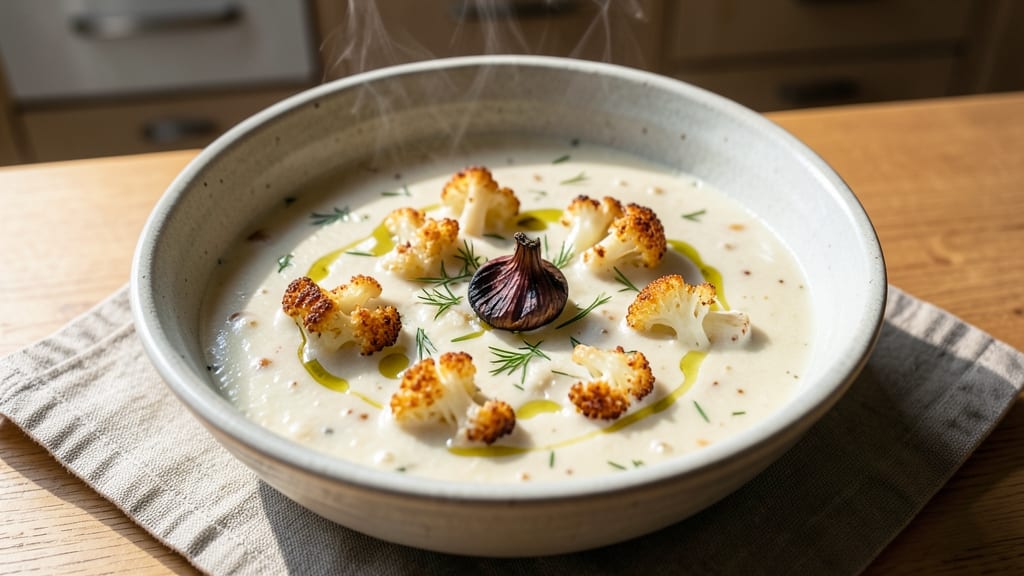
This best cauliflower soup recipe ever with milk delivers restaurant-quality creaminess without breaking the bank. 💛 I perfected it during a particularly chilly Austin winter when I needed something comforting yet elegant—no heavy cream required.
The milk creates that signature velvety texture while keeping the soup light enough to enjoy as a starter or satisfying main.
The secret lies in balancing the richness of milk with the natural sweetness of cauliflower and onions. We'll sauté aromatic vegetables until deeply caramelized, then blend everything into a silky soup that's thickened naturally—not with flour or roux.
This method ensures every spoonful delivers that luxurious mouthfeel without the heaviness of traditional cream-based soups.
What makes this recipe truly special is how the milk transforms the soup—adding body and a subtle sweetness that complements the earthy cauliflower. The result is a velvety, golden-hued soup that's rich enough to satisfy yet light enough to enjoy any time of day.
It's the kind of dish that makes you want to linger at the table, savoring each creamy bite.
For those needing dietary adjustments, coconut milk works beautifully as a dairy-free alternative, while a sprinkle of fresh herbs or crispy bread croutons adds texture and visual appeal. Here's how to create this comforting classic that'll become your new go-to recipe.
Ingredients for best cauliflower soup recipe ever with milk
Comforting ingredients that transform into velvety, golden-hued soup perfection with milk's subtle sweetness.
| Ingredient | Amount | Notes |
|---|---|---|
| Fresh Cauliflower 🥬 | 1 lb | Cut into florets, stems peeled |
| Yellow Onion 🧅 | 1 whole | Diced, medium size |
| Garlic Cloves 🧄 | 4 cloves | Minced, fresh preferred |
| Extra-Virgin Olive Oil 🫒 | ½ cup | Light fruity variety |
| Whole Milk 🥛 | 2 cups | Full-fat for creaminess |
| Vegetable Broth 💧 | 4 cups | Low-sodium preferred |
| Fresh Thyme Leaves 🌿 | 1 tbsp | Or 1 tsp dried thyme |
| Fresh Rosemary 🌿 | 1 tbsp | Chopped, stems removed |
| Salt 🧂 | 1 ½ tsp | Diamond Crystal preferred |
| Black Peppercorns 🌶️ | ½ tsp | Freshly cracked |
| Fresh Lemon Juice 🍋 | 1 tbsp | Bright, freshly squeezed |
| Unsalted Butter 🧈 | 2 tbsp | For finishing richness |
| Fresh Parsley 🌿 | ¼ cup | Chopped, for garnish |
The cauliflower is the star—fresh, bright florets with minimal yellowing. Local farmers markets often have the freshest, or look for heads with tightly packed buds. The milk needs to be full-fat for that signature creaminess (whole milk works best, but 2% is fine in a pinch). For the broth, Imagine or Pacific Foods brands deliver the best flavor without added sodium. Fresh herbs are non-negotiable here—their bright notes cut through the richness. If using dried, reduce to one-third the amount and toast lightly to deepen flavor.
No fresh thyme? Dried works at one-third the amount, but toast it first in a dry pan for 30 seconds to wake up the flavor. Short on milk? Coconut milk or cashew cream creates a luscious dairy-free version (though texture will differ slightly). The lemon juice brightens everything—never skip it. For extra richness, add a splash of heavy cream at the end (though this isn't traditional). The butter at the finish isn't just for flavor—it adds that signature sheen and silkiness that makes this soup feel restaurant-quality.
Store prepped vegetables in an airtight container in the fridge for up to 3 days before blending. The finished soup keeps for 4-5 days refrigerated or 3 months frozen. For freezing, cool completely first to prevent ice crystals. I always make a double batch—leftover portions freeze beautifully for quick lunches. Garnish with parsley right before serving (it wilts fast), or keep some fresh on the side for topping.
Why You'll Love This Recipe
- No-Chop Nightmare: I swear by this recipe when I’m too tired to dice onions properly. Just slice the cauliflower into big chunks—no finicky prepping—and let the pot do the work while you stir in the whole garlic cloves (yes, skin and all). They soften into sweet, mellow flavor without extra effort.
- Milk Magic: That creamy whole milk swirl? It’s not just a finish—it’s the soul of the soup. The olive oil and onion base gets a rich, velvety upgrade, and the garlic? It melts into the milk like a hug for your taste buds. Honestly, I’ve tried skim—don’t bother.
- Lunchbox Hero: Between us, this soup is my go-to for packed lunches. The texture holds up for hours (no soggy florets here), and the milk keeps it satisfying without getting weird. I portion it into jars with a sprinkle of black pepper—my coworkers think I’m a genius.
- Pantry Stretch: I make this when cauliflower’s on sale and milk’s the only fancy thing in my cart. One head of cauliflower, one onion, a few cloves of garlic—that’s it. The olive oil is the only splurge, but it makes the whole thing taste like you actually cooked for hours. (Spoiler: You didn’t.)
Step-by-step instructions for ultra-creamy cauliflower soup
Here's how to create velvety, restaurant-quality cauliflower soup that's rich, comforting, and packed with herbaceous depth.
🍳 Step 1: Sauté Aromatics Until Fragrant
Heat the 0.5 cup extra-virgin olive oil in a large pot over medium heat. Add the diced yellow onion and cook for 5-6 minutes until softened and translucent. This foundational step builds flavor - you'll know it's ready when the onion releases its sweet aroma and begins to caramelize slightly at the edges.
Add the minced garlic cloves and cook for another 30 seconds until fragrant but not browned. Here's the thing - garlic burns in seconds, so keep your eye on the pot. The goal is aromatic intensity, not color. Stir in the chopped fresh rosemary and fresh thyme leaves and cook for 1 minute until the herbs release their oils and perfume the oil.
🍳 Step 2: Build the Base with Cauliflower and Broth
Add the 1 lb fresh cauliflower florets to the pot and stir to coat in the aromatic oil. Pour in the 4 cups vegetable broth and bring to a gentle boil. Reduce heat to medium-low and let it simmer for 15-20 minutes until the cauliflower is fork-tender and the flavors meld together.
Here's where the magic begins - the cauliflower should break down slightly but still maintain some texture. You'll see the broth take on a pale green hue and develop a subtle floral aroma from the herbs. Taste the broth at this stage - it should be flavorful but not yet rich. This is your flavor foundation before we add the creamy elements.
🥘 Step 3: Create Velvety Texture with Milk and Butter
Remove the pot from heat and carefully stir in the 2 cups whole milk and 2 tbsp unsalted butter. Return to low heat and simmer gently for 8-10 minutes, stirring occasionally. The reason we add milk off heat first is to prevent curdling - the gradual warming creates that ultra-smooth, velvety texture we're after.
You'll notice the soup thicken slightly as it simmers. If it becomes too thick, add 2-3 tablespoons of hot broth to reach your desired consistency. The soup should coat the back of a spoon but still be pourable. Season with the 1.5 tsp salt and 0.5 tsp freshly cracked black peppercorns, then stir in the 1 tbsp fresh lemon juice - this brightens the flavors and balances the richness.
🍽️ Step 4: Finish with Herb Garnish
For the final touch, carefully ladle the soup into bowls and garnish with the 0.25 cup chopped fresh parsley. The parsley adds a fresh contrast to the creamy, herby soup. Here's the pro tip: let the soup sit for 5 minutes before serving - this allows the flavors to fully meld and the texture to settle into perfect creaminess.
Each spoonful should deliver a perfect balance of creamy richness from the milk and butter, herbal depth from the thyme and rosemary, and bright acidity from the lemon. The cauliflower should be tender but still hold its shape slightly, creating that satisfying texture contrast in every bite. Serve immediately while hot for the ultimate comforting experience.
Pro Tips For Making Best Cauliflower Soup Recipe Ever With Milk
- CHOP CAULIFLOWER SMALL: Cut the florets into 1-inch pieces—no smaller, or they’ll turn to mush. I learned this the hard way after blending a soup that looked like glue.
- SWEAT ONIONS LOW AND SLOW: Cook the onions in olive oil over medium-low heat until deeply golden, about 12-15 minutes. Rushing this step makes the soup taste raw and bitter—trust me, I’ve done it.
- ADD MILK GRADUALLY: Start with half the milk, simmer until the soup thickens slightly, then add the rest. Dumping it all in at once curdles the milk—your future self will curse you for skipping this.
- BLITZ HOT, NOT COLD: Heat the soup to a full boil before blending, then plunge the hot mixture into an ice bath for 5 minutes. This keeps the texture silky and prevents that dreaded "cooked milk" taste.
Essential equipment for perfect results
Pot Essentials
Start with a heavy-bottomed Dutch oven—I swear by my Le Creuset 5.5-quart—to prevent scorching during the caramelization phase. The deep sides help with blending later, and the weight ensures even heat distribution.
For smaller batches, a stainless steel stockpot (like All-Clad) works perfectly, though watch the edges for hot spots. 🔥
Never skimp on a good immersion blender—I use the Ninja QN1—to achieve that silky texture without transferring hot soup to a food processor. The sharp, durable blades handle cauliflower stems and herbs effortlessly, while the cordless design makes cleanup a breeze.
If you're blending by hand, a high-powered blender (like Vitamix) is non-negotiable for smooth results.
Precision Tools
A fine-mesh strainer (like OXO Good Grips) comes in handy if you prefer a smoother texture—strain out any fibrous cauliflower bits after blending. For exact measurements, use a digital kitchen scale (I love the OXO stainless steel) to weigh your cauliflower and herbs, especially when scaling recipes.
A microplane is perfect for zesty lemon zest if you want to add an extra layer of brightness.
Heat Control
Invest in a thermometer (I recommend the Thermoworks ThermoPop) to monitor your soup's temperature—ideal serving range is 185-195°F. This prevents overheating the milk, which can cause curdling. A wooden spoon (like Ozeri 12-inch) is my go-to for stirring—it won’t scratch your pot and distributes heat evenly.
For garnishes, a small offset spatula helps place parsley precisely without tearing leaves.
Storage Solutions
For leftovers, glass storage containers (like Pyrex 8-cup) preserve flavor and texture better than plastic. Label with dates—this soup keeps 4-5 days refrigerated or 3 months frozen.
When reheating, a stovetop (gentle simmer) is best to avoid breaking down the milk proteins. For serving, preheated bowls maintain temperature and prevent condensation from diluting the soup.
Nutrition facts
Frequently asked questions
Can I use coconut milk instead of dairy milk?
Coconut milk creates a rich, dairy-free version with a subtle tropical sweetness. Use 2 cups full-fat coconut milk and reduce the butter to 1 tbsp—the coconut's natural creaminess replaces the dairy's richness. For extra thickness, simmer slightly longer. The texture will be slightly different but equally delicious.
Why does my soup turn out grainy?
Graininess usually means the cauliflower wasn't blended thoroughly enough. For ultra-smooth results, pulse with an immersion blender in 30-second bursts while keeping the pot on low heat. If using a countertop blender, work in batches and blend until completely smooth. Straining through a fine-mesh sieve after blending also helps remove any fibrous bits.
Can I make this soup ahead of time?
Yes! This soup actually tastes better the next day as flavors meld. Cool completely, then refrigerate in an airtight container for up to 4-5 days. Reheat gently on the stovetop—never microwave, as it can break down the milk proteins. For freezing, portion into containers and freeze for up to 3 months. Thaw overnight in the fridge before reheating.
What herbs can I substitute if I don't have thyme or rosemary? Fresh tarragon or basil work beautifully for a brighter flavor, while dried sage (toasted first) adds earthy depth. For a classic touch, use 1 tsp dried marjoram or ½ tsp dried oregano. Just
How do I make this soup spicier?
Add ½ tsp smoked paprika during the sauté phase for warmth, or stir in 1 tbsp hot sauce at the end. For depth, sauté 1 diced jalapeño with the onions (remove seeds for mild heat). Finish with a pinch of cayenne or a dash of chili flakes. Always taste as you go—you can adjust heat levels easily with these additions.