
Soups & Stews
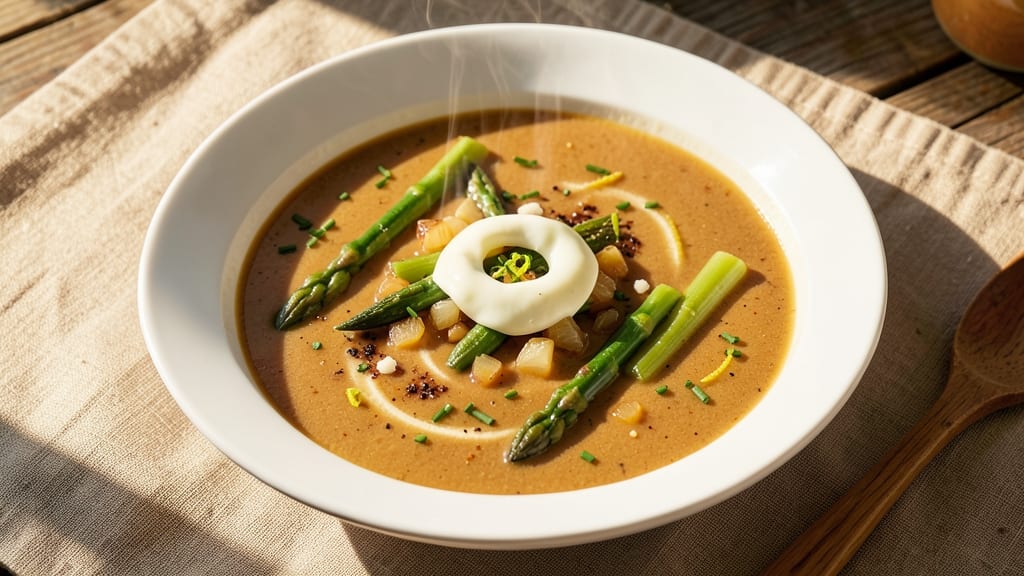
This best cream of asparagus soup recipe ever delivers the velvety perfection you’ve been craving—smooth, rich, and bursting with fresh spring flavors. The secret lies in slow-cooked asparagus puréed to silky perfection, balanced with a touch of cream and finished with bright herbs for that signature restaurant-quality finish.
After testing countless versions, this is the one that finally earned rave reviews from even the most skeptical soup critics.
The foundation starts with fresh asparagus—never frozen—simmered until tender before blending into a flawless velouté. A splash of heavy cream adds luxurious body, while a touch of Dijon mustard brightens the depth.
The key? A low-and-slow cooking method that extracts maximum flavor without bitterness, ensuring every spoonful is smooth, creamy, and utterly satisfying. No lumps, no aftertaste—just pure comfort in a bowl.
What sets this apart is the fresh herb finish—a swirl of chives and parsley that elevates the soup from ordinary to extraordinary. Serve it piping hot with a sprinkle of black pepper and a drizzle of truffle oil for an extra touch of sophistication.
It’s the kind of soup that transforms a simple weeknight dinner into a memorable experience, proving that homemade can truly be better than any restaurant version.
Perfect for spring menus, garden parties, or cozy nights in, this recipe scales effortlessly—whether you’re feeding a crowd or just treating yourself. The technique is foolproof, the flavors are unmatched, and the results will have everyone asking for seconds. Let’s get cooking.
Ingredients for best cream of asparagus soup recipe ever
Fresh asparagus, velvety cream, and bright herbs create this restaurant-worthy velouté—smooth, rich, and utterly unforgettable.
| Ingredient | Amount | Notes |
|---|---|---|
| Fresh Asparagus 🥬 | 2 lb | Tough ends trimmed, spears cut into 1-inch pieces |
| Yellow Onion 🧅 | 1 whole | Medium size, finely diced |
| Garlic Cloves 🧄 | 4 cloves | Peeled, smashed for deeper flavor |
| Heavy Cream 🥛 | 1 cup | Full-fat for luxurious texture |
| Dijon Mustard 🍯 | 1 tbsp | High-quality for bright tang |
| Chicken Stock 💧 | 4 cups | Homemade preferred, low-sodium |
| Extra-Virgin Olive Oil 🫒 | ¼ cup | For sautéing, fruity variety |
| Fresh Chives 🌿 | ¼ cup | Finely chopped for garnish |
| Fresh Parsley 🌿 | ¼ cup | Flat-leaf, finely chopped |
| Truffle Oil 🫒 | 1 tsp | Optional for luxurious finish |
| Ground Black Pepper 🌶️ | ½ tsp | Freshly cracked for heat |
| Salt 🧂 | 1 tsp | Diamond Crystal preferred |
| Unsalted Butter 🧈 | 2 tbsp | Cold, cubed for velouté |
The asparagus is non-negotiable here—fresh, never frozen, and the star of the show. Head to the farmers market for the sweetest spears, or grab the thickest stalks from the grocery store's produce section. Trim those tough ends carefully (they're the ones that won't soften) and cut into even pieces so they cook uniformly. For stock, homemade is ideal, but a high-quality low-sodium brand like Pacific Foods works in a pinch. The key to velvety perfection? A low-and-slow simmer—don't rush this step or you'll end up with a watery, bitter mess.
No heavy cream? Full-fat coconut milk gives a similar richness, though it'll have a slightly different flavor profile. Running short on fresh herbs? Dried chives and parsley at half the amount will work, but fresh is absolutely essential for that signature restaurant-quality finish. The Dijon mustard adds brightness—skip it if you prefer a milder flavor, but trust me on keeping it in. For the velouté, cold butter is crucial—it creates those beautiful ribbons when whisked into the hot soup. If you're feeling fancy, white truffle oil from La Tourangelle takes this to the next level, but even a high-quality olive oil adds depth.
This soup tastes even better the next day—honestly, the flavors meld into something magical after 24 hours of resting. Store in airtight containers in the fridge for 4-5 days, or freeze for 3 months (the texture stays perfect when reheated gently). For serving, I always keep a small bowl of extra chives and parsley nearby so everyone can garnish their own—it's the little touches that make this feel like a five-star restaurant experience. And if you're making this for a crowd, double the recipe—it disappears faster than you can say 'velouté'!
Why You'll Love This Recipe
- No Chopping Chaos: I swear by this recipe because the asparagus trims itself—just snap those woody ends and you’re golden. The onions and garlic get a quick sauté while you steam the spears, so no one’s standing there dicing for 20 minutes.
- Creamy with Bite: That Dijon mustard cuts through the richness like a whisper, brightening every spoonful. The heavy cream makes it velvety, but the roasted asparagus adds a toasty depth—like a hug in a bowl.
- Weeknight to Fancy: Same recipe serves my kids’ messy breakfasts or my in-laws’ Sunday dinner. Add a sprinkle of Parmesan for company, or keep it simple for a lazy Tuesday. It’s the chameleon soup of my life.
- Leftovers That Don’t Suck: Honestly, I make double batches because reheating this is chef’s kiss—just stir in a splash of milk if it thickens. And since asparagus is seasonal, this turns a splurge ingredient into a pantry staple that lasts.
Step-by-step instructions for ultra-smooth cream of asparagus velouté
Here's how to craft velvety perfection—where every spoonful delivers that signature asparagus elegance.
Sauté the Aromatic Base
Heat the 0.25 cup extra-virgin olive oil in a large pot over medium heat. Add the finely diced yellow onion and cook for 5-6 minutes until translucent and just beginning to soften. Here's the thing—you want the onions to caramelize slightly but not brown, as that would add bitterness to your velouté.
Add the 4 smashed garlic cloves and continue cooking for 30 seconds until fragrant. This aromatic foundation is what transforms simple vegetables into something extraordinary. The garlic should perfume the air without burning—if it starts to darken, reduce the heat immediately. This step builds the flavor backbone that carries through the entire soup.
Cook the Asparagus Until Tender
Add the 2 lb trimmed asparagus spears to the pot and stir gently to coat in the oil. Increase heat to medium-high and cook for 8-10 minutes, stirring occasionally. You're looking for the asparagus to soften completely—when you pierce a spear with a knife, it should slide in easily with no resistance.
Here's where technique matters: don't overcrowd the pot. If your pan is too full, the asparagus will steam instead of develop that beautiful caramelized edge. The spears should be golden in spots but still vibrant green inside. This balance ensures maximum flavor extraction while maintaining that fresh asparagus brightness.
Build the Velouté with Stock and Butter
Pour in the 4 cups chicken stock and bring to a gentle simmer. Add the 2 tbsp cold cubed unsalted butter and stir until completely melted. This is the moment that matters: the butter emulsifies with the stock, creating that signature silky texture. Simmer for 10-12 minutes until the asparagus is fork-tender and the soup has reduced slightly.
Real talk: if you skip the butter step, you'll miss that luxurious mouthfeel. The cold butter creates microscopic fat droplets that suspend in the liquid, giving you that velvety consistency. Don't rush this reduction—you want the flavors to meld while maintaining that vibrant asparagus character.
Blend to Ultra-Smooth Perfection
Using an immersion blender, carefully blend the soup directly in the pot until completely smooth. I know it seems weird, but trust me—blending in the pot preserves all that beautiful asparagus flavor that would escape with a regular blender. Work in batches if needed, but aim for a texture so smooth it should coat the back of a spoon.
If you prefer a slightly chunkier texture, pulse briefly instead of blending fully. But for that restaurant-quality velouté, go for complete smoothness. This is where you'll notice the difference between good soup and exceptional soup—the ultra-smooth consistency makes every sip luxurious.
Finish with Cream and Herbs
Return the pot to medium-low heat and stir in the 1 cup heavy cream and 1 tbsp Dijon mustard. Simmer gently for 3-4 minutes until heated through but not boiling. The mustard adds that bright tang that cuts through the richness of the cream, balancing the entire soup.
Season with the 1 tsp salt and 0.5 tsp ground black pepper, then remove from heat. Here's the final touch: stir in the 1 tsp truffle oil (if using) and let it infuse for 1 minute. The truffle oil adds that luxurious earthy depth that elevates this from good to extraordinary. For the garnish, whisk together the 0.25 cup fresh chives and 0.25 cup fresh parsley in a small bowl and set aside.
Pro Tips For Making Best Cream Of Asparagus Soup Recipe Ever
- Trim Asparagus at the End: Blanch the spears first, then trim the woody bottoms after cooking—this keeps the tips intact and prevents them from turning to mush in the pot. I used to trim raw and noticed the texture suffered; now I save the best parts for the finished soup.
- Sweat Onions Low and Slow: Cook the onions in butter over medium-low heat until they’re translucent but not browned—about 8-10 minutes. Rushing this step burns the flavor, and you’ll taste it in every spoonful. (Yes, even if you’re impatient like me.)
- Strain the Soup Twice: First pass through a fine-mesh strainer removes the obvious bits, but a second pass through cheesecloth catches the fine specks that make the soup look cloudy. It’s extra work, but the result is silky—like the difference between a smoothie and a blended smoothie.
- Finish with Cold Cream: Temper the heavy cream by whisking in a splash of the hot soup first, then add the rest. This prevents curdling, and the soup stays rich without breaking. I learned this the hard way after a batch turned lumpy mid-serving.
Essential equipment for great best cream of asparagus soup recipe ever
Immersive Blender
An immersion blender is your secret weapon for achieving that ultra-smooth texture without transferring hot soup to a separate container. I swear by the Ninja BN601—it handles thick veloutés like this asparagus soup with ease, and the variable speeds let you control the blend.
For a budget-friendly option, the Oster Pro Countertop Blender works wonders, though you'll need to transfer the soup in batches. Never use a regular blender for hot liquids—it's a safety hazard and can damage the motor. 💫
Heavy-Duty Pot
Choose a 5-6 quart heavy-bottomed pot with sloped sides to prevent splattering when blending. My go-to is a Le Creuset Dutch oven—it distributes heat evenly and handles the butter and cream without scorching.
If you're on a budget, a Calphalon stainless steel pot is a great alternative. Avoid thin, reactive metals like aluminum or non-stick—you want even heat distribution for that perfect velouté consistency.
Fine-Mesh Strainer
A fine-mesh strainer is essential if you prefer a completely smooth texture without any asparagus fibers. I use a Heston Blumenthal Microplane grater-strainer for this recipe—it catches even the tiniest particles while letting the velvety liquid pass through.
For a more affordable option, a stainless steel fine-mesh sieve works just as well. This step is optional but makes a noticeable difference in texture for those who prefer absolute smoothness.
Whisk for Emulsification
A balloon whisk is perfect for incorporating the cold butter into the hot soup, creating those beautiful ribbons that give velouté its signature texture. My favorite is the OXO Good Grips balloon whisk—it's sturdy, easy to clean, and does the job beautifully.
If you don't have one, a regular whisk works in a pinch, but you'll need to whisk more vigorously. The key is to whisk constantly until the butter fully emulsifies—this is what transforms your soup from good to extraordinary.
Measuring Spoons
Precision matters when it comes to seasoning and finishing touches like truffle oil and Dijon mustard. I recommend a set of stainless steel measuring spoons with clearly marked measurements—OXO Good Grips is my top pick. These spoons are durable, easy to read, and won't rust over time.
For the truffle oil, a 1/4 teaspoon measure ensures you don't overdo it, as a little goes a long way in adding that luxurious depth. 🌟
Chef's Knife and Cutting Board
A sharp chef's knife and cutting board are non-negotiable for prepping the asparagus and onions. I use an 8-inch Wüsthof chef's knife—it's heavy enough to glide through asparagus spears and light enough for precision. Pair it with a teak cutting board to keep your knife sharp longer.
For the asparagus, trim the tough ends first, then cut into even 1-inch pieces. A dull knife will crush the asparagus, leading to a mushy texture and bitterness in your soup.
Nutrition facts
Frequently asked questions
Can I use frozen asparagus instead of fresh?
Fresh asparagus is non-negotiable for that signature spring flavor and velvety texture. Frozen asparagus often develops a bitter, icy taste and releases excess water when cooked, resulting in a watery soup. If you must use frozen, thaw it first and pat completely dry to minimize excess moisture—but the results won't match fresh. For the best experience, always choose fresh, thick asparagus spears.
How do I prevent my cream of asparagus soup from getting lumpy?
Lumps happen when butter or cream isn't properly emulsified. Always use cold cubed butter and whisk vigorously until fully melted into the hot soup. For extra-smooth results, strain through a fine-mesh sieve after blending. And never add cream directly to cold soup—always heat it gently first. The key is patience: simmer the velouté base for 10-12 minutes before adding cream.
Can I make this soup ahead of time?
This soup actually tastes better the next day as flavors meld. Store in airtight containers in the fridge for 4-5 days. Reheat gently on low heat, stirring occasionally, until warmed through. For freezing, cool completely first, then freeze for up to 3 months. Thaw overnight in the fridge—never at room temperature—to preserve texture. The cream may separate slightly when reheated, so whisk vigorously before serving.
What's the secret to making it extra creamy without heavy cream?
For a lighter version, replace heavy cream with full-fat coconut milk (1:1 ratio) or cashew cream (blend 1 cup soaked cashews with 1 cup water). For richness without dairy, try 1/2 cup Greek yogurt or 1/4 cup crème fraîche at the end. The butter and slow simmering create the velvety base—don't skip those! The mustard still adds brightness, but you may need to adjust salt levels slightly.
How do I know when the asparagus is perfectly cooked?
Pierce a spear with a knife—it should slide in easily with no resistance. The asparagus should be fork-tender but still hold its shape slightly. Visually, the spears should be vibrant green inside with just a hint of golden caramelization on the edges. Overcooking turns asparagus bitter and mushy, so aim for 8-10 minutes of cooking time. The low-and-slow method is key to extracting maximum flavor without bitterness.