
Soups & Stews
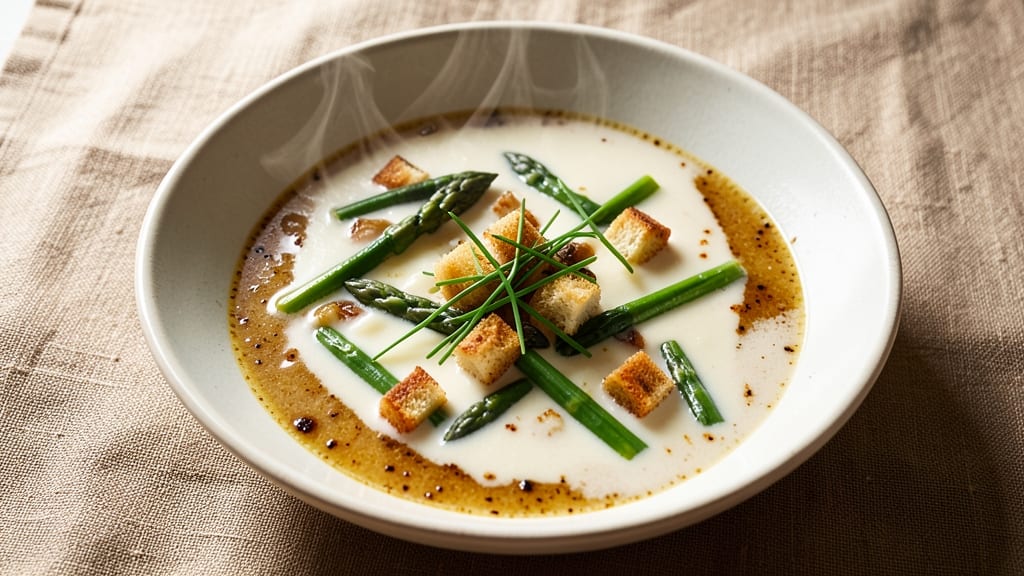
This best ever asparagus soup recipe delivers velvety perfection with a sophisticated white wine twist that transforms simple ingredients into something extraordinary. The secret lies in proper asparagus preparation—peeling those fibrous stems and trimming the woody ends—then building layers of flavor through gentle cooking and blending.
What sets this apart is the balance of creaminess and acidity, creating a soup that's both comforting and refined.
What makes this the best asparagus soup is the velouté technique, where onions and garlic form a flavorful base before asparagus transforms into silky smoothness. A splash of dry white wine brightens the broth while reducing, and heavy cream adds luxurious body without overpowering the vegetable's natural sweetness.
The result is a soup that's creamy yet light, rich yet elegant—perfect for spring menus or elegant gatherings.
This recipe achieves restaurant-quality smoothness at home using simple kitchen tools: a blender for velvety texture and a whisk for finishing. The white wine adds complexity that store-bought versions can't match, while proper asparagus preparation ensures no bitter notes remain.
Every spoonful delivers that perfect harmony of flavors—creamy, aromatic, and subtly tangy.
Serve this asparagus soup with crusty bread for dipping or garnish with toasted croutons and fresh herbs for added texture. The recipe scales beautifully for dinner parties while remaining simple enough for weeknight meals.
Whether you're preparing for a special occasion or just craving something comforting, this velouté delivers exceptional results every time.
Ingredients for best ever asparagus soup
Velvety asparagus soup transforms humble ingredients into restaurant-quality elegance with white wine sophistication.
| Ingredient | Amount | Notes |
|---|---|---|
| Fresh Asparagus Spears 🌱 | 2 lb | Medium thickness, woody ends trimmed |
| Yellow Onion 🧅 | 1 whole | Medium, finely diced |
| Garlic Cloves 🧄 | 4 cloves | Peeled, minced |
| Unsalted Butter 🧈 | 4 tbsp | European-style preferred |
| Dry White Wine 🍷 | ½ cup | Sauvignon Blanc or Pinot Grigio |
| Vegetable Stock 💧 | 4 cups | Homemade or low-sodium |
| Heavy Cream 🥛 | 1 cup | Full-fat for richness |
| Lemon Juice 🍋 | 1 tbsp | Freshly squeezed |
| Salt 🧂 | 1 tsp | Diamond Crystal preferred |
| Ground Black Pepper 🌶️ | ½ tsp | Freshly cracked |
| Fresh Thyme Leaves 🌿 | ¼ cup | Stems removed |
| Extra-Virgin Olive Oil 🫒 | 1 tbsp | For finishing |
The asparagus is non-negotiable—farm-fresh spears from a local market or Whole Foods deliver the best texture. Look for vibrant green stalks with tight tips; avoid anything woody or rubbery. The stems should peel easily with a vegetable peeler, and the tips should snap cleanly when bent. For extra flavor, Trader Joe's often carries organic asparagus bundles that hold up perfectly. If using frozen, thaw and drain thoroughly before cooking to prevent watering down the velouté. The white wine makes all the difference—Sauvignon Blanc or Pinot Grigio adds brightness without overpowering the delicate asparagus flavor.
No white wine? Substitute extra vegetable stock with a splash of apple cider vinegar for acidity—just be prepared for a subtler flavor profile. Fresh thyme is ideal, but dried thyme at one-third the amount works in a pinch. The heavy cream should be full-fat for that luxurious mouthfeel, though half-and-half thinned with a bit of milk can mimic the texture if you're watching fat content. For the butter, European-style (like Plugrá) has a higher fat content and melts more smoothly than American butter. The vegetable stock? Homemade is best, but even the low-sodium store-bought versions from Pacific Foods or Imagine work beautifully—just taste and adjust the salt at the end.
This soup tastes even better the next day as flavors meld—store in an airtight container for up to 4 days in the fridge. For freezing, portion into ziplock bags with a thin layer of olive oil on top to prevent a skin from forming. Thaw overnight in the fridge and stir in a splash of warm water to restore creaminess. Garnish with a drizzle of extra-virgin olive oil and a sprinkle of cracked black pepper just before serving. The soup reheats beautifully—simmer gently on the stove or microwave in 30-second bursts while stirring to avoid curdling the cream.
Why You'll Love This Recipe
- No Chopping Chaos: The onions and garlic take two minutes to mince—no tears, no fuss. I swear by the food processor for this, but even if you’re old-school, a sharp knife and one quick motion does the trick. That butter and white wine? Just melt, deglaze, and let the asparagus do the work.
- Wine’s Secret Boost: Honestly, that splash of dry white wine isn’t just for flavor—it cuts through the richness and brightens everything. The acidity makes the soup taste lighter, while the butter keeps it velvety. It’s the kind of depth that turns a simple veggie soup into something you’d order at a bistro.
- Leftovers That Shine: This soup actually improves the next day. The asparagus softens into a silky texture, and the flavors meld into something even richer. I freeze half in portions—perfect for lazy mornings or when I’m too tired to cook. Just reheat, and it’s like someone else made dinner.
- Spring’s Simplest Star: Between us, this is my go-to when asparagus is in season. It’s elegant enough for a dinner party but unfussy enough for a Tuesday night. Plus, it uses up those spears before they go limp—no sad, wilted leftovers here. Just pure, seasonal satisfaction.
Step-by-step instructions for silky asparagus velouté
Here's how to transform simple ingredients into a velvety soup with bright wine notes and perfect texture.
Sauté Aromatics Until Fragrant
Melt the 4 tablespoons unsalted butter in a large pot over medium heat. Add the 1 whole yellow onion and cook for 5-6 minutes until soft and translucent. I like to press down gently with a wooden spoon to encourage even cooking.
Add the 4 cloves minced garlic and 0.25 cup fresh thyme leaves, stirring constantly for 30 seconds until the garlic becomes golden and fragrant. The thyme should release its piney aroma—this is where the magic starts. If you smell burning, reduce the heat slightly. You want these aromatics to sing without browning.
Char Asparagus for Depth of Flavor
Trim the woody ends from the 2 lb fresh asparagus spears and cut them into 1-inch pieces. Add them to the pot in a single layer, allowing them to sear directly against the pan for 3-4 minutes without stirring. This creates caramelized edges that deepen the soup's complexity.
Once the asparagus begins to soften and develop golden spots, stir gently and continue cooking for another 2 minutes. You're looking for tender asparagus that still holds its shape—it should be bright green with just a hint of char on the edges. This texture contrast is essential for the velouté's final mouthfeel.
Deglaze and Simmer the Base
Pour in the 0.5 cup dry white wine and scrape up all those beautiful browned bits from the bottom of the pot. This deglazing step captures all the concentrated flavor you've built. Let the wine simmer for 3-4 minutes until reduced by half—you should see a glossy sheen on the surface.
Add the 4 cups vegetable stock and bring to a gentle boil. Then reduce heat to low and let it simmer uncovered for 15 minutes. This slow cook time allows the asparagus to break down completely while maintaining its natural sweetness. Stir occasionally to prevent any sticking.
Blend Until Silky Smooth
Using an immersion blender, carefully blend the soup directly in the pot until completely smooth. I prefer this method because it's less messy and preserves all the flavor. If you don't have an immersion blender, carefully transfer the soup to a countertop blender in batches—just be sure to leave some room at the top for steam.
After blending, return the soup to the pot and stir in the 1 cup heavy cream and 1 tablespoon lemon juice. The cream will give you that luxurious velouté texture, while the lemon juice brightens all the rich flavors. Taste and adjust seasoning with the 1 teaspoon salt and 0.5 teaspoon ground black pepper—this is where you can really make the soup sing.
Finish with Olive Oil and Serve Warm
Remove the pot from heat and let the soup rest for 5 minutes. Then stir in the 1 tablespoon extra-virgin olive oil. This final touch adds a silky mouthfeel and helps balance the acidity from the lemon juice. The oil should emulsify into the soup, creating a glossy sheen on the surface.
Ladle the soup into bowls and serve immediately with a sprinkle of freshly cracked black pepper. The contrast between the velvety texture and the bright wine notes makes this soup truly exceptional. For extra elegance, garnish with a few thin asparagus spears on the side or a drizzle of reduced white wine sauce.
Pro Tips For Making Best Ever Asparagus Soup
- CHAR THE ONION LOW: I used to rush this and end up with bitter, watery soup. Sweat the onion in butter over medium-low for 8-10 minutes until it's translucent and just starting to caramelize—no browning yet. That deep flavor is the foundation, and skipping this step means your soup will taste like sad office cafeteria food.
- TRIM ASPARAGUS UNIFORMLY: Cut the woody ends off at a 45-degree angle—about 1-1.5 inches from the base—so the spears look neat and cook evenly. Save those trimmings: chop them finely and add them to the pot first. They’ll break down into a silky base while the spears stay intact for serving.
- DEGLAZE WITH WINE IMMEDIATELY: As soon as you remove the onion (before it browns), pour in the white wine and let it bubble for 2-3 minutes. Scrape up those stuck-on bits—yes, even the ones you think are gone. This isn’t just for flavor; it’s how you salvage all the caramelized goodness that would otherwise burn or get wasted.
- BLEND IN BATCHES: Don’t overload your blender with hot soup—it’ll make a mess and strain the motor. Split it into two transfers: blend the first half until smooth, then the second. If the soup is too thick after blending, add a splash of warm water or vegetable stock (about ¼ cup at a time) and taste as you go. Over-diluting is easier to fix than under-blending.
Wine and beer pairings for this recipe
White Wine Pairings
The white wine used in the soup—Sauvignon Blanc or Pinot Grigio—is your best friend when pairing. These crisp, mineral-driven wines mirror the soup's bright acidity and herbal notes from the thyme.
I always reach for a chilled bottle of Oyster Bay Sauvignon Blanc from Trader Joe's—its citrus and grassy notes complement the asparagus perfectly. The wine's natural acidity cuts through the creaminess, cleansing your palate between spoonfuls. 🍷
Light Beer Complements
A crisp wheat beer like Blue Moon Belgian White or a light lager such as Heineken balances the soup's richness without overpowering it. The subtle sweetness and effervescence in wheat beers contrast beautifully with the soup's acidity.
For a more robust option, try a dry Riesling—its stone fruit notes harmonize with the asparagus's natural sweetness. Serve the beer slightly cooler than room temperature (45-50°F) to enhance its refreshing qualities.
Sparkling Wine Elevation
For a celebratory touch, serve a dry Prosecco or Champagne alongside the soup. The bubbles and acidity in these wines create a dynamic contrast with the velvety texture. I love pairing it with La Marca Prosecco—its almond and green apple notes elevate the asparagus's earthiness.
The effervescence also helps cleanse the palate, making each spoonful of soup feel even more luxurious. Keep the sparkling wine well-chilled (40-45°F) to preserve its crispness.
Red Wine Surprise
While white wines dominate, a light-bodied red like Pinot Noir can work surprisingly well with this soup. Choose a cool-climate Pinot Noir with bright acidity, such as one from Oregon's Domaine Serene.
The red wine's subtle fruitiness complements the asparagus's natural sweetness, while its acidity balances the creaminess. This pairing is perfect for adventurous palates who want to explore beyond traditional white wine matches. 🍇
Non-Alcoholic Options
For those skipping alcohol, a sparkling apple cider or ginger beer offers refreshing alternatives. The effervescence and slight tartness in Martinelli's Sparkling Cider mirror the wine's acidity, while ginger beer's spice adds a unique contrast.
For a more sophisticated option, try a non-alcoholic Riesling—brands like Freixenet 0.0% deliver the same citrus and mineral notes without the alcohol.
Nutrition facts
Frequently asked questions
Can I use frozen asparagus instead of fresh?
You can, but fresh asparagus delivers the best texture and flavor. If using frozen, thaw it completely first and drain any excess water to prevent a watery soup. For optimal results, look for frozen asparagus that's been blanched—this helps preserve its natural sweetness. The stems may be more fibrous, so you might want to use just the tips for a smoother velouté.
How do I make this soup vegetarian or vegan?
For a vegetarian version, simply replace the heavy cream with coconut cream or cashew cream for richness. For a vegan version, use a full-fat coconut milk and ensure your vegetable stock is plant-based. The white wine adds depth, but you can substitute apple cider vinegar for acidity. The soup will still be creamy and delicious—just slightly lighter in texture.
Why does my asparagus soup turn out watery?
Watery soup usually means the asparagus wasn't cooked long enough to break down completely. Simmer the soup uncovered for the full 15 minutes before blending, and reduce it slightly on the stove after blending if needed. Another common cause is using too much stock—stick to the 4 cups measurement. If it's still too thin, blend in a spoonful of cornstarch mixed with water to thicken it up.
Can I make this soup ahead of time?
Yes! This soup tastes even better the next day as flavors meld. Store it in an airtight container in the fridge for up to 4 days. For freezing, portion into ziplock bags with a thin layer of olive oil on top to prevent a skin from forming. Thaw overnight in the fridge and stir in a splash of warm water to restore creaminess. Reheat gently on the stove or in the microwave in 30-second bursts while stirring.
What's the secret to getting that perfect velvety texture?
The key is proper blending and the right ingredients. Use an immersion blender for the smoothest results, and make sure the asparagus is fully cooked before blending. The heavy cream adds luxurious body, but don't skip the lemon juice—it brightens the flavors and balances the richness. For extra silkiness, strain the soup through a fine-mesh sieve after blending to remove any remaining fibrous bits.