
Soups & Stews
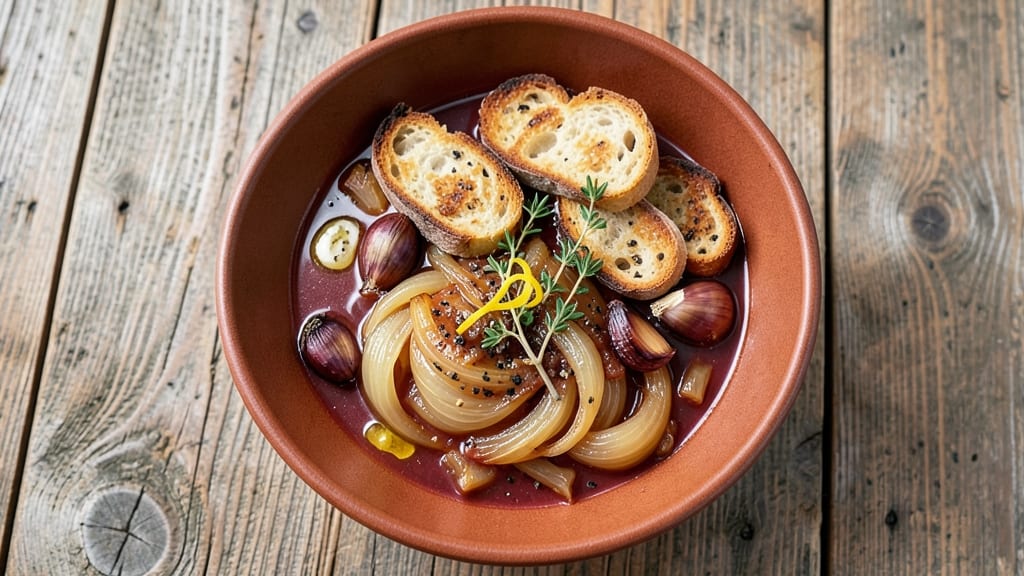
The secret to authentic French onion soup starts with the right onions—yellow onions, slow-cooked until deep golden and sweet. 🌟 This recipe transforms tough onions into a rich, caramelized fond that forms the soul of every perfect bowl.
The key lies in patience and technique, turning simple ingredients into something restaurant-worthy.
Yellow onions are the star here, their natural sweetness developing as they caramelize for hours. We'll build layers of flavor with beef broth, a splash of white wine, and a touch of thyme, creating a broth so rich it'll have everyone asking for seconds.
The slow cooking process is what makes this soup unforgettable—deep, complex, and impossible to resist.
What you'll end up with is a velvety soup topped with perfectly melted Gruyère cheese and toasted baguette slices, creating the ultimate comfort food experience. The caramelized onions add sweetness that balances the savory broth, while the cheese adds a creamy, gooey finish that's pure indulgence.
This recipe delivers restaurant-quality results at home, with tips for selecting the best onions and variations for different dietary preferences. Let's create the perfect French onion soup together—one that'll become your new favorite dinner staple.
Ingredients for best onions for french onion soup
Sweet, caramelized onions and rich broth make this French onion soup unforgettable.
| Ingredient | Amount | Notes |
|---|---|---|
| Yellow Onions 🧅 | 4 large | Peeled, sliced into even rounds |
| Unsalted Butter 🧈 | ½ cup | Cold, cubed for even cooking |
| Beef Broth 🥫 | 6 cups | Homemade or high-quality store-bought |
| Dry White Wine 🍷 | ½ cup | Sauvignon Blanc or Chardonnay |
| Fresh Thyme 🌿 | 1 tbsp | Leaves only, chopped fine |
| Garlic Cloves 🧄 | 4 cloves | Minced for even distribution |
| Gruyère Cheese 🧀 | 1 ½ cups | Freshly grated, not pre-shredded |
| Baguette 🍞 | 1 whole | Crusty, sliced into 1-inch pieces |
| Olive Oil 🫒 | 2 tbsp | For toasting baguette slices |
| Salt 🧂 | 1 ½ tsp | Kosher salt, added gradually |
| Black Pepper 🌶️ | ½ tsp | Freshly cracked for best flavor |
| Flour 🌾 | 1 tbsp | All-purpose, for thickening |
The onions are everything here. Yellow onions are your best bet—they caramelize beautifully, turning sweet and golden. Grab the biggest, firmest ones you can find, usually near the produce section at Whole Foods or Trader Joe's. Avoid any with soft spots or sprouting—those won't caramelize right. If you're feeling fancy, French shallots add a delicate sweetness, but yellow onions are foolproof. Pro tip: soak them in ice water for 10 minutes before cooking to remove dirt and prep them for slicing. Trust me, it's worth the extra minute.
No white wine? Chicken or vegetable broth with a splash of apple cider vinegar works in a pinch. Fresh thyme is ideal, but dried thyme at half the amount gets you close. The Gruyère is non-negotiable for that authentic flavor—pre-shredded cheese loses its melt, so always grate it yourself from a block. Short on time? Comté or Emmental are good substitutes. The baguette should be crusty—Warm it in the oven for 5 minutes before toasting to bring out the flavor. And if you're worried about the onions sticking, pat them dry before adding butter. That's the secret to even browning.
This soup tastes even better the next day—honestly, the flavors meld into something magical. Store it in the fridge for up to 5 days, or freeze portions for 3 months. Keep the cheese separate until serving so it stays fresh. The baguette slices can be toasted ahead of time and reheated in the oven for 2-3 minutes to crisp them back up. And if you make a big batch, double the cheese—you'll want extra for seconds.
Why You'll Love This Recipe
- No-Chop Shortcut: I swear by my mandoline for this—thinly sliced onions caramelize in minutes, not hours. No tears, no fuss, just golden layers that melt into the broth like magic.
- Wine-Infused Depth: That splash of dry white wine? It’s the secret weapon. It cuts through the richness of the butter and beef broth, leaving behind a bright, almost floral finish that makes every spoonful feel fancy.
- Weeknight to Dinner Party: Same recipe, different vibes. Simmer a big batch on a Tuesday for leftovers that taste like you slaved over them, or dress it up with crusty baguettes and Gruyère for a crowd. It adapts without breaking a sweat.
- Budget-Friendly Luxury: Yellow onions and beef broth are pantry staples that punch way above their price. A single batch feeds four (or one very hungry me) and costs less than takeout, but somehow tastes like a Parisian bistro.
Step-by-step instructions for perfect French onion soup
Here's how to transform those sweet yellow onions into a rich, caramelized fond that makes every bite unforgettable.
🔥 Step 1: Caramelize the Onions to Golden Perfection
Melt the 0.5 cup unsalted butter in a large Dutch oven over medium-low heat. Add the 4 large yellow onions (peeled and sliced into even rounds) and stir to coat completely in the butter. Here's the thing—this step takes patience. Cook for 45-50 minutes, stirring occasionally, until the onions are deep golden brown and sweet-smelling.
You'll know they're ready when the onions have transformed from pale yellow to a rich amber color and the butter has completely rendered out, leaving behind a thick, glossy fond. Don't rush this—rushed caramelization means bitter onions. If the onions start to stick, add a splash of water and scrape up those flavorful browned bits from the bottom of the pot.
🍳 Step 2: Build the Fond with Wine and Broth
Once your onions are beautifully caramelized, pour in the 0.5 cup dry white wine and scrape up any browned bits from the bottom of the pot. Let the wine simmer for 3-4 minutes until it reduces by half and the alcohol cooks off. You'll smell that beautiful, rich aroma—this is where the magic happens.
Next, add the 6 cups beef broth, 1.5 tsp salt, 0.5 tsp black pepper, and 1 tbsp fresh thyme. Bring to a gentle simmer and let it cook uncovered for 20-25 minutes until the liquid reduces by about one-third and the flavors meld together. The soup should be thick and intensely onion-flavored—this is your base for the rich, velvety soup you're creating.
👨🍳 Step 3: Finish with Garlic and Thicken the Soup
Stir in the 4 cloves minced garlic and cook for 1-2 minutes until fragrant. Here's where it gets good—sprinkle in the 1 tbsp flour and stir vigorously for 1-2 minutes to cook off the raw flour taste. Then, gradually whisk in 1 cup of the reduced soup to create a smooth slurry. Pour this back into the pot and simmer for another 5 minutes until the soup thickens slightly.
Taste and adjust seasoning if needed. The soup should be rich, sweet, and perfectly balanced. If it's too thick, add a splash more broth to reach your desired consistency. This is the moment that matters—your caramelized onions should be completely submerged in this luxurious broth.
🥘 Step 4: Toast the Baguette and Assemble
While your soup simmers, slice the 1 whole baguette into 1-inch thick pieces and brush both sides generously with 2 tbsp olive oil. Toast in a 400°F oven for 5-7 minutes until golden and crisp. You want that perfect crunch that contrasts beautifully with the creamy soup.
Ladle the hot soup into oven-safe bowls, top each with 3-4 toasted baguette slices, and sprinkle generously with 1.5 cups freshly grated Gruyère cheese. Here's the best part—pop these under the broiler for 2-3 minutes until the cheese is bubbly and golden brown. The cheese should melt into a luscious blanket over your soup, creating that classic French onion soup experience.
Pro Tips For Making Best Onions For French Onion Soup
- Sweat, Don’t Burn: Yellow onions need patience—cook them low and slow over medium heat until they’re golden and translucent, not browned. I used to rush this, and the soup always tasted bitter. A splash of white wine early on helps dissolve the caramelized bits and keeps things smooth.
- Use Two Sizes: Halve the onions unevenly—leave some whole for depth, slice others thin for quick cooking. The whole halves stay tender, while the slices caramelize faster. This isn’t the prettiest method, but it works every time.
- Salt the Butter First: Season the cold butter with salt before melting—it dissolves better and seasons the onions evenly. Skip this, and you’ll end up chasing salt later, especially if your broth is unsalted. Trust me, it’s worth the 10 seconds.
- Deglaze with Wine: After caramelizing the onions, pour in the white wine immediately—it lifts the browned bits off the pan and adds acidity. Let it reduce by half before adding broth. This isn’t just flavor; it’s the foundation of the soup’s richness.
Troubleshooting perfect results
Onions Sticking?
If your onions stick to the pan during caramelization, you're not alone—this is a classic French onion soup challenge. The fix is simple: pat them completely dry with paper towels before cooking. Wet onions release moisture that steams instead of caramelizes.
I also recommend using a heavy-bottomed Dutch oven like All-Clad or Le Creuset—they distribute heat evenly and prevent burning. If sticking happens anyway, add 1-2 tablespoons of water, scrape up those browned bits (they're flavor gold!), and continue cooking. 🔥
Bitter Onions?
Bitter onions usually mean you rushed the caramelization process. The key is low and slow—cook at medium-low heat for at least 45 minutes, stirring occasionally. If your onions taste bitter, they need more time.
Try adding a pinch of sugar (½ tsp) to the butter at the start to enhance sweetness. I've also found that yellow onions with papery skins (like Sweet Vidalia) caramelize more evenly than smaller varieties. Never skip the wine reduction step—it balances any bitterness beautifully.
Broth Too Thin?
If your soup ends up too thin, don't panic—this is easily fixed. Simmer the soup uncovered for an additional 15-20 minutes to reduce it further. For faster results, whisk in 1 tbsp cornstarch mixed with 2 tbsp cold water and cook for 3-5 minutes until thickened.
Pro tip: Use a slotted spoon to skim off excess fat before reducing if you're concerned about richness. The ideal consistency should coat the back of a spoon but still be pourable. 🥄
Cheese Not Melting?
Pre-shredded cheese contains anti-caking agents that prevent proper melting, so always grate your own Gruyère or Comté. For extra insurance, sprinkle the cheese in two layers—first while the soup is still hot, then again after broiling.
If your cheese still refuses to melt, try mixing it with 1 tsp flour before sprinkling to help bind it. I also recommend broiling on high heat for just 2-3 minutes—any longer and it'll burn. The cheese should be bubbly and golden, not dry or clumpy.
Onions Burning?
Burned onions happen when the heat is too high or the pan isn't heavy enough. Always use medium-low heat and a wide, shallow pan to maximize surface area. If you see dark brown spots, immediately reduce the heat to low and stir gently to redistribute the onions.
For future attempts, try buttering the onions in batches if your pan is too small. I've also had success using a silicone spatula to lift stuck onions without scraping the fond (those flavorful bits are essential!).
Wine Not Reducing Properly?
A wine reduction should take 3-4 minutes over medium heat, reducing by about half. If yours isn't reducing, your heat might be too low. Increase to medium-high and stir occasionally to prevent sticking. For a faster reduction, use a smaller saucepan—less surface area means quicker evaporation.
Never skip this step! The wine deglazes the pan, adding depth of flavor that water can't replicate. If you're short on time, a splash of balsamic vinegar can mimic some of the complexity, though it won't be identical. 🍷
Nutrition facts
Frequently asked questions
Can I substitute yellow onions with another type?
Yellow onions are ideal for their sweetness and texture, but French shallots or sweet Vidalia onions work beautifully too. For a milder flavor, use red onions (they'll caramelize faster but turn pinkish). Avoid white onions—they're too sharp and don't develop the same depth of flavor. If using shallots, reduce cooking time by about 10 minutes since they're smaller.
How do I know when the onions are perfectly caramelized?
Perfectly caramelized onions should be deep golden brown with a glossy sheen, not dry or burnt. They'll smell sweet and nutty, and the butter should have rendered completely, leaving a thick fond at the bottom. If they stick, they're not done yet—keep cooking! The texture should be soft but still hold its shape when lifted with a spoon.
Can I make this soup ahead of time?
The soup tastes even better the next day. Store the base (without cheese) in the fridge for up to 5 days or freeze for 3 months. Reheat gently on the stove, then toast the baguette and add fresh cheese when serving. Pro tip: Keep the cheese separate until reheating to prevent sogginess.
What if I don't have white wine?
No problem! Use apple cider vinegar (¼ cup) or chicken/vegetable broth with a splash of balsamic vinegar for depth. For a richer flavor, add 1 tsp sugar to the butter at the start. The wine's main job is to deglaze the pan and add complexity—these substitutes will still work, just with slightly different notes.
Why does my soup taste bitter?
Bitter flavor usually means the onions weren't caramelized long enough or the heat was too high. Try adding a pinch of sugar (½ tsp) to the butter at the start next time. Also, ensure you're cooking at medium-low heat for at least 45 minutes. If it's still bitter, a splash of lemon juice at the end can help balance the flavors.