
Soups & Stews
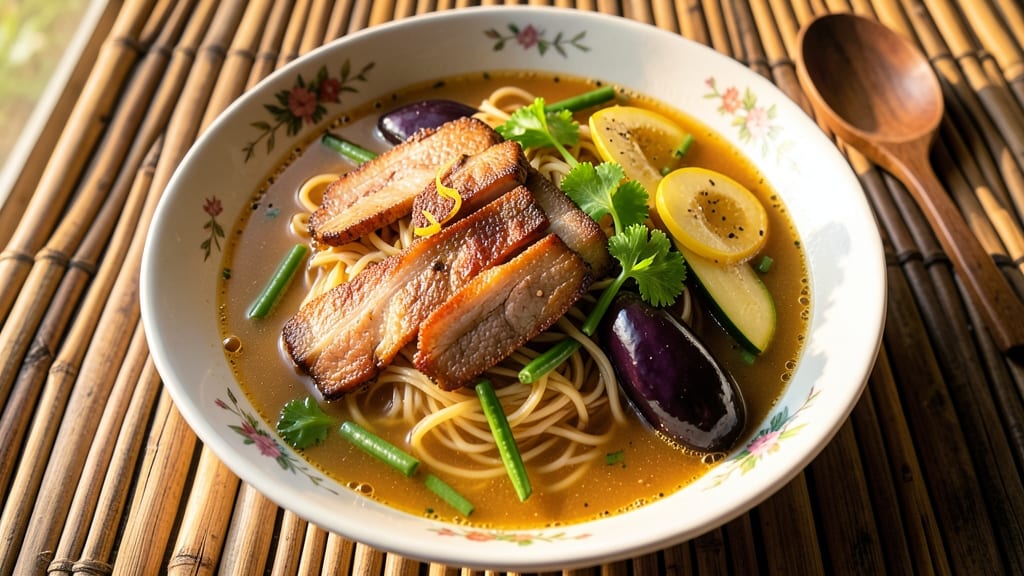
This bihon soup recipe Filipino delivers the comforting, crispy celery crowns and tender rice noodles that define Filipino home cooking. 💛 The secret lies in balancing savory pork, aromatic broth, and perfectly textured vegetables—each bite is a harmony of textures and flavors that transport you straight to a Filipino kitchen table.
What makes this dish special is the crispy celery crowns, which add a satisfying crunch that contrasts beautifully with the soft noodles and tender pork.
The recipe begins with a rich broth infused with garlic, ginger, and bay leaves, forming the soul of the soup. Pork belly or chicken is simmered until tender, while rice noodles soak up the flavorful liquid.
The vegetables—squash, eggplant, and string beans—are cooked just enough to retain their natural sweetness and slight bite. This is where the magic happens: the crispy celery crowns, fried until golden, are added at the end, ensuring they stay crunchy and full of flavor.
What you’ll end up with is a bowl of bihon soup that’s hearty, aromatic, and packed with layers of texture—crispy, tender, and savory all in one spoonful. The broth is rich yet not overpowering, allowing the natural flavors of the pork, vegetables, and noodles to shine.
This dish is not just a meal; it’s a taste of Filipino comfort food, perfect for sharing with family or enjoying on a cozy night in.
The beauty of this recipe lies in its versatility—you can swap pork for chicken, adjust the vegetables based on what’s available, or even add a modern twist with extra herbs or a splash of calamansi for brightness.
Whether you're making it for a special occasion or a simple weeknight dinner, this bihon soup promises to satisfy with every bite.
Ingredients for bihon soup recipe filipino
Pantry staples meet Filipino flavors—crispy celery crowns and tender noodles await.
| Ingredient | Amount | Notes |
|---|---|---|
| Pork Belly 🥓 | 1 lb | Cut into 1-inch cubes, skin removed |
| Rice Noodles 🍜 | 8 oz | Bihon or vermicelli noodles |
| Celery Crowns 🧅 | 1 bunch | Cut into 2-inch pieces |
| Yellow Squash 🍠 | 1 medium | Sliced into half-moons |
| Eggplant 🍆 | 1 small | Cut into 1-inch cubes |
| Green String Beans 🌱 | 1 cup | Trimmed, cut in half |
| Garlic Cloves 🧄 | 6 cloves | Minced for broth |
| Fresh Ginger 🌿 | 1 inch | Sliced thinly, peeled |
| Bay Leaves 🌿 | 2 whole | For aromatic broth |
| Vegetable Oil 🫒 | ½ cup | For frying celery crowns |
| Soy Sauce 🍶 | 2 tbsp | For seasoning broth |
| Fish Sauce 🍶 | 1 tbsp | For umami depth |
| Salt 🧂 | 1 tsp | Adjust to taste |
| Black Pepper 🌶️ | ½ tsp | Freshly ground |
| Calamansi or Lemon Juice 🍋 | 1 tbsp | For brightness (optional) |
The pork belly is non-negotiable here—it gives that rich, savory base. Grab bone-in cuts from an Asian market or the butcher counter at Trader Joe's if you're short on time. The celery crowns? Look for thick stalks—they fry up crispier. If you can't find calamansi, lemon juice works in a pinch. The squash and eggplant should be firm, not mushy—local farmers markets usually have the freshest picks. For the noodles, bihon or vermicelli is ideal, but any rice noodles will do.
No pork belly? Chicken thighs work just as well—they stay tender while soaking up the broth. Swap fish sauce for soy sauce plus a dash of sugar if you're avoiding it. The celery crowns can be prepped ahead—just store them in the fridge until frying. For the broth, toast the garlic and ginger first to deepen the flavor. The vegetables? Add them in stages—squash and eggplant first (they take longer), then string beans and noodles at the end. Fresh herbs like cilantro or Thai basil? Toss them in right before serving.
This soup tastes even better the next day—broth flavors meld beautifully. Store leftovers in the fridge for 3-4 days or freeze for up to 3 months. The celery crowns? Fry them fresh when reheating to keep that crispy texture. For meal prep, cook the broth and pork separately, then combine when reheating. The noodles? Soak them in hot broth for 5 minutes before serving to keep them from getting mushy.
Why You'll Love This Recipe
- One-Pot Magic: The pork belly and veggies all simmer together—no separate pans, no extra bowls. I just toss everything in, add water, and let it do its thing while I prep the noodles. That’s it. No stress, no mess.
- Pork Belly Payoff: Honestly, the crispy edges on that pork belly? Chef’s kiss. It’s tender inside but has this irresistible crunch that makes the whole bowl sing—especially when it soaks up the broth and those caramelized bits stick to the noodles.
- Lunchbox Hero: Between us, this is my secret weapon for meal prep. The noodles hold up for days, and the veggies stay crisp-tender if you reheat it gently. Pack it cold or warm—either way, it’s a hit with kids (yes, even the picky ones) and adults who just want something hearty.
- Budget-Friendly Feast: Pork belly might sound fancy, but a little goes a long way, and the veggies stretch the broth into a full-blown meal. I’ve made this feed six people for under $15—no joke. Plus, leftovers taste just as good the next day.
Step-by-step instructions for bihon soup
Here's how to nail that perfect Filipino bihon soup with crispy celery crowns and rich pork broth.
🔥 Step 1: Fry the Celery Crowns Until Golden
Heat the 0.5 cup vegetable oil in a large skillet over medium heat. Add the 1 bunch celery crowns cut into 2-inch pieces and fry for 5-6 minutes, turning occasionally, until they're deep golden brown and crispy. I like to press down gently on the celery with a spatula during the first minute—this prevents them from curling and ensures even contact with the hot oil.
Remove the celery crowns and set them aside on a paper towel-lined plate. Don't drain the oil completely—you'll use it again later for the pork belly. If the oil smells too strong, pour off about ¼ cup and replace with fresh oil to keep the pork from tasting oily. The celery should be crisp enough to stand up to the noodles without turning soggy later.
🍳 Step 2: Cook the Pork Belly Until Tender
In the same skillet with the remaining oil, add the 1 lb pork belly cut into 1-inch cubes. Increase heat to medium-high and cook for 5-6 minutes, stirring occasionally, until the pork turns light golden brown on all sides. This step builds flavor through the Maillard reaction—don't skip browning the pork.
Pour in 1 cup water, add the 2 whole bay leaves, 6 cloves minced garlic, and 1 inch sliced ginger. Bring to a simmer, then reduce heat to low and cover partially. Let it cook for 30-40 minutes until the pork is fork-tender and the liquid reduces by half. You want the pork to pull apart easily but still hold its shape—this ensures it stays juicy when served over noodles.
🥘 Step 3: Build the Savory Broth
Once the pork is tender, remove it from the skillet and set aside. In the same pot, add the 1 medium yellow squash sliced into half-moons, 1 small eggplant cut into 1-inch cubes, and 1 cup green string beans trimmed and halved. Stir in the 2 tbsp soy sauce and 1 tbsp fish sauce, then add enough water to cover the vegetables by about 1 inch. Simmer for 10-12 minutes until the vegetables are tender but still hold their shape.
Season the broth with 1 tsp salt and 0.5 tsp black pepper. Taste and adjust—Filipino soups need that perfect balance of salty, umami, and slightly tangy. If you're using 1 tbsp calamansi or lemon juice, add it now for brightness. The broth should be flavorful enough to coat the back of a spoon without being overly salty.
⏰ Step 4: Cook the Noodles and Assemble
While the broth simmers, bring a separate pot of water to a boil. Add the 8 oz rice noodles and cook according to package instructions until al dente—they should still have a slight bite. Drain and rinse briefly with cold water to stop the cooking process, then drain again thoroughly. Toss the noodles with a little oil to prevent sticking.
To serve, divide the cooked noodles among bowls. Ladle the hot broth and vegetables over the noodles, then arrange the crispy celery crowns and tender pork belly on top. The contrast of textures—crispy celery, tender pork, and chewy noodles—is what makes this dish special. Garnish with extra black pepper if desired and serve immediately while everything's hot.
Pro Tips For Making Bihon Soup Recipe Filipino
- CRISP THE PORK BELLY FIRST: I used to toss the pork belly straight into the broth, thinking it’d soften fine—wrong. Brown it first in a hot pan with oil until the fat renders and the meat develops a crust. This isn’t just for flavor; it’s the only way to guarantee the pork stays tender instead of turning rubbery later.
- SLICE THE VEGETABLES UNIFORM: Celery crowns, squash, and eggplant all play hide-and-seek if they’re uneven. Cut them into ½-inch thick rounds or sticks so they cook at the same pace. I learned this the hard way when my eggplant turned to mush while the celery stayed crunchy—now I measure with a knife.
- DON’T BOIL THE NOODLES DRY: Bihon noodles are delicate, and overcooking them turns them into a gluey mess. Test one strand early—it should float but still hold shape. Add the noodles to the hot broth just before serving, and give them 2-3 minutes max to soften. (Yes, even if you’re impatient like me.)
- SALT THE BROTH IN STAGES: Filipino broths need balance, but I used to dump all the salt at once and wonder why the pork tasted flat. Start with half the seasoning, let the pork simmer 10 minutes, then adjust. The meat releases its own salt as it cooks—trust the process, even if it feels weird.
Regional styles of this dish
Visayan-Style Bihon
In the Visayas region, bihon soup often features chicken instead of pork and includes dried shrimp for extra umami. The broth is lighter, with more ginger and garlic to balance the seafood flavor.
I’ve made this version with chicken thighs and ½ cup dried shrimp simmered in the broth for 15 minutes before adding the vegetables. The noodles are slightly thicker here—12 oz rice noodles—to hold up to the heartier broth. 🌶️
Tagalog Bihon with Adobo
Central Luzon’s take on bihon incorporates adobo flavors—the broth is seasoned with ½ cup soy sauce and 1 tbsp vinegar (either canola or coconut vinegar) for tang. I like to add 1 tsp brown sugar to the broth to round out the flavors.
The pork is often marinated overnight in 1 tbsp soy sauce, 1 tbsp calamansi juice, and ½ tsp black pepper before cooking. This version is richer and slightly sweeter, perfect for family gatherings. 🍋
Northern Luzon’s Crispy Bihon
Up north, the celery crowns are fried twice—once before cooking to soften them, and again at the end for extra crunch. The broth here is thicker, almost like a stew, with more eggplant and less squash.
I’ve seen versions where pork ribs replace pork belly, adding even more depth. The noodles are soaked in the hot broth for just 3-4 minutes to keep them al dente. This style is heartier and ideal for cooler weather. 🥓
Modern Twist: Spicy Bihon
For a contemporary take, add 1-2 tbsp sriracha or chili garlic sauce to the broth and top with crushed red pepper flakes and sliced green onions. I also like to stir-fry 1 cup baby bok choy and add it to the soup in the last 5 minutes of cooking.
The heat cuts through the richness of the pork and noodles beautifully. This version is a hit with younger crowds who enjoy a little kick. 🌶️
Bihon for Special Occasions
For celebrations, Filipinos often serve bihon with crispy pork rinds on top and a side of sinigang (sour soup) for contrast. The broth is made extra rich with pork bones simmered for 2 hours before adding the meat.
Garnish with fresh Thai basil and a sprinkle of toasted sesame seeds for an elegant touch. This version is labor-intensive but worth it for holidays like Christmas or birthdays. ✨
Nutrition facts
Frequently asked questions
Can I substitute pork belly with chicken in this recipe?
Chicken works beautifully—use bone-in thighs for extra flavor and simmer for 25-30 minutes until tender. Visayan-style bihon often uses chicken, and you can add ½ cup dried shrimp to the broth for authentic umami. The cooking time will be shorter than pork belly, so adjust accordingly.
How do I keep the celery crowns crispy when serving?
Fry them in batches at medium heat until golden brown, then drain on paper towels. The key is to fry them just before serving—they lose crispiness if fried too early. For extra crunch, some regional versions fry them twice: once to soften, then again at the end. Keep them warm in a 200°F oven while finishing the soup.
What if I can't find bihon noodles?
Any rice noodles (vermicelli or pad Thai noodles) work perfectly. For a chewier texture, use thicker noodles like banh pho. Soak them in hot broth for 3-5 minutes until al dente—overcooking makes them mushy. The noodles should complement the broth, not overpower it.
Can I make this soup ahead of time?
Yes! Prepare the broth and cook the pork and vegetables, then store everything (except celery crowns) in the fridge for 3-4 days. Reheat gently, then fry the celery crowns fresh before serving. For freezing, store components separately—broth freezes well for 3 months, while pork and veggies can be frozen for 2 months. The noodles are best cooked fresh.
What's the secret to making the broth flavorful?
Toast the garlic and ginger in the oil until fragrant before adding liquid, and use fish sauce or soy sauce for umami depth. Simmer uncovered for the last 5 minutes to concentrate flavors. For extra richness, add pork bones to the broth while cooking the pork. The broth should coat a spoon but remain clear—never reduce it too much.