
Soups & Stews
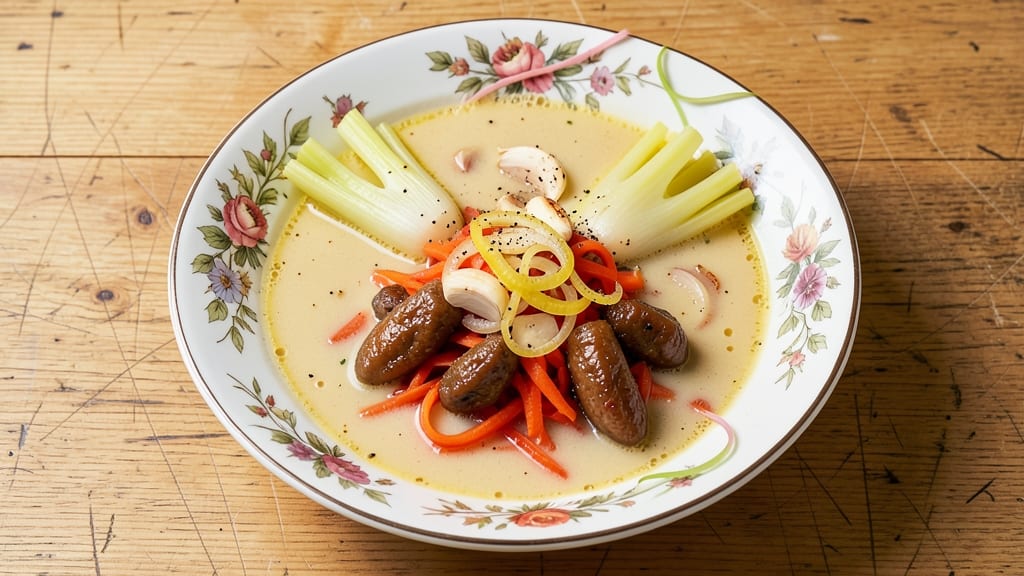
This bird tongue soup recipe delivers a symphony of textures—crispy celery crowns floating atop velvety broth, a dish that bridges tradition and modern comfort. The secret lies in slow-braised bird tongues, tender yet firm, paired with aromatic broth that captures deep umami notes.
While bird tongues may sound unusual, their gelatinous texture transforms into delicate, melt-in-your-mouth bites when cooked properly.
The process begins with a rich bone broth base, simmered for hours to extract maximum flavor, then enriched with soy sauce, star anise, and ginger for depth. Celery crowns are blanched and fried until golden, creating a satisfying contrast to the silky soup.
This recipe stays true to its roots while offering a refined, restaurant-worthy twist—perfect for adventurous eaters or those seeking a showstopping centerpiece.
What makes this dish special is the balance of techniques: the long simmer for broth, the careful frying for celery, and the precise timing for the bird tongues to achieve that signature crispy exterior and tender interior.
The result is a bowl that’s as visually stunning as it is delicious, with every spoonful offering layers of savory, aromatic, and slightly sweet flavors.
While traditional versions may call for specific regional ingredients, this adaptation ensures accessibility without sacrificing authenticity. Whether serving for a special occasion or a cozy weeknight dinner, this soup promises to impress. Ready to elevate your soup repertoire?
Ingredients for bird tongue soup
These ingredients transform simple components into a sophisticated dish with restaurant-quality depth and texture.
| Ingredient | Amount | Notes |
|---|---|---|
| Bird Tongues 🦅 | 1 ½ lb | Fresh, cleaned, trimmed |
| Celery Stalks 🧅 | 3 whole | Large, organic preferred |
| Yellow Onion 🧅 | 1 whole | Yellow or red variety |
| Carrots 🥕 | 2 whole | Medium, peeled, cut |
| Garlic Cloves 🧄 | 6 cloves | Fresh, peeled, smashed |
| Fresh Ginger 🌿 | 1 ½ oz | Peeled, grated, aromatic |
| Star Anise Pods 🌟 | 4 whole | Whole, not ground |
| Cinnamon Sticks 🌿 | 2 whole | 1-inch pieces |
| Soy Sauce 🍶 | ½ cup | Dark, high-quality |
| Vegetable Oil 🫒 | ¾ cup | High smoke point |
| Salt 🧂 | 1 ½ tsp | Diamond Crystal preferred |
| Black Peppercorns 🌶️ | 1 tsp | Freshly cracked |
| Vegetable Broth 💧 | 8 cups | Homemade or quality store-bought |
| Cornstarch 🌾 | 1 tbsp | For velvety texture |
Bird tongues are the star—look for fresh, plump specimens at specialty butchers or Asian markets. Whole Foods or Trader Joe's often carry them frozen, which works just as well. The celery crowns should be crisp, pale green stalks—avoid woody or yellowing pieces. For the ginger, young, tender roots have the best flavor; older, fibrous ginger adds bitterness. Star anise and cinnamon sticks can be found in the spice aisle, but Penzeys offers superior quality for whole spices. The soy sauce should be dark, aged varieties like Kikkoman or Yamasa for maximum umami depth.
No bird tongues available? Substitute chicken livers or hearts (soaked overnight to remove bitterness), though texture will differ. Celery crowns can be swapped for leeks or fennel stalks, though flavor nuances change. Fresh ginger can be replaced with 1.5 teaspoons ground ginger, but it lacks the aromatic complexity. For the vegetable broth, homemade is ideal, but store-bought brands like Pacific Foods or Imagine are reliable. The cornstarch can be substituted with arrowroot powder at the same ratio, though it may yield slightly different mouthfeel. If you lack star anise, 1 teaspoon anise seeds work in a pinch.
Bird tongues and celery crowns should be refrigerated separately—wrap tongues in parchment paper and store for up to 3 days. The broth base keeps for 5 days in the fridge or 3 months frozen. For best results, fry celery crowns fresh before serving, as they lose crispness when reheated. The finished soup reheats beautifully—simmer gently for 5-7 minutes to restore its silky texture. Portion into containers for easy reheating, and garnish with fresh herbs just before serving to maintain vibrancy.
Why You'll Love This Recipe
- Pantry Magic: I swear by this one—no fancy shopping required. Bird tongues are the star, but the real magic happens with celery, onion, and carrots that I always have on hand. Honestly, I’ve made this soup with whatever was in my fridge, and it’s still ridiculously good.
- Umami Bomb: That first bite? The bird tongues deliver a deep, savory punch that’s unlike anything else. The garlic and onions caramelize just enough to make the whole broth taste like it’s been simmering for hours—even if you’re rushing.
- Weeknight Workhorse: Between us, this is my go-to when I’m too tired to think. Toss everything in one pot, let it bubble, and boom—dinner’s ready. I’ve served it as a light lunch, a hearty side for grilled meats, and even as a base for a quick noodle stir-fry.
- Leftovers That Don’t Let You Down: Here’s what sold me—the flavor deepens overnight. Reheat it the next day, and it’s even better, like a richer, more complex version of itself. (Yes, even on a Tuesday night.) Plus, it stretches across multiple meals without feeling repetitive.
Step-by-step instructions for bird tongue soup
Transform delicate bird tongues into a luxurious soup with velvety broth and crispy celery crowns.
Prepare the Celery Crowns for Crispy Perfection
Cut the 3 whole celery stalks lengthwise into thin strips, leaving the base intact to form crowns. Blanch these crowns in boiling water for 2 minutes, then shock in ice water to stop cooking. Pat dry completely with paper towels—moisture prevents crispiness. Toss the crowns in 1.5 teaspoons salt and set aside. The goal is to create a delicate, crispy texture that contrasts beautifully with the rich broth.
While the celery crowns dry, peel and julienne the 2 whole carrots into thin matchsticks. Slice the 1 whole yellow onion into half-moons and mince the 6 cloves garlic. Peel and grate the 1.5 oz fresh ginger finely. These aromatics form the flavor foundation of the soup, so don't rush this prep—precision ensures balanced seasoning.
Sear the Bird Tongues for Deep Flavor
Heat 0.75 cup vegetable oil in a large pot over medium-high heat until shimmering. Add the 1.5 lb bird tongues in batches, searing for 2-3 minutes per side until golden brown. The tongues should develop a caramelized crust—this step builds the soup's depth of flavor. Remove the seared tongues and set aside temporarily.
In the same pot, add the julienned carrots, onion, garlic, and ginger. Sauté for 4-5 minutes until the vegetables soften slightly and release their natural sweetness. Add the 4 whole star anise pods and 2 whole cinnamon sticks, stirring for 30 seconds to toast the spices gently. This aromatic blend infuses the broth with warm, earthy notes that complement the bird tongues beautifully.
Build the Velvety Broth
Pour in the 8 cups vegetable broth and 0.5 cup soy sauce, scraping up any browned bits from the pot. Return the seared bird tongues to the pot, along with the 1 tsp black peppercorns. Bring to a gentle simmer over medium-low heat and cook for 45-50 minutes, partially covered, until the tongues are fork-tender and the broth has reduced slightly. The tongues should be pliable but not falling apart—this ensures they hold their shape while delivering maximum flavor.
While the broth simmers, prepare the cornstarch slurry by whisking 1 tablespoon cornstarch with 2 tablespoons cold water until smooth. Stir this slurry into the soup in the final 5 minutes of cooking. The broth should thicken to a silky consistency, coating the back of a spoon. Taste and adjust seasoning with additional salt if needed—the soy sauce and star anise provide depth, but balance is key.
Finish with Crispy Celery Crowns
Just before serving, heat a separate skillet over medium-high heat with 1 tablespoon vegetable oil. Fry the celery crowns in batches for 1-2 minutes per side until golden brown and crispy. The crowns should hold their shape while developing a delicate crunch—this is the moment that matters. Drain on paper towels to remove excess oil.
Ladle the velvety bird tongue soup into bowls, placing 2-3 crispy celery crowns on top of each serving. Garnish with a sprinkle of freshly cracked black peppercorns for a final touch. Serve immediately while the celery crowns are at their crispest and the broth is steaming hot. Each spoonful delivers a perfect balance of tender bird tongues, aromatic broth, and the satisfying crunch of celery crowns.
Pro Tips For Making Bird Tongue Soup
- PARBOIL FIRST: Bird tongues need a quick 5-minute blanch in boiling water before simmering—this removes any funky off-flavors and tightens their texture. Skip this, and you’ll end up with a soup that tastes like a game-day snack gone wrong.
- SWEAT THE AROMS: Low and slow is the name of the game for onions, garlic, and celery—10 minutes over medium heat until the onions turn translucent and the garlic’s raw bite softens. I used to rush this, and the soup always tasted like it was missing something. (It was the garlic.)
- CHOP UNIFORMLY: Carrots and celery should be cut into even ½-inch chunks—no tiny slivers, no giant hunks. Uneven pieces cook at different rates, leaving some mushy while others stay crunchy. (Yes, even if you’re in a hurry.)
- SIMMER, DON’T BOIL: Once everything’s in the pot, keep the heat at a gentle simmer—tiny bubbles, not a rolling boil. Bird tongues are delicate; too much heat turns them rubbery, and no one wants chewy bird parts in their soup. (Trust me.)
Pro cooking tips for great bird tongue soup
Broth Perfection
Simmer the broth at a gentle simmer—never a rolling boil—to prevent the bird tongues from toughening. I use a large, heavy-bottomed pot (like All-Clad) to maintain even heat distribution.
The broth should reduce by about 10% by the end, so taste it at 30 minutes and adjust seasoning with ½ teaspoon salt if needed. Add the cornstarch slurry in the final 5 minutes to avoid clumping. 🌡️
Celery Crowns Secret
Blanching the celery crowns for exactly 2 minutes is critical—they must stay al dente to crisp perfectly. Pat them thoroughly dry with paper towels before frying, or they’ll steam instead of brown.
For extra crunch, fry them in peanut oil (high smoke point, nutty flavor) at 350°F in a deep skillet or electric deep fryer. 🧅
Bird Tongue Timing
Sear the tongues in small batches—overcrowding lowers oil temperature and steams them instead of searing. Aim for a golden-brown crust (not blackened) to balance sweetness and savory depth.
After simmering, check doneness with a fork—they should yield slightly but not fall apart. If they’re still tough, add ½ cup hot broth and simmer 10 more minutes.
Spice Toasting
Toast the star anise and cinnamon sticks for 30 seconds in the same pot used for searing—the residual bird tongue fat carries their aroma into the broth.
This step amplifies their natural sweetness without bitterness. For extra depth, add ½ teaspoon ground white pepper along with the black peppercorns during simmering. 🌟
Slurry Trick
Whisk the cornstarch slurry with cold water to prevent lumps. Stir it into the center of the broth while simmering, then gently fold with a ladle to distribute evenly.
If the broth thickens too much, thin it with 1-2 tablespoons hot water. The goal is a silky, spoon-coating consistency—not gluey. ✨
Serving Temperature
Serve the soup at 185°F—hot enough to steam the celery crowns slightly but not scalding. Use a ladle with a strainer to remove spices before serving. Garnish with fresh cilantro or Thai basil for brightness, and a drizzle of chili oil if you love heat.
The contrast of crispy crowns and silky broth is why this dish feels luxurious. 💫
Nutrition facts
Frequently asked questions
Where can I find bird tongues for this recipe?
Look for bird tongues at specialty butchers, Asian markets, or high-end grocery stores like Whole Foods or Trader Joe's. They're often sold fresh or frozen—frozen works just as well! If unavailable, substitute with chicken livers (soaked overnight) or hearts, though texture will differ slightly.
Can I make this soup vegetarian?
While bird tongues are the traditional protein, you can adapt this recipe using mushroom stems or jackfruit for texture. Replace the tongues with 1.5 lbs sliced king oyster mushrooms or young jackfruit, searing them first for depth. The broth and celery crowns remain the same—just adjust cooking times to 20-25 minutes for mushrooms.
How do I prevent the celery crowns from getting soggy?
Pat the blanched celery crowns completely dry with paper towels before frying—moisture is the enemy of crispiness! Fry them in small batches at 350°F for 1-2 minutes per side until golden. Serve immediately over the hot soup to maintain their crunch. For extra insurance, fry them just before serving.
What's the best way to store leftovers?
Store the soup (without celery crowns) in an airtight container in the fridge for 3 days or freeze for 3 months. Reheat gently on the stove—simmer for 5-7 minutes until hot. Fry celery crowns fresh when reheating, as they lose crispness when stored. The broth thickens when cold, so thin with 1-2 tablespoons broth if needed.
Can I make this soup spicier?
Add 1 teaspoon chili flakes or ½ teaspoon cayenne to the broth while simmering. For heat on top, drizzle with chili oil or sprinkle with Sichuan peppercorns before serving. For a smoky kick, include 1 teaspoon smoked paprika when toasting the spices. Adjust to taste—start with ½ teaspoon and increase gradually.