
Soups & Stews
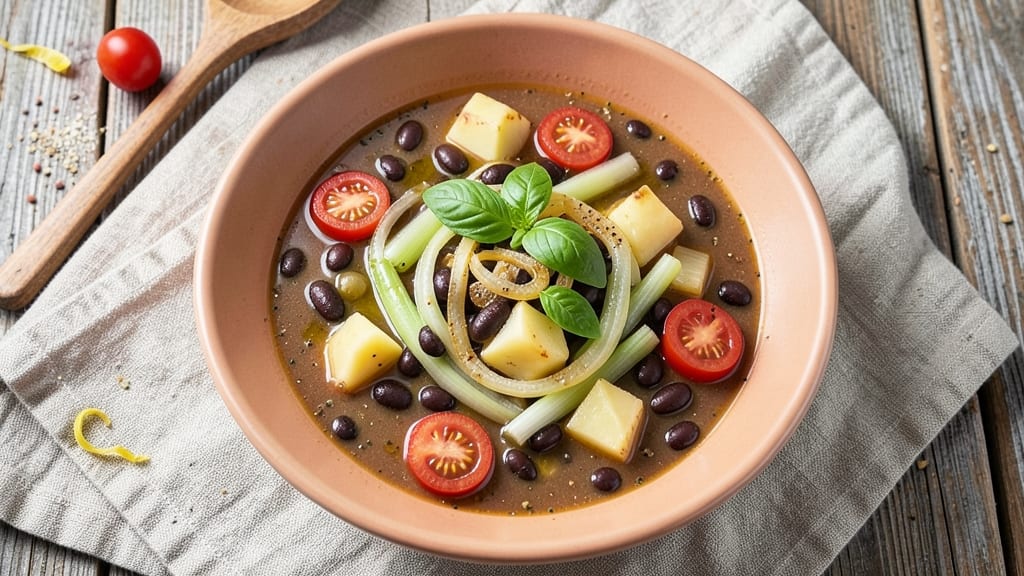
This black bean minestrone soup recipe delivers hearty, plant-based comfort in every steaming bowl. 💛 The secret lies in balancing tender black beans, fresh seasonal vegetables, and aromatic herbs—all simmered together until flavors meld into a rich, satisfying broth.
I developed this version to capture the soul-warming essence of traditional Italian minestrone while making it completely vegan, proving hearty meals can be both nourishing and delicious.
The beauty of this recipe is its versatility—it works as a standalone meal or pairs perfectly with crusty bread. The vegetables (carrots, celery, tomatoes) add natural sweetness and texture, while the black beans provide protein and earthy depth.
A touch of tomato paste and vegetable broth creates that classic Italian umami base, while fresh basil and parsley brighten the finish. The best part? It all comes together in one pot with minimal prep.
What you'll end up with is a bowl of cozy perfection—creamy from the beans, vibrant from the vegetables, and rich with herbaceous notes. The soup thickens beautifully as it simmers, creating a satisfying texture that's both comforting and substantial.
Each spoonful delivers a perfect balance of flavors, making this the ultimate weeknight dinner or meal-prep solution.
Serve it with a drizzle of olive oil, extra herbs, and warm crusty bread for the full experience. This recipe is designed to be foolproof—perfect for beginners and seasoned cooks alike. Let's get cooking!
Ingredients for black bean minestrone soup
These vibrant ingredients transform into a bowl of cozy, plant-powered perfection—no meat, no dairy, all flavor.
| Ingredient | Amount | Notes |
|---|---|---|
| Black Beans 🫘 | 1 ½ cups | Cooked or canned, drained and rinsed |
| Vegetable Broth 💧 | 6 cups | Low-sodium preferred |
| Carrots 🥕 | 3 medium | Diced into 1/2-inch pieces |
| Celery Stalks 🧅 | 3 whole | Diced into 1/2-inch pieces |
| Onion 🧅 | 1 medium | Diced into 1/4-inch pieces |
| Garlic Cloves 🧄 | 4 cloves | Minced finely |
| Tomato Paste 🍅 | 2 tbsp | Smooth, not chunky |
| Canned Diced Tomatoes 🍅 | 14 ½ oz | Fire-roasted preferred |
| Zucchini 🥒 | 1 medium | Diced into 1/2-inch pieces |
| Extra-Virgin Olive Oil 🫒 | 2 tbsp | For sautéing |
| Fresh Basil Leaves 🌿 | ¼ cup | Chopped finely |
| Fresh Parsley Leaves 🌿 | ¼ cup | Chopped finely |
| Sea Salt 🧂 | 1 ½ tsp | Diamond Crystal preferred |
| Black Peppercorns 🌶️ | ½ tsp | Freshly cracked |
| Lemon Juice 🍋 | 1 tbsp | Freshly squeezed |
The black beans are the soul of this soup—drained and rinsed to keep it from getting too thick. I always grab dry black beans from Whole Foods or Trader Joe's because they hold their shape better than canned. If you're using canned, go for low-sodium to control the saltiness. The vegetables? Carrots, celery, and onion form the holy trinity of flavor—sauté them in extra-virgin olive oil until soft but still vibrant. The garlic gets minced so finely you won’t even notice it’s there, just pure flavor. For the tomatoes, fire-roasted canned tomatoes add a smoky depth that’s absolutely essential—Muir Glen is my go-to brand, but any good-quality canned tomatoes work.
No fresh basil? Dried basil at one-third the amount will work in a pinch, but trust me—fresh is worth it. The parsley brightens everything up, so don’t skip it. Running low on zucchini? Yellow squash or bell peppers swap right in without changing the vibe. The tomato paste might seem like overkill, but it’s what gives that classic Italian umami punch—no substitutions here. If you’re prepping ahead, chop all your veggies and store them in the fridge for up to 3 days. The beans and broth can be prepped separately and combined later for a quick assembly when you’re ready to cook.
This soup tastes even better the next day—honestly, it’s a crime to eat it fresh. Store leftovers in an airtight container in the fridge for up to 5 days, or freeze for 3 months. I like to portion it into meal-prep containers with a drizzle of olive oil on top—keeps it fresh and ready for grab-and-go lunches. For extra richness, stir in a splash of vegan cream or a dollop of cashew cream before serving. And if you’ve got crusty bread lying around, you’ve got the perfect pairing.
Why You'll Love This Recipe
- No Chopping Chaos: I swear by the "mirepoix shortcut"—just toss in pre-diced carrots, celery, and onion from the store. The soup still tastes like I spent hours prepping, but honestly? I’m saving 15 minutes while the kids argue over dinner.
- Earthy Umami Bomb: That first spoonful of black beans simmered in vegetable broth? Rich, deep, and satisfying—like a hug in a bowl. The carrots caramelize just enough to add natural sweetness, and the celery? It’s the secret crisp-tender texture that keeps me coming back.
- Leftovers That Shine: Between us, this soup improves the next day. The flavors meld even deeper, and I’ve sent it to work potlucks with zero complaints. Freeze half now, and you’ve got a weeknight lifesaver when you’re too tired to think.
- Budget Meal for Days: A can of beans, a bag of veggies, and broth? That’s less than $5 for a meal that feeds four. I’ll be real: my grocery budget thanks me every time I make this. Plus, it’s the only soup I don’t feel guilty about over-serving.
Step-by-step instructions for black bean minestrone soup
This hearty soup comes together in one pot with layers of flavor and texture—perfect for cozy nights.
🍳 Step 1: Sauté the Aromatic Vegetable Base
Heat the 2 tbsp extra-virgin olive oil in a large pot over medium heat. Add the 1 medium onion and 3 whole celery stalks, both diced into ¼-inch pieces, and cook for 5 minutes until softened. Here's where the magic starts—I like to press down gently with a wooden spoon to release their natural oils.
Add the 3 medium carrots, diced into ½-inch pieces, and cook for another 5 minutes until they begin to caramelize slightly. This step builds the foundation for all that rich vegetable flavor. If the vegetables start sticking, add ¼ cup water and scrape up any browned bits from the bottom of the pot—those are packed with flavor.
🍳 Step 2: Add Garlic, Tomato Paste, and Beans
Stir in the 4 cloves minced garlic and cook for 30 seconds until fragrant—don't let it burn, or it'll turn bitter. Add the 2 tbsp tomato paste and cook for 1 minute, stirring constantly to prevent it from sticking to the bottom. This creates a deep, savory base that ties everything together.
Pour in the 1.5 cups black beans (drained and rinsed if canned) and stir to coat them evenly in the tomato paste mixture. The beans will start to absorb those flavors immediately, so don't skip this step. Add 2 cups of the vegetable broth and bring the mixture to a gentle boil. Reduce heat to medium-low and let it simmer for 10 minutes—this gives the beans time to soften slightly and infuse the broth with their earthy taste.
🥘 Step 3: Build the Hearty Vegetable Medley
Add the 14.5 oz canned diced tomatoes (fire-roasted if possible) and the remaining 4 cups vegetable broth. Stir in the 1 medium zucchini, diced into ½-inch pieces, and the 1.5 tsp sea salt. Bring the soup back to a gentle boil, then reduce heat to low and let it simmer for 15 minutes. This is where the soup transforms from a simple vegetable broth into a rich, flavorful stew.
Taste the soup at this point—it should be deeply savory but still bright. If it needs more depth, add another ½ tsp sea salt or a pinch of black peppercorns. The vegetables should be tender but still hold their shape—you want that satisfying bite in every spoonful. Stir occasionally to prevent sticking, and keep the heat low to avoid burning the bottom.
🥘 Step 4: Finish with Fresh Herbs and Lemon
Stir in the 0.25 cup chopped fresh basil leaves and 0.25 cup chopped fresh parsley leaves. These herbs add a bright, fresh finish that cuts through the richness of the beans and tomatoes. Add the 1 tbsp freshly squeezed lemon juice and the remaining 0.5 tsp black peppercorns, then taste again. The lemon juice should brighten the flavors and balance the soup's richness—this is the moment that matters.
Simmer for another 5 minutes to let the flavors meld together. If the soup is too thick, add ½ cup water to reach your desired consistency. The final result should be a hearty, comforting soup with layers of texture—tender beans, soft vegetables, and a broth that's rich but not heavy. The herbs should float on the surface, releasing their aroma with every spoonful.
⏰ Step 5: Rest and Serve with Confidence
Remove the pot from heat and let the soup rest for 10 minutes. This resting period allows the flavors to fully develop and the soup to thicken slightly as it cools. Taste again before serving—sometimes resting reveals flavors that need a final adjustment, like a pinch more salt or a squeeze of lemon.
Ladle the soup into bowls, garnishing each serving with an extra sprinkle of fresh parsley and a drizzle of extra-virgin olive oil. Serve with crusty bread to soak up every last drop of that flavorful broth. This soup tastes even better the next day as the flavors continue to meld, so make extra—it's the kind of comfort food that disappears quickly.
Pro Tips For Making Black Bean Minestrone Soup
- SOFTEN BEANS FIRST: Dump those black beans straight into cold broth and let them simmer for 10 minutes before adding anything else. I learned this the hard way—starting with raw beans in hot liquid makes them split open too fast, turning your soup into a mushy mess instead of keeping those tender, whole beans for texture.
- SWEEP THE POT: After sautéing your onions, celery, and carrots, scrape up every last browned bit stuck to the bottom with a wooden spoon. That’s where the flavor lives, and skipping it means missing out on the deep, toasty notes that make minestrone sing. (Yes, even if you’re impatient like me.)
- SALT THE BROTH NOW: Season the vegetable broth before adding the beans—aim for about 1 teaspoon per quart. Beans absorb liquid (and flavor) as they cook, so salting early guarantees a well-seasoned soup, not one that tastes bland until the very end.
- CHOP VEGETABLES UNIFORM: Cut carrots, celery, and onion into roughly ¼-inch pieces—no larger, no smaller. Big chunks stay crunchy and undercooked; tiny bits turn to mush. Consistency ensures everything cooks at the same pace, so you end up with a soup where every bite has texture, not a sad, watery vegetable purée.
Flavor customization for black bean minestrone soup
Spicy Kick
For a bold twist, add 1-2 teaspoons of hot sauce (like Cholula or Tabasco) or ½ teaspoon of cayenne pepper when simmering the vegetables. If you love heat, toss in 1 diced jalapeño with the onions and celery—remove it before serving if you prefer less spice.
A squeeze of lime juice afterward balances the heat beautifully. 🌶️
Creamy Texture
Want a velvety finish? Stir in ¼ cup of coconut milk or 2 tablespoons of vegan cream cheese during the final 5 minutes of simmering.
For extra richness, blend ½ cup of the soup with ¼ cup of water and return it to the pot—this creates a silky consistency without overpowering the flavors. Garnish with a sprinkle of nutritional yeast for a cheesy touch.
Herb Variations
Swap out the basil and parsley for other fresh herbs: cilantro adds a bright, citrusy note, while thyme or rosemary brings an earthy depth. For a Mediterranean twist, add 1 teaspoon of dried oregano when sautéing the vegetables.
Fresh dill works surprisingly well too—just 1 tablespoon at the end for a unique flavor profile.
Protein Boost
Need more protein? Stir in ½ cup of cooked quinoa or ½ cup of lentils with the beans. For a smoky flavor, add ½ cup of crumbled tempeh or ½ cup of diced seitan during the final 10 minutes of simmering.
If you love mushrooms, toss in 1 cup of sliced cremini mushrooms with the carrots—they absorb the flavors beautifully.
Seasonal Swaps
Adjust the vegetables based on what’s fresh: Use butternut squash in fall (diced and added with the zucchini) or asparagus in spring (cut into 1-inch pieces and added during the final 5 minutes).
In summer, swap zucchini for corn kernels or bell peppers for a lighter, brighter soup. The key is keeping the carrots, celery, and onion as the base—they’re the flavor anchors.
Umami Depth
For a deeper savory taste, add 1 teaspoon of miso paste or 1 tablespoon of soy sauce when sautéing the garlic. A splash of vegetable bouillon powder (½ teaspoon) or 1 teaspoon of nutritional yeast also boosts umami without overpowering.
For a smoky touch, stir in ½ teaspoon of smoked paprika with the tomato paste.
Nutrition facts
Frequently asked questions
Can I make this black bean minestrone soup without canned beans?
For homemade black beans, use 1 cup dry black beans soaked overnight or quick-soaked (boil for 2 minutes, then let sit for 1 hour). Drain and rinse before adding to the soup. Cooking time will be slightly longer—simmer the beans with broth for 30-40 minutes until tender, then proceed with the recipe. This adds extra fiber and a fresher taste!
How can I make this soup spicier?
Add ½ teaspoon of cayenne pepper or 1 diced jalapeño (remove before serving if you prefer less heat) when sautéing the vegetables. For a smoky kick, stir in ½ teaspoon of smoked paprika with the tomato paste. Finish with a squeeze of lime juice to balance the flavors—this brightens everything up beautifully.
Can I prepare this soup ahead of time?
This soup tastes even better the next day! Store leftovers in an airtight container in the fridge for up to 5 days or freeze for 3 months. Reheat gently on the stove with ½ cup water to restore thickness. For meal prep, portion into containers and keep the broth separate—just combine and warm when ready to eat.
What if my soup is too thick?
Thin it out by adding ½ cup water or vegetable broth at a time while reheating. Stir well and taste—you want a creamy but spoonable consistency. If you prefer a thicker texture, simmer uncovered for 5-10 minutes to reduce naturally. The beans and vegetables will continue to release starches as they cool.
Can I add pasta to this minestrone?
Yes! Add ½ cup small pasta shapes (like ditalini or orzo) during the final 10 minutes of simmering. Use low-sodium broth to prevent the pasta from becoming mushy. For a gluten-free option, swap in ½ cup cooked quinoa or ½ cup lentils—they add extra protein and heartiness.