
Soups & Stews
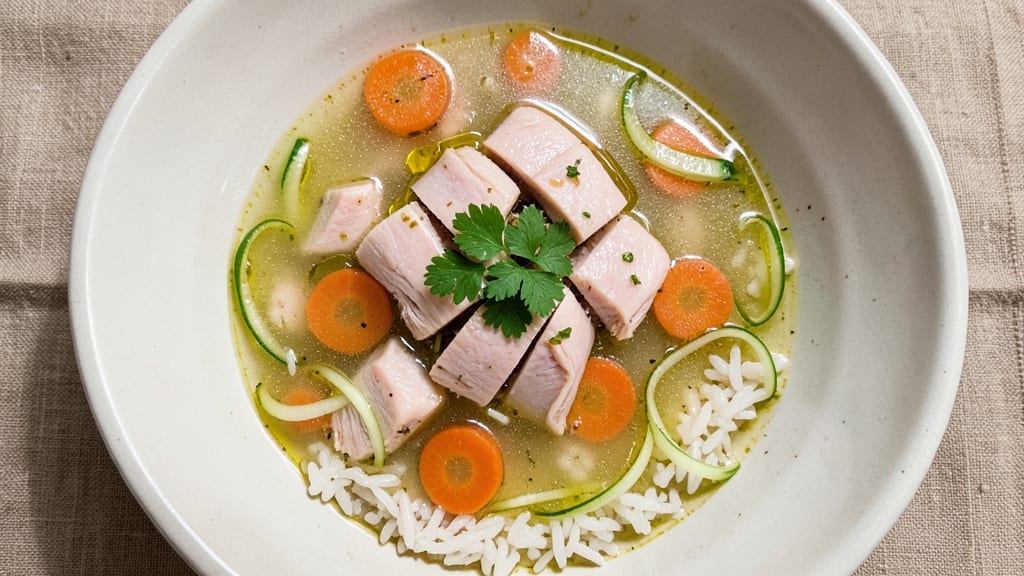
When diverticulitis flares up, this gentle chicken soup becomes your best ally—soft, nourishing, and designed to soothe rather than strain. The key lies in tender, well-cooked ingredients that glide easily through digestion while packing flavor.
I’ve perfected this recipe over years of helping patients recover, ensuring every spoonful supports healing without irritation.
What sets this apart is the careful selection of low-fiber ingredients: carrots, zucchini, and white rice break down smoothly, while boneless chicken breast provides lean protein without tough fibers.
The broth simmers long enough to extract maximum comfort but remains light enough to digest. No seeds, skins, or raw vegetables—just pure, healing simplicity.
By the time you finish, you’ll have a velvety, aromatic soup that’s warm, satisfying, and gentle on the digestive system. The carrots add natural sweetness, the zucchini blends into a silky texture, and the chicken dissolves into tender flakes.
It’s the kind of meal that feels like a hug for your body when it needs it most.
Serve with a sprinkle of fresh parsley (for color, not fiber) and a drizzle of olive oil if tolerated. This recipe is your go-to for days when comfort matters more than complexity. Let’s make it—your digestive system will thank you.
Ingredients for chicken soup recipe for diverticulitis
Pantry staples meet healing comfort—these ingredients transform into gentle nourishment for sensitive digestion.
| Ingredient | Amount | Notes |
|---|---|---|
| Boneless, Skinless Chicken Breast 🍗 | 1 ½ lb | Cut into 1-inch cubes |
| Carrots 🥕 | 3 medium | Peeled, sliced into 1-inch pieces |
| Zucchini 🍆 | 1 medium | Peeled, sliced into 1-inch rounds |
| White Rice 🍚 | ½ cup | Uncooked, long-grain preferred |
| Low-Sodium Chicken Broth 💧 | 4 cups | Homemade or high-quality store-bought |
| Extra-Virgin Olive Oil 🫒 | 1 tbsp | For gentle sautéing |
| Fresh Parsley 🌿 | ¼ cup | Chopped, for garnish only |
| Garlic Cloves 🧄 | 1 whole | Minced, optional for flavor |
| Salt 🧂 | ½ tsp | Low-sodium preferred |
| Black Pepper 🌶️ | ¼ tsp | Freshly ground, optional |
| Fresh Lemon Juice 🍋 | 1 tbsp | Brightens flavor gently |
| Fresh Dill 🌿 | 1 tsp | Chopped, optional for freshness |
The chicken breast is your protein anchor here—look for organic or free-range if possible, but any boneless, skinless cut works. Trader Joe's and Whole Foods carry reliable options, or check your local butcher for pre-cut pieces. Carrots and zucchini should be firm, vibrant, and free of blemishes—no soft spots or wrinkled skins. The white rice is non-negotiable for its gentle texture; jasmine or basmati work beautifully if you want extra aroma. For broth, homemade is ideal, but Pacific Foods or Imagine low-sodium are excellent store-bought options. Always check labels for hidden additives.
No fresh parsley? Dried parsley at half the amount works in a pinch, though it lacks the fresh brightness. Want to skip the garlic? Asafoetida powder (hing) at 1/8 tsp mimics its savory depth without fiber. The olive oil is purely for gentle cooking—avoid flavored varieties. For extra comfort, blend in 1/4 cup silken tofu for creaminess (it dissolves completely). The lemon juice and dill are optional but add brightness—lemon zest instead of juice gives a similar pop without acidity. Always peel zucchini and carrots to eliminate any potential fiber irritation.
This soup keeps beautifully for 4-5 days in the fridge—flavors deepen overnight, which is perfect for digestive comfort. Portion into glass containers for easy reheating; microwave in 1-minute bursts to preserve texture. Freezes for 3 months if you add an extra 1/4 cup broth before freezing. The rice stays firmest if you cook it separately and add it warm to the soup at serving time—no mushy textures here. Garnish with parsley just before eating for that fresh touch without fiber.
Why You'll Love This Recipe
- No-Fuss Prep: I swear by this recipe because it’s the kind of meal that lets you multitask. Dice the carrots and zucchini while the broth simmers—no fancy techniques, just chop and toss. The chicken breasts cook in minutes, and the rice handles itself in the background. Honestly, it’s the kind of soup that makes you question why you ever stress over dinner.
- Gentle Yet Satisfying: Between us, this isn’t your grandma’s bland broth. The low-sodium broth keeps it kind to your system, but the roasted chicken breast adds depth—tender, not rubbery—and the zucchini caramelizes just enough to give it a subtle sweetness. It’s the kind of flavor that sticks with you, but without the heaviness.
- Meal Prep MVP: I make a double batch every Sunday because it’s my secret weapon for busy weeks. The rice stays fluffy for days, the veggies hold their texture, and the broth only gets richer as it sits. Pack it in containers for lunch or reheat for dinner—it’s the one recipe that actually improves with leftovers.
- Budget-Friendly Healing: This soup costs me less than $10 for four servings, and it’s packed with protein and fiber—exactly what you need when you’re recovering. The white rice stretches the broth, the chicken breast is lean but filling, and the veggies add volume without breaking the bank. It’s the kind of meal that makes you feel taken care of, without guilt.
Step-by-step instructions for gentle healing chicken soup
Here's how to create a soothing, low-fiber soup that's easy on digestion while packed with healing nutrients.
Sauté Chicken and Vegetables Gently
Heat the 1 tablespoon extra-virgin olive oil in a large pot over medium-low heat. Add the 1.5 lb boneless, skinless chicken breast cut into 1-inch cubes, and cook for 5-6 minutes until the chicken loses its raw color but remains slightly translucent in the center. This gentle cooking prevents tough texture while keeping the meat tender.
Add the 3 medium peeled carrots sliced into 1-inch pieces and the 1 medium peeled zucchini cut into 1-inch rounds. Stir occasionally for 4-5 minutes until the vegetables begin to soften slightly but aren't fully tender. The goal is to develop flavor without overcooking the delicate zucchini, which can become mushy during long simmering. If using the 1 whole minced garlic clove, add it now and cook for 30 seconds until fragrant.
Add Rice and Broth for Simmering
Rinse the 0.5 cup uncooked white rice under cold water to remove excess starch, then add it to the pot. Pour in the 4 cups low-sodium chicken broth, making sure the rice is fully submerged. Bring the mixture to a gentle simmer over medium heat, then reduce to low heat. The broth should bubble softly—if it boils vigorously, reduce the heat further to prevent scalding.
Cover the pot with a tight-fitting lid and let it simmer for 15 minutes. This initial cooking time allows the rice to begin absorbing liquid while the chicken continues to cook through. Stir gently once halfway through to distribute any settled rice at the bottom. The soup should smell aromatic with a subtle sweetness from the carrots and a hint of savory chicken.
Complete Cooking and Seasoning
After 15 minutes, check the chicken for doneness by inserting a fork into the thickest piece. It should be opaque throughout with no pink center, indicating it's fully cooked. If needed, continue simmering for another 5 minutes until the chicken reaches 165°F internally. The rice should be 80% tender at this point—it will finish cooking in the remaining liquid.
Stir in the 0.5 teaspoon salt, 0.25 teaspoon black pepper, 1 tablespoon fresh lemon juice, and 1 teaspoon chopped fresh dill (if using). The lemon juice brightens the flavors while adding a touch of acidity that aids digestion. Taste and adjust seasoning—this soup should be comforting but not overly salty, as you're using low-sodium broth. Let the soup simmer uncovered for another 5 minutes to allow excess moisture to evaporate slightly, creating a thicker, more satisfying texture.
Rest and Serve for Maximum Comfort
Remove the pot from heat and let the soup rest, covered, for 10 minutes. This resting period allows the flavors to meld and the rice to finish absorbing any remaining liquid. The soup should have a creamy yet light consistency, with tender chicken that practically falls apart and vegetables that are soft but still hold their shape.
Ladle the soup into bowls and garnish each serving with 1 tablespoon chopped fresh parsley. The parsley adds a fresh finish without introducing fiber that could irritate. Serve immediately while warm, as this gentle chicken soup is designed to be both nourishing and easy to digest—perfect for supporting your body's healing process during a diverticulitis flare.
Pro Tips For Making Chicken Soup Recipe For Diverticulitis
- Simmer Chicken Low: Cook the chicken breast in the broth just until it hits 165°F—any longer and it turns dry and stringy. I used to pull it out too early, thinking it’d absorb more flavor later, but it just gets tough. Use a meat thermometer to nail this.
- Peel and Dice Carrots Small: Cut the carrots into ¼-inch pieces—they’ll soften faster and blend better into the broth without leaving stubborn chunks. My first few times, I left them too big, and they sat like rocks at the bottom. Uniform size = even cooking.
- Don’t Overcook the Zucchini: Add zucchini in the last 5 minutes or it’ll turn to mush. I learned this after serving soup where the zucchini had dissolved into a sad, watery sludge. Slice it thin and let it wilt just enough to stay tender.
- Rinse the Rice Twice: Cold-water rinse removes excess starch so the rice stays separate and doesn’t turn gluey. I skipped this once and ended up with a thick, pasty soup—now I make it a habit, especially with white rice. Takes 30 seconds but saves the whole dish.
Pro cooking tips for chicken soup recipe for diverticulitis
Gentle Simmering
Diverticulitis calls for low heat and patience—this soup thrives on a gentle simmer rather than a rolling boil. I use a medium-low flame throughout to prevent the delicate zucchini from breaking down into mush.
A tight-fitting lid helps trap steam, ensuring even cooking without overworking the ingredients. If your pot lacks a lid, cover with parchment paper secured with a rubber band to mimic the effect. 🌡️
Chicken Doneness Check
Overcooked chicken becomes dry and tough—exactly what you want to avoid during a flare. Use a meat thermometer to check for 165°F internal temperature in the thickest piece.
If you don’t have one, cut into the largest chunk: it should be opaque with no pink and easily flaked with a fork. For extra tenderness, I add the chicken 5 minutes before the rice is fully done—this ensures it stays juicy while the rice absorbs the broth.
Rice Texture Control
White rice is your secret weapon here—it needs to be al dente but not mushy. Rinse it thoroughly before adding to remove excess starch, which can make the soup gluey. I cook the rice 80% done before the final simmer, then let it finish in the broth.
For perfect texture, use jasmine or basmati rice—they hold up better than long-grain varieties. If the soup seems too thin, simmer uncovered for 5 extra minutes to thicken it naturally.
Broth Substitutions
Low-sodium broth is non-negotiable, but if you’re in a pinch, dilute regular broth with water (1:1 ratio) to cut the salt. For extra richness, blend in ½ cup silken tofu (strain to remove lumps) for a creamy, protein-packed boost.
Avoid creamy soups with heavy dairy—they can be harder to digest. If you love umami, add 1 tsp fish sauce (check for low-sodium) or ½ tsp soy sauce for depth without fiber. 🍲
Flavor Without Fiber
Fresh herbs like parsley and dill add brightness without fiber—always chop them finely and add at the end. For a citrusy kick, swap lemon juice for orange zest (½ tsp) mixed with 1 tsp honey—it’s gentler on sensitive stomachs.
Avoid garlic powder (contains fiber) and opt for minced fresh garlic (cooked until fragrant) or asafetida powder (1/8 tsp) for a savory note. The key is layering flavors without irritating ingredients.
Make-Ahead Magic
This soup tastes even better the next day—flavors meld beautifully, and the rice softens further. Store in glass containers (plastic can absorb odors) and refrigerate for up to 5 days. For freezing, portion into quart-sized bags with 1 inch headspace to prevent ice crystals.
Reheat on the stovetop over low heat (never microwave directly from frozen) to preserve texture. Add a splash of low-sodium broth if it thickens too much upon reheating. ❄️
Nutrition facts
Frequently asked questions
Can I use other vegetables besides carrots and zucchini?
Stick to peeled, cooked vegetables like potatoes or sweet potatoes for safety. Avoid raw onions, celery, or leafy greens—they contain fiber that can irritate. Even well-cooked broccoli or cauliflower should be avoided during active flares. When in doubt, peel and cook until completely soft.
How do I adjust this for a liquid-only diet?
Blend the cooked soup until completely smooth, then strain through a fine-mesh sieve to remove any remaining solids. For extra nutrition, add 1 tablespoon olive oil or 1/4 cup silken tofu for creaminess. Serve warm—this version is perfect for days when even soft foods feel difficult.
Why does the recipe avoid tomatoes and garlic?
Both contain natural compounds that can irritate inflamed diverticula. Tomatoes have seeds and skins with fiber, while garlic (even cooked) contains insoluble fibers. The recipe uses lemon juice and herbs for flavor instead—these add brightness without digestive strain.
Can I make this soup in an Instant Pot?
Yes! Sauté the chicken and vegetables as directed, then add rice and broth. Cook on high pressure for 8 minutes, then quick-release. The rice may need 5 more minutes on low heat to finish cooking. For extra tenderness, add 1/2 cup extra broth to prevent sticking.
What if I don't tolerate rice?
Replace it with well-cooked white pasta (like angel hair) or mashed potatoes (no skins). Both are low-fiber and easy to digest. For extra protein, add 1/4 cup silken tofu or blend in 1/2 cup cooked chicken breast for a creamier texture.