
Soups & Stews
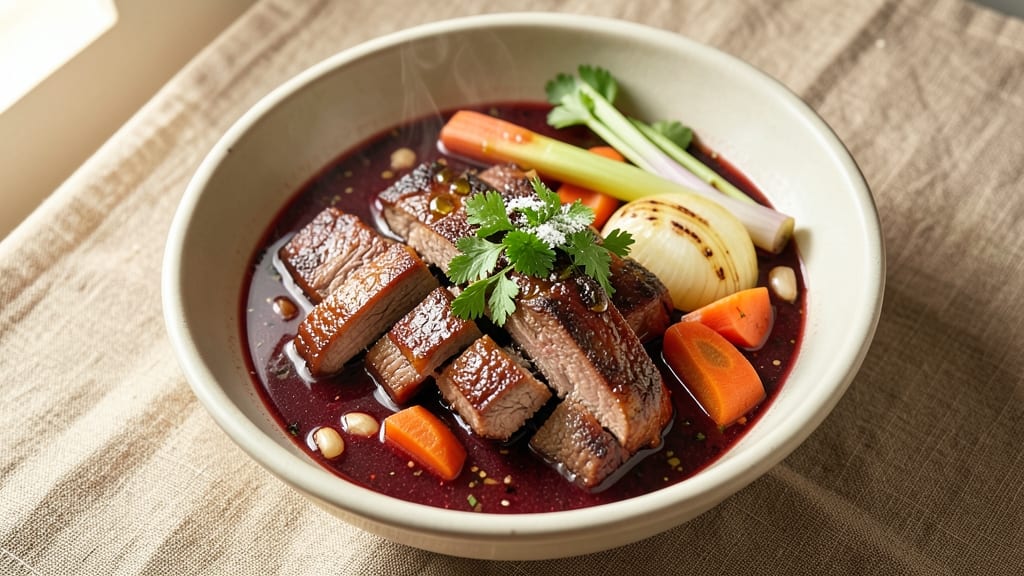
This short rib soup recipe delivers the kind of deep, meaty richness that makes weeknights feel like a restaurant meal—without the hours in the kitchen.
The secret lies in slow-braising beef short ribs until they practically fall apart, then simmering them in a red wine and herb-infused broth until every spoonful is velvety perfection.
I perfected this version after years of experimenting with braising times and broth reductions, and it’s now my go-to for cozy dinners that impress even skeptical guests.
The process starts with a deep sear to develop that signature caramelized crust on the ribs, then a long, slow braise in liquid until the meat is fork-tender.
What sets this apart is the dual-broth technique: a rich red wine base infused with aromatics, then finished with a splash of cream for a luxurious finish. Every bite delivers melt-in-your-mouth beef and a broth so flavorful it deserves a second bowl.
By the time you’re done, you’ll have a restaurant-quality soup that’s hearty enough for a cold evening but light enough for a weeknight. The ribs shred easily, the broth coats your spoon, and the aroma alone will have everyone gathering around the table.
This isn’t just soup—it’s a one-pot meal that transforms simple ingredients into something extraordinary.
Serve with crusty bread for soaking up every drop, or pair it with a simple green salad to balance the richness. The leftovers? Even better the next day as flavors meld further. Let’s get cooking—this soup is worth every minute of wait time.
Ingredients for short rib soup
Sixteen ingredients transform into a restaurant-worthy short rib soup with melt-in-your-mouth beef and velvety broth.
| Ingredient | Amount | Notes |
|---|---|---|
| Beef Short Ribs 🥩 | 3 lb | Bone-in, cut into 2-inch pieces |
| Yellow Onion 🧅 | 1 whole | Peeled and halved lengthwise |
| Carrots 🥕 | 4 medium | Peeled and cut into chunks |
| Celery Stalks 🥬 | 4 whole | Trimmed and cut into 1-inch pieces |
| Garlic Cloves 🧄 | 6 cloves | Peeled and smashed |
| Dry Red Wine 🍷 | 2 cups | Bold Cabernet Sauvignon preferred |
| Beef Broth 💧 | 4 cups | Homemade or high-quality store-bought |
| Fresh Thyme 🌿 | 2 sprigs | Or 2 tsp dried thyme |
| Fresh Rosemary 🌿 | 1 sprig | Or 1 tsp dried rosemary |
| Tomato Paste 🍅 | 2 tbsp | Squeeze tube or canned |
| Heavy Cream 🥛 | 1 cup | Full-fat for richness |
| Salt 🧂 | 1 ½ tbsp | Diamond Crystal kosher preferred |
| Black Peppercorns 🌶️ | 1 tsp | Freshly cracked |
| Olive Oil 🫒 | 3 tbsp | For searing ribs |
| Fresh Parsley 🌿 | ¼ cup | Chopped for garnish |
The beef short ribs are non-negotiable—bone-in, cut into 2-inch pieces—they deliver that signature richness. Grab the chuck or plate cut from Whole Foods or your local butcher; supermarket pre-cut ribs work too. Look for good marbling, which means more flavor. If you're buying a whole pack, trim any excess fat to avoid greasy broth. The carrots and celery can be baby versions for convenience, but whole stalks add more texture and flavor when roasted briefly before adding to the pot. Don't skip the fresh thyme and rosemary—they're what elevate this from basic beef soup to something extraordinary.
No red wine? Substitute with beef broth and a splash of balsamic vinegar—it mimics the acidity. Fresh herbs wilt fast, so dried works at one-third the amount, but nothing beats the aroma of fresh. The tomato paste is your flavor booster—Trader Joe's squeeze tubes are perfect for this since you only need a tablespoon. Want more depth? Add a bay leaf or splash of soy sauce. The heavy cream at the end is what makes this feel luxurious—half-and-half works too if you're watching calories, but trust me on the full-fat version for that restaurant-quality finish.
This soup tastes even better the next day as flavors meld. Store in an airtight container in the fridge for up to 5 days, or freeze for 3 months. I always make a double batch—one for dinner, one for lunches. The ribs shred easily after braising, so portion them out for quick meals. Garnish with fresh parsley right before serving—it brightens up the dish and makes it look restaurant-worthy. For extra richness, stir in a spoonful of the creamier top layer when reheating.
Why You'll Love This Recipe
- Here’s what sold me: this soup improves the next day. The flavors meld into something even deeper, and it reheats like a dream. Pack it for lunch or freeze it—either way, you’re winning.
- One-Pot Wonder: I swear by this—just toss the ribs, onions, carrots, and celery into a pot with broth, and let it simmer. No chopping like a fine-diner, no fancy techniques. The ribs practically melt off the bone while you’re paying bills or watching TV.
- Deep Umami Magic: That first sip? Chef’s kiss. The short ribs break down into rich, velvety chunks, while the garlic and onions caramelize into a flavor bomb. It’s the kind of soup where every spoonful tastes like you’ve been cooking for hours—even though you didn’t.
- Leftovers That Don’t Suck: Here’s what sold me: this soup improves the next day. The flavors meld into something even deeper, and it reheats like a dream. Pack it for lunch or freeze it—either way, you’re winning.
Step-by-step instructions for short rib soup
A rich, velvety soup with fall-off-the-bone short ribs—this method builds flavor layer by layer.
Sear the Short Ribs for Deep Flavor
Heat a large Dutch oven over medium-high heat and add the 3 tablespoons olive oil. Once shimmering, add the 3 lb beef short ribs in a single layer, working in batches if needed. Let them sear undisturbed for 4-5 minutes until deeply browned on all sides—this caramelization is the foundation of your soup's rich flavor. I press down gently on the ribs during the first minute to prevent curling, which ensures even contact with the pan.
As you sear, resist the urge to overcrowd the pot. If the ribs release easily when prodded with a wooden spoon, they're ready to move. Transfer the seared ribs to a plate and set aside. You'll notice the pan has developed a beautiful mahogany crust—this is what we'll deglaze next to create the soup's depth of flavor.
Build the Aromatic Base
In the same Dutch oven, add the halved yellow onion, carrots, and celery stalks. Cook for 5-6 minutes until the vegetables begin to soften and the onions turn translucent. Add the 6 smashed garlic cloves, 2 sprigs fresh thyme, and 1 sprig fresh rosemary, stirring for 30 seconds until fragrant—this is where the soup's aromatic complexity begins.
Sprinkle the 1.5 tablespoons salt and 1 teaspoon black peppercorns over the vegetables, stirring to coat. The salt will enhance the natural sweetness of the carrots and onions, while the pepper adds a subtle warmth that balances the richness. Pour in the 2 cups dry red wine and scrape up all the browned bits from the bottom of the pot with a wooden spoon—this deglazing step captures all that concentrated flavor we worked so hard to create.
Simmer Until Tender
Return the seared short ribs to the pot and add the 4 cups beef broth. Bring to a gentle simmer, then reduce the heat to maintain a low bubble just breaking the surface. Cover and cook for 2.5-3 hours, checking occasionally to ensure there's enough liquid to keep the ribs submerged. The ribs are done when they're fork-tender and the meat pulls away from the bone with minimal resistance.
Here's the thing—patience is key. The ribs should be so tender that a wooden spoon can easily pierce through them. If the liquid reduces too much before the ribs are tender, add a splash of water or broth to maintain the level. The aroma at this stage should be intoxicating—earthy, winey, and deeply savory. This is where the magic happens, so don't rush it.
Finish with Cream and Tomato
Once the ribs are tender, use tongs to transfer them to a plate. In the same pot, stir in the 2 tablespoons tomato paste and cook for 1 minute to deepen the soup's color and add a touch of umami. Pour in the 1 cup heavy cream and simmer gently for 3-4 minutes, stirring occasionally, until the soup is creamy and velvety. The cream should be fully incorporated but not curdled—if it looks too thick, add a splash of the reserved broth to loosen it.
Return the short ribs to the pot and let everything heat through together for 2-3 minutes. The ribs should be coated in the rich, creamy broth, and the flavors should be perfectly balanced—deep, meaty, and slightly tangy from the wine and tomato. Taste and adjust the seasoning if needed, adding more salt or pepper as necessary. The soup should be rich but not overpowering, with a harmonious blend of all the ingredients.
Serve with Fresh Parsley
Ladle the soup into bowls, garnishing each serving with 1 tablespoon chopped fresh parsley. The parsley adds a bright, fresh contrast to the deep, rich flavors of the soup, cutting through the creaminess with a touch of brightness. Serve immediately, as the flavors are at their peak when the soup is hot. Each spoonful should deliver a perfect balance of tender short ribs, creamy broth, and aromatic vegetables.
For an extra touch, I like to serve this soup with crusty bread to soak up every last drop of that luxurious broth. The bread adds a satisfying texture contrast and helps balance the richness of the dish. Leftovers keep well in the refrigerator for up to 3 days, and the flavors actually deepen as the soup sits—so if you have any, reheat gently on the stove and enjoy again.
Pro Tips For Making Short Rib Soup
- Sear the Ribs Hard: I learned this the hard way—skipping the deep sear means flavor stuck in the pan instead of the soup. Use a heavy pot, high heat, and 2 tablespoons of oil per batch. Let those ribs sit undisturbed for 3-4 minutes per side until they’re dark brown, almost black in spots. That crust? Non-negotiable for depth.
- Cut Ribs Uniformly: Uneven pieces mean some cook too fast, others too long. Ask the butcher to separate the bones and cut the meat into 1-inch cubes—consistency is everything. If you’re doing it yourself, trim excess fat but leave a thin layer; it renders into golden flavor.
- Don’t Rush the Soup Base: After searing, I used to toss in everything and walk away. Big mistake. Deglaze that pot with 1 cup of liquid (broth, wine, or beer) and let it simmer uncovered for 5 minutes to cook off the alcohol and concentrate the flavors. Then add the rest—patience here makes the difference.
- Save the Starch Water: When you peel carrots and celery, don’t dump that starchy water—it’s liquid gold for thickening. Strain it, add it back to the pot at the end, and let it simmer for 10 minutes. It’ll give your soup a natural richness without needing extra flour or cornstarch. (Yes, even if you’re impatient like me.)
Regional styles of this short rib soup
French Classic
In France, short rib soup known as bouillon de paleron is traditionally made with bone-in beef short ribs and a red wine reduction base.
The French approach focuses on slow braising for 3-4 hours in a heavy Dutch oven with white wine (like Sauvignon Blanc) instead of red, creating a lighter but still deeply flavorful broth.
I’ve adapted this by using Cabernet Sauvignon for a bolder twist while keeping the technique—sear the ribs first, then simmer with carrots, celery, and leeks for a classic mirepoix.
The French version often finishes with a bouquet garni (thyme, bay leaf, parsley) tied in cheesecloth for easy removal. 🍷
Italian Rustic
Italy transforms this into zuppa di costine, where the ribs are marinated overnight in white wine, garlic, and rosemary before slow cooking. The Italians use tomato paste and San Marzano tomatoes to balance the richness, creating a slightly acidic, tomato-forward broth.
I love their two-stage cooking: first braise the ribs in beef broth, then finish with heavy cream and grated Parmigiano-Reggiano for a creamy, umami-packed result. Serve with crusty bread or polenta to soak up every drop.
The key difference? No red wine—just white and a splash of balsamic vinegar for depth. 🇮🇹
American Comfort
The American take leans into bold, hearty flavors with beer or bourbon added to the broth for a deeper, smokier profile. I’ve seen versions with chipotle powder or smoked paprika for heat, and some even include mushrooms (cremini or wild) for earthiness.
The ribs are often shredded and served over mashed potatoes or cornbread, turning it into a one-pot meal. A Southern twist? Add collard greens or kale at the end for a slightly bitter contrast that cuts through the creaminess.
This version is all about comfort food—rich, filling, and perfect for cold nights. 🍖
Spanish Adaptation
In Spain, this soup becomes sopa de falda, where the ribs are slow-cooked with chorizo and smoked paprika for a spicy, smoky kick.
The Spanish use garlic and sherry (instead of wine) to build the broth, and the ribs are shredded and served in a deep bowl with crispy chorizo bits on top.
I’ve simplified this by adding 1 slice of chorizo (like La Huerta) during the last 30 minutes of cooking—it infuses the broth with smoky, garlicky depth without overpowering. Garnish with fresh parsley and a drizzle of olive oil for authenticity. 🌶️
Modern Twist
For a contemporary take, I’ve experimented with miso paste (white or red) in the broth for umami richness, or a splash of soy sauce for depth.
Swap the red wine for dry sherry or Port to add complexity, and finish with crème fraîche instead of heavy cream for a lighter, tangier texture. Some chefs even add roasted garlic or caramelized onions for extra sweetness.
The modern approach keeps the slow-cooked ribs but plays with global flavors—think Japanese miso + Italian tomatoes or Mexican chorizo + Spanish sherry. 💫
Nutrition facts
Frequently asked questions
How long should I cook the short ribs for perfect tenderness?
The ribs need 2.5-3 hours of simmering to become fork-tender. Use a meat thermometer to check—when the internal temperature reaches 203°F, they'll be perfectly shreddable. If your ribs aren't tender enough, add 30 more minutes of cooking time. Patience here is key for that melt-in-your-mouth texture!
Can I use bone-in or boneless short ribs for this recipe?
This recipe is designed for bone-in short ribs, as they add incredible depth of flavor to the broth. If you must use boneless, reduce the cooking time by 20-30 minutes since they'll cook faster. The bones release collagen that thickens the broth, so boneless versions won't have the same rich texture.
What's the best way to store and reheat leftovers?
Store in an airtight container in the fridge for up to 5 days or freeze for 3 months. To reheat, warm gently on the stove over low heat—never microwave, as it can make the broth watery. Stir in a splash of broth or water if it thickens too much. The flavors actually improve overnight!
Why did my soup turn out too thick or too thin?
Thin soup? Add 1-2 tablespoons tomato paste or 1/4 cup heavy cream to thicken. Too thick? Thin with 1/4 cup beef broth or water. The ideal consistency should coat the back of a spoon but still be ladle-friendly. If using cream, heat it gently to prevent curdling—always stir constantly!
Can I make this soup in a slow cooker instead of a Dutch oven?
Sear the ribs first (still essential for flavor), then transfer everything to a 6-quart slow cooker. Cook on low for 8 hours or high for 5-6 hours. The ribs will be extra tender, and the broth will develop even more depth. Just add the cream and tomato paste during the last 30 minutes of cooking to prevent curdling.