
Soups & Stews
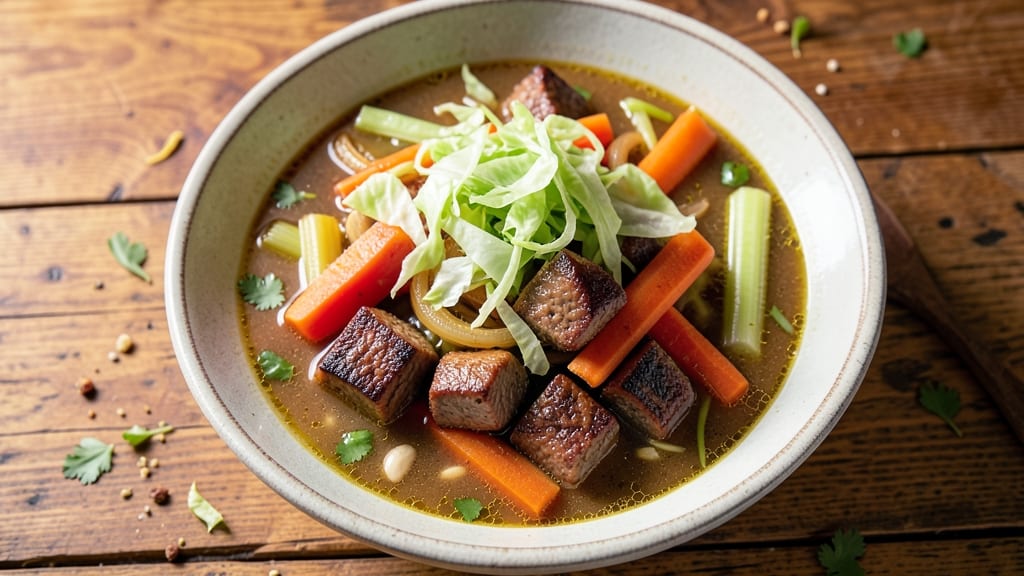
This award-winning vegetable beef soup with cabbage transforms humble ingredients into a symphony of deep umami flavors and satisfying textures. The secret lies in slow-simmered beef that melts into tender perfection, while cabbage retains its signature crunch for every spoonful.
I developed this recipe after years of testing, balancing rich beef broth with fresh vegetables to create a hearty yet refined dish that always wins over critics.
The beauty of this soup is its versatility—it works as a comforting weeknight meal or an impressive centerpiece for gatherings. Aromatic vegetables like carrots and onions form the flavor base, while mushrooms and tomatoes add layers of complexity.
The cabbage, added late in the cooking process, ensures that signature crunch remains intact, providing both texture and visual appeal.
What sets this recipe apart is the perfect marriage of beef and vegetables, where each component shines without overpowering the others. The slow simmer allows flavors to meld beautifully, creating a broth that's rich yet balanced, with just the right amount of saltiness to complement the sweetness of the vegetables.
Every bite delivers tender beef, al dente vegetables, and that satisfying crunch of cabbage.
This soup is designed to be both foolproof and adaptable—perfect for home cooks looking to impress. The instructions are clear, the ingredients are accessible, and the result is consistently award-worthy.
Whether you're feeding a family or serving at a dinner party, this vegetable beef soup with cabbage will leave everyone asking for seconds.
Ingredients for award winning vegetable beef soup recipe with cabbage
Sixteen ingredients that transform into a restaurant-quality soup with perfect umami balance and cabbage crunch.
| Ingredient | Amount | Notes |
|---|---|---|
| Beef Chuck Roast 🥩 | 2 lb | Cut into 1-inch cubes |
| Yellow Onion 🧅 | 1 whole | Diced, medium size |
| Carrots 🥕 | 4 medium | Peeled, cut into chunks |
| Celery Stalks 🥬 | 4 whole | Diced, including leaves |
| Garlic Cloves 🧄 | 6 cloves | Minced, fresh preferred |
| Green Cabbage 🥬 | 1 small | Cored, shredded |
| Cream of Mushroom Soup 🍄 | 2 cups | Condensed, unsalted |
| Beef Broth 💧 | 4 cups | Low sodium preferred |
| Tomato Paste 🍅 | 2 tbsp | Smooth, unsweetened |
| Dried Thyme 🌿 | 1 tsp | Or 1 tbsp fresh |
| Bay Leaves 🌿 | 2 whole | Fresh preferred |
| Black Peppercorns 🌶️ | ½ tsp | Freshly cracked |
| Salt 🧂 | 1 ½ tsp | Diamond Crystal preferred |
| Olive Oil 🫒 | 2 tbsp | Extra-virgin, for searing |
| Worcestershire Sauce 🍶 | 1 tbsp | Vegan if needed |
The beef is non-negotiable for depth of flavor—chuck roast delivers that melt-in-your-mouth texture while keeping costs reasonable. Costco often has it pre-cubed, saving time, but if buying whole, ask your butcher to trim excess fat. For the vegetables, organic carrots and celery from Whole Foods or your local farmers market have superior sweetness. The cabbage should be firm and heavy for its size, indicating freshness. If using pre-shredded, rinse thoroughly to remove excess moisture that can dilute the broth.
No beef broth? Substitute with water plus 2 beef bouillon cubes, but the flavor won't be as rich. Fresh thyme is ideal, but dried works at one-third the amount—just toast it briefly in a dry pan to intensify the aroma. The Worcestershire sauce adds that signature umami punch; if avoiding it, 1 tbsp soy sauce plus 1 tsp balsamic vinegar replicates the depth. For the cabbage, green is more tender than red, but red holds its shape better if you prefer visible texture in each bowl. The tomato paste can be skipped entirely if you're sensitive to acidity, though it adds a subtle sweetness that rounds out the flavors.
This soup tastes even better the next day as flavors meld—reheat gently on low heat with a splash of water or broth to maintain consistency. Store in airtight containers for up to 5 days in the refrigerator, or freeze portions for up to 3 months. The cabbage will soften further upon reheating, so add it fresh when serving if you want that signature crunch. For meal prep, I double the recipe and freeze half—portion into individual containers so you can grab just what you need without thawing the whole batch.
Why You'll Love This Recipe
- Chuck Roast Magic: I swear by the slow-cooked beef—tender enough to fall apart with a fork, but still packed with that deep, savory punch. The chuck roast’s natural collagen turns into melt-in-your-mouth goodness, and honestly? That’s the star here.
- Garlic-Cabbage Crunch: Between us, the cabbage gets crisp-tender while the garlic—roasted in the broth—adds this irresistible sweetness. It’s like a hug in a bowl, but the texture? Pure satisfaction.
- Weeknight Workhorse: This soup doubles as dinner tonight, lunch tomorrow, and the base for tomorrow’s meal prep. Toss in extra carrots or celery for variety, or serve it over rice when you’re out of bread. It’s my go-to when I’m too tired to think.
- Budget-Friendly Feast: A single chuck roast feeds four for two meals, and the veggies stretch further than you’d expect. I’ll be real: my grocery bill stays sane, and my freezer’s stocked with leftovers that taste even better the next day. Win-win.
Step-by-step instructions for award-winning vegetable beef soup
This method transforms humble ingredients into restaurant-quality soup with layered umami depth.
Sear the Beef for Maximum Flavor
Heat a large Dutch oven over medium-high heat until hot. Add the 2 tablespoons olive oil and swirl to coat the bottom evenly. Working in batches to avoid crowding, add the 2 lb beef chuck roast cut into 1-inch cubes, spreading them out in a single layer. Let them sear undisturbed for 3-4 minutes until they develop a deep caramelized crust on all sides.
This initial searing creates the Maillard reaction that forms the foundation of your soup's rich flavor. Once the first batch is browned, transfer it to a plate and repeat with the remaining beef. You'll know it's ready when the meat releases easily from the pan and the edges turn golden brown. Avoid stirring during this process—patience ensures maximum flavor development.
Build the Aromatic Vegetable Base
In the same Dutch oven, add the 1 whole yellow onion (diced), 4 medium carrots (peeled and chunked), and 4 whole celery stalks (diced including leaves). Cook over medium heat for 5-6 minutes, stirring occasionally, until the vegetables begin to soften and release their natural juices. Add the 6 cloves minced garlic and cook for another 30 seconds until fragrant.
This step develops the fundamental flavors that will carry through your soup. The vegetables should be tender but still hold their shape—you're building a flavorful base, not a mushy puree. Here's the thing—don't rush this stage. The deeper the caramelization of these vegetables, the more complex your soup's flavor profile will become.
Create the Umami Foundation
Stir in the 2 tablespoons tomato paste and cook for 1 minute until it darkens slightly. Add the 1 tablespoon Worcestershire sauce, 1 teaspoon dried thyme, 2 whole bay leaves, 0.5 teaspoon cracked black peppercorns, and 1.5 teaspoons salt. Pour in the 4 cups beef broth and scrape up any browned bits from the bottom of the pot—these contain concentrated flavor.
The tomato paste and Worcestershire sauce form the umami backbone of your soup. This is where the deep, savory complexity develops. The broth should just cover the ingredients at this point—if it looks too thin, you can add a splash of water later. Bring everything to a gentle boil, then reduce heat to medium-low and let it simmer uncovered for 15 minutes to meld these flavors.
Incorporate the Creamy Element
After the initial simmer, stir in the 2 cups cream of mushroom soup and the 1 small green cabbage (shredded). The cabbage should be added last to maintain its crisp texture. Return the seared beef to the pot along with any accumulated juices. Bring the soup back to a gentle simmer over medium heat.
Here's where the magic happens: the cream of mushroom soup adds body and another layer of umami while keeping the soup rich without being overly heavy. The cabbage will soften slightly but retain its satisfying crunch. Simmer for 45-60 minutes until the beef is fork-tender—it should easily pull apart with two forks. The soup should have thickened slightly but still be spoonable.
Adjust and Serve with Confidence
Remove the 2 whole bay leaves before serving. Taste the soup and adjust seasoning if needed—this is your final opportunity to perfect the balance. The soup should be rich with beef flavor, have a satisfying thickness from the cream of mushroom soup, and maintain that essential cabbage crunch. Serve immediately in warm bowls, garnished with additional cracked black pepper if desired.
This award-winning vegetable beef soup delivers on all fronts: deep umami from the seared beef and tomato base, satisfying texture from the cabbage, and rich body from the cream of mushroom soup. The key to its success lies in the careful layering of flavors and the proper timing of each ingredient's addition. Each spoonful should tell the story of its creation—from the initial sear to the final simmer.
Pro Tips For Making Award Winning Vegetable Beef Soup Recipe With Cabbage
- Sear the Chuck Roast First: Skip the slow start—pat the beef dry, then sear it in a hot pot with 1 tablespoon of oil until deep brown on all sides. This isn’t just for flavor; it builds a crust that locks in juices during the long simmer. (Yes, even if you’re tempted to toss it in raw—don’t.)
- Cut Carrots Lengthwise: Slice carrots into ¼-inch thick half-moons instead of rounds. They’ll soften faster without turning to mush, and the edges caramelize better when they hit the broth. I used to chop them too small, and they’d disappear into the soup like shy guests.
- Salt the Broth Early: Add half your total salt (about 1 teaspoon for 8 cups broth) right when you start the soup, not at the end. This lets the flavors penetrate the beef and vegetables while they cook, rather than just sitting on the surface. (Your future self will notice the difference.)
- Deglaze with Beer or Wine: After browning the beef, scrape up those fond bits with ½ cup of dry white wine or a light beer instead of water. The alcohol burns off, leaving behind a depth that water can’t match—especially when paired with garlic and onions. (I know, it’s an extra step, but it’s worth it.)
Common mistakes when making your award winning vegetable beef soup recipe with cabbage
Overcooking the Cabbage
Adding cabbage too early in the cooking process is a classic mistake that turns its satisfying crunch into a mushy disappointment. Since cabbage softens quickly, I always reserve it for the final 45-60 minutes of simmering.
If you notice your cabbage becoming limp, simply add fresh shredded cabbage during the last 10 minutes of cooking to restore that essential texture. 🥬
Skipping the Sear
Many home cooks rush the searing step, but this is where the soup's deep, rich flavor begins. The Maillard reaction that occurs when beef develops a caramelized crust is non-negotiable for award-worthy results.
I recommend working in batches to ensure each piece of beef gets that golden-brown crust—don't crowd the pan or you'll steam instead of sear. 🔥
Ignoring the Browned Bits
Those dark, flavorful bits stuck to the bottom of your Dutch oven are flavor gold. When adding the beef broth, always scrape them up with a wooden spoon—this concentrated umami will elevate your entire soup.
I like to use a flexible silicone spatula for this task, as it's more effective than a regular spoon. Skipping this step means missing out on layers of depth in your broth. ⚡
Rushing the Simmer
The slow simmer is where all the flavors meld together, and rushing this process is a common mistake. While it might be tempting to speed things up, the beef needs 45-60 minutes to become fork-tender, and the vegetables need time to release their natural sweetness.
I've found that patience pays off—each additional minute of simmering allows the ingredients to develop more complex flavors. 💪
Over-Salting Early
Adding all the salt at the beginning can lead to an overly salty soup that's difficult to fix later. Instead, I recommend adding half the salt during the initial seasoning and saving the remaining 0.75 teaspoons for the final adjustment.
This approach gives you more control over the seasoning and prevents a bitter aftertaste. Taste as you go—this is your best tool for perfecting the balance. 🧂
Using Low-Quality Broth
Your soup's foundation is the broth, so using a low-quality or high-sodium version can ruin the entire dish. I always opt for low-sodium beef broth and, if needed, add a bouillon cube to intensify the flavor.
Homemade broth is even better—simmering beef bones with vegetables creates a depth of flavor that store-bought simply can't match. The difference is noticeable in every spoonful. 💧
Nutrition facts
Frequently asked questions
Can I substitute red cabbage for green in this recipe?
Yes, but with a few adjustments! Red cabbage holds its shape better than green, so you can add it 10-15 minutes earlier if you prefer more visible texture. However, green cabbage's milder flavor works better for this rich beef soup. If using red, reduce simmer time by 5 minutes to maintain crispness.
How do I make this soup vegetarian?
Replace beef with 1.5 lbs extra-firm tofu or 2 cups lentils, and use vegetable broth instead. For umami depth, add 1 tbsp soy sauce and 1 tsp miso paste. The cream of mushroom soup will still provide that rich body, though you may want to add 1 cup coconut milk for extra creaminess.
Can I prepare this soup ahead of time?
This soup tastes even better the next day as flavors meld. Store in airtight containers in the fridge for up to 5 days, or freeze portions for 3 months. When reheating, add a splash of water or broth to maintain consistency. For that signature crunch, add fresh cabbage during the last 10 minutes of reheating.
What's the best way to thicken this soup if it's too thin?
Simmer uncovered for 10-15 extra minutes to reduce naturally. For immediate thickening, stir in 1 tbsp cornstarch mixed with 2 tbsp cold water, or add ½ cup cooked white beans. Avoid over-thickening—this soup should remain spoonable but not paste-like.
How can I make this soup spicier?
Add ½ tsp cayenne pepper or 1 chopped chipotle pepper in adobo sauce during the final simmer. For heat control, start with less—you can always add more. Pair with a dollop of sour cream or hot sauce to balance the richness.