
Soups & Stews
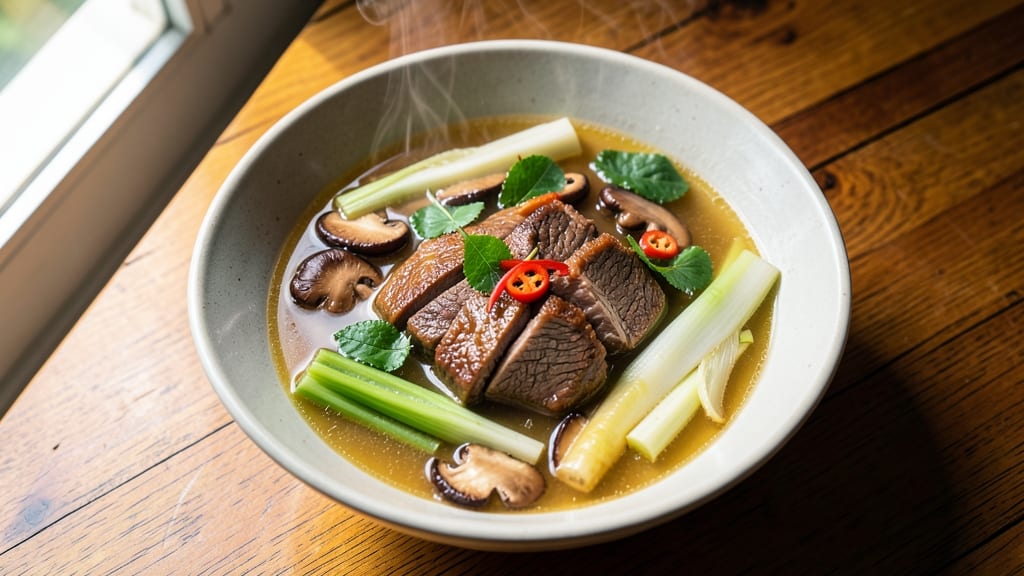
This beef tom yum soup recipe delivers the bold, aromatic essence of Thailand in every steaming bowl. The secret lies in balancing fiery chilies with bright lemongrass, zesty lime, and salty fish sauce—a harmony that transforms simple ingredients into a restaurant-worthy experience.
I've perfected this version through years of testing, ensuring the beef stays tender while the broth remains vibrant and complex.
What sets this recipe apart is the careful preparation of the aromatic base—lemongrass, galangal, kaffir lime leaves, and Thai chilies are pounded just enough to release their oils without turning to mush. The beef cooks quickly in the simmering broth to maintain its texture, while mushrooms add earthy depth.
This isn't just soup; it's a flavor explosion that starts with the first whiff of steam.
The result is a tender beef tom yum with a clear, fragrant broth that's perfectly balanced—spicy, sour, salty, and umami all at once. The broth should be vibrant enough to see through while still packing layers of flavor.
Serve it piping hot with steamed jasmine rice to soak up every last drop of that aromatic goodness.
For those who prefer a creamier version, a splash of coconut milk can be added at the end, though purists will argue that traditional tom yum doesn't need it. Either way, this recipe delivers the soul of Thai street food—bold, bright, and impossible to resist.
Ingredients for beef tom yum soup
Bold flavors start with these aromatic essentials and tender beef for a restaurant-quality tom yum.
| Ingredient | Amount | Notes |
|---|---|---|
| Beef Sirloin 🥩 | 1 lb | Cut into 1-inch cubes |
| Lemongrass 🌿 | 3 whole | Lower stems only, bruised |
| Galangal (Thai Ginger) 🧅 | 3 inches | Peeled, sliced into thick rounds |
| Kaffir Lime Leaves 🍋 | 4 whole | Bruised, torn in half |
| Thai Bird's Eye Chilies 🌶️ | 6 whole | Adjust for heat preference |
| Shiitake Mushrooms 🍄 | 8 oz | Fresh, stems removed |
| Fish Sauce 🍶 | 2 tbsp | Red Boat preferred |
| Lime Juice 🍋 | ½ cup | Freshly squeezed |
| Coconut Milk 🥥 | ½ cup | Full-fat, optional for creaminess |
| Vegetable Stock 💧 | 4 cups | Homemade or quality store-bought |
| Garlic Cloves 🧄 | 6 cloves | Smashed, not minced |
| Brown Sugar 🍚 | 1 tbsp | Lightly packed |
| Salt 🧂 | 1 tsp | Kosher or sea salt |
| Black Peppercorns 🌶️ | ½ tsp | Crushed, not ground |
| Cilantro Leaves 🌿 | ¼ cup | Chopped, for garnish |
The aromatic base makes or breaks this dish. Thai Bird's Eye Chilies are the heat carriers—buy from Asian markets where they're freshest, or sub with serrano peppers if needed. Lemongrass should be bright green and firm—avoid wilted stems. Galangal, often called Thai ginger, has a peppery kick; look for fresh roots near the lemongrass section. Kaffir lime leaves have a citrusy aroma—bruise them gently to release oils without turning bitter. For fish sauce, Red Boat is the gold standard, but any reputable brand works.
No galangal? Extra ginger plus a dash of turmeric gets you close, though it won't be identical. Running short on lemongrass? Substitute 1 tbsp lime zest plus 1 tsp lime juice, but it won't have the same depth. Fresh shiitake mushrooms are ideal, but canned shiitakes work in a pinch—just drain well. The coconut milk is optional for purists, but a splash at the end adds silky richness without overpowering. Vegetable stock should be low-sodium—homemade or brands like Pacific Foods are best.
Prep the aromatics last—pound them lightly with a mortar and pestle for 30 seconds to release oils. Store fresh galangal and lemongrass wrapped in damp paper towels for up to 1 week in the fridge. Kaffir lime leaves freeze beautifully for 3 months. The broth keeps for 4 days refrigerated—reheat gently and add a splash of water if it thickens. Garnish with cilantro right before serving, as it wilts quickly in heat.
Why You'll Love This Recipe
- One-Pot Magic: I swear by this—just toss everything into a single pot, simmer, and forget about it. The beef sirloin practically falls apart on its own, and the lemongrass and galangal infuse the broth like a spa day for your taste buds.
- Tangy Heat Payoff: That first sip? Chef’s kiss. The galangal’s peppery bite, the chilies’ fiery punch, and the citrusy lemongrass—it’s like a flavor explosion in a bowl. Honestly, I’ve ruined other soups trying to replicate this balance, but this one’s foolproof.
- Weeknight Crowd-Pleaser: Between us, this is my go-to when friends drop by unannounced. It’s hearty enough for a meal but light enough to feel special—plus, everyone can adjust their spice level with extra chilies. No one leaves hungry, and no one complains about leftovers.
- Budget-Friendly Leftovers: A single batch feeds four, and the flavors actually get better the next day. I’ll be real: I often make double, freeze half, and pull it out for lazy nights. The galangal and kaffir lime leaves add depth without breaking the bank—way cheaper than takeout.
Step-by-step instructions for beef tom yum soup
This authentic method delivers a perfect balance of spicy, tangy, and aromatic flavors every time.
Prepare the Aromatic Base
In a large pot, combine the 4 cups vegetable stock, 3 whole lemongrass (lower stems only, bruised), 3 inches galangal (peeled, sliced into thick rounds), 4 whole kaffir lime leaves (bruised, torn in half), and 6 whole Thai bird's eye chilies. Bring to a boil over high heat, then immediately reduce to medium-high heat and simmer for 10 minutes to extract maximum flavor from the aromatics.
The broth should develop a deep golden color and fill your kitchen with that unmistakable Thai aroma. This initial simmer is crucial—it infuses the stock with the essential oils from the lemongrass, galangal, and lime leaves that define tom yum's complex flavor profile. Don't skip this step; it's the foundation of your soup.
Cook the Beef and Mushrooms
Add the 1 lb beef sirloin (cut into 1-inch cubes) to the simmering broth. Cook for 8-10 minutes until the beef is just tender but still holds its shape. Remove the beef with a slotted spoon and set aside. In the same pot, add the 8 oz shiitake mushrooms (stems removed) and cook for 5-6 minutes until they've absorbed the broth and softened slightly.
You'll know the beef is ready when it easily pierces with a fork but still has a slight resistance. The mushrooms should release their earthy flavors into the broth as they cook. Keep the beef warm while you prepare the remaining ingredients—it'll finish cooking in the final assembly.
Build the Signature Flavor Profile
Return the beef to the pot and add the 6 smashed garlic cloves, 1 tbsp brown sugar, 1 tsp salt, and 0.5 tsp crushed black peppercorns. Stir gently to combine, then simmer for 2 minutes to allow these ingredients to meld with the broth. Remove the lemongrass stalks, galangal slices, and kaffir lime leaves at this point—they've done their job and can be discarded.
This is where the soup comes together. The brown sugar balances the acidity, the garlic adds depth, and the salt and pepper round out the flavors. The broth should now have a rich, aromatic base that's ready for the finishing touches. Taste the broth at this stage—it should be savory with a hint of sweetness and spice.
Finish with Acid and Cream
Reduce the heat to medium-low and stir in the 2 tbsp fish sauce and 0.5 cup lime juice. Simmer for 1-2 minutes to let the acidity brighten the flavors. Finally, gently stir in the 0.5 cup coconut milk (if using) until just combined—this adds a subtle creaminess without overpowering the broth's vibrant character.
The coconut milk should blend smoothly, creating a delicate sheen on the surface. The soup should now have that perfect balance of spicy, sour, salty, and umami flavors that define authentic tom yum. If you prefer a creamier texture, you can add a bit more coconut milk, but traditional versions often omit it entirely.
Serve with Fresh Garnishes
Ladle the soup into bowls and immediately garnish with the 0.25 cup chopped cilantro leaves. Serve with steamed jasmine rice on the side. The cilantro not only adds freshness but also provides a visual contrast to the deep red broth.
Each bowl should have tender beef that falls apart easily when stirred, mushrooms that have absorbed the flavorful broth, and a broth that's vibrant and full of layers. The soup should be hot when served—tom yum is best enjoyed immediately while the aromatics are at their peak. Adjust the heat level by adding more chilies if needed, but remember that the fish sauce and lime juice already contribute significant flavor.
Pro Tips For Making Beef Tom Yum Soup
- BLEND GALANGAL FIRST: I learned this the hard way—grating galangal into the soup whole just makes it taste like you’re chewing on a root. Use a food processor or microplane to turn it into a paste before adding it to the broth. The flavor releases better and blends smoothly, not like a surprise chunk in every bite.
- SEAR BEFORE SIMMERING: Don’t skip the quick sear on the beef sirloin—cut it into 1-inch chunks and brown them in a screaming-hot pot for 2-3 minutes. That crust locks in flavor and keeps the meat from turning to mush later. (Yes, even if you’re impatient like me.)
- TOAST KAFFIR LIME LEAVES: Sounds weird, but it works: Gently toast the kaffir lime leaves in a dry pan for 10 seconds per side before tearing them. It deepens their citrusy aroma without burning them—just enough to make the broth smell like a Thai street cart. (Your future self will thank you.)
- USE STALK LEMONGRASS: Skip the woody bottom of the lemongrass stalk—it’s tough and adds no flavor. Cut off the pale, rubbery base and discard it. Only use the bright green, tender part (about 3 inches) for the broth. More flavor, less work.
Regional styles of this beef tom yum soup
Thai Street Food Style
This version keeps the essence of Bangkok street carts—quick, bold, and packed with fresh ingredients. Use Thai chilies (not dried) for maximum heat, and serve in small clay pots if you have them, straight from the stove.
The key is to keep everything hot and steamy, just like vendors do—no waiting! I like adding sliced Thai chilies on top as a garnish for extra heat lovers. 🌶️
Northern Thai Variation
In Chiang Mai, they make a heartier version with pork or chicken instead of beef, but you can adapt by using leaner cuts like flank steak. Add fermented soybeans (tauco) for a funky, nutty depth—start with 1 tbsp and adjust to taste.
The broth here is often slightly thicker, so reduce the stock to 3 cups and simmer uncovered for 5 extra minutes to concentrate the flavors.
Southern Thai Fusion
Southern Thailand brings coconut milk to the forefront—this version is creamy but still tangy. Use 1 can (13.5 oz) full-fat coconut milk instead of just ½ cup, and add it earlier (after the mushrooms).
The heat comes from bird's eye chilies and dried shrimp paste (kapi)—start with ½ tsp for depth. Garnish with crushed peanuts and Thai basil for texture. 🥥
Modern Bangkok Café Twist
Upscale Bangkok restaurants often serve tom yum with seared scallops or grilled prawns alongside the beef. For a restaurant-worthy touch, sear 6 large shrimp in a separate pan with 1 tbsp butter and garlic, then add them to individual bowls.
Use fish sauce (Red Boat) and lime juice to balance the richness, and finish with edible flowers for presentation. The broth stays the same—just the presentation elevates it.
Isaan-Style Spicy Sour
Isaan province takes tom yum to another level with fermented fish sauce (nam pla pao)—use 1 extra tbsp for a funkier, deeper flavor. Add 1 tbsp palm sugar to balance the acidity, and include diced green papaya for a refreshing crunch.
The heat comes from Thai chilies and dried shrimp, giving it a fermented, funky edge that’s addictive. Serve with sticky rice instead of jasmine for the full Isaan experience.
Vegetarian Adaptation
Swap beef for extra-firm tofu (pressed and cubed) or king oyster mushrooms for meatiness. Use soy sauce instead of fish sauce (2 tbsp), and add 1 tbsp mushroom powder for umami depth.
The broth becomes lighter but still vibrant—balance with extra lime juice and chilies. Garnish with toasted cashews for crunch. This version keeps the spicy-sour profile intact while being completely plant-based. 🌱
Nutrition facts
Frequently asked questions
Can I substitute beef with chicken or shrimp?
For chicken, use 1 lb boneless thighs (they stay juicier than breast) and reduce cooking time to 6-8 minutes. Shrimp cooks in just 3 minutes—add them last with the mushrooms. The broth ratios remain the same, but shrimp versions often use ½ cup coconut milk for creaminess. Chicken works best with 1 extra tbsp fish sauce to match beef's umami depth.
Why does my broth turn cloudy instead of clear?
Cloudiness usually means the broth hasn't simmered long enough to clarify. The aromatic ingredients need 10+ minutes of gentle simmering to release oils properly. Strain through a fine-mesh sieve after cooking to remove any lingering solids. For extra clarity, skim off any foam that forms during simmering—this traps impurities.
How do I adjust the heat level for sensitive eaters?
Remove all whole chilies before simmering and add just 1-2 sliced Thai chilies at the end for mild heat. For zero heat, omit them entirely and boost brightness with extra lime juice (1 tbsp). The fish sauce already provides umami depth, so you won't lose flavor—just the spicy kick. Always taste the broth before serving.
Can I make this soup ahead of time?
Yes, but with key timing adjustments. Prepare the broth and cook the beef/mushrooms completely, then cool it rapidly (place pot in ice bath). Store in airtight containers for 3 days refrigerated or 1 month frozen. Reheat gently—never boil—to preserve the aromatic oils. Add fresh lime juice and cilantro just before serving, as they wilt when reheated.
What's the secret to balancing all the flavors?
The magic happens in this order: sweet (brown sugar) first to tame acidity, then salty (fish sauce) for depth, followed by sour (lime) to brighten. The broth should taste like a perfect harmony—if it's too spicy, add more lime; if too sour, a pinch of sugar helps. Taste as you go! The coconut milk (if using) should be the last addition to avoid curdling.